This collection offers a guide to the impacts of Brazil’s 2026 elections. For a companion piece on the crime and security situation, see Vanda Felbab-Brown’s commentary, “Crime and security take center stage in Brazil’s election.”
On October 4, Brazilians will vote in the first round of a general election for president and vice president, governors, two-thirds of the Senate, the full Chamber of Deputies, and state legislatures. The presidential race, despite a contested field of 13 candidates, has centered on two candidates: current President Luiz Inácio Lula da Silva of the Workers’ Party and Senator Flávio Bolsonaro of the Liberal Party, son of former President Jair Bolsonaro. In this collection, Brookings experts examine what the election means for Brazil and the international community.
A win for Bolsonaro would be a big win for Trump
The first round of Brazil’s presidential elections set for October 4 is more than just a winnowing of a crowded field. It also represents the next chapter of an ongoing feud between Brazil’s two ideological poles: the apparently indefatigable leftist incumbent, President Luiz Inácio Lula da Silva, seeking a fourth term, and Flávio Bolsonaro, the telegenic scion of the right-wing former President Jair Bolsonaro. Bolsonaro the father is currently serving a 27-year term under house arrest for conspiring to stay in power despite losing to Lula in 2022. Whoever wins will face daunting governance challenges on the domestic economic and public security fronts and a fractious legislature adept at negotiating for costly concessions from the public purse.
Perhaps more importantly, however, the election outcome will influence Brazil’s democratic trajectory for years to come, regardless of who wins. The dramatic backdrop is both political and personal. It pits Lula, the grizzled former labor leader with his own checkered track record on corruption, against the Bolsonaro family determined to recapture power. Jair Bolsonaro and his allies have been accused of trying to stay in office via a military coup, mob violence, and an alleged plot to assassinate Lula. The election also has implications for the judiciary’s role as an independent branch of power—despite its latest scandals and heavy-handed tactics to police politics—the perceived integrity of Brazil’s electoral system, and the Brazilian voters’ ability to maintain faith in their democratic institutions.
Not surprisingly, the Trump administration has repeatedly inserted itself into this fight. In July 2025, it imposed heavy trade duties on Brazilian exports in retaliation for the judiciary’s alleged “witch hunt” against former President Bolsonaro. It has verbally attacked and sanctioned the Brazilian Supreme Court justice responsible for prosecuting Jair Bolsonaro and revoked the visas of several Supreme Court justices. It agreed to Flávio Bolsonaro’s personal appeal at a White House meeting in May to designate two Brazilian criminal groups as foreign terrorist organizations and ignored Lula’s proposal for alternative approaches presented that month. It has withdrawn recognition of Brazil’s ambassador to Washington and cancelled visas of Brazilian law enforcement officials engaged in security cooperation against transborder crimes. The ongoing tit-for-tat also involved Brazil’s denial of visas to two State Department officials purportedly set to evaluate Brazil’s electoral system and its withholding agreement for Trump’s appointment of Florida’s former speaker of the House, a long-time Trump acolyte, as ambassador to Brasilia. The cumulative effect has been mixed. Trump’s interference seems to have bolstered Lula’s defense of Brazilian sovereignty against Washington’s pressure campaign, but will it be enough to counter Flávio Bolsonaro’s claim to address the public’s call to crack down on criminal groups?
The echoes in Brazil of Trump’s own ongoing claims of electoral fraud and instigation of mob violence to retain power in January 2021 still ring true; a Bolsonaro win would validate Trump’s imperious brand and hardball tactics at home and abroad. When set against today’s broader geopolitical landscape—and Trump’s reassertion of hemispheric hegemony under the Donroe Doctrine—Brazil, the largest power in Latin America, also represents the big prize in a steady string of right-wing allies coming to power in the region. A Bolsonaro return to power would be decisive in cementing the White House’s mission to realign Latin American nations as reliable U.S. allies, ready to do its bidding to advance its America First agenda of militarized approaches to crime and drug trafficking, crackdowns on migration, and preferential access to critical minerals and energy. Defense of democracy and human rights, the rule of law, environmental protection, and balanced approaches to public security would be further sidelined if not jettisoned.
Lula’s replacement by a close Trump political ally like Flávio Bolsonaro would dramatically consolidate Trump’s regional influence, even if he couldn’t get Brazil’s support across the board, such as on curtailing trade with China. Bolsonaro would owe Trump a debt for helping him make the case that his “mano dura” approach to fighting organized crime would win Washington’s favor to the benefit of Brazilians tired of crime in their neighborhoods. Bolsonaro might bend on other priorities for Washington such as preferential access to Brazil’s hefty store of critical minerals. Given such high stakes, it would be reasonable to expect the White House to continue to meddle in Brazil’s internal politics right up until inauguration day in Brasilia next January, and beyond.
The list of allies may grow thinner
Brazil’s presidential election will determine more than the direction of Latin America’s largest country. It will also determine whether one of the Global South’s most active diplomatic actors continues to invest political capital in broadening the constituency for inclusive multilateralism and an international order less dominated by great-power competition—or instead narrows its ambitions toward a more selective, bilateral foreign policy centered on Washington.
During President Luiz Inácio Lula da Silva’s current term, Brazil sought to maintain equidistant, pragmatic relationships with the United States and China. It has pursued what Brazilian officials describe as “multi-alignment,” maintaining a working relationship with Washington, expanding commercial ties with Beijing, and using BRICS, the G20, and the Conference of the Parties to widen Brazil’s diplomatic room for maneuver. This strategy rests on a broader Brazilian proposition: countries outside the superpower tier are more likely to preserve meaningful autonomy when they use coalitions and multilateral institutions to improve bargaining leverage.
Canadian Prime Minister Mark Carney advanced an analogous case for cooperation among middle powers confronting economic coercion and renewed great-power rivalry in his Davos speech. His warning that countries absent from the negotiating table risk ending up “on the menu” echoes a long-standing Brazilian concern that unequal bilateral bargaining leaves even capable states vulnerable when great powers divide the world into spheres of influence.
On September 21, Brazil and Canada, joined by Australia, Barbados, the European Union, India, and Kenya, launched Partners for Multilateralism, an open framework intended to coordinate support for international law and institutional reform while tackling shared challenges, including climate change, artificial intelligence, and supply-chain resilience. As Bruce Jones and Susana Malcorra argued in a 2020 report, a network of middle powers can “hold the floor” on key cooperative frameworks and hold major powers accountable when they abandon multilateral commitments. Its immediate practical impact remains uncertain. The initiative is nonetheless politically significant: it acknowledges the competitive multilateral environment now shaping global politics and connects Western and Global South middle powers without requiring either group to align explicitly with Western or anti-Western blocs. It also signals growing support for Canada’s resistance to U.S. pressure and for a broader strategy of middle-power economic resistance.
Flávio Bolsonaro’s election victory would probably interrupt the project. His platform prioritizes closer relations with the United States, Israel, and Argentina, accession to the Organization for Economic Cooperation and Development, commercial opening, and deeper integration into global value chains. The platform does not mention BRICS, while Bolsonaro has criticized non-dollar initiatives and entertained possibly leaving the grouping. He has also proposed closer security and critical minerals cooperation with the Trump administration. This suggests a foreign policy more inclined toward selective convergence with Washington than Lula’s coalition-building among middle powers and Global South governments.
A potential foreign policy shift under Flávio Bolsonaro would not necessarily produce a wholesale Brazilian realignment. China’s weight in Brazil’s trade and investment relationships would impose substantial limits on any effort to privilege Washington at Beijing’s expense. China has been Brazil’s largest trading partner since 2009 and is a major market for soybeans, crude oil, and iron ore. Periods of heightened U.S.-China trade tensions have created trade-diversion opportunities for some Brazilian exporters, reinforcing constituencies that favor preserving access to the Chinese market. These ties would make any serious effort to decouple from Beijing economically costly and politically difficult. Flávio’s own program also envisages continued commercial engagement with China. During the administration of Jair Bolsonaro—Flávio’s father—anti-China rhetoric did not prevent bilateral trade from reaching record levels, and Brazil resisted U.S. pressure to exclude Huawei from its 5G rollout.
A Brazilian withdrawal from BRICS also would not be inevitable. Brazil’s export interests, institutional constraints, and long-standing preference for diversified external relationships limited Jair Bolsonaro’s earlier effort to reorient Brazilian diplomacy; they would likely limit a Flávio Bolsonaro administration as well.
But Brazil’s international role depends not only on formal membership but also on where its president invests diplomatic attention, confers legitimacy, and uses the country’s convening power. A Flávio Bolsonaro government could remain within the principal multilateral institutions while withdrawing from the more ambitious effort to animate them—moving from coalition-building among middle powers toward more transactional, bilateral diplomacy with Donald Trump’s Washington.
If Flávio Bolsonaro wins the election, Canada, European governments, and partners across the Global South would lose a potentially important collaborator in efforts to resist a world divided into U.S. and Chinese spheres of influence.
Brazil’s election and the future of U.S.-Brazil technology relations
As voters in Brazil head to the polls to elect their next president, their decision could also shape the trajectory of U.S.-Brazil technology collaboration—a priority area for the U.S. government across the region. Should President Luiz Inácio Lula da Silva, widely known as Lula, be reelected, bilateral relations would likely remain tense, with the potential for guarded cooperation around critical minerals, continued efforts to assert digital sovereignty, and more punitive policies related to social media platforms. Should Flávio Bolsonaro win, the U.S. government would find a much more natural ally on technology collaborations, including platform regulation, artificial intelligence (AI) infrastructure, and partnerships on the critical minerals behind much of that hardware. Many of those minerals are primarily processed in China, creating an opportunity for closer U.S.-Brazil cooperation. Ideologically, Flávio Bolsonaro would skew toward Washington, but history suggests that the Trump administration would face real limits in its ability to apply pressure. His father, Jair Bolsonaro, and Argentina’s Javier Milei were both aligned with U.S. President Donald Trump, yet each maintained a productive relationship with Beijing.
Brazil’s social media policies have become a source of debate domestically and an area of frustration internationally. In 2025, Brazil’s Supreme Court ruled that platforms can be held liable for certain illegal user-generated content if they fail to remove it after notice. The court revised the ruling in 2026, and Lula’s government has sought other avenues for regulation. Decrees signed by the federal government in May give Brazil’s National Data Protection Agency power to sanction platforms, and the administration has also proposed a bill giving the Administrative Council for Economic Defense, the country’s antitrust regulator, new authority over large platforms. The bill remains pending in the Chamber of Deputies, but in a second term, Lula may renew efforts to try to push it through. A Flávio Bolsonaro presidency would likely aim to peel back as much platform regulation as possible and could revoke Lula’s decrees without congressional approval. If Bolsonaro’s coalition gains ground in the National Congress, it could even try to impeach and remove Supreme Court justices, and the next president is set to appoint at least four new justices to the court that has overseen much of Brazil’s platform policies.
Both candidates have made investment in AI central to their platforms, with some consensus on infrastructure investments. Lula has stressed the importance of AI sovereignty, and his supercomputer program seeks to avoid dependence on any single country or company—a goal that may be very difficult to accomplish in practice. Last year, he signed a law that eliminates federal taxes on data center equipment imports. Flávio Bolsonaro, for his part, supports the development of data centers, including through lower energy taxes and lighter regulation to draw investments.
There is less consensus, however, about Brazil’s role in diversifying the global supply chain for critical minerals used in high-performance magnets, electric vehicle motors, and advanced defense systems, among other technologies. With the world’s second-largest rare earth reserves, Brazil has emerged as a potential counterweight to U.S. dependence on China. On September 3, USA Rare Earth, partly owned by the U.S. government, completed its acquisition of Serra Verde, Brazil’s only commercial rare earth producer, despite Lula’s public criticism. A day earlier, the Brazilian National Congress approved a regulatory framework for critical minerals, which Lula signed on September 16. The law creates an interministerial council with the power to approve and prioritize projects, giving Lula leverage over future deals if he is reelected. Flávio Bolsonaro has explicitly signaled a desire for Brazil to play a central role in reducing U.S. reliance on China for rare earths, raising the issue during a visit with Trump in May.
Education on the ballot
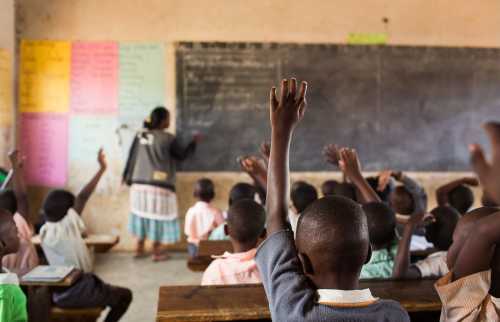
According to a recent poll, 71% of Brazilians are factoring education into their upcoming vote in the 2026 election, and 83% believe education should be among the incoming government’s top three priorities.
The current administration has prioritized education. In 2026, the Brazilian National Congress passed a new 10-year National Education Plan, which commits to raising government expenditures on education to 7.5% of gross domestic product in 2033 and eventually 10% by 2036 (UNESCO’s global benchmark is 4%-6%).
The National Education Plan prioritizes improving the quality of education, addressing inequities, expanding early childhood education, and promoting retention rates through secondary school. A little over half of 15-19-year-olds are in secondary school, while approximately 70% of secondary school students complete their education, comparable to rates across South America. The central Ministry of Education is committed to addressing inequities in education, and particularly educational quality between regions, school type, race, gender, and socioeconomic status. Because states and municipalities administer education in their constituencies, voters will likely pay attention to progress toward these commitments in their local elections.
A central objective in the National Education Plan is finally achieving full-time integral education (educação em tempo integral). “Full-time” means shifting from a four- to five-hour school day to a seven-hour one to increase learning time; more school time has positive economic implications for working parents. “Integral” ensures children receive a holistic education that integrates academics with social and emotional learning, digital literacy, physical education, workforce development, and beyond. The latest School Census shows that 25.8% of public schools are receiving full-time education, and the next administration will decide whether this expansion keeps pace.
Top of mind for education civil society organizations like Todos Pela Educação is advocating for public schools—where 80% of children receive their education. Todos is pushing policymakers to continue prioritizing quality of learning in the upcoming election, with an emphasis on literacy development and addressing persistent learning gaps exacerbated by the COVID-19 pandemic. In 2025, 66% of Grade 2 children met basic literacy requirements, far below the 80% target set for 2030. Todos is also calling for a reform of national assessments and an investment in teachers—increasing resources for pay and training. Brazil is facing a pending teacher shortage with an aging workforce and fewer new teachers entering the profession.
Screen time and generative artificial intelligence (AI) in education are also hot topics in Brazil, as they are globally. In January 2025, Brazil passed a law to restrict mobile phone use in schools, and in September 2025, the Digital Statute of Children and Adolescents, or ECA Digital, was signed into law requiring tech platforms to verify users’ ages and to link under-16 accounts to a guardian, among other safeguards. The next government will inherit the responsibility of enforcing both laws and shaping new guidelines on generative AI in classrooms, while the Legal Framework for Artificial Intelligence awaits a vote.
Another important issue is the government response to emergencies facing the education sector, including safety, climate, and health threats. Several climate-related school closures have occurred in the past two years, including in Rio Grande do Sul, which experienced devastating floods, and in the Legal Amazon, which faced a prolonged drought. Following the 2025 COP30 climate summit in Brazil, the government passed the national education guidelines to ensure educational continuity amid crises and disruptions. Eyes will be on how the new administration handles possible El Niño impacts.
As in the United States, much of Brazil’s political debate centers on which investments to prioritize in public education. Brazil will be a litmus test for the world for which educational platforms resonate in a polycrisis, as citizens grapple with how to address the economic, environmental, geopolitical, social, and technological forces shaping their lives and schools.
Authors





Related Content
-
Acknowledgements and disclosures
Emily Markovich Morris and Carolina Campos would like to thank Laura Nóra and members of the Center for Universal Education’s Brazil Family Engagement in Education Network for their perspectives.
The Brookings Institution is committed to quality, independence, and impact.
We are supported by a diverse array of funders. In line with our values and policies, each Brookings publication represents the sole views of its author(s).
Commentary
What kind of Brazil will emerge from this election?
Brookings experts weigh in
September 30, 2026