This commentary is a companion piece to a Brookings collection on Brazil’s 2026 elections, “What kind of Brazil will emerge from this election?”
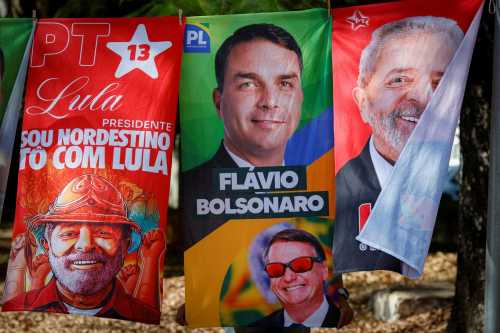
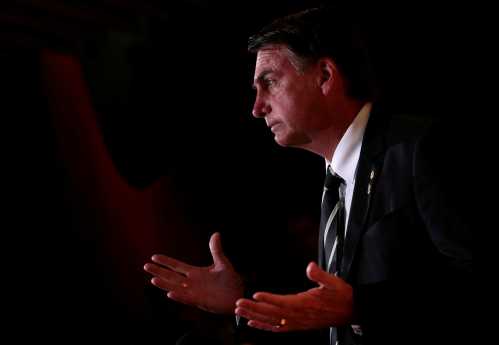
Security was the one issue Brazil’s President Luiz Inácio Lula da Silva, known as Lula, did not want to campaign on in his bid for a fourth term. He largely avoided it in his previous three campaigns as well, focusing more on economic and social issues. Yet security is a top concern for Brazilian voters: For years, Brazil has ranked among the 15 to 20 countries with the most homicides per 100,000 people. In contrast, Lula’s chief opponent, Flávio Bolsonaro, has made crime his top campaign issue. His father, former President Jair Bolsonaro, who was sentenced to 27 years in prison following a 2022 coup attempt, had centered tough-on-crime policies in his candidacy and presidency as well.
During Lula’s third term (2022-2026), public safety in Brazil hasn’t worsened in comparison to the Bolsonaro years—at least not in terms of homicides. Under Lula, homicides declined to just over 20 per 100,000 in 2024 (the last year for which official data are available). During most of Bolsonaro’s term, homicides hovered between 21.7 per 100,000 and 23.6 per 100,000, having fallen in his first year from almost 28 per 100,000.
Although Bolsonaro (2019-2022) promoted a no-holds-barred anti-crime policy that promised police impunity and embraced highly violent militias, the initial decline in crime mostly reflected local dynamics—sometimes the settling of criminal turf wars, and other times local police efforts in Brazil’s highly decentralized, subnational policing system. Killings by police rose to more than 6,400 per year, amounting to approximately 17 people killed every day by various police forces in Brazil.
Lula had campaigned on a citizen-centric security program and rolled back Bolsonaro’s deregulation of weapons possession. He also emphasized police accountability. He mandated that police officers be equipped with body cameras and the images be stored for analysis. But killings by police did not decrease during his term: police killed over 6,600 people in 2025. Like homicides, these numbers reflect Brazil’s highly decentralized law enforcement system, which often prioritizes repression over crime investigations.
Crime beyond the cities
Lula also strengthened environmental protections after four years of erosion under Bolsonaro. Embracing the so-called “Beef, Bullets, and Bible” lobby—the ranchers and large landowners, tough-on-crime military and police officers, and influential evangelical leaders—Bolsonaro had gutted and defunded Brazil’s environmental regulations and environmental law enforcement agencies. Those policies contributed to a surge in human-set fires and deforestation across the Amazon, the cerrado (Brazil’s crucial savannah ecosystem), and other biomes.
In contrast, Lula’s willingness to enforce environmental regulations produced declines in deforestation in both the Amazon and cerrado. Acting on an order from Brazil’s Supreme Court, hundreds of federal forces were also deployed to regions of the Amazon to disperse illegal miners and protect indigenous communities. Within a few weeks or months, the forces would redeploy elsewhere, and illegal loggers and miners would return, encouraged by corrupt businessmen and state and local officials or supported by large criminal groups such as the Primeiro Comando da Capital (PCC).
The lack of a sustained security presence in the Amazon is not the region’s only law enforcement vulnerability. A lot of crime in the Amazon and other Brazilian biomes—including illegal logging, deforestation, and mining—is not primarily perpetrated by organized crime groups or poor loggers and miners. It is sponsored by local businesses and politicians, many of whom become mayors and governors. Tackling such institutional capture and corruption is a difficult political task.
Why crime still resonates
Nonetheless, despite Lula’s anti-crime policies, many Brazilians perceive crime to be out of control, citing violent outbreaks in Rio de Janeiro, the spread of extortion by the Comando Vermelho (CV), and capture of legal economies by the PCC across the country.
Flávio Bolsonaro has made political hay from these concerns. Like his father and other right-wing politicians elected across Latin America in recent years, he calls for more maximum-security prisons, mass incarceration, tougher criminal penalties, and lowering the age of legal culpability to 14 for serious crimes. He also supports using technology to fight crime, including building a national facial-recognition database connected to criminal databases, a proposal that has raised concerns among civil liberties advocates. Importantly, he and his brother successfully lobbied the Trump administration to designate the PCC and its major rival, the CV, as foreign terrorist organizations. The Lula administration strongly opposes that designation, while the Trump administration has embraced the approach and promoted it across Latin America.
The salience of crime in voters’ electoral agenda has pushed Lula to step up his response. In May 2026, he launched Brasil Contra o Crime Organizado (Brazil Against Organized Crime), a national program backed by approximately 1.065 billion reais ($200 million) in direct federal resources and up to 10 billion reais ($1.9 billion) in financing for states and municipalities. Targeting the PCC and CV, the plan has four pillars: financially disrupting criminal organizations; strengthening prison security; improving homicide investigations and clearance rates; and combating the trafficking of weapons and ammunition. In September 2026, Lula also announced a pilot initiative to expand federal-state-municipal cooperation against organized crime in Rio de Janeiro. The initiative seeks to expand joint operations along major highways and in selected territories, emphasizing shared intelligence, coordinated policing and inspections, surveillance, and action against cargo theft, weapons and drug trafficking, and criminal financial networks.
The challenge of Rio
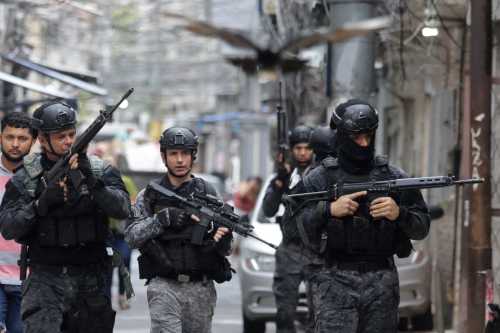
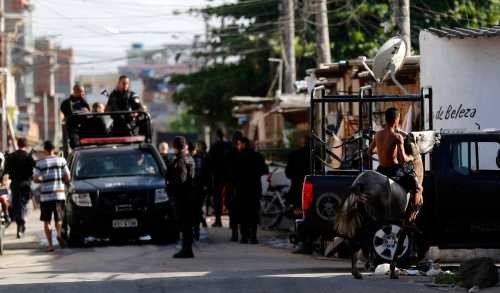
The focus on Rio is not accidental. Next to the city’s affluent beaches are the poor favela areas where roughly one million people live in marginalized conditions—lacking access to public health, education, legal jobs, and safety. Their lives and freedom of movement are ruled by highly violent actors, such as the CV or pro-police militias, which barricade the favelas, deal drugs, and extort money from residents. The CV also regularly uses spectacular violence in affluent parts of the city to extract economic or political concessions.
During Lula’s first two terms, his government belatedly supported a Rio-led public safety initiative known as the Pacification (UPP) Program. Starting in 2008, the effort sought to replace decades of violent, temporary military-police incursions into the favelas with a sustained police presence that communities would accept and embrace. Initially, the UPP program appeared to work well: security improved in a few favelas, the government expanded social services in them, and some legal jobs arrived. But the program soon encountered serious problems: creating community-based UPP police was slow, and the military police often had no UPP force to take over once an area was “pacified.” Legal jobs and expanded services never arrived in most of the slums. And once Brazil’s commodity boom ended in 2014 and Rio hosted the 2016 Olympics, federal, state, and local funding for the UPP dried up. Public spaces such as libraries and community centers closed, and education, training, sports, and arts programs ended. Many of the buildings themselves fell into disrepair. Policing reverted to the highly violent, temporary police incursions that UPP had sought to replace. Civilian casualties rose sharply, while the CV regained power and expanded control through warzone-like violence.
The CV has since expanded beyond Rio to large parts of Brazil, where it engages in violent extortion. But it is a latecomer to such an expansion, trailing the PCC. Although the PCC is often mythologized as not engaging in violence, it is itself a violent group—especially where it competes with the CV over turf. PCC has expanded across Latin America and Africa, funneling substantial amounts of cocaine into Europe and increasingly also into Australia. Although it is not as powerful and internationally present as the Mexican cartels or Chinese criminal groups, it has emerged as a new competitor to them. In São Paulo, where the PCC is dominant, potent synthetic opioids known as nitazines are also emerging.
The PCC is highly diversified, extending beyond illicit economies such as illegal mining into legal ones. A large 2025 Brazilian law enforcement operation, Carbono Oculto, for example, revealed the group’s efforts to take over ethanol production and fuel distribution. It is also involved in international scams, smuggling fake GLP products, cryptocurrencies, and money laundering through fintech companies, among other activities. And unlike the CV’s violent favela boys, the PCC is well connected to Brazil’s business and political elites and is increasingly focused on influencing local elections, something the CV has long done in Rio.
The U.S. factor
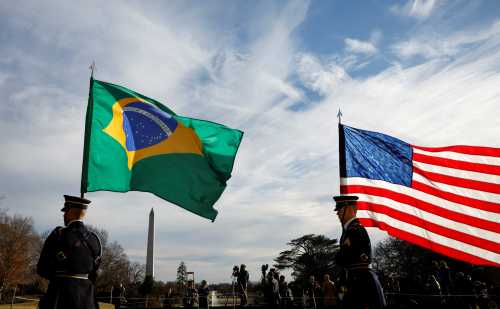
The Trump administration is closely watching Brazil’s presidential elections, and its preference for Flávio Bolsonaro is no secret. It also opposed the legal prosecution of Jair Bolsonaro for the coup attempt and temporarily sanctioned the Brazilian justice who presided over his trial.
Flávio has promised to join the Trump administration’s Shield of the Americas. But a Flávio Bolsonaro government could face tensions with Washington over the scope of U.S. involvement in Brazil. Allowing U.S. military strikes—or even just a U.S. military presence —in Brazil would deeply challenge the ethos of the powerful Brazilian military. There is also no need for such a U.S. military role since U.S.-Brazilian law enforcement cooperation has long been strong. Although Flávio wants to permanently deploy the Brazilian military to ports such as Santos to combat drug trafficking, reducing China’s role in Brazilian critical infrastructure, as the Trump administration would like, won’t be easy. His father postured tough on China but didn’t shrink China’s economic presence. Even Trump’s close ally Javier Milei in Argentina has not delivered on the Trump administration’s demand to kick China out of its deep-space base in Patagonia or reduce China’s role in Argentina’s economy. In fact, his government is trying to strengthen it.
Credibility on addressing urban crime may well determine the outcome of Brazil’s elections. Anti-crime policies also increasingly impact strategic relations between the United States and Brazil. But regardless of who wins in Brazil, they are not going to be the U.S. beachhead for deeper influence that the Trump administration may hope for.
Author
Related Content
The Brookings Institution is committed to quality, independence, and impact.
We are supported by a diverse array of funders. In line with our values and policies, each Brookings publication represents the sole views of its author(s).
Commentary
Crime and security take center stage in Brazil’s election
September 30, 2026