This piece is part of the “Blowback: How the Iran war may change the world” series, which features original analyses and policy recommendations by experts on the immediate and prospective long-term fallout from the 2026 Iran war.
Strategic planners across Asia have frequently lamented that the region confronts the worst security environment since the end of World War II. An erratic United States, an assertive China, a more menacing North Korea, and the outbreak of kinetic conflict in Europe and the Middle East have sharply degraded the geopolitical landscape. But the Iran war has delivered an equally jarring reckoning: Asia’s economic security is dangerously precarious. The closure of the Strait of Hormuz delivered the largest-ever global oil shock. As the region most dependent on this shipping route to meet its energy needs, Asia’s pain is singularly acute. The full extent of Asia’s predicament, however, becomes clear when this severe emergency is understood as the latest in a series of jolts to the region’s model of economic interdependence. More ominously, the unfolding saga leaves no doubt that the world economy lacks a great power stabilizer.
Cascading crises undermine Asia’s economic security
The era of benign globalization is over. With abrupt production stoppages and the hoarding of medical supplies, the COVID-19 pandemic exposed the fragility of global supply chains to border closures and beggar-thy-neighbor policies. Far more corrosive to the fabric of interdependence is the willingness of great powers to weaponize economic vulnerabilities to serve their purposes.
When President Donald Trump announced the “Liberation Day” tariffs on April 2, 2025, developing Asian nations were singled out for the steepest duties (as high as 49% for Cambodia and 46% for Vietnam, for example). The worst-case scenario of a sharp contraction of trade flows and curtailed growth prospects did not materialize—largely because Washington paused enforcement as it sought to deescalate trade tensions with China and initiated negotiations across the region on “reciprocal” trade deals that extract one-sided concessions from trading partners.
China has long practiced economic coercion. However, two developments reinforce Beijing’s ability and will to exploit supply chain vulnerabilities: first, the artificial intelligence and clean energy transitions depend heavily on critical minerals and rare earths, where China commands about 90% of global refining capacity; second, Beijing has been emboldened by the effectiveness of its rare earth export controls, which helped push Washington from trade war escalation toward détente.
Asia had been grappling with power moves delivered in the form of tariffs and export controls when the Iran war opened a new set of economic insecurities.
It is no exaggeration to describe the Strait of Hormuz as a vital artery at the heart of Asia’s economy. In 2025, 80% of oil and oil products and 90% of liquefied natural gas (LNG) transiting this waterway were destined for Asia. Access to other critical commodities, such as fertilizer, urea, naphtha, and helium, is also at stake. For instance, South Asia sources 34% of its fertilizer imports from the Middle East. Hence, the Strait of Hormuz’s closure hits all areas of the Asian economy: from transportation and manufacturing (including of semiconductors) to food production and medical supplies. The Asian Development Bank forecasts a drop in GDP growth by 0.7% in 2026 and inflation increasing to 5.2% if average oil prices hover around $96 dollars per barrel this year and decline to around $80 dollars in 2027. In a more severe scenario of $200 dollars per barrel, growth would fall by 1.2%, and inflation would rise to 7.4%.
Across Asia, the specter of stagflation—low growth and high inflation and unemployment—is rearing its ugly head.
The Hormuz crisis revives a fear that haunts a region heavily dependent on maritime trade: the closure of vital shipping lanes. Despite the power asymmetries between the United States and Iran, Tehran has demonstrated that geography and lower-tech assets (such as mines and speedboats) are enough to turn the strait into a chokepoint. The reaction of private companies matters too. The rise in maritime insurance premiums—by as much as 50%, according to some sources—means that when the strait reopens, higher freight costs will already be baked in as geopolitical risk is repriced. Iran’s demand for toll payments raises the specter of moving toward a future of gated waterways. If freedom of navigation flounders, other maritime chokepoints loom large: 45% of seaborne oil trade transits through the Malacca Strait.
No great power stabilizer
A thriving world economy requires responsible management. A great power that acts as a stabilizer and provides public goods—such as predictable international economic exchange and open sea lanes—is necessary. As much as the United States and China are vying for dominance, neither appears willing to act as such a stabilizer, despite the vast economic fallout from the Iran war.
By attacking Iran without consulting allies, articulating clear war objectives, or devising a workable strategy to reopen the strait, the United States has destabilized the world economy. Last March, the United States made the largest contribution to the 400 million barrels of oil released by members of the International Energy Agency to prevent sharper spikes in global prices. But the Trump administration has not mounted a coordinated campaign to help Asia weather the economic crisis, eased the terms of implementation for its “reciprocal” trade agreements, or pursued longer-term initiatives to strengthen the region’s resilience to future disruptions.
China imports a significant share of its oil from the Middle East but is much better prepared to weather the storm, given its sizable strategic reserves and, more fundamentally, the lead it has built in clean energy. Nonetheless, its first reaction to the Hormuz crisis was to suspend exports of refined fuel. Weeks later, it resumed sales but at a much lower level and for a select few countries (among them, Vietnam and Australia). Beijing also sees a major opportunity to become the supplier of choice in green energy technologies with crisis-stricken nations eager to diversify away from fossil fuels. However, overdependence on China for the green transition carries well-known risks, given the coercive leverage Beijing can exert on raw materials, equipment, and technology. And while Beijing has called for the reopening of Hormuz, it has stayed cautiously on the sidelines, letting a crisis that weakens the United States unfold, rather than wading into a high-wire diplomatic gamble.
Economic security multipolarity
The great powers increasingly adhere to similar logics: rules for others and political conditioning of economic ties. Therefore, Asia’s response to this acute economic security crisis is not a choice between a petrostate (United States) and an electrostate (China). Governments across the region understand that their economies will depend on a mix of fossil fuels, renewables, and critical minerals. The management of dependencies vis-à-vis the great powers has become par for the course in Asian statecraft. More novel are the collective resilience initiatives emerging across the region in the wake of the Iran war that speak of the need to fill a leadership vacuum.
To be successful, these efforts must first reckon with the stark disparities in energy vulnerability across the region. As the table below underscores, there is a wide range of reliance on Middle East producers to satisfy the energy consumption needs of Asian economies. Highly dependent on oil from the Middle East are Japan (77%), Taiwan (63%), and South Korea (57%), in contrast to oil-producing Indonesia (10%). South Korea, Taiwan, and India source around one-third of their gas consumption from Persian Gulf producers; others are less dependent. Vulnerability is not just determined by the geographical concentration of supply, but by the existence (or not) of strategic reserves to deal with sudden stoppages, the ability to switch suppliers or energy sources, and the fiscal space to sustain emergency measures and invest in long-term resilience projects.

On the first score, a great divide separates Asia. The region’s economic heavyweights have built oil stockpiles to act as buffers at times of crisis like today. China, Japan, South Korea, and India rank among the 10 countries with the highest petroleum strategic reserves, but no Southeast Asian country makes this list. China’s stockpile is deemed to cover roughly 220 days of consumption, and Japan’s and South Korea’s cover 201 and 202 days, respectively. Thailand (108 days) and India (74 days) are less covered, but ahead of the Philippines (60 days), Indonesia (25 days), and Vietnam (25 days).
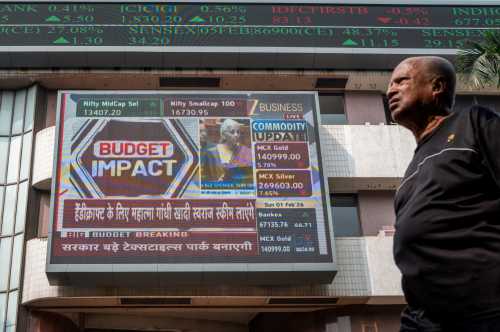
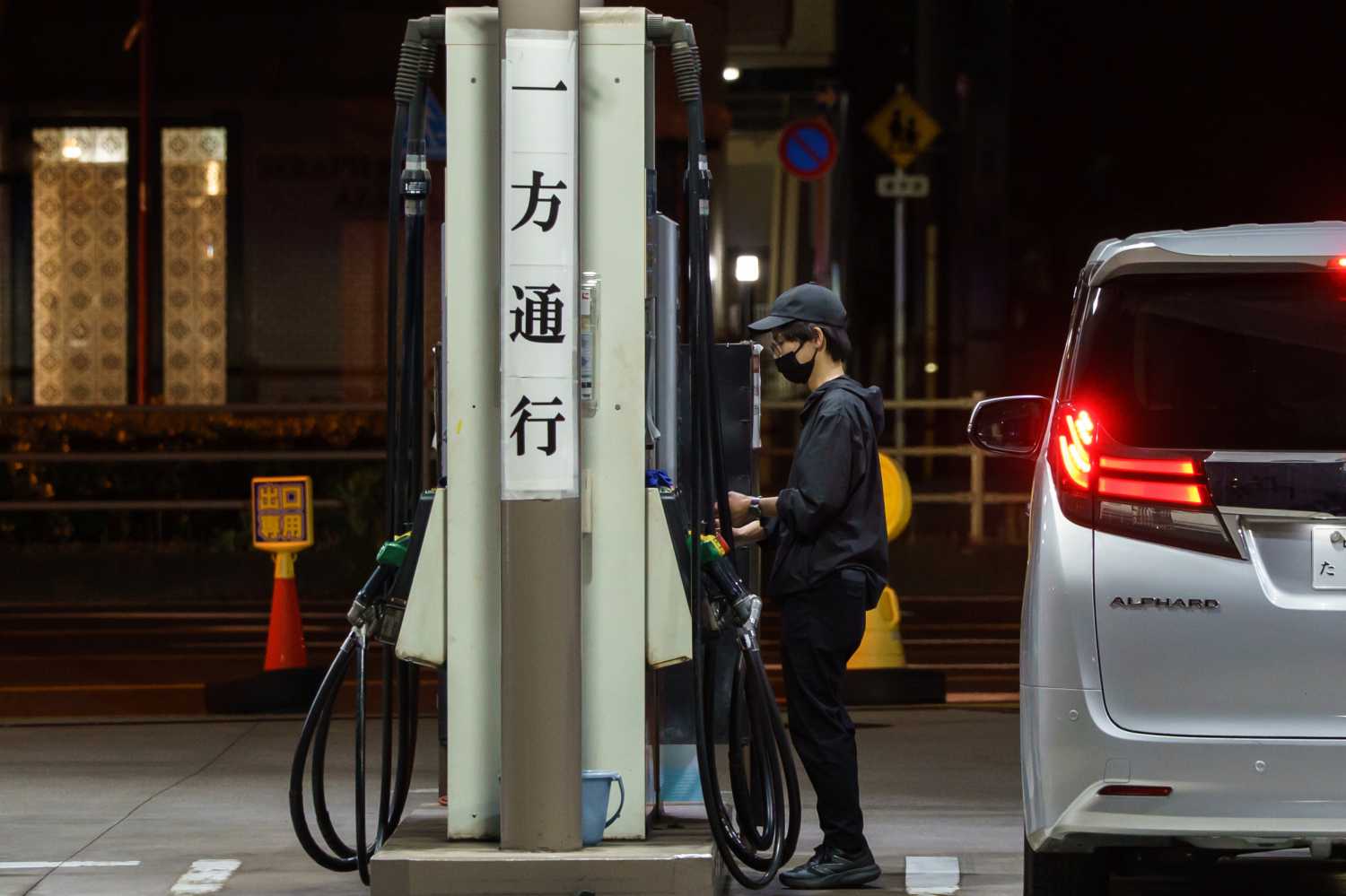
To cope with energy shortages and spikes in gasoline prices that are fueling inflation across the economy, many Asian governments have resorted to price caps, fuel subsidies, and energy conservation measures. The urgency of the crisis is reflected in the Philippines’ declaration of a national emergency, reduced workweeks for civil servants in Malaysia and Indonesia, and flight cuts in Vietnam as jet fuel shortages grew severe. Richer economies are also under pressure as their crisis response comes under scrutiny. Prioritizing its growth agenda, Japan’s Takaichi administration decided to retain gasoline subsidies and declined to adopt energy-saving measures. The strains in public finances—evident in rising bond yields and the need for a supplementary budget to sustain relief policies—have become evident.
The Iran crisis has emphasized the underdevelopment of collective response mechanisms. Such was the conclusion reached by the leaders of the Association of Southeast Asian Nations (ASEAN) at their 48th summit meeting in the Philippines, where they noted the pressing need to enact the ASEAN Framework Agreement on Petroleum Security (enabling emergency oil sharing arrangements), expand ASEAN’s cross-border power grid, and consider the implementation of a joint stockpile program. The idea of regional petroleum reserves is not new. A 2017 report by the Economic Research Institute for ASEAN and East Asia underscored the need for a collective framework, given the prohibitive cost for many ASEAN countries to build national reserves that meet the 90 days of consumption standard. Joint strategic reserves would provide more than immediate relief, allowing time to diversify supply, reassure financial markets, and gain leverage to negotiate better terms.
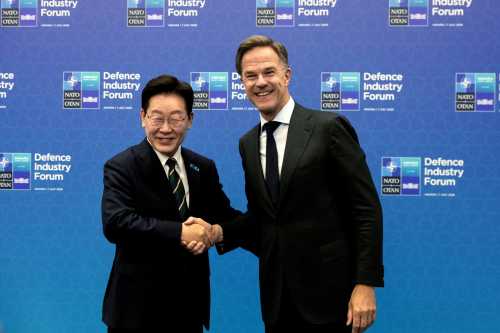
This idea-in-waiting received new impetus with the launch last April of Japan’s POWERR Asia (Partnership on Wide Energy and Resource Resilience Asia). It entertains a $10 billion fund to ASEAN members both for immediate action (loans to diversify oil purchases and to support local companies that are part of Japan’s supply chain) and structural change (stockpiling systems and their related infrastructure, like storage tanks). At the Japan-South Korea summit meeting the following month, President Lee Jay Myung announced Seoul’s participation in POWERR Asia. And both leaders agreed to develop a bilateral swap system for crude oil, LNG, and petroleum products. These initiatives are informed by the recognition that economic interdependence counsels mutual aid: Southeast Asia plays an important role in the manufacture of petroleum-derived medical supplies.
Trade policy may provide another avenue to stabilize the supply of critical commodities. Noteworthy is the Agreement on Trade in Essential Supplies inked by Singapore and New Zealand in early May. It contains a binding prohibition on export restrictions at times of crisis on products such as food, fuels, medical supplies, and construction materials. The trade deal should be regarded as a pathfinder agreement, launching an idea that could catch on (akin to the original trade agreement among four small economies that evolved into the Trans-Pacific Partnership agreement). It points to a more productive incorporation of economic security provisions in trade agreements to stamp out beggar-thy-neighbor tactics during emergencies.
At a time when the great powers are not guided by enlightened self-interest, leaders across the region feel compelled to step up. These new mechanisms of collective resilience remain untested, but their fate will matter greatly to the region’s ability to adapt its model of economic interdependence to new power realities.
Author

Related Content
The Brookings Institution is committed to quality, independence, and impact.
We are supported by a diverse array of funders. In line with our values and policies, each Brookings publication represents the sole views of its author(s).