This piece is part of the “Blowback: How the Iran war may change the world” series, which features original analyses and policy recommendations by experts on the immediate and prospective long-term fallout from the 2026 Iran war.
Summary of the issue
Ukraine and Iran may prove the nemeses of Russian and American ambitions. In February 2022, Russian President Vladimir Putin assumed he would quickly decapitate and defeat Ukraine in a “special military operation.” In February 2026, U.S. President Donald Trump assumed the same in his “excursion” against Iran. Ukraine does not control a vital global choke point like the Strait of Hormuz. It cannot hold the United States and the world to ransom. But, like Iran, Ukraine has denied a superpower an easy victory and imposed significant costs on it.
Deadlock in Ukraine discredits Russia as a global military force. It corrodes Putin’s patina of indestructibility in the same way that the stalemate in the Persian Gulf undermines the United States and Trump. Notably, the Ukraine war has exposed America’s weaknesses, not just Russia’s. For Trump, success in bringing peace to Ukraine is as elusive as success in ending the war in Iran. Trump’s failure to solve the Ukraine war in his much-touted “24 hours” discredited the United States as a reliable security provider. His subsequent failure to prevent Iranian retaliation in the Persian Gulf reinforced that impression.
So-called “second-rate powers” have diminished the standing of Putin and Trump, the men who started these ill-advised wars. Russia and the United States both have fewer means to exert power and influence than before. Their erstwhile allies—in places like the Caucasus and Central Asia in the case of Russia, and Europe in the case of the United States—are looking beyond them at new regional security options, hastening the development of a more decentralized international order.
Background
Putin and Trump share an imperial mindset and, to some degree, a sense of invincibility. Both, in their own telling, are men who like to take risks and roll the dice in bold domestic and foreign policy moves. They operate in an uninhibited fashion, with minimal external constraints on their decisionmaking. Putin believes that things will go wrong in military and other operations—based on his own experience in the security services—but he also believes he will always find a way to fix them. Trump believes nothing will go wrong, and if it does, someone else is to blame. As we can see from Trump’s vehement disagreements with the pope, the memes of him as Jesus or a god-like entity, and personal references to his status as a world-historic figure, Trump has gone one step further than Putin. He believes he is infallible.
Putin may not have been quite so filled with hubris in 2022, but he certainly dismissed concerns about the risks of invading Ukraine after easily annexing Crimea in 2014. Putin kept his decisionmaking to a tiny circle of confidantes, not even including the military in planning, which clearly showed in the botched execution of the initial attack. Ukraine’s relative success in fending off Russia, and Putin’s failure to impose his will on Ukraine in four years of brutal war, should have been a cautionary tale for Trump. But after the U.S. military’s stunning success in removing Venezuelan President Nicolás Maduro from power in a January 2026 covert operation, Trump was convinced that a stealth attack on Iran and its leaders would lead to another inevitable triumph. The U.S. military had thoroughly prepared the operational and tactical contingencies, with Israel as a key partner. The United States and Israel had seen little backlash from Iran after a joint assault on its nuclear program in June 2025, so Trump pulled a Putin and rolled the dice. He ignored all the many years of warnings by U.S. and other intelligence services about Iran closing the Strait of Hormuz. Like Putin, Trump did not have a plan for what would happen next.
Analysis
Robert Kagan’s May 2026 piece in the Atlantic clearly outlines the consequences of the war in Iran for the United States and the accelerating global adjustment to a post-American world as a result of this massive miscalculation. The supposition might be that Russia will take some advantage, but the war’s geopolitical impacts are a mixed bag for Moscow. The current oil crisis has strengthened Russia through a rush of petrodollars (more money for existing volumes) into state coffers and its Ukraine war chest. Yet these financial gains have come at a cost: the war has undermined many of the networks that Russia has depended on to resist Western pressure over the last several years.
For example, Russia relies on the Persian Gulf for resources other than oil and gas. Gulf states provide a safe haven for Russian money, companies, top businessmen, politicians, offshore remote workers, and tourists pushed out of Europe and the United States by sanctions and other restrictions. The Gulf is also a major hub for Russian finance and trade, and a transportation node for flights to Moscow from around the world. Gulf leaders increasingly took care of diplomatic and other political affairs for Russia, hosting meetings and negotiations with both the Ukrainians and U.S. envoys.
Iran itself has also been a stabilizing force for Russia’s domestic and regional strategy. It provided a Shia and largely disinterested religious counterweight to troublesome Sunni Muslim populations in Russia’s heartland and periphery. Crucially, at the beginning of the war in Ukraine, Iran provided Shahed drones to combat Ukraine’s rapid adoption of unmanned combat aerial vehicles. Russia has since launched its own drone production, but Iran provided a vital service at a pivotal moment in the conflict.
The war has also deprived Moscow of an important political partner. Iranian Supreme Leader Ayatollah Ali Khamenei was a valued and long-standing interlocutor for the entirety of Putin’s 25-year presidency. Khamenei’s death and the assassination of much of Iran’s senior leadership have deeply rattled Putin—who is paranoid about his personal security—and robbed Russia of an important network of trusted contacts. Coming after the collapse of the Bashar al-Assad regime in Syria and Trump’s removal of Maduro in Venezuela, Russia’s circle of dependable partners is narrowing. Assad now resides in Moscow alongside other erstwhile regional leaders granted exile and safety by Putin from possible murderous retribution.
There are some structural similarities in the wars in Ukraine and the Persian Gulf. Russians think that Ukraine is home territory, but it has always been a contested space on the shifting frontier of the vast Russian empire. Similarly, the United States has been a major player in the Middle East for 80 years, but it is a region that does not necessarily advantage the United States, and the standoff with Iran has endured for half this time. The two conflicts are not identical. Ukraine was not a threat to Russia in the way that Iran was a threat to the United States and to larger global security through its vicious proxy wars, support for terrorism, and attacks on U.S. interests. Yet both conflicts have produced a similar outcome: a weaker power has trapped a stronger one in a costly confrontation.
Just as Iran has drawn America into a prolonged struggle, Ukraine has essentially put Russia in a chokehold. It has inflicted massive casualties on Russian forces and heavy costs on the Russian economy, including through long-range strikes on targets in Russia. Ukrainians, much like Iranians for the Gulf states, have also dispelled assumptions about security at home. Putin is reportedly more “bunkered” than ever, as concerns about his personal and national vulnerability have grown. Trump’s brokering of a three-day ceasefire to cover Moscow’s annual May 9 Red Square commemorations of victory in World War II, along with the pared-down military parade that accompanied them, was a visible symbol of Putin’s discomfort.
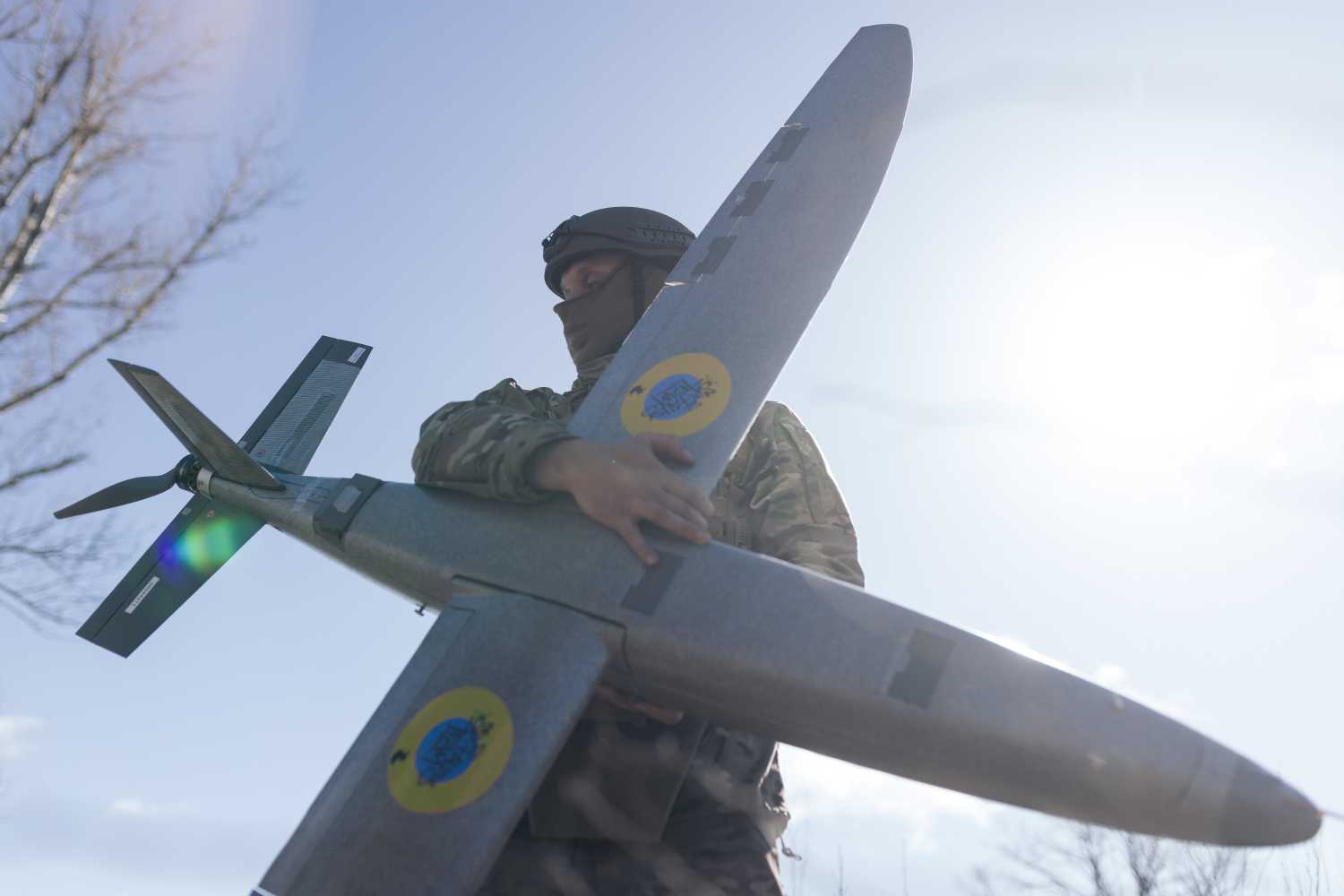
Trump, for his part, has consistently failed to see how Ukraine has transformed its regional and international standing by bogging down a much larger military power. Ukraine has transformed warfare through remarkable battlefield innovation. Its military is both battle-hardened and operating at the cutting edge of technology. As a result, Ukraine may be a surprise geopolitical beneficiary of the war in Iran. Even the diversion of Trump’s and Washington’s attention may prove beneficial. Trump has long been uninterested in genuinely mediating an end to the war with Russia and finding real solutions to the conflict. He is more interested in claiming superficial wins through declarations of ceasefires, touting symbolic high-profile conversations and meetings with Putin, and seemingly seeking U.S.-Russian business deals that could benefit business interests close to his administration. Trump has repeatedly berated Ukrainian President Volodymyr Zelenskyy while praising Putin, and he forcefully encouraged the Ukrainians to offer one-sided territorial and other concessions to Russia.
Peace in Ukraine, or at least some durable cessation of the current hostilities, is not likely to be found through the Putin-Trump nexus and the interactions of their envoys. Zelenskyy and Ukraine recognize this. They are now moving away from their primary reliance on the United States’ (less than) good offices and tacking closer to European supporters, as well as prospective partners in the Gulf who are keen to learn from Ukrainian prowess in drone and counter-drone warfare.
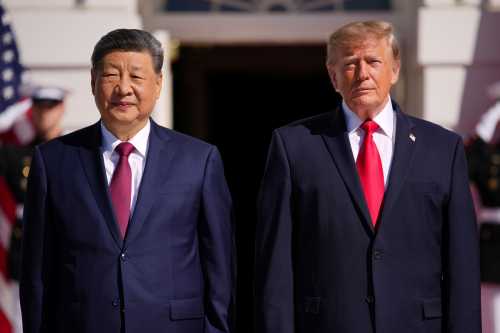
Ironically, Trump’s action in the Gulf could be the biggest blow to Putin in his decades in power. This is a system-changing event—an exogenous shock that fundamentally alters global dynamics. Putin expected that Trump would hand him a victory in Ukraine. But the more Trump becomes preoccupied with Iran, and the more the Ukrainians sour on the United States, the less likely he is to hand Putin a victory. The U.S. president is no longer (literally) Putin’s trump card. Nor can Putin keep up the war’s current pace forever. By January, Russia had been fighting Ukraine longer than the Soviet Union had fought Nazi Germany in WWII. In April, Russia racked up around 35,000 casualties for that month alone in terms of people injured and killed for incremental territorial gains. This figure was equivalent to the monthly Russian quota for contracted recruits.
Chris Donnelly, a British expert on the Soviet military and a former advisor to NATO secretaries general, has long described the war in Ukraine as a “deadlock.” As opposed to a stalemate in a game of chess, where neither side can move forward, in a deadlock, both sides still have capacities for action, including to pursue peace. Either side could decide to break out with a sudden move. In the Ukraine-Russia standoff, neither side wants to make the first move or a concession. And yet, something will have to give to avoid further ruinous losses and endless rounds of retaliatory attacks after brief pauses.
This May, reports were mounting of increased stress on the Russian economy—including from Ukraine’s destruction of energy infrastructure and military supply lines—and falling approval ratings for Putin. Formerly close Russian allies, like Armenia and Kazakhstan, were also openly breaking with Moscow to hold unprecedented summits with the European Union and other countries, including signing independent agreements for economic and security cooperation. And African rebels ejected Russian military trainers and forces from Mali in April. Russia no longer looks like a sure bet as a security provider or as a counterweight to the United States. The war is dragging it down.
Policy recommendations
It seems unlikely at this stage that the United States and Russia will recognize what other countries have in terms of their diminution as global actors from their military misadventures. Just like the United States is burning up weaponry in the Gulf, Russia is burning up its arsenal on the battlefield in Ukraine. Focused on their respective wars, both countries cannot currently produce the same volume of arms for export. Countries that previously relied on U.S. or Russian arms manufacturing capacity—like Europe for the United States and India for Russia—will have to build up their own defense production, and some already are. The wars in Ukraine and Iran demonstrate to Russian and U.S. allies and partners the dangers of overreliance on single powerful actors for security. They will have to figure out how to position themselves in a post-Russian as well as a post-American world. Neither country will be the decisive, even at times indispensable, country it was in the past.
Security solutions for European and other actors will likely be found in new regional country groupings like the Joint Expeditionary Force (JEF), which includes the U.K., the Nordic and Baltic states, other European countries, and potentially Canada. The JEF focuses on security in the Arctic High North, the North Atlantic, and the North Sea. It increasingly serves as a forum for coordinating military assistance to Ukraine, given the deep commitment of members like the U.K. since the beginning of the war. The JEF’s coordinating role on Ukraine could be expanded to support an enhanced European political effort on negotiating an end to the war. It could also be used as a platform for more joint defense funding, procurement, and innovation tied to ensuring Ukraine’s long-term security as well as northern Europe’s. Canada, for example, as a prospective member, is currently setting up a new defense investment bank and bundling together other funds to diversify the Canadian economy away from reliance on the United States and to build up Canada’s own defense systems. The JEF could be the locus of similar multicountry efforts.
Europeans are learning lessons from both Iran and Ukraine. They are actively thinking about how they deal with and engage with Ukraine going forward. Ukraine is the most competent military force in Europe. Other major militaries, like Turkey and Finland, have not been tested in the way that Ukrainians have. The Ukrainians have a lot to offer Europe for ensuring its own defense, and Ukraine will be an asset over the longer term for European security, separate from the tangle of ongoing relationships with the United States. As America’s war with Iran drags on, Europe will increasingly have to take the lead in finding and bringing an end to Russia’s war in Ukraine. Both Ukraine and Europe are already entering a post-American world, in terms of their mindsets.
Author

Related Content
-
Acknowledgements and disclosures
The author would like to thank Caroline Grassmuck for research support and Adam Lammon for editing.
The Brookings Institution is committed to quality, independence, and impact.
We are supported by a diverse array of funders. In line with our values and policies, each Brookings publication represents the sole views of its author(s).