This piece is part of the “Blowback: How the Iran war may change the world” series, which features original analyses and policy recommendations by experts on the immediate and prospective long-term fallout from the 2026 Iran war.
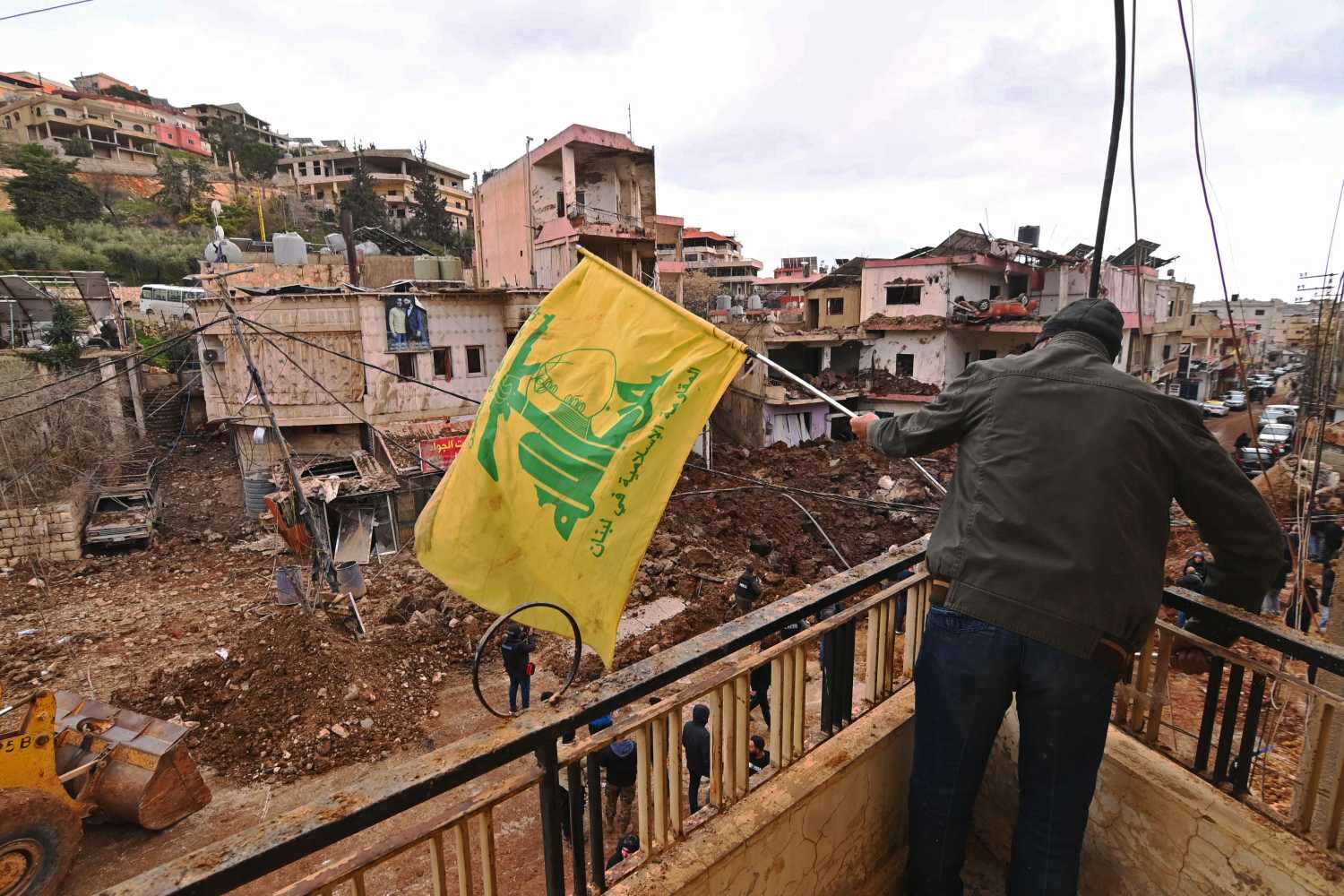
As Iran insists that Lebanon be part of ceasefire negotiations with the United States and Israel, the Israel Defense Forces’ May 31 seizure of Beaufort Castle resurrects unsettled memories of the 1982-2000 occupation that fueled Hezbollah’s ascent. As Israel pounds Lebanon, Washington and Tehran wait for the other to blink in negotiations, and Lebanon shatters the taboo against direct talks with Israel, an uncomfortable truth remains: there is no short-term solution to Hezbollah’s arms. American, Israeli, and Lebanese leaders all want Hezbollah defanged. But Israel’s expanding occupation is failing to defeat Hezbollah, which adapts by shifting to asymmetric tactics. Nor are today’s Lebanese Armed Forces (LAF) up to the task of disarming Hezbollah. The Lebanese state is far too weak and underdeveloped to replace the jobs, social services, and patronage networks that Hezbollah provides to a once-neglected Shia population. In talks with Washington, Iran is more likely to double down on, rather than negotiate away, its most successful surrogate.
Neutralizing Hezbollah’s military threat and stranglehold on Lebanon hinges on several difficult factors. First, patience and planning for the longer term. Second, sustained U.S. leadership, focused on capacity-building and monitoring and enforcing what emerges from U.S.-Iran and Israel-Lebanon talks. Third, tangible programs to persuade Lebanon’s Shia that, without Hezbollah’s arms, they will not be left vulnerable to Israel (or a Sunni-dominated Syria) and that a bankrupt and dysfunctional state can evolve to revive the economy and deliver services. If the LAF is to disarm Hezbollah without collapsing along sectarian lines, a credible civilian government presence must accompany it, demonstrating that “anti-Hezbollah” does not mean “anti-Shia.” Finally, even while maintaining the fiction that the Lebanese and Iranian tracks are separate, Washington must factor Lebanon into its negotiations with Tehran. Iran may use any sanctions relief, Strait of Hormuz “tolls,” or access to frozen funds to give Hezbollah what it lacks: money for relief and reconstruction that could rebuild its tattered political base and undercut government efforts. While Shia fury over Israel’s “scorched earth” tactics boils high, growing resentment at Hezbollah for dragging them again into war opens space for the state to step in.
“Pax Syriana” and Hezbollah dominance
Unique among Lebanon’s militias, Hezbollah was not compelled to disarm under the 1990 Taif agreement that ended the country’s 15-year civil war, an exceptionalism linked to fighting Israel’s occupation. Hezbollah claims, not entirely without merit, that Hezbollah’s “resistance” forced Israel to withdraw its troops in 2000, ending an 18-year occupation. (The Israeli-backed South Lebanon Army defied Taif’s disarmament requirements, dissolving when Israel’s occupation ended.)
Hezbollah has also positioned itself as a defender and advocate of Lebanon’s Shia community. Sunni and Christian elites historically neglected and politically sidelined the Shia. While foundationally and fundamentally a tool of Iran’s revolutionary ambitions, Hezbollah gave many once-marginalized Lebanese dignity and purpose through social services, employment, and greater political influence. If Hezbollah would evolve into a purely political force—a fantasy, as long as Iran is pulling the strings—it would be Lebanon’s largest, most disciplined movement. That it hasn’t done so speaks volumes about Iran’s intentions.
Despite Hezbollah’s deepening roots and terrorism, Washington initially let postwar Lebanon languish under Syrian occupation. In 2004, the United States began supporting Lebanese sovereignty as a means of weakening Syria’s and Iran’s destabilizing influence in the region. After the 2005 assassination of former Prime Minister Rafiq Hariri forced Syria to withdraw, Hezbollah emerged even stronger, fighting Israel to a draw in 2006, increasing the size and sophistication of its arsenals aimed at Israel, and using threats and political leverage to hold the government hostage to its preferences.
U.S. training, equipment, and even salary support to the Lebanese Armed Forces has improved its capabilities, resulting in successful campaigns against ISIS. But the LAF’s effectiveness remains constrained by low wages, fears of sectarian splits, and American reluctance—given Israeli objections—to provide the lethal weapons necessary to offset Hezbollah’s military edge. While LAF recruits took second jobs to feed their families, Hezbollah fighters, alongside Iran’s Islamic Revolutionary Guard Corps forces, became combat-tested in Syria’s civil war.
A transformed landscape after October 7
The Hamas attack on Israel on October 7, 2023, overturned the status quo. The following day—without regard to Lebanon’s government, parliament, or interests—Hezbollah fired guided missiles, rockets, and mortars into Israel. Massive Israeli retaliation followed.
In the aftermath, the context in which Hezbollah dominated Lebanon was upended. Israel decapitated Hezbollah’s leadership and later killed its primary sponsor, Iranian Supreme Leader Ali Khamenei. Its military degraded under Israeli attacks, Hezbollah could not save its other patron, Syrian dictator Bashar al-Assad; the Sunni jihadist figures that replaced him in Damascus retain bitter memories of Hezbollah’s role in Syria’s civil war. Although Hezbollah now produces drones locally, replenishing its strategic arsenals absent a Syrian “land bridge” is exceedingly difficult.
Inside Lebanon, for the first time since 1992, a president and government came to office in 2024 without implicit approval of Hezbollah, Tehran, and Damascus. President Joseph Aoun and Prime Minister Nawaf Salam immediately dropped the tiresome “Army, People, Resistance” rhetoric that for decades had politically legitimized Hezbollah’s role in national security. Instead, the government outlawed Hezbollah’s arms (so far without enforcement) and wrested control of key institutions, including Beirut’s airport, from Hezbollah’s control. In a series of unprecedented diplomatic steps, Beirut complained to the United Nations that Iran violated the provisions of the Vienna Convention on Diplomatic Relations and ordered Iran’s ambassador to leave Lebanon. Aoun accused Hezbollah of “treason” for dragging Lebanon into war on behalf of Iran and criticized Tehran for using Lebanon as a “bargaining chip” in talks with Washington. Even while condemning Israeli actions, both Aoun and Salam have supported the U.S.-brokered, direct Israeli-Lebanese talks, breaking a long-standing taboo. (Having essentially burned their bridges to Hezbollah, Aoun and Salam are forced to depend on Parliament Speaker Nabih Berri as their intermediary with Hezbollah, elevating that wily veteran of Lebanese wars and politics to just where he prefers, in a pivotal position.)
Significantly, while enraged at Israel, a growing number of Shia also express anger that Hezbollah provoked a war resulting in the largest destruction and displacement of Lebanon’s Shia in modern history. Residents of both Tyre and Nabatieh, two major Shia cities in southern Lebanon, publicly called for the end of armed groups and denounced “wars of others.” Unlike in 2006, with a wasteland of shattered villages in the Shia heartland, Hezbollah will struggle to peddle a credible victory narrative. It is increasingly obvious even to the Shia that Hezbollah’s arms create the very dangers that they are purported to deter.
Yet Hezbollah’s threats persist. Assassinated Secretary General Hassan Nasrallah’s diminished successor, Naim Qassim, threatened Lebanon’s cabinet in May, prompting memories of Hezbollah’s complicity in assassinations and its May 2008 takeover of Beirut. Emboldened by Iran’s claims of victory in its war with the United States and Israel, Hezbollah triumphantly posts images of drone attacks on Israeli soldiers.
For all the courageous talk and changed context, the Lebanese government and the LAF still lack the will and capacity for direct confrontation with Hezbollah. Forcing them to do so now would break the state and the army. Anger and despair over Israel’s devastation of an expanding swath of Lebanese territory further complicates the task. Even Lebanese who may be relieved that, at last, Lebanon is at the table with Israel—rather than on the menu—must fret that the U.S.-brokered direct negotiations and performative ceasefire announcements can appear as a green light for Israel’s ongoing assaults.
Policy recommendations
Many people (including this author) have spent decades pushing initiatives intended to weaken Hezbollah. The results were mostly unimpressive. Now, changed conditions present an opportunity to neutralize Hezbollah’s security threat, if one can think longer term and acknowledge that an exclusively military approach will not succeed.
The key to loosening Hezbollah’s grip is to erode its Shia political base by filling the vacuum left by the state—providing the services a functional government should, which Hezbollah has long supplied. Effective service delivery undermines the narrative that sidelining Hezbollah aims to marginalize the Shia once again. Lebanon’s ability to disarm Hezbollah, without plunging Lebanon back into sectarian chaos, therefore requires steps that both reinforce growing Shia disillusionment with Hezbollah and more generally persuade Lebanese that a state that currently lacks credibility can actually deliver. Multiple lines of work need to be pursued simultaneously.
1. Security and military transition
Hezbollah’s hardcore, Iran-aligned nucleus will not suddenly change course, and the LAF will eventually need to confront it. It will therefore be essential to continue building up the LAF’s capacity. In parallel, U.S.-brokered Israel-Lebanon talks can build on existing work to develop detailed relief-in-place plans for the LAF to replace Israeli occupying troops. Washington, the United Nations, and others can dust off frequently discussed confidence-building steps; disarmament, demobilization, and reintegration; security sector reform; and LAF capacity-building plans. U.N. Secretary-General António Guterres has responded to the Security Council’s request for options for U.N. monitoring and observations, following the end of the U.N. Interim Force in Lebanon’s mandate in December. Options need to be developed for enforcement, which was a notable gap in previous approaches.
2. Diplomatic efforts and a ceasefire
Washington should use both the Israel-Lebanon and U.S.-Iran channels to secure a genuine ceasefire. Despite American denials, Tehran has effectively linked Lebanon to any exit strategy from the Iran war. President Donald Trump, for now, is paying attention, which is important since U.S. leadership remains relevant in Israel and Lebanon. Only the Americans, if sufficient U.S. diplomatic machinery remains in working condition, can assemble the funding, coalitions, and understandings needed to permanently transform Israeli-Lebanese dynamics.
With elections looming and Israelis displaced by Hezbollah’s drones and missiles, Israeli Prime Minister Benjamin Netanyahu may calculate that escalating the war in Lebanon, supported by 80% of Israeli Jews, may distract voters from his failure to achieve his war aims in Iran. Yet Netanyahu is unlikely to risk incurring Trump’s wrath ahead of Israel’s October elections, should Trump demand Israel temper its belligerency in Lebanon to help end the Iran war—giving Washington a meaningful source of leverage. While Netanyahu may not be troubled by provoking state collapse in Lebanon—even though the earlier combination of state collapse and occupation led to Hezbollah’s rise—such an outcome would work against the Trump administration’s aim of a more stable Syria.
U.S. efforts in Syria will also be important for Lebanon. U.S. support for Ahmad al-Sharaa’s interim government can reinforce the emerging mutually constructive Lebanese-Syrian relations. It can also reassure Lebanon’s Shia that Sharaa’s Hayat Tahrir al-Sham-dominated government is not a threat to them.
3. Economic relief and state legitimacy
After the 2006 war, Hezbollah was perceived as moving faster and more generously than the government in providing compensation and reconstruction assistance. Today’s devastation is far greater, and Hezbollah’s resources are considerably less, giving the state an opportunity to act. To counter Hezbollah, the bankrupt Lebanese government needs resources to be visibly in charge of providing immediate relief to those displaced and lead the eventual reconstruction. Washington, working with the U.N., France, and others, can initiate efforts to both attract financial support and establish supervision mechanisms to prevent the diversion of funds to notoriously corrupt Lebanese institutions, such as the Council for the South. Although the Gulf states will prioritize repairing their own war damages, they can be motivated to prevent either a renewed Iranian hegemony in Lebanon or its replacement by Israel. Donor funds and international financial institution support could help the Lebanese state reassert control and provide services across progressively larger areas of the country.
4. Constraining Iran
Throughout this process, Washington must watch Iran closely. Tehran will not trade away Hezbollah at the negotiating table: If Iran gains access to frozen funds or sanctions relief, it may race to transfer resources to Hezbollah to outperform and undermine the government. Iran will remain quite focused on preserving its Lebanese surrogate, and any diplomatic progress must account for this reality.
Conclusion
The aftermath of October 7 and the Iran war have changed Hezbollah’s operating environment considerably. While the window is only as wide as Washington’s attention span, there is an opportunity, after decades of failed efforts, to eliminate the Hezbollah threat against Lebanon and Israel. It requires providing resources and support to help the government put into practice Aoun and Salam’s commitment to a strong state, with a monopoly over arms, that is able to deliver security, services, and economic revival, while posing no threat to its neighbors. Unfortunately, this plan needs more time than Netanyahu is likely to grant it, and more focus than the Trump administration, with its diplomatic and foreign assistance mechanisms dismantled, seems able to maintain.
Author

Related Content

The Brookings Institution is committed to quality, independence, and impact.
We are supported by a diverse array of funders. In line with our values and policies, each Brookings publication represents the sole views of its author(s).