Executive summary
China and the United States have experienced the Hormuz energy crises very differently. The United States has ramped up oil and gas production, but China has sharply reduced oil imports while surging cleantech exports. These divergent trajectories underscore an emerging fundamental difference in the two countries’ energy systems, with China placing greater emphasis on integrating renewables and electric vehicles. These cleantech investments have played only a limited role in helping China weather the Hormuz energy crisis so far, but they may produce a more lasting advantage for Chinese firms if they can help them capitalize on growing demand for clean technology in an era of persistently higher fossil energy prices. U.S. policymakers need to act now if they are to counter China’s formidable cleantech advantage.
Introduction: Electrostates and petrostates
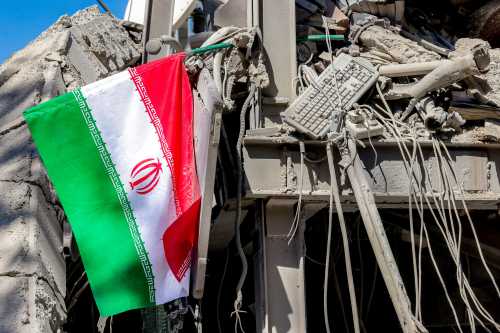
The U.S.-Israeli attack on Iran in late February 2026 triggered the largest oil supply disruption in history. The effect on natural gas markets has been similarly profound. Yet this massive disruption unfolded very differently for the world’s two largest economies, the United States and China. The United States drew down strategic and commercial oil stocks to export a record 5.6 million barrels per day (mb/d) of crude oil in May 2026, partly offsetting reduced production in the Persian Gulf. China, on the other hand, accelerated oil imports in January and February 2026 before sharply reducing crude oil imports by 3.6 mb/d, a quantity roughly equivalent to Japan’s total demand. Given pervasive policy concern with U.S.-China competition, these sharply differing impacts invite the question: Did these divergent trajectories advantage one country over the other?
This question is especially relevant because it underscores fundamental, emerging differences between the U.S. and Chinese energy systems, which some commentators term “electrostates versus petrostates.” The former describes an integrated energy system where renewable electricity supplies much of the power—displacing natural gas and coal in generation—while electric vehicles (EVs) displace oil in transportation. The latter, meanwhile, is just what it sounds like: an economy in which fossil fuels, especially oil and natural gas, make up a large chunk of energy use. Proponents of the electrostate-petrostate dichotomy point to China’s massive investments in EVs, grid modernization, and clean energy as evidence that it is becoming an electrostate, while the United States’ status as the world’s largest oil producer and largest exporter of liquefied natural gas (LNG) places it in the petrostate category.
In truth, as this policy brief explains, the electrostate-petrostate dichotomy is greatly exaggerated. China’s continuing reliance on fossil fuels, especially coal, has been its most important buffer against the shock coming out of the Strait of Hormuz. But the distinction does underscore an emerging bifurcation in global energy security, presenting challenges for U.S. policymakers. Even as the increasingly unstable Persian Gulf remains the fulcrum of the world’s supply of both oil and natural gas, the global supply chains for the two technology categories that can substitute for those fuels—EVs, which displace oil in transportation, and renewable energy technologies, which displace natural gas in power generation—are deeply and irreversibly centered in China.
The Hormuz shock significantly increased demand both for oil and gas as well as for the clean energy technologies that can displace them. The U.S. response has been to ramp up its contribution to global fossil fuel supply, while China provides the technology that can eventually supplant those fuels. In the short term, both countries are making money and helping ease the energy supply crunch. But over the longer term, without bold policy action, the United States is positioned to benefit only from the immediate scramble for fossil fuels, while China is positioned to benefit from both the crisis and the gradual shift to clean energy.
An important distinction is that while the Hormuz shock affected both oil and gas supplies, China has different relationships to these energy sources. The oil shock primarily affects China’s transportation sector, though the impacts have been softened by China’s oil stockpiles, increased Russian oil imports, and EVs. The gas shock, meanwhile, primarily affected Chinese power generation but was cushioned by China’s coal fleet and renewable energy generation capacity. As of the time of writing, the underlying U.S.-Israel conflict with Iran remains unresolved, despite the signing of an agreement in June 2026 that was intended to end the fighting. Accordingly, it remains to be seen how the conflict might affect China’s energy system over the long term.
The rest of this policy brief unpacks how the Hormuz shock affected China’s economy and energy system, using data from the second quarter of 2026. It also examines China’s short-term responses to the Hormuz shock, the three buffers that have helped to insulate it, and the implications for China’s clean energy system and for U.S. policy.
China’s response to the Hormuz shock
Soon after the United States and Israel launched strikes on Iran on February 28, 2026, Iran declared the Strait of Hormuz, through which 20% of both global oil supply and global LNG supply flow, closed to virtually all maritime traffic. Within a few weeks, commercial traffic through the strait had all but ceased, and the price of benchmark Brent crude oil rose from an average of just over $70 per barrel in February to $100 in March. Spot prices for LNG in Asia, a widely used gas benchmark, jumped from roughly $13 to $21 per million British thermal units over roughly the same period. Soon after, the International Monetary Fund revised its 2026 global economic growth forecast downward to 3.1% from 3.3%.
Unlike most of its Asian neighbors and emerging market peers, China was well-prepared for this unprecedented shock to the world oil and gas supply. China had been bolstering its strategic stockpiles for years as part of a long-standing energy security strategy designed precisely to limit the impact of production disruptions in the Persian Gulf. Beijing had long been concerned about this scenario occurring, whether due to terrorism, piracy, or U.S. military action. As U.S.-Iran tensions rose prior to the onset of the conflict, China accordingly accelerated its oil purchases, with imports rising 16% year-over-year in January-February 2026. Then, when the conflict began, China promptly slashed oil imports, and in March, the government ordered leading refiners to stop diesel and gasoline exports.
China’s short-term policy responses also appeared to prioritize nonfossil energy. Though prepared well before the onset of the Hormuz shock, the 15th Five-Year Plan approved at the March 2026 National People’s Congress increased the target share of renewable energy from 20% in 2025 to 25% in 2030, even as it relaxed carbon-specific targets. More dramatically, in remarks broadcast on Chinese television in early April, Chinese President Xi Jinping reportedly called for China to quickly develop a new energy system to bolster the country’s energy security. He boasted that “The path we took in being the first to develop wind and solar power has now proven to be forward-looking.” Yet while renewable energy may present a sustained economic opportunity for China in the aftermath of the Hormuz shock, other features of its energy system played just as big a role in limiting its exposure.
The sources of China’s energy resilience
Despite its massive investments in renewable energy, EVs, and other clean energy technologies, China’s energy system remains centered on fossil fuels, especially coal. While the percentage of electricity generated from renewable sources in China now exceeds the average for high-income countries, at some 22%, coal-fired generation still supplies approximately half of total electricity output. China’s energy policy, including the recently released 15th Five-Year Plan, articulates a significant role for such coal-fired power generation well into the future—despite rapid growth in renewables. China operates the world’s largest coal fleet with over 1,200 gigawatts (GW) of generation capacity—more than half the global total. This massive source of existing capacity, combined with a relatively low cost of coal-fired power generation and abundant domestic coal reserves, has led Chinese policymakers to position coal to meet shortfalls in generation from other sources—a role played by natural gas in many other economies, including the United States. The use of coal provides critical assurance that, in combination with nuclear power and other nonfossil energy sources, China can meet its power generation needs without relying on imported natural gas.
While coal provides Beijing with an insurance policy for power generation, China’s strategic oil stockpiles helped its transportation sector weather the impact of the Hormuz shock. Despite an increasing share of EVs, this sector remains heavily reliant on oil. Accordingly, China is both the world’s largest oil importer and holds its largest stockpile of crude oil, totaling some 1.4 billion barrels. Of these, about 360 million barrels are government-held, and the remainder are controlled by state-owned enterprises that effectively operate at Beijing’s direction. In combination, these reserves are sufficient to provide for approximately seven months of imports. These estimates may be conservative: China treats the total size of its reserves as a state secret. However, whatever their exact size, these reserves played a significant role in allowing China to sharply reduce its oil imports, thereby avoiding a scenario where demand would have massively exceeded available supplies, driving prices markedly higher.
Beijing can also count on an alternative source of oil: its northern neighbor Russia, which has drawn ever closer to China as it has become increasingly estranged from the United States and its allies. Even before the conflict with Iran began, Russia had become China’s largest source of crude oil supply, accounting for 17.4% of imports, substantially more than any other single country. China relied on Russia for its pre-conflict stockpiling: the volume of Russian oil imports increased by more than 300,000 barrels per day during January-February 2026. Increases in Russian imports have likely made up the shortfall caused by the almost total collapse in Chinese oil imports from Iran, which were estimated at 1.38 mb/d in 2025, accounting for some 80% of Iranian exports prior to the onset of the conflict.
Yet while fossil energy played an important role in reducing China’s exposure to the Hormuz shock, clean technology has also contributed in the form of EV-driven oil demand displacement. The International Energy Agency previously estimated that China’s world-leading EV fleet reduced oil demand by approximately 1 mb/d in 2025 and projected this to increase to 2.7 mb/d by 2030. A similar Rhodium Group analysis predicted oil demand displacement to increase approximately 600,000 barrels per day annually, while a third study by the Centre for Economic Policy reached an estimate of some 430,000 barrels per day with the possibility of quadrupling by 2040. All of these estimates, however, predate the Hormuz shock, and thus may prove to be conservative. One Chinese source reported that EV penetration accounted for 12% of the decrease in China’s oil use post-Hormuz.1 Regardless, EV-driven oil displacement provides China with a buffer that, given the size of its EV fleet, few other countries can match—least of all the United States, where oil consumption for transportation accounts for some 30% of total energy consumption. Indeed, while China’s dominance in clean energy technology played only a partial role in offsetting its exposure to the Hormuz shock, it may give Beijing a lasting economic and technological advantage.
China’s cleantech export advantage
Chinese producers’ dominant position in most clean energy technology segments distinguishes the 2026 Hormuz shock from previous energy supply disruptions. Where past crises left importing states with few near-term alternatives to fossil fuels, Chinese producers today can supply the two categories of technology that most directly substitute for them: EVs, which displace oil in transportation, and renewable energy generation technology, which displaces natural gas and coal in the power sector. According to 2024 data, China accounted for over 90% of global solar module production, over 80% of batteries and wind turbines, and over two-thirds of EVs. This dominant position was the result of decades of industrial policy measures, which provided substantial policy support to China’s nascent clean technology industries. Foreign investment also played a significant role, and some foreign firms were subject to intellectual property theft and forced technology transfers. The net effect was that by the late 2010s, Chinese producers achieved near-insurmountable cost and scale advantages in many clean energy technologies.
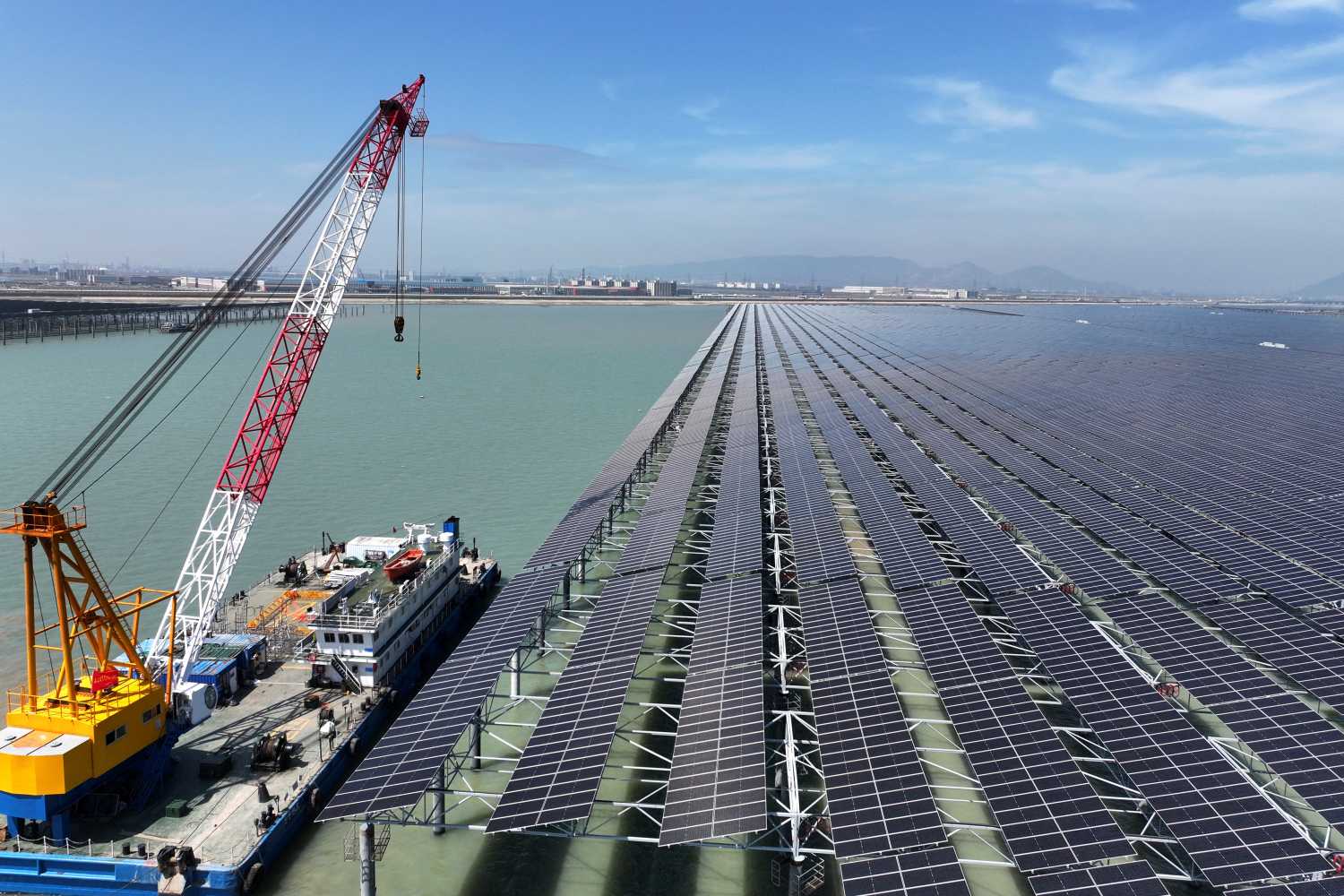
While the long-term impact of the shock on demand for Chinese clean energy technology products remains to be seen, initial data show a significant increase. In May 2026, China’s EV exports reached a record $9.2 billion, representing a 49% increase from the same period in 2025. This increase was led by surging demand in Thailand and the Philippines—two countries hit hard by the Hormuz oil price shock. An Ember analyst explained these figures directly with reference to the Hormuz crisis, saying, “The disruption to global fuel markets caused by the Middle East conflict and the resulting impacts on fuel prices have accelerated transport electrification” across Southeast Asia. Chinese solar exports, meanwhile, reached a record 68 GW in March 2026, nearly 50% above the previous monthly high set in August 2025 (see Figure 1). Unlike EVs, solar energy equipment does not directly substitute for oil; the surge instead reflects demand from countries seeking to reduce their exposure to gas-fired generation as LNG prices spiked. It likewise illustrates the potential for Chinese producers to gain from Middle East energy crises. A similar pattern is evident in China’s exports of lithium-ion batteries and wind turbines, which rose 50% and 45%, respectively, underscoring the potential for Chinese firms to benefit from the Hormuz shock.

Pakistan illustrates the potential for continued demand for Chinese clean technology post-Hormuz. After importing approximately 50 GW of Chinese solar equipment through August 2025—of which roughly 35 GW is estimated to have been installed—the country’s power sector was significantly less exposed to the LNG price shock than would otherwise have been the case, given Pakistan’s substantial reliance on Qatari LNG imports transiting the Strait of Hormuz. Such increased demand for Chinese clean technology has already translated into market gains for Chinese producers. The share prices of CATL, perhaps China’s foremost battery manufacturer, and BYD, one of its largest EV manufacturers, rose 24% and 11% in March, respectively. These gains all point to sustained confidence in the ability of Chinese clean energy producers to deliver value in a world of heightened oil prices. While these producers had only a limited role in mitigating the impact of the Hormuz shock on China, they nonetheless could offer Beijing a strategic advantage in a world where the threat of future energy supply shocks drives continued increases in demand for clean energy technology. The policy implications of this scenario for the United States are the subject of the next section.
Implications for U.S. policy
The Hormuz shock has revealed a bifurcation in the world’s energy supply that demands a rethinking of U.S. energy and national security policy. Global oil and gas markets remain highly vulnerable to disruptions and instability in the Persian Gulf. Yet the two categories of technology that can substitute for these fuels—renewable generation equipment (wind, solar, batteries) that displaces gas and coal in power, and EVs that displace oil in transportation—depend on supply chains heavily concentrated in China. U.S. energy policy is structured to respond to the first reality, but not the second. In order to adapt, U.S. policymakers need to decide whether and how to challenge China’s dominance in clean technology production, including whether or not to invite Chinese investment into the U.S. energy industry. Three recommendations follow, each of which would require leadership from an administration committed to diversifying U.S. energy supplies and enhancing energy security:
Recommendation 1: Negotiate technology transfer and U.S. production requirements in exchange for lifting tariffs. It is difficult if not impossible to challenge Chinese producers in most clean technology segments, yet providing access to these technologies can help U.S. businesses and consumers reduce energy costs, especially gasoline consumption. At the same time, there are legitimate economic and national security concerns about allowing Chinese access to U.S. markets. The U.S. government should take a page out of China’s playbook and negotiate technology transfer, joint venture, and U.S. manufacturing requirements with Chinese producers, in exchange for lifting tariffs on Chinese EVs, solar panels, wind turbines, and other clean technologies. Despite geopolitical tensions, the U.S. market remains highly attractive to Chinese producers, which need foreign markets to escape involution in China’s domestic market.
Recommendation 2: Create a cleantech strategic reserve. The U.S. government responded to the 1979 oil crisis by creating the Strategic Petroleum Reserve (SPR). It has no analog for clean technology, though it is in the process of creating a Strategic Critical Minerals Reserve. A Cleantech Strategic Reserve would serve a different function than the SPR: instead of stockpiling fuel, it would supply components, including batteries, solar wafers and cells, wind turbine gearboxes, transformers, and high-voltage grid equipment, at scale sufficient to sustain accelerated deployment for six to 12 months in the event of supply disruption. Such scale would help guard against overdependence on clean energy components manufactured in China. A Cleantech Strategic Reserve could moreover be jointly operated with and made available to U.S. partners and allies who hold similar concerns regarding dependence on Chinese-manufactured components.2
Recommendation 3: Commercialize next-generation clean energy research and development. China’s leading position in commercial clean energy technology is difficult to counter. But there are several next-generation energy technologies in which U.S. firms have significant competitive advantages, and federal support for research, development, and commercialization could help realize them. These technologies include fusion energy, perovskite solar cells, sodium-ion battery chemistries, hydrogen fuel cells, and enhanced geothermal power. Each promises to play a significant role in reducing oil and gas demand into the future, helping the United States to attenuate future oil supply shocks while also giving U.S. companies a slice of the growing clean energy market. Many of these technologies are already supported by early-stage federal research support, but they lack clear pathways to achieving commercial scale. The transition from technically viable to commercial technologies has historically been a point of failure for the U.S. clean energy industry and a strength for China. New federal policies are needed to support commercialization. Measures could include demonstration projects, technology development hubs, or direct investment in early-stage commercialization. All of these measures can help address U.S. weakness in the commercialization of cleantech.
Conclusion
The United States and China are increasingly following different energy policy trajectories, a divergence underscored by their sharply differing responses to the 2026 Hormuz crisis. Yet while it is tempting to view these responses through the prism of electrostates and petrostates, the reality is more complex: China’s clean energy ecosystem played only a partial role in buffering its economy from the impact of the Persian Gulf conflict. In the short term, coal and renewables insulated China’s power sector from the LNG price shock, while strategic stockpiling and a rapidly expanding EV fleet cushioned the oil shock. But China’s dominance in the two technology categories that most directly substitute for oil and LNG—EVs and renewable generation equipment—positioned it to reap the economic benefits of sharply increased global demand for both. In the likely event these trends continue and demand increases for clean technology are sustained, U.S. policymakers will need to develop new tools to counter China’s clean technology advantage. If they fail to do so, U.S. firms risk being locked out of growing demand for clean energy technology.
The U.S. energy system, meanwhile, may become dependent on Chinese-manufactured technology. This dependence in turn presents unacceptable economic and national security risks to the United States as a whole. More broadly, the United States will be left with an energy system—and economy—built for the 20th century rather than the 21st. The fossil fuels that powered the last century aren’t going away any time soon, but it is equally clear that the spread of renewable energy and EVs is here to stay, and these clean energy technologies will make up a significant portion of the 21st-century energy mix. Whether the United States treats the 2026 shock as an occasion for structural adaptation, or whether it spends the next decade refighting the last energy crisis, will determine whether it leads the energy transition or falls victim to it.
Author

Related Content
-
Footnotes
- Author’s personal communications.
- I am grateful to Anthropic’s Claude Opus 4.7 model for suggesting this idea in response to a prompt for feedback on my initial outline of this paper.
The Brookings Institution is committed to quality, independence, and impact.
We are supported by a diverse array of funders. In line with our values and policies, each Brookings publication represents the sole views of its author(s).