This piece is part of the “Blowback: How the Iran war may change the world” series, which features original analyses and policy recommendations by experts on the immediate and prospective long-term fallout from the 2026 Iran war.
Summary
Many observers worry that the intensive use of American precision weapons in the 2026 conflict against Iran leaves American forces dangerously exposed in the crucial Asia-Pacific region. The situation is exacerbated by the major levels of assistance that the United States has provided to Ukraine since Russia’s large-scale attack in 2022. We argue that while the shortages of munitions are certainly concerning and in need of rapid redress, deterrence of great power war is highly unlikely to fail due to these shortages. Any leader, such as Chinese President Xi Jinping, making the fraught and historic decision to risk such a gambit—perhaps by attacking Taiwan—would have to consider a much broader range of factors before taking such a potentially existential decision. Importantly, those other factors do not collectively improve the odds of a successful attack.
Background
Since the United States joined Israel in a major military campaign against Iran on February 28, 2026, many have worried that American stockpiles of key munitions—often referred to as “magazine depth”—were becoming dangerously low. This was particularly evident through the first six weeks of the conflict, when the use of munitions was intense. Heavy use of defensive interceptors to shoot down Iranian missiles and drones, including Patriot, Terminal High Altitude Area Defense (known as THAAD), and Navy Standard missile interceptors, as well as offensive weapons like Tomahawk cruise missiles, came on top of four years of major assistance to Ukraine that involved the transfer of many of these same assets (particularly defensive ones).
Various studies, most notably a detailed Center for Strategic and International Studies report, calculate that American inventories of key weapons have been reduced by double-digit percentages as a result of recent operations, with little prospect of the situation being rectified for years. Wargames further suggest that China’s inventories of thousands of offensive cruise and ballistic missiles, to say nothing of its drones, could exhaust existing magazine depth within weeks in the event of high-end conflict, especially over Taiwan. All of this is layered atop a situation in which U.S. munitions production lines have been trimmed back in the interest of cost-saving efficiency for decades, and in the context of the American defense enterprise’s long-standing tendency to prioritize large weapons platforms, such as aircraft carriers and submarines, over munitions inventories.
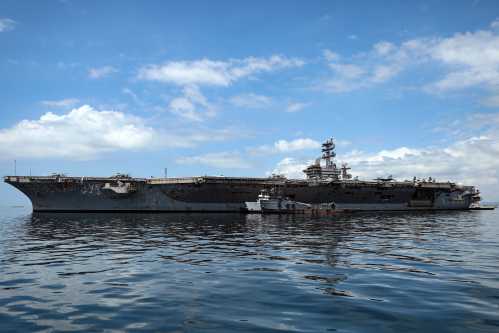
The military concerns also go beyond the matter of critical munitions. The diversion of American hardware away from the Indo-Pacific, including a carrier strike group and a battery of THAAD interceptors with associated radar, has some analysts worried. Moreover, there is no doubt that the Taiwan issue remains paramount for Xi. During the May summit with U.S. President Donald Trump, Xi flagged the island’s status as a possible flashpoint. “If handled poorly,” he reportedly said, “the two countries could collide or even enter into conflict, pushing the entire China-U.S. relationship into an extremely dangerous place.” Several years ago, Xi famously instructed his military to pursue plans that would give China the ability to conquer Taiwan by 2027, presumably even in the face of American military opposition.
Analysis
We share the serious concerns about munitions shortfalls for offensive as well as defensive weapons. And there’s no doubt that Beijing is watching all this with considerable interest. But will it really see a window of opportunity for an attack? Perhaps. Yet many factors point in the opposite direction. In the end, Xi deciding to risk great power war is far too momentous a choice to be reduced to calculations over weapons inventories alone, especially when superpowers with the strategic depth and resource bases of China and the United States are concerned.
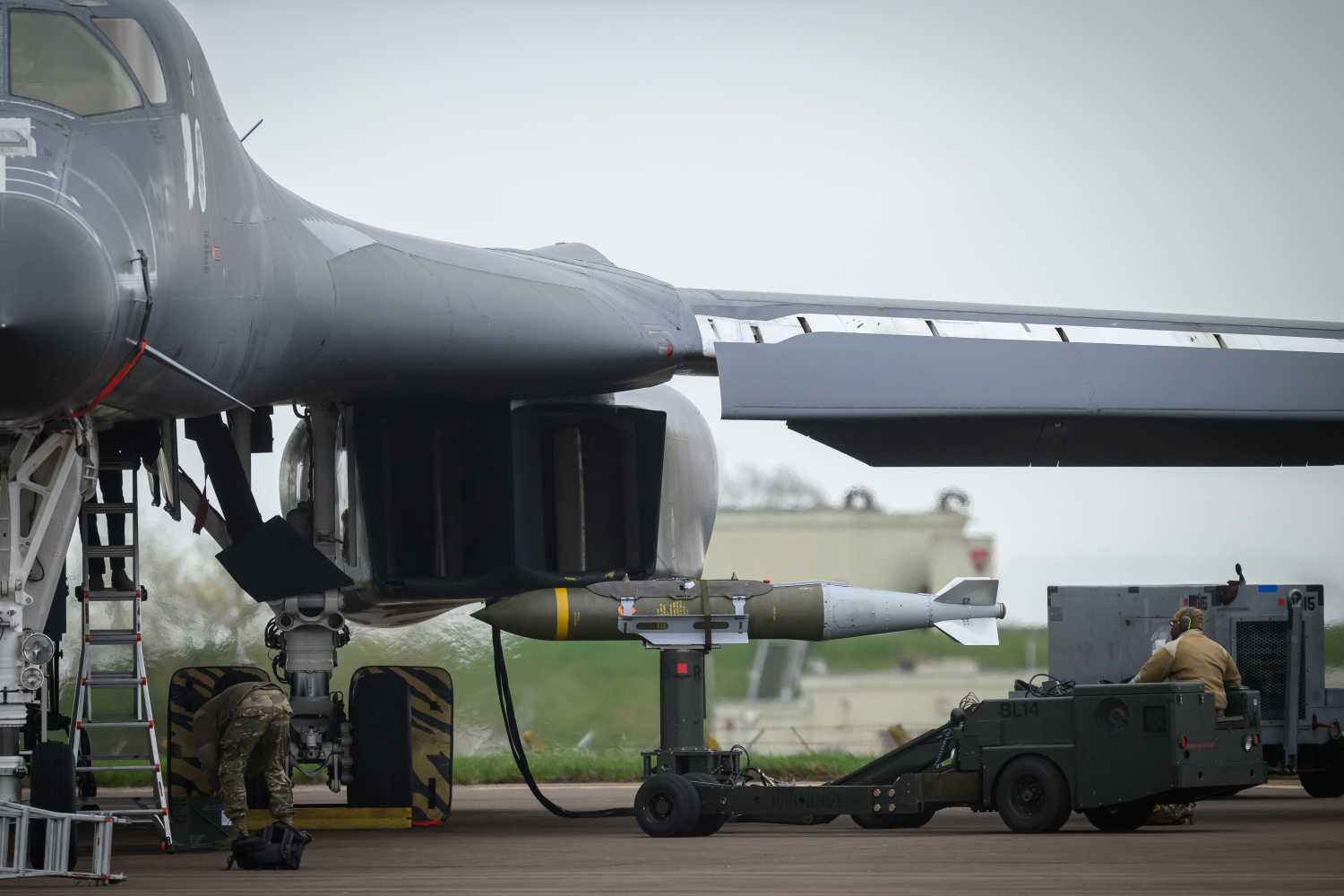
One crucial matter is the U.S. military’s successes in the Iran war. Together with Israel, the United States has severely degraded Iran’s leadership as well as its missile and drone capabilities. All of this could challenge any sense that a war over Taiwan with the United States would be an easy lift. The United States also retains many stockpiles of munitions that have not been heavily expended either against Iran or in Ukraine, including anti-ship missiles, torpedoes on submarines, weapons on anti-submarine aircraft, and shorter-range precision weapons like Joint Direct Attack Munitions (or JDAMs) that could be dropped by stealth aircraft on Chinese ships or land-based infrastructure—albeit at some risk to the aircraft themselves.
There are also broader issues of psychology and strategic calculation at play. For one thing, Trump forged ahead with strikes on Iran in the face of significant domestic constraints. Disagreements within the Republican Party about whether foreign interventions are consistent with an “America First” ideology, plus the issues of inflation and increased energy prices, top the list. Operation Epic Fury against Iran also follows Trump’s decision earlier in the year to conduct a special forces operation to arrest then-President Nicolás Maduro of Venezuela. All of this may signal to Beijing that Trump is willing to use hard power despite political risk. Earlier speculation that Trump is an isolationist no longer seems so plausible.
From China’s vantage point, any decision to take military action against Taiwan is likely to be influenced by factors that have little connection with Iran. One is whether Xi and his deputies are optimistic or pessimistic about China’s growth and the future balance of power. Closely tied to this is how Xi sees the odds of reunification with Taiwan short of war, which would certainly be China’s preference. Part of the calculation here turns on whether China’s efforts to support “patriotic pro-reunification forces” in Taiwan and oppose “separatists” are working, all of which will affect the urgency of pushing the unification issue with possible military means.
Of course, Xi must also worry that if he gave the green light to invade Taiwan tomorrow, the People’s Liberation Army might be ill-prepared. Recent purges raise questions about its readiness. This is particularly relevant if China’s plan is to conquer the island through direct amphibious assault. Any such decision would surely have to weigh such a venture’s daunting challenges and the huge costs of failure—not to mention the costs of success. After all, when the United States and the Allies carried out their masterful amphibious operations of World War II (and Korea) in the Pacific and Atlantic theaters, they dominated the proximate airspace and seas and did not have to worry about precision-guided weapons being fired at their assault vessels.
Even in technical military terms, there are lots of issues to consider beyond munitions stockpiles. Chinese officials would have to evaluate the risks to their reconnaissance and command-and-control systems in the event of war. They could not easily hit mobile targets they could not see, and the United States would surely seek to disrupt Chinese sensor-shooter networks. Then there is the matter of the danger of nuclear escalation in a context in which the United States still has considerable nuclear superiority over China—as well as a historical track record of being willing, for better or worse, to threaten nuclear brinkmanship in superpower crises. Even if such worst-case military scenarios can be avoided, there remains the risk of significant economic disruption that would dwarf what is resulting now from the Strait of Hormuz showdown.
The historical record is also relevant here. While opportunistic aggression is a real phenomenon, it has usually come about in the shadow of protracted and all-consuming conflicts. During World War II, Japan exploited “the defeat of the Netherlands, the fall of France and the anticipated collapse of the UK to advance into Southeast Asia.” More recently, Azerbaijan’s lightning offensive against the ethnic Armenian enclave of Nagorno-Karabakh in the fall of 2023 was facilitated in part by Russia’s war against Ukraine. As one report put it, “Russia, drained by the war in Ukraine, seemed incapable of acting as the indispensable power capable of knocking heads together.”
Policy recommendations
Naturally, it would be desirable that the conflict against Iran end as soon as possible, so long as that can be achieved consistent with American strategic interests. At the same time, production of key munitions should be accelerated, and greater surge capacity for future production should be developed. Although our concerns about the strategic implications of current shortages in magazine depth are not as acute as for some, we acknowledge that the issue is serious.
Key decisionmakers are clearly aware of the issue. The Trump administration’s budget request for fiscal year 2027 includes $100 billion for the defense industrial base, including $52.9 billion for critical munitions with the aim of enticing “new entrants by sending a clear demand signal to expand capacity and future scalable production, including the use of multi-year procurement contracts.” Some of this funding is to be provided through “mandatory funds”—generally not a preferred way of resourcing the armed forces, since the use of such funding reduces Congress’ often-useful role in the budgeting process. However, in this case, there is enough consensus on the basic objective that this unusual mechanism may be acceptable. In any case, even if Congress agrees and provides the money, experts suggest deliveries could still take months to years—which Secretary of Defense Pete Hegseth acknowledged at a public hearing.
Zooming out, even if China’s calculations vis-à-vis Taiwan are unlikely to be meaningfully influenced by U.S. military operations against Iran, the risk of opportunism on a smaller scale is a real concern. This could include China accelerating the pace of building artificial islands in the South China Sea, which some reports suggest has already happened, as well as increasing military exercises and intimidation in the region.
The United States cannot easily stop such activities, but it can continue and even accelerate its own efforts to diversify and further develop its network of military capabilities throughout the broader Asia-Pacific as a means of countering Chinese assertiveness and further strengthening deterrence. The United States also needs a broader effort to harden its own economy and strengthen its crucial manufacturing supply chains to ensure that Beijing would not enjoy escalation dominance in any future economic rivalry or conflict. These priorities must not be forgotten even as the Middle East, as usual, acts as strategic quicksand in potentially distracting the United States from other global priorities.
Authors


Related Content

-
Acknowledgements and disclosures
The opinions and views expressed are those of the author(s) alone and do not necessarily represent those of the U.S. Government, U.S. Department of War or its components, to include the Department of the Navy or the U.S. Naval War College.
The Brookings Institution is committed to quality, independence, and impact.
We are supported by a diverse array of funders. In line with our values and policies, each Brookings publication represents the sole views of its author(s).