
This piece is part of the “Blowback: How the Iran war may change the world” series, which features original analyses and policy recommendations by experts on the immediate and prospective long-term fallout from the 2026 Iran war.
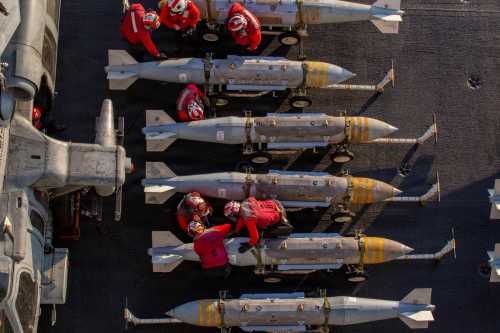
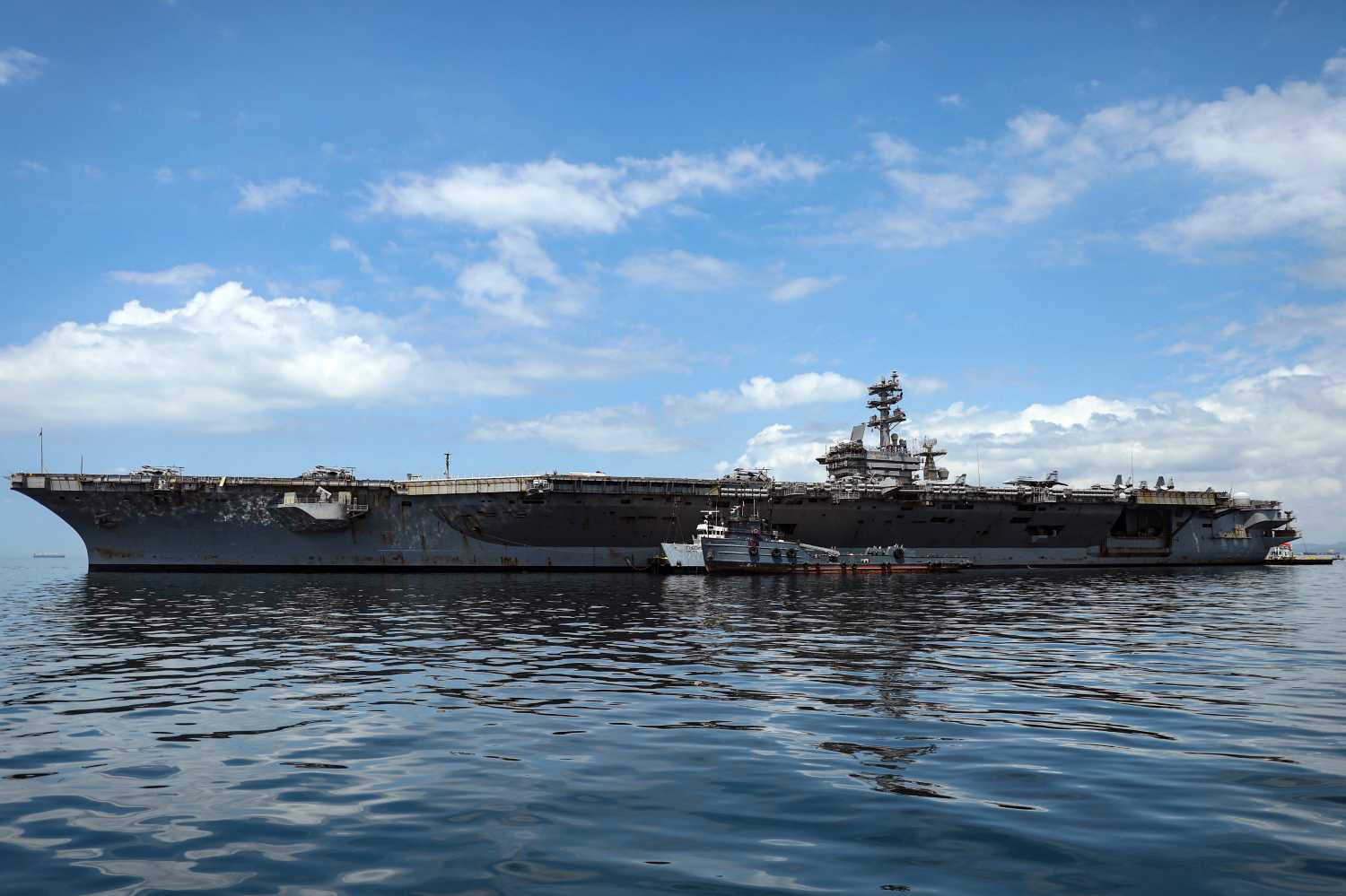
The first set of American strikes on Iran during Operation Epic Fury, prosecuted primarily by the U.S. Navy, were met with ebullient commentary about the sophistication of the military technology on display. Now, the situation looks different. After Iran responded by disrupting shipping through the Strait of Hormuz, a major chokepoint for global energy flows, President Donald Trump demanded Tehran reopen the strait and imposed a blockade on Iranian ports, in addition to ordering further strikes. Since Iranian attacks on shipping began in early March, U.S. forces have been unable to fully reopen the strait or demine it, while U.S. naval readiness in other theaters has been degraded. The conflict has revealed important military shortfalls in American naval power and added to strains within the U.S. alliance system. What’s more, it is part of a series of events that increasingly challenge the viability of the long-standing U.S. guarantee to the freedom of navigation, a major source of U.S. influence.
Background
This is not the first time that the U.S. Navy has had to tackle the disruptions in the Strait of Hormuz. In the early 1980s, the Iraqi invasion of Iran and ensuing war spilled into Hormuz, disrupting oil flows—the so-called “Tanker War.” In 1987, under growing pressure from Arab allies, U.S. President Ronald Reagan agreed to mount an operation to escort Kuwait tankers through the strait. Between July 1987 and December 1989, a U.S. naval Joint Task Force mounted Operation Earnest Will to this effect, as well as Operation Praying Mantis, which saw U.S. destroyers attack and sink an Iranian frigate, the IRIS Joshan. The U.S. Navy had not sunk an adversary ship since the end of World War II. It would not do so again until February 2026—as part of Epic Fury. On March 4, the frigate IRIS Dena was sunk by a U.S. submarine as it was returning to Iran from exercises off the coast of India.
There are important parallels, and even more important disparities, between the two episodes. Then as now, conflict spilling into the Strait of Hormuz disrupted oil flows, the United States declared that keeping commerce moving freely through the strait was essential to American purposes, the United Nations broadly condemned Iranian threats to the strait, and key allies rebuffed U.S. requests for military help. Wider strategic issues seemed to outweigh the oil question.
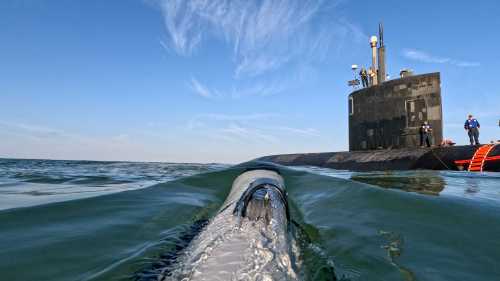
However, there were four essential differences. First, in the early 1980s, abundant oil supply kept prices low. Indeed, the global price of oil fell during the first phase of the Tanker War; market innovations outweighed geopolitical disruption. A sustained operation did not impact the price that U.S. consumers paid at the pump. Second, the primary beneficiaries of the free flow of oil were U.S.-allied Western economies; there was an essential strategic logic in guaranteeing its free flow. Now, the primary beneficiary is China (on volume), and Russia (on price), and the U.S. guarantee to the free flow of commerce at sea contains an inherent contradiction. Third, vitally, the United States could mount Operation Earnest Will in 1987 without drawing capabilities from the Atlantic or Pacific theaters, where the bulk of its 600-ship Navy was deployed; now, the operation has sucked capacity from every theater serviced by the roughly 280-ship Navy the United States currently operates. It has also badly degraded missile stockpiles, including an estimated 1,000 Tomahawk missiles, more than three years’ worth of production by the U.S. defense industry. Fourth, in 1980, seabed cables played a minor role in the U.S. and global economy and U.S. military communications; now, they are fundamental to both. Iran has threatened not just to control the flow of surface shipping through the Strait of Hormuz but also to levy a toll on data flows through cables along its seabed, something that the United States has understandably deemed unacceptable.
The current operation thus showcases a major contradiction inherent in contemporary concepts of the U.S. guarantee of freedom of navigation, as well as the limits of contemporary American naval power.
The wider picture
The crisis in the Strait of Hormuz is not the first in recent years to have these effects. Several recent episodes reveal a worrying phenomenon, namely the global spread of weapons technologies that are making global shipping vulnerable. In the Black Sea, Ukraine’s tiny navy used autonomous surface and air vehicles and clever tactics to effectively deny the sea to the far-larger Russian navy. On the Red Sea, the Houthis, a nonstate armed group in one of the world’s poorest countries, have used Iranian technology and local manufacturing to generate a supply of low-cost, medium-range guided missiles that disrupted global commercial shipping. In response, the United States and several European navies deployed sizeable forces to those waters to protect the container and bulk ship traffic that traditionally sailed that route. Operations in the Red Sea demonstrated the effectiveness of U.S. naval defense systems, but at massively outsized cost relative to the threat—in some cases, $2 million missiles being used to shoot down $20,000 drones. Added to this, a series of incidents in the Baltic, Irish, and Norwegian seas have highlighted the vulnerability of seabed infrastructure to accidental or (probably) deliberate damage. This is an infrastructure that has grown tremendously in both scale and consequence.
And therein lies the core problem. Throughout the post-Cold War period, the world economy has increasingly wrapped itself around the axle of maritime flows, and the U.S. economy has done the same. The scale is impressive: global shipping accounts for more than 80% of all trade by volume, more than two-thirds of all flows of fossil fuels, 90% of the flow of metals and minerals, and roughly 60% of the world’s supply of food. The revolution in low-cost shipping is the primary driver of extensive globalization, which in turn has been the primary source of global growth and poverty reduction, for more than four decades. All while seabed cables now account for a whopping 99% of intercontinental data flows, tens of trillions of dollars in daily financial flows that power the U.S. economy, and the lion’s share of U.S. military communications.
But while the U.S. and global dependence on maritime flows has increased markedly, the overall scale of Western naval power has declined. Those declines have been more moderate in the United States than in Europe. (Japan is an outlier.) This news is bad enough without acknowledging that China has moved in the other direction. Beijing has poured resources into its shipping industry, fleet, and the supporting technologies and sciences, emerging as the world’s largest navy by hull count, the world’s largest commercial shipbuilder, and arguably the world’s most comprehensive maritime power. Andrew Erickson, who leads the Naval War College’s China Maritime Studies Institute, convincingly depicts Xi Jinping as “the world’s foremost navalist statesman today and the greatest navalist head of state since World War II.”
In sum, sea-based flows are up, Chinese naval power is up, the capacity of weaker states to disrupt those sea-based flows is up, and Western naval power is down. That is not a good picture for the United States.
So, what now?
The U.S. decision to attack Iran, with its predictable (and widely predicted) consequence of disrupting the Strait of Hormuz, did not trigger the erosion of the U.S. role in freedom of navigation, but it has accelerated that decline. This is an ironic outcome for the Trump administration, which has elevated U.S. naval and maritime power as a strategic priority and made the restoration of American shipbuilding and the expansion of U.S. naval power signature initiatives.
Credit where credit is due: the Trump administration has shown seriousness of purpose on shipbuilding and maritime power. The chief of naval operations’ “U.S. Navy Fighting Instructions” and the associated shipbuilding plans have been positively reviewed in expert commentary, though with a notable caveat regarding the proposed new battleship. Separately, Steve Carmel, the president’s appointee to the Department of Transportation’s Maritime Administration, has made a strong case to Congress about moving beyond naval power toward a wider approach to rejuvenating American maritime industries. The Pentagon has also put its money where its mouth is: the administration’s budget request to Congress contains significant new monies to fund both naval and commercial shipbuilding. New demining systems, combining naval air, surface, and autonomous sub-surface vehicles, are soon to be deployed, and the Pentagon’s ambitious procurement reforms are showing promise.
Increasing the U.S. Navy’s size and revitalizing the moribund U.S. shipbuilding industry are essential parts of reversing the United States’ problematic post-Cold War maritime trends. They will not be enough.
The potential wartime naval challenges posed by China’s People’s Liberation Army (PLA) Navy are at least as big as those posed by the Soviet navy at its height, arguably considerably bigger. The U.S. Navy must contend with these at the same time it also meets three additional threats. Those include a serious Russian threat in the undersea space; a growing small state/nonstate threat to freedom of commerce; and both state and nonstate threats to vital and vulnerable seabed infrastructure.
To meet this diverse challenge, the Navy will need both a new strategy and new capacity. As Peter Dombrowski and I will argue in greater depth in a forthcoming piece on maritime strategy, sustaining the U.S. role in this domain may require revisiting the debate over a “high-low” mix of capabilities, as it did toward the end of the Cold War. This would combine high-end systems designed to fight a peer competitor with lower-end systems suited for freedom of navigation, counter-piracy, sea-lane protection, and related tasks. The Navy will need clear priorities at both the high and low ends. For freedom of navigation operations, it will need to fast-track new shipborne counter-drone systems—as will European, Middle Eastern, and North Asian navies—and prioritize the proposed new class of frigates over other ship programs. Better still, given a series of recent ship design failures, it could simply update the proven, effective Arleigh Burke-class destroyer design, for which U.S. shipyards are currently optimally configured.
At the high end, as both the Biden and Trump administrations realized, the clear priority has to be the submarine force.
New arrangements?
Of course, the United States is far from the only beneficiary of the flow of energy, commercial goods, and data across the world’s oceans and seas. And even the most rapidly rebuilt U.S. Navy may be incapable of serving the role of global guarantor of those flows. New burden-sharing or regional arrangements may soon prove necessary.
To that end: in the Strait of Hormuz, a proposed initiative by the U.K. and France to help the United States—alongside German offers to send demining ships—appears welcome, but it is designed to work only once Iran no longer poses a threat to transit. As Secretary of State Marco Rubio correctly stated in remarks to the press following a May 22 NATO Foreign Ministers meeting in Sweden, it’s a welcome but insufficient initiative. What is needed is a Plan B to secure the Strait of Hormuz even if the fighting continues. In fact, it is arguably a Plan C: Plan A would have been to avoid starting the war without adequately preparing for the inevitable Iranian response. In the longer term, the Quad (comprised of Australia, India, Japan, and the United States) could also be a useful mechanism for burden-sharing. Here, though, we will start to see the real costs of the Trump administration’s frequent insults and frictions with allies, which may limit potential efforts to coordinate collective responses.
From an American strategic perspective, it is far preferable for such arrangements for the Strait of Hormuz to be established and led by the United States, rather than emerge in the wake of U.S. failure or insufficiency. China’s PLA—the world’s largest navy—does not want the job, at least not yet. The PLA Navy would be hard-pressed to mount sustained escort operations at scale, notwithstanding how hard it has been practicing through its counter-piracy missions in the Indian Ocean. But China’s economy still depends wholly on the import of fossil fuels, as well as the import of ferrous metals critical to its naval and commercial fleets. Sustained disruption to maritime trade flows may force Beijing to advance its thinking.
In 1987, Reagan’s primary motivation for authorizing Operation Earnest Will was to prevent the Soviet Union from stepping in to fill the gap after Kuwait requested naval escorts from both Moscow and Washington. Reagan’s secretary of defense, Caspar Weinberger, knew full well how much leverage the United States gained by dint of its role in the Persian Gulf. Washington has much to gain from preserving freedom of navigation at sea, and much to lose if it fails either to sustain that guarantee or shape a credible set of allied or regional supplements.
Related Content
-
Acknowledgements and disclosures
The author would like to thank Ryan Beane for his research support on this piece.
The Brookings Institution is committed to quality, independence, and impact.
We are supported by a diverse array of funders. In line with our values and policies, each Brookings publication represents the sole views of its author(s).