This piece is part of the “Blowback: How the Iran war may change the world” series, which features original analyses and policy recommendations by experts on the immediate and prospective long-term fallout from the 2026 Iran war.
Executive summary
The U.S. war with Iran has exposed a widening gap between Washington’s stated prioritization of the Indo-Pacific and the policies it is pursuing. The diversion of military resources to the Middle East, growing economic pressure, and the increasingly transactional treatment of allies and partners in Asia are raising doubts about the durability of U.S. regional leadership. On the Korean Peninsula, scaled-back military exercises risk weakening deterrence, while the lessons Pyongyang draws from Iran’s experience may reinforce its conviction that nuclear weapons are essential to regime survival. The danger, therefore, is not necessarily a reversal of the U.S. pivot to Asia, but a gradual erosion of the capabilities, credibility, and partnerships needed to sustain it.
Background
For more than a decade, successive U.S. administrations have declared the Indo-Pacific a central priority for America’s long-term security and prosperity. The second Trump administration is no exception. Its 2025 National Security Strategy emphasizes maintaining a favorable balance of power in Asia, while the 2026 National Defense Strategy identifies deterring China in the Indo-Pacific as a central priority.
The war with Iran, however, has exposed an increasingly consequential gap between U.S. strategic priorities and its actions. Critics have described the conflict as contributing to a “reverse pivot” away from Asia. U.S. military assets, including precision-guided ammunition and an aircraft carrier, have left the Indo-Pacific for the Middle East. The conflict is also depleting global munitions supplies, raising concerns among Asian allies as the United States cancels joint military exercises with South Korea and delays a nearly $30 billion approved arms sales to Taiwan. At the same time, U.S. tariffs, the dissolution of the U.S. Agency for International Development, and retreat from regional economic engagement have weakened other pillars of American influence.
But the problem is not necessarily Washington’s abandonment of Asia. China remains the United States’ principal long-term strategic competitor, and the administration’s own strategy documents recognize this reality. The deeper problem is strategic incoherence. U.S. officials continue to identify Asia as a priority while pursuing policies that make sustaining that priority increasingly difficult.
The costs extend beyond military assets
The most visible problem is in the military domain. Although formidable, American power cannot be everything, everywhere, all at once. Aircraft carriers, missile defense systems, precision-guided munitions, bombers, logistics networks, and trained personnel cannot simply be duplicated when simultaneous crises occur.
The Iran war has demonstrated how quickly regional contingencies can consume capabilities intended to support a global strategy. This matters in Asia because deterrence depends not simply on aggregate U.S. military power, but on an adversary’s assessment that Washington possesses both the capability and political willingness to employ it during a crisis. Adversaries, such as Beijing and Pyongyang, are not just watching to see whether the United States succeeds or fails in Iran, but also what the war reveals about American capacity to manage multiple contingencies simultaneously.
The consequences are also political. Allies, such as Japan, South Korea, Australia, and the Philippines, have been encouraged to invest more heavily in their own defense. Asking allies to assume greater responsibility is reasonable. But demands for greater burden-sharing become harder to reconcile with policies that raise questions about Washington’s own commitments to the region or suggest that alliances are primarily transactional arrangements.
For Southeast Asian countries, the problem is different but equally significant. Many already seek to avoid choosing between Washington and Beijing. A United States consumed by another Middle Eastern war while simultaneously restricting trade and imposing economic costs on regional partners makes hedging more attractive. China does not automatically inherit American influence when Washington falters. However, Beijing benefits when countries question whether the United States can offer a durable combination of security, economic opportunity, and political reliability.
The view from the Korean Peninsula
The Korean Peninsula further illustrates why the Iran war’s consequences extend beyond the diversion of American military resources, as alliance management has also become entangled with the Iran conflict. President Donald Trump linked the recent reduction of the Ulchi Freedom Shield exercises between U.S. and South Korean forces partly to tensions over South Korea’s unwillingness to support the U.S. war effort. Treating alliance readiness as leverage over an ally’s position toward an unrelated conflict risks weakening the very deterrence Washington is trying to preserve.
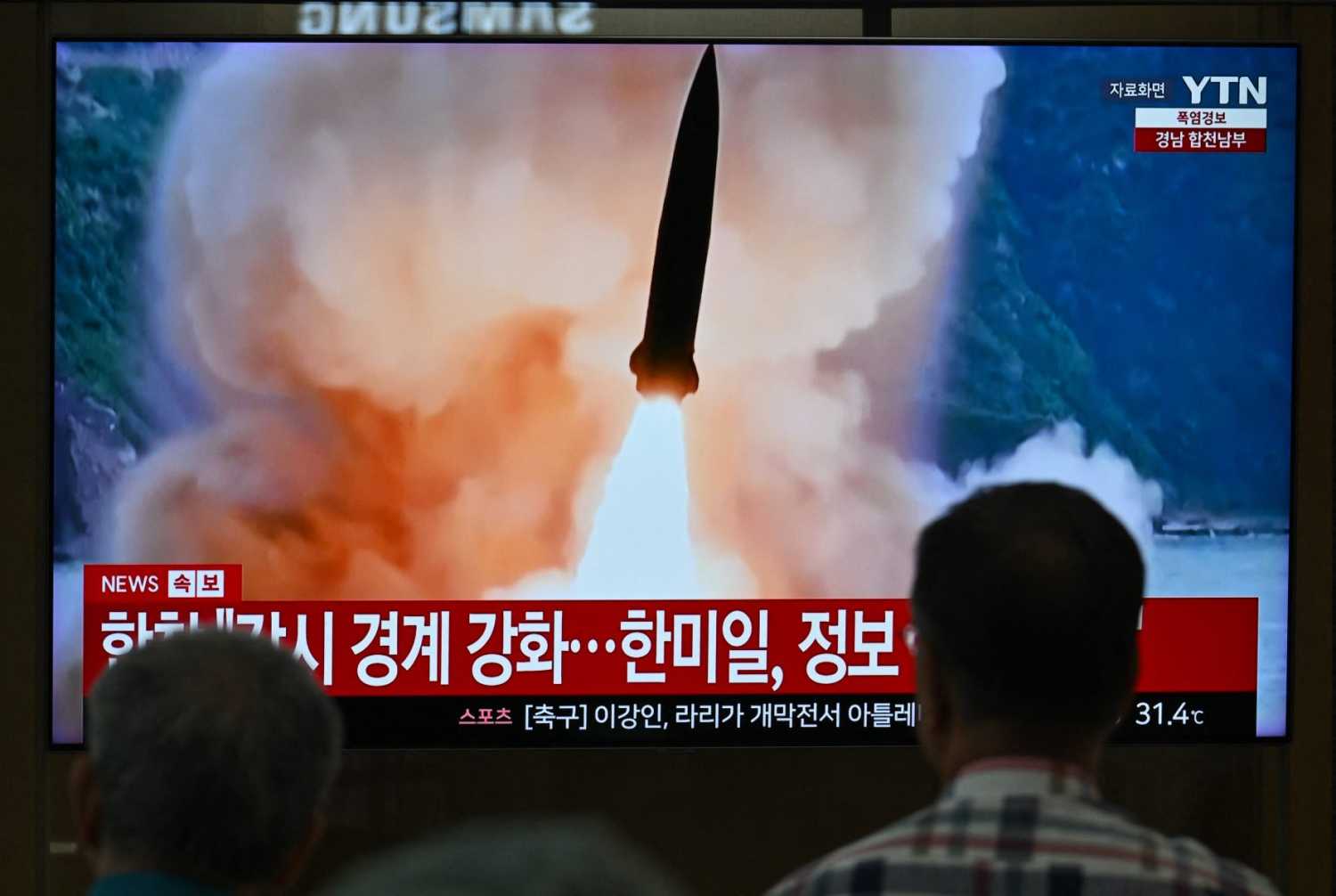
Another enduring impact may be the lessons North Korea draws from Iran. For decades, Pyongyang has justified its nuclear program as necessary to prevent the same fate as governments, such as those in Iraq under Saddam Hussein and Libya under Moammar Gadhafi. Iran adds another data point. From North Korea’s perspective, the contrast is stark. Iran possesses significant missile capabilities and a budding nuclear program, but not an operational nuclear arsenal capable of credibly threatening the United States or its allies with nuclear retaliation. North Korean leaders may thus interpret the Iran war as further evidence that nuclear weapons are essential to regime survival, reinforcing the Kim regime’s firm rejection of denuclearization.
The lessons of Iran also come at the operational level. North Korean military planners will study the vulnerability of Iranian leadership and command structures, air defenses, missile launchers, underground facilities, and communications networks. They are likely to place even greater emphasis on leadership survivability, hardened and dispersed command-and-control systems, mobile missile launchers, larger missile inventories, drones, air and missile defenses, and the ability to retaliate after absorbing an initial attack.
This creates an uncomfortable paradox for Washington. A war intended to prevent Iran from acquiring nuclear weapons may not only strengthen Tehran’s resolve to preserve its nuclear program, but also reinforce North Korea’s determination to sustain, if not expand, its own nuclear program. Moreover, if Iran ultimately decides to pursue nuclear weapons, it may look to North Korea as a model.
Reconnecting strategy and resources
The United States cannot simply withdraw from every crisis outside of Asia. But prioritization requires choices. If Washington believes, as its own strategy documents state, that preserving a favorable balance of power in the Indo-Pacific is a vital national interest, it must protect the resources and relationships necessary to accomplish that objective. Three correctives are particularly important.
First, Washington should establish clearer limits on the military resources allocated to Iran and accelerate replenishment of munitions and missile defense inventories relevant to Indo-Pacific contingencies. An Asia strategy, including deterring China, cannot succeed if the capabilities on which it depends are continually diverted elsewhere.
Second, the administration should reassure Indo-Pacific allies that commitments to their defense will not become bargaining chips in disputes over their participation in outside military operations. In the Korean context, Washington should insulate alliance readiness and extended deterrence from disagreements with Seoul over Iran. If joint exercises need to be temporarily curtailed, Washington and Seoul should at least coordinate how they might publicly message scaled-down exercises.
Third, Washington should take visible steps to demonstrate that the diversion of resources to Iran is temporary rather than the beginning of a broader strategic retrenchment from Asia. Congress could take a stronger stand, withholding additional spending for the war in Iran unless the Trump administration presents a coherent exit strategy. As operational demands permit, the United States should restore key naval and air assets to the Indo-Pacific, maintain the tempo of exercises with allies and partners, and sustain senior-level participation in regional forums.
The Iran war has not necessarily reversed the pivot. The United States still retains powerful military capabilities, strong allies, and an extensive network of regional partnerships. More importantly, the Trump administration continues to identify China as America’s long-term pacing challenge and the Indo-Pacific as the priority theater. The danger of the Iran war may therefore be less a formal American retreat from Asia than the gradual erosion of the credibility, capabilities, and partnerships required to sustain U.S. leadership there.
Author

Related Content

-
Acknowledgements and disclosures
The author would like to thank Hanna Foreman for research assistance, Adam Lammon for editing, and Rachel Slattery for layout.
The Brookings Institution is committed to quality, independence, and impact.
We are supported by a diverse array of funders. In line with our values and policies, each Brookings publication represents the sole views of its author(s).