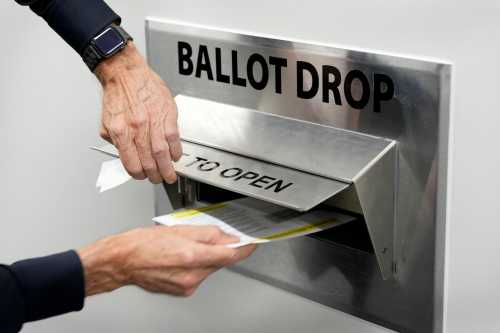
Following a historic midterm election victory that gives Democrats control of the House, the Senate, and numerous state legislatures in January 2027, President Donald Trump’s final two years in office may bring greater foreign policy risks and unpredictability. For some U.S. allies, such as South Korea, however, the “blue wave” in Congress is likely to offer a mix of relief, opportunities, and challenges. Despite U.S. officials praising the country as a “model ally,” tensions had been brewing for months, with both governments acknowledging “turbulence” in the alliance in the run-up to the election. A new Democratic-controlled Congress could give the United States and South Korea an opportunity to narrow these gaps in their relationship.
Diagnosing the problem
At first glance, it may have been difficult to spot friction in the alliance. Bilateral summits held between Trump and South Korean President Lee Jae-myung in August and October 2025 were hailed as a success, with the two leaders developing a personal rapport. South Korea’s pledge to increase defense spending to 3.5% of GDP and invest $350 billion in the United States, alongside U.S. support for South Korean development of nuclear-powered submarines, featured prominently in the November 2025 joint fact sheet and helped define the early Trump-Lee relationship.
Yet several “irritants” have hindered progress on the commitments contained in the joint fact sheet. From Washington’s perspective, Seoul has moved too slowly and cautiously on fulfilling its $350 billion investment pledge. Although $150 billion has been earmarked for shipbuilding, the two governments spent months negotiating the disbursement process and selecting the initial investment projects. It was not until September 30, 2026, that the Trump administration announced the first South Korean investments in liquefied natural gas (LNG) and nuclear energy projects in Texas. Washington has also repeatedly complained about Seoul’s discriminatory practices against U.S. companies through non-tariff and regulatory barriers in the digital sector.
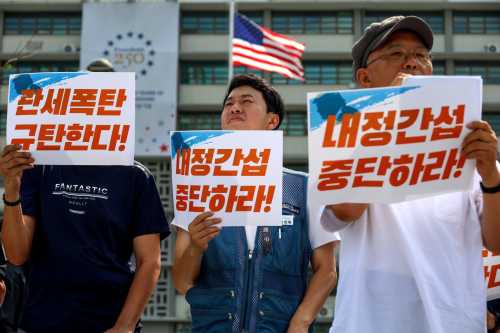
On security, the United States took the unusual step of limiting intelligence sharing after South Korea’s minister of unification publicly identified a North Korean uranium enrichment site that Washington had considered classified. For its part, the Lee government has expressed frustration with the slow pace of discussions on nuclear-powered submarines (SSNs) and potential revisions to the Section 123 agreement governing U.S.-South Korean civilian nuclear cooperation that would enable Seoul to develop a full nuclear fuel cycle. Disagreements over the timing of the transfer of wartime operational control (OPCON) have also become a point of friction, with Seoul seeking to complete the transition as early as 2028. Meanwhile, Trump’s abrupt curtailment of U.S.-South Korea joint military exercises in late August and his frustration over the Lee government’s tepid support for U.S. operations in the Middle East also took South Koreans by surprise.
None of the aforementioned issues alone will make or break the alliance. But the confluence of economic and security irritants, further exacerbated by a misinterpretation of alliance priorities, threatens to derail bilateral relations. A new Democratic-led Congress will not necessarily resolve tensions. Nor will it change Trump’s approach toward alliances. Although Congress can pass bills, issue subpoenas, withhold appropriations, and conduct oversight, it may not be able to constrain Trump’s foreign policy gambits or unilaterally overturn his policies.
Moreover, while the elections clearly signal a repudiation of Trump, they also emphasize widespread public concerns over issues such as data center expansion, artificial intelligence (AI), the Iran war, and others. South Korea holds a stake in each of these areas, especially on AI and defense cooperation. The election outcome may therefore create new challenges for the alliance, at least initially, rather than usher in a reset. But additional congressional oversight may help ensure that South Korean investment projects benefit the local community, remain profitable for both countries, and secure their long-term viability.
Investment and trade
On economics, Trump will likely increase U.S. pressure on Seoul over its investment commitments and tariffs. Congress is also expected to hold hearings and investigate the legality of the investment deals. Democrats are unlikely to strike them down, given the high stakes for both countries. However, questions over their costs and whether certain companies received preferential treatment from the administration may emerge amid pressure for heightened transparency on corruption-related issues.
Meanwhile, South Korean companies may try to delay investments, believing that they only need to run out the clock on Trump’s final two years in office. This approach could risk provoking the Trump administration’s ire. But congressional oversight itself may also slow the pace of Korean investments, giving Seoul and Washington more time to identify projects that bring long-term benefits for Americans and remain profitable for both countries.
At the state and local levels, the backlash against data centers could disproportionately impact South Korea, given its numerous investments in related industries. Although South Korean companies are not investing in the data centers themselves, the opposition to their expansion may prompt new regulatory obstacles, delays, and reductions in demand for energy and domestically produced semiconductors, which are two major sources of Korean investments. This risk is most pronounced in Texas and Georgia, where Governors-elect Gina Hinojosa and Keisha Lance Bottoms, respectively, have pledged to suspend the construction of new data centers. Changes in state leadership may require South Korean companies to prioritize investments with wide bipartisan appeal, such as LNG and nuclear energy in Texas, automotives in Georgia, and shipbuilding in Pennsylvania.
Neither the Trump administration nor Congress is likely to dial down pressure against Seoul on the issue of discriminatory treatment toward U.S. platform companies, especially as the Korea Fair Trade Commission continues to press the National Assembly to pass the Online Platform Fairness Bill. Although Republicans have been more vocal to date, fair treatment of U.S. companies abroad may face bipartisan scrutiny, with both parties examining South Korea’s protectionist stance toward U.S. businesses and exports, and the Trump administration’s response to the digital trade issues within the relationship.
Assessing the security implications
A Democratic-controlled Congress may influence the path forward for two of Lee’s major security policy goals: the transfer of OPCON and SSNs. Securing OPCON from Washington may become more complicated if Congress imposes new funding restrictions or reporting requirements or conducts greater oversight over U.S. military readiness or force posture. Democrats are expected to scrutinize any major changes to U.S. force structure and personnel across the region, especially those affecting U.S. Forces Korea, combined exercises and readiness drills, and redeployments of defense assets from the Indo-Pacific to other regions.
South Korea’s acquisition of SSNs may also face additional headwinds as senators concerned about non-proliferation may look to halt or condition Seoul’s civil uranium enrichment and fuel reprocessing rights. Such capabilities have never been approved for both military and civilian purposes. Long-term SSN cooperation may also depend on whether Congress revises the Section 123 agreement to authorize military uses of U.S.-supplied nuclear materials, technology, and byproducts.
Congressional efforts to rein in Trump on the Iran war could alsoend the war in Iran by limiting funding indirectly affect South Korea. Following the midterm elections, Lee took steps to widen South Korean anti-piracy operations in the Gulf of Aden, including by dispatching minesweeping capabilities. Although framed as a measure to protect South Korean interests, the deployment of additional naval assets to the Middle East may mollify Trump’s earlier criticism that Seoul was providing insufficient support for U.S. military operations in the region. As Trump wrote on Truth Social, “I recently asked the President of South Korea if they would like to join us in the Denuclearization of the Islamic Republic of Iran, and they said, ‘No thanks!’” A congressional push to settle the conflict with Iran would further reduce U.S. pressure on Seoul.
Finally, on North Korea, Trump has a strong desire to meet Kim Jong Un before the end of his presidential term, as he seeks to achieve some legacy-defining achievements in his lame duck period. Although a Trump-Kim meeting in 2026 appears unlikely, Lee would welcome renewed U.S.-North Korea diplomacy, notwithstanding the risk that Trump could make a deal without consulting him, corroborating South Korean fears of “Korea passing.”
Onward with alliance modernization
The midterm election results provide Washington and Seoul with opportunities to address misperceptions and narrow existing gaps in their alliance. Domestic political developments in both countries have exacerbated these misunderstandings.
For instance, Trump officials continue to inaccurately characterize the Lee government as “pro-China.” Seoul’s actions, including large economic investments in the United States and its contributions to alliance burden-sharing, suggest that it remains committed to the bilateral relationship. Yet, the Lee government’s myopic focus on OPCON transfer and inter-Korea engagement may be leaving U.S. policymakers with the impression that South Korea remains less committed to regional deterrence.
Both governments ultimately want to strengthen the U.S.-South Korea alliance. The arrival of new faces in Congress and state legislatures this January allows an emerging generation of leaders from both parties to develop a better understanding of how alliances, especially with South Korea, are indispensable for ensuring American security and prosperity in this current moment.
Authors


Related Content
The Brookings Institution is committed to quality, independence, and impact.
We are supported by a diverse array of funders. In line with our values and policies, each Brookings publication represents the sole views of its author(s).


Commentary
Why the midterms matter for the US-South Korea alliance
November 20, 2026