Iran
The strategic aftershocks of Trump’s Iran war

The Brookings Foreign Policy program is the leading center of policy-relevant scholarship exploring the major challenges to international peace and security.
The Brookings Foreign Policy program is the leading center of high-quality, policy-relevant scholarship advancing actionable solutions to the major challenges to international peace and security. Brookings Foreign Policy scholars engage in in-depth, nonpartisan research and analysis aimed at informing policymakers and the public debate and developing concrete ideas for addressing the world’s toughest problems.
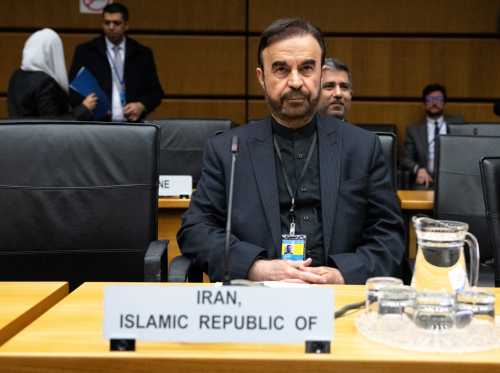
Suzanne Maloney appeared on “The Ezra Klein Show” to explain why Iran believes it has the upper hand in the war.

Philip Gordon joined the “Rachman Review” podcast to analyze the consequences of the war in Iran for the U.S. and its allies.
Tanvi Madan joined Carnegie’s Grand Tamasha to discuss the trajectory of Indian foreign and trade policy under the second Trump era.
Energy markets are inherently global, and there is no possibility of insulating the U.S. from the economic damage that is already occurring and will become exponentially worse if the..."
Philip Gordon appeared on Tim Miller’s “The Bulwark” podcast to discuss the state of the war in Iran and President Trump’s cycles of threats and retreats.
Mireya Solís joins Mira Rapp-Hooper on the Asia Group’s “What Comes Next” podcast to discuss Japanese Prime Minister Sanae Takaichi’s summit with President Trump and what Japan wants...

Mireya Solís joins Eye on Korea to break down the upcoming U.S.-Japan summit and its ripple effects across the Indo-Pacific.
Suzanne Maloney spoke on MS NOW about Iran’s strikes on the Strait of Hormuz and Joe Kent’s resignation from the National Counterterrorism Center.
Suzanne Maloney joined “Compass Points” on PBS News to discuss the U.S. war in Iran and the future of the Iranian regime under the new supreme leader Mojtaba Khamenei.
Philip Gordon appeared on “The Contrarian” podcast to explain why military-imposed regime change doesn’t work and why Iran may not give up the fight.
2026
2026
2026