This piece is part of a series titled “Between dependence and delay: Chinese investment and America’s clean energy future” from Brookings’s John L. Thornton China Center.
It is widely accepted that there is some level of risk when it comes to accepting foreign investment from a strategic competitor like China. Yet not all risks are equal: some should be avoided outright, while others may be manageable with the right policy safeguards.
In this second conversation of the series, Mary Gallagher moderates a discussion with Joanna Lewis, Josh Cartin, and Kyle Chan. They examine where meaningful red lines on Chinese investment in the U.S. clean energy sector could be drawn; where some degree of dependency on Chinese inputs may be unavoidable; and how policymakers can design guardrails precise enough to manage security risks and reduce long-term dependencies without unduly constraining access to the technologies and partnerships needed to meet energy demands and sustain economic growth.
The participants agreed that Chinese investment in U.S. clean energy involves layered risks but differed on which risks can, or should, be managed and on how meaningful the potential benefits are.
What do we mean by 'security risks' in this context?
Mary E. Gallagher
Thank you all for joining us for the second session in our series, examining Chinese investment in U.S. clean energy sectors. I’m Mary Gallagher, the Marilyn Keough Dean of the Keough School of Global Affairs at the University of Notre Dame and a nonresident senior fellow at The Brookings Institution.
In our first conversation, we explored the central tension in this debate: how to balance the speed and scale required for energy deployment with concerns about strategic dependence and security risk. Today, we’re going to move from that high-level trade-off to a more precise question: when we talk about risk, what exactly do we mean?
Are we concerned primarily about supply chain disruptions, cyber and infrastructure vulnerabilities, long-term technological dependence on China, or political backlash that could undermine projects altogether? Not all risks are equal, and not all require the same policy response. Our goal today is to better understand where meaningful red lines should be drawn and where the risks may be manageable with the right guardrails in place.
The stakes are significant. How we define risk will not only shape U.S. national security and economic competitiveness, but also the trajectory of the energy transition itself.
I’m joined today by an outstanding group of experts to help us think through these questions. Josh Cartin is a partner at the strategic intelligence firm TD International and a nonresident senior fellow at the Atlantic Council. Joanna Lewis is a professor of energy and environment at Georgetown University’s School of Foreign Service. Finally, Kyle Chan is a fellow at the Brookings China Center.
Let me start off with you, Josh. When we talk about security risks in the context of Chinese investment in clean energy, are we talking about data access, grid vulnerability, cyber risk, supply chain disruption, or long-term economic dependency? Could you sketch out a worst-case scenario and contrast it with a more manageable one?
Josh M. Cartin
Mary, it’s a real honor to be with such an esteemed panel. This is a very worthwhile discussion, and I think your framing is exactly right. You charted three risks. First, what you described as “hard” security risks, including cyber threats and disruption. Second, economic dependence, and third, supply chain risk. I would say economic dependency and supply chain risk are related, but there’s no bright line between these areas. They all feed into an overall strategic risk.
The U.S. political, national security, and defense enterprises are becoming more literate on the hard security risks associated with cyber intrusions, supply chain attacks, and the dangers posed by transmission devices in a 21st-century connected economy. It’s very clear, and almost not arguable from my perspective, that hostile, adversarial entities should not have access to transmission devices. And, unfortunately, the People’s Republic of China (PRC) national security enterprise has policies in place that effectively grant it unlimited access to Chinese technology firms by law, including those engaging in overseas trade.
There will be more or less complete decoupling in critical technologies that involve the transmission of information that poses security risks.
I think that, regardless of our perspectives on this, there will be more or less complete decoupling in critical technologies that involve the transmission of information that poses security risks. That could mean a security risk to actual systems, or it could mean a security risk to personal data and things like that.
So, given the current strategic paradigm between China and the United States and governance paradigms on both sides, it’s hard to see Chinese companies participating in anything involving both transmission devices and critical infrastructure.
I’m much more interested in the other two pillars of your question, supply chain risk and economic dependency, and they’re both related. I would note that the definition of critical infrastructure is expanding to include IT infrastructure, energy infrastructure, and other things like health infrastructure. We’ve seen in recent years how excessive dependency has led to real social disadvantages for the United States.
We have to look at the energy sector as among the most critical of critical infrastructures. The risk of a country, or companies at the behest of their government, deciding not to provide equipment, not to provide servicing, or not to grant licensing to a critical infrastructure system is a very strong risk. Unfortunately, the PRC has proven over several years to be willing to use economic leverage in that way.
On the supply chain, it’s a similar issue. China is already demonstrating a willingness to innovate new ways of shutting down supplies of certain materials deemed necessary or advantageous for whole economic sectors. We just can’t accept that risk when it comes to critical infrastructure. For me, the supply chain and economic dependency risk is perhaps less acute than the so-called hard security risks, but definitely more of a strategic risk over the long term.
The main concern I had when I was in government, looking at some of these issues, was what I would call a market risk. What risk does the participation or leadership of PRC companies in a particular foundational economic segment pose to the normal market functioning of that segment?
And unfortunately, again, because of the PRC’s unique political-economic composition, I really do not see PRC companies as normal market participants. It doesn’t mean they’re bad people. It doesn’t mean they’re not doing good, even innovative, work. It just means that in their system, they can’t be normal market participants, and therefore, their participation or leadership in foundational economic sectors, particularly critical infrastructure sectors, is a problem.
Are there areas of manageable risk?
Mary E. Gallagher
I’m not seeing a lot of areas for manageable risk, right? Based on your response, Josh, most areas are too risky, and everything bleeds into each other toward national security risk.
Josh M. Cartin
Now I’ll give you a faster answer. Dumb hardware, or dumb commodities that can play a role in supplying fundamental components for critical infrastructure, satisfies the question of hard security danger. We probably don’t need to worry about dumb components.
It does still pose a threat to the supply chain and compounds the economic dependency problem. However, that problem can be resolved if U.S. consumers of these components have duplexed, or dual-sourced, supply chains built up. So, there is room for some economic participation by PRC companies in dumb hardware, but only if we have duplexed purchasing programs in place.
Are supply chain disruptions or cyber and infrastructure vulnerabilities the greater concern?
Mary E. Gallagher
Thank you. Joanna, a similar question from the perspective of the power sector and climate deployment: Are we more concerned about supply chain disruptions—that is, the ability to obtain critical components—or cyber and infrastructure vulnerabilities of the sort Josh just described, such as risks related to inverters or software control systems?
Joanna Lewis
Thank you for the question, and I’ll echo Josh that it’s great to be part of this panel and this really timely discussion. I think people are concerned both about supply chain disruption and broader cyber and infrastructure vulnerabilities.
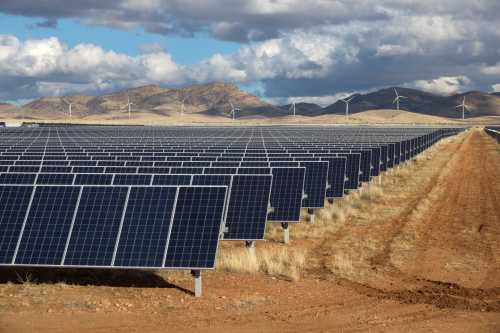
I’ll stay in the supply chain space. The concern in the United States is not just disruption, but competition, right? Because China really dominates global clean energy supply chains. It controls over 80% of manufacturing for solar, wind, and battery technologies. These are the three key areas that we need for a low-carbon transition.
China also dominates supply chains for critical minerals and other upstream components, including those used in lithium-ion batteries, such as lithium, manganese, cobalt, graphite, and nickel. These batteries are critical in the electrification of vehicles, drones, battery storage, and a variety of other areas.
This dominance stems less from resource endowment than from processing capabilities, and so, this leaves some opening for how we think about supply chain dominance. It also really does vary quite a bit depending on what area you’re looking at in the mineral space.
On the technology side, China is also the world’s largest producer and exporter of renewable components, exporting these technologies around the world for a much lower cost. Some estimates suggest these prices may be 40% lower than similar exports coming from the United States or the European Union.
For countries that are trying to localize these technologies and compete directly with China, it’s very hard to do that on a cost basis, and this does lead to an overall reliance on China. Most countries are almost completely reliant on China for solar panels, batteries, etc.
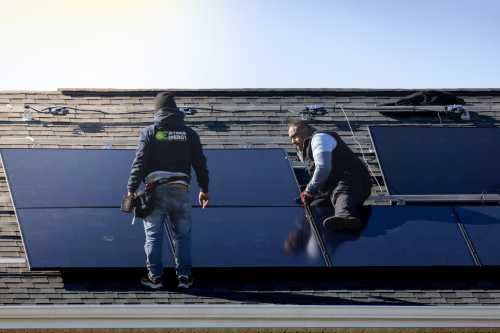
In terms of broader security risks associated with China’s clean energy technologies, these risks are more relevant to some than others. A group of us did a study a few years ago examining wind, solar, electric vehicles (EVs), and several other sectors to identify where the main concerns lie. A solar panel is less likely to have a cyber risk, but it depends on how it’s being used. What is the grid interconnection? Obviously, the big concern is with EVs and particularly connected, internet-enabled vehicles.
I honestly just don’t think we have a great sense of what these real risks are. A lot of these concerns are real, but they’re speculative. There are risks, but we need to be clear about what they are, and we can and should manage them.
In terms of the overall outlook for Chinese investment in this sector in the United States, we need to look for strategic opportunities. I don’t think we should take a one-size-fits-all approach to blocking the operation of Chinese firms in the United States. Instead, we need to identify the actual risk and allow these partnerships and investments in areas where the benefits to U.S. companies, climate goals, and U.S. competitiveness outweigh the risks.
What risks arise when 'dumb' hardware is embedded in connected systems?
Mary E. Gallagher
Great. A question that ties your response to Josh’s and gets at the idea of “dumb” hardware. For electric vehicles, which are also highly connected, and something like an EV battery that has Chinese components, or a battery that is wholly made by a Chinese company in a car that is connected, what happens to a “dumb” piece of hardware when it’s in a connected vehicle?
Joanna Lewis
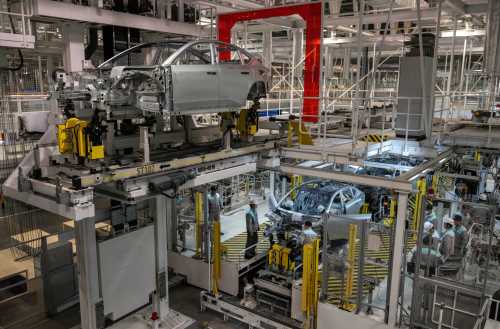
It depends on how it is set up, but the concern is that a battery in an EV, even in the United States, that incorporates Chinese technology could transmit sensitive user data back to servers in China. Though this depends more on the car and the rest of its electronics. There could also be cyber vulnerabilities related to the software connected to the hardware.
There are ways to put the appropriate firewalls in place and to also be cautious about the ownership structures of these technology partnerships.
How should we assess long-term economic dependency on China?
Mary E. Gallagher
Great, thanks. Let’s go to Kyle. The question about long-term economic dependency on China around these technologies, could you talk a little bit about that?
Related to the dependency, can you talk about the kind of industrial concentration that Joanna was just mentioning, that China has in many of these areas? From the critical minerals at the beginning of the supply chain, all the way down to the production of, let’s say, electric vehicles—some of the cars themselves—which are now getting a lot of interest from around the world for both the quality and the cost.
How do you think about this industrial concentration and the leverage it gives China?
Kyle Chan
Great question. I would break it down into a number of related questions. First, there’s the most immediate: how sensitive is the technology or application? If we’re dealing with critical grid infrastructure, if we are dealing with connected vehicles that could send data back to China, we need to take that as our opening question for any of these technologies.
The second question is related to this industrial concentration question, which is, how much of a dependence is there on any one country or supplier, and in particular, on Chinese suppliers? This is where it’s useful to look at not just the U.S.-China relationship and Chinese suppliers, but also the overall industrial landscape.
Are there alternative suppliers in allied and partner countries, or third countries that are not China? Are there alternatives in the United States? What are the trade-offs? Is it a certain technology of such high security risk that we would want to keep this capability within the United States and source it directly from the United States? You can think about, for sure, any kind of defense equipment you would want to prioritize U.S. sourcing.
There’s also this extra nuance of how easy it is to switch and substitute components from a Chinese supplier, whether it’s made in China or produced by a Chinese company outside of China.
It could be that, to give a theoretical picture here, we are reliant on battery cells, and a large share is coming from China. Are there other alternatives, say from South Korea or from Japanese companies? Are we able to produce that domestically? It’s never going to be a black and white sort of all or nothing, but what share could be shifted if needed? That’s a second cluster of questions.
Then a third set of questions is about interoperability and longer-term integration risk. There are some components, inputs that are fairly easy to substitute out within hardware that you’re building in the United States. You can switch solar cell suppliers; it’s fairly commoditized. There are technical standards that allow this. It may be harder for other technologies, where you need to build a whole system around this particular component and the specifications that it has. And so, if you end up doing that, you end up becoming reliant.
And here, I’ll draw on an analogy from outside of the clean energy industry, which is for semiconductors and AI. So right now, we actually see an interesting case where many Chinese AI firms were highly dependent on Nvidia GPUs and the CUDA ecosystem. And that made it very difficult for them to switch away. Even when there were domestic alternatives in China for domestic AI chips, they had built on top of a CUDA ecosystem that made that kind of dependency harder to loosen.
The focus should not be only on immediate security risks, which should be considered first and foremost, but also about what longer-term dependency looks like.
These are some of the issues that we should be thinking about. The focus should not be only on immediate security risks, which should be considered first and foremost, but also about what longer-term dependency looks like. Are there ways to mitigate that? And if not, then we should think about how to deal with this upfront.
Who should lead on managing strategic dependencies: the private sector or the government?
Mary E. Gallagher
Great. I have a follow-up, Kyle, on this question, because I think it’s important to understand. When we’re thinking about that kind of dependency and the need for the ability to shift, if needed, to a different supplier, who is doing this strategic thinking?
Do you see it happening at the corporate level, or is this something that the government is compelling or encouraging firms to think about? I think the supply chain disruptions during the pandemic did create a shock that made corporations think more about this.
But do you see this as really the responsibility of corporate actors, or is this something that the government is starting to compel people to think about?
Kyle Chan
To some extent, you do see some diversification strategies from private players. For example, you see dual-sourcing, or non-China sourcing, for some components or even some larger aspects of manufacturing assembly.
At the same time, though, I don’t think we should leave it purely up to the private sector here, especially in areas where we really do feel like there is a long-term dependency or risk. That is where policy should step in, in a targeted way, to identify areas where market incentives are insufficient to support the additional investment needed to build out second- and third-source suppliers or even to build domestically in the United States.
How can we have a targeted approach to incentivizing those private players to do that, or worst-case scenario, would there be a need for the government to step in and fill that role directly? I think it is probably better to adjust the incentives here and leverage the capabilities already out there in the private sector.
Mary E. Gallagher
Josh, do you see that as well coming from the government and now in the private sector?
Josh M. Cartin
I do see it, and I don’t think that the diversification strategies are a short-term blip. I think they’re a belated but necessary response, by all companies, to the last 10 years of U.S.-China relations, including some of the shocks related to COVID-19 and elsewhere. I agree with everything Kyle said. It is really up to companies to make these decisions.
When it comes to U.S.-China trade over the last 30 years, companies have done a really good job of profit maximization. They haven’t done as great a job in risk mitigation and portfolio diversification. Both are equally important responsibilities of corporate leaders.
The question, as Kyle said, is what kinds of incentives do you put in place? Do you put in hard regulations that force diversification, or do you rely on certain kinds of signaling, or cheerleading, if you will? Across both Trump administrations and the Biden administration in between, we’ve seen different kinds of approaches in place. I would say the approach I discern right now in the second Trump administration is one of market signaling, particularly when it comes to supply chain diversification.
I don’t see U.S. companies becoming the manufacturers of first or last resort for vast segments of the clean energy infrastructure or supply chain. So eventually we are going to have to come up with frameworks, and even institutions, that allow and encourage network supply chains among countries or companies with similar sorts of standards in place for economic security.
Is it possible to distinguish between different types of Chinese firms?
Mary E. Gallagher
Great. We’ll get back to the network supply chains. It’s super interesting.
I’m going to move to this idea about drawing red lines, but I want to reference something that Josh said in his opening remarks about Chinese firms not being normal market actors. I think what Josh is signaling is a very important point: it might not matter so much whether a firm in China is privately-owned or state-owned, but because of the regulatory or, even more importantly, the political system that it’s embedded in, it makes it very difficult for us to draw lines between benign private capital and high-risk, state-directed control.
So, Kyle, first over to you. Is there a way to draw lines between different types of Chinese firms, even though they still all operate in the same political economy?
Kyle Chan
Yeah, I agree largely with what Josh was saying. Certainly, if you were to draw the hardest of hard red lines, it would be any institution, company, or organization that is directly affiliated with the Chinese military.
But beyond that, the distinction between private and state-owned is sometimes not the most useful. To drill down on why: one is that the kinds of leverage that the central government can exert in China over Chinese companies, their management teams and personnel, private or otherwise, can be very substantial.
When we are thinking about framework risks and guidelines for dealing with Chinese suppliers, we should be attuned to the ownership type or the operating model. In a worst-case scenario, we would want to treat some of these private sector actors in a similar fashion, especially for highly sensitive areas of critical infrastructure.
Are there areas where some degree of dependence on China is acceptable, at least temporarily?
Mary E. Gallagher
Joanna, in your remarks, you also referenced a slightly different position of this idea that there may be areas where Chinese investment makes sense for strategic reasons, maybe in terms of catching up or other things like tech transfer. Do you see areas where some degree of dependency is acceptable, at least temporarily?
Joanna Lewis
I do. I absolutely think some degree of dependency has to be acceptable, at least in the short term, for the United States to be globally competitive in EVs and certain battery technologies. I do think that there is a relatively short window to pursue technology partnerships with Chinese companies in a smart and safe way. I’ll emphasize that I’m not advocating for a free-for-all here.
For decades, we saw China demanding technology transfer from the United States and other countries in return for market share. This ended up being a relatively successful model for China in a variety of clean energy technologies. We essentially need to do the same thing in reverse. I think we can encourage intellectual property transfer back to the United States to the extent that it’s practical and in certain key areas.
There’s some willingness to do this on the Chinese side. They’re, of course, actively limiting such transfers already in certain areas of strategic competition, but they are not forbidding it entirely. We see signals of this in ongoing partnerships, for example, Ford-CATL and others.
If U.S. auto companies want to be competitive in the EV space, it's going to be very difficult to do that without some degree of integration with Chinese companies.
Honestly, the United States risks cutting itself off from the skills and knowledge that it really needs in these technologies. Whether we care about these technologies is a separate issue, and more of a political issue, but if U.S. auto companies want to be competitive in the EV space, for example—and I gather that’s an open question—it’s going to be very difficult to do that without some degree of integration with Chinese companies.
There are ways to do this more selectively, though. We are already seeing in current and past legislation, the Inflation Reduction Act and the One Big Beautiful Bill Act, that there have been regulations on foreign ownership, restricting them to certain shares in order to receive U.S. subsidies, etc.
There are ways we can regulate the terms of licensing. We can restrict partnerships in areas with broader concerns, where the issues that we were discussing earlier—like data privacy, cyber, and national security—are present. It is just a question of identifying what those areas are, and then which are areas where the benefits would outweigh those risks?
How can the United States build networked supply chains with allies and partners?
Mary E. Gallagher
Great. Josh, I wanted to go back to what you remarked on with ideas of networked supply chains with other countries, especially allies and partners with similar goals and standards.
Particularly recently, it seems very difficult to get a lot of countries on the same page as the United States. I think about the European Union (EU) recently reversing its tariffs on Chinese EVs and going more for minimal voluntary export restraints, as we did with Japan in the 1980s. The way in which some EU countries are interested in Chinese investment on the manufacturing side for various reasons. And then there are other countries, like the U.K., for example, that don’t have the tariffs and also don’t have national brands to protect, but are still allowing Chinese vehicles in.
How do you think about network supply chains and getting other countries—including allies and partners—on board? What kind of leverage does the United States have?
Josh M. Cartin
It’s a great question. The concept of alliance coordination is always understood as being a very arduous process. We are allies with countries; we are economic competitors with many of those same countries, or our companies are economic competitors with those countries’ economic champions. It’s really challenging.
You’ve seen different approaches across the last three administrations—actually going back even further. There’s the good-cop approach, which is meeting in nice Atlantic capitals like Paris and London and trying to hammer out protocols and agreements. Then there’s the bad-cop approach, which is essentially using U.S. market power to signal to companies in these partner countries to lean more in the U.S. direction. It’s really hard, and there’s no clear answer.
At a grand strategic level, a strong U.S. economy is the asset that we need; a strong U.S. economy, a well-governed U.S. economy, a U.S. economy with deep innovative capacity and deep capital. The current administration is trying to confront companies and partner economies with a choice: what is the economic outlook? What is the relative economic outlook of a Western global supply chain versus a China-centered supply chain?
Ultimately, it is possible to have two supply chains. It’s costly, and companies aren’t necessarily enthusiastic about it, but it is a very realistic outcome of this moment in global trade and investment. The short answer is we need to do all of the above. We need to be running the good-cop approach and the bad-cop approach simultaneously.
We also need to continue to do what we’ve tried to do with Chinese trade and investment counterparts for 35 years, which is to try to find ways, again using good- and bad-cop approaches, of showing them that normal market participation is in their long-term economic interest. I believe that there are many companies on the Chinese side that would like to be able to compete on a level playing field. But unfortunately, the composition of the economic system and political system in China right now means that they are not normal market participants. They’re incentivized domestically to do certain things that disqualify them, basically a priori, from normal global economic competition.
Did China miscalculate in deploying export bans?
Mary E. Gallagher
This next question is related to what Josh was just talking about, Western versus Chinese supply chains and countries being faced with a choice, particularly if there’s further decoupling.
Was it a miscalculation for China to use the export bans it used this year? I think it did demonstrate, to Germany in particular, that the amount of leverage that China currently holds over some industries is overwhelming. It demonstrated China’s power, but I also wonder if it was a miscalculation.
Josh M. Cartin
Well, to call it a miscalculation implies that there was some sort of calculation made, and, unfortunately, China’s political and economic composition means that it just does things; that’s the way the system works. I don’t know how much calculation went into it.
But as a matter of negotiation, my instinct is that China probably didn’t want to wield that big of a weapon this early in the broad negotiation. I don’t think Beijing wanted to wield it, but it did. And I think every time China does use economically coercive tactics, it pushes the rest of the world to find alternate supply chains and solutions. But I think China has a really hard time evolving beyond the kinds of tools that it has always relied on.
Mary E. Gallagher
Kyle or Joanna, do you have any thoughts on that?
Kyle Chan
Yeah, I’ll add that it’s interesting that in some ways China held this card pretty closely for a while. China didn’t play this during the first Trump administration or during the Biden administration when there were export controls placed on a lot of semiconductor chips and equipment to China.
I think China was aware of the way this could confirm everyone’s fears, basically. So, for anyone nervous about supply chain dependency on China, especially for something like rare earths and critical minerals, that solidified that concern, and it really destroyed a degree of trust in the economic relationship.
At the same time, though, this is now the world we’re in. Now that we know these hard realities, how do we feed that back into our balancing of the risks? Both in terms of what China’s able to do on the coercive side or in weaponizing some of these interdependencies, but also on the technology side and being able to improve manufacturing capabilities or level up industrial capacity in other countries.
There are a couple of simultaneous things happening in different directions at the same time coming out of China.
How should policymakers operate in a rapidly changing environment?
Mary E. Gallagher
This gets to some of the things that I’m going to ask about next, which is: how do we make policy in an environment where there’s rapid change?
I do think that by using that weapon last year, it did demonstrate to not just U.S. actors but companies and countries around the world, that there is a long-term threat of dependency. And that there has to be faster movement in some kinds of decoupling, in some kinds of new supply chains elsewhere, and in the reshoring of certain critical parts of these supply chains.
Relatedly, just thinking about the last three administrations, the policy instability in the United States seems to be more severe than it has been previously, in terms of differences between administrations. How are we thinking about policymaking in this environment where there seems to be a very high level of risk? How are we thinking about long-term dependency and China’s ability to shut off supply chains at any time, and not just at the very high end, but also in very important manufacturing like automotives—not even electric vehicles, but automotives full stop.
How do we improve the policymaking environment?
Kyle Chan
In areas where we can get bipartisan support, there can be real success. I would point to areas like the CHIPS Act, where there was broad recognition of the critical role that semiconductors play in our modern economy. For that, there was broad agreement that we should have some manufacturing capability here in the United States. Maybe there’s a similar story that could unfold with batteries.
You can think about the different kinds of structures for this, whether it’s partnering, supporting existing domestic producers, or helping startups that are trying to innovate on next-generation technology in batteries. This could be an area that isn’t politicized and isn’t necessarily subject to the policy volatility that we’ve seen in other spaces.
Mary E. Gallagher
Great. Joanna, do you want to weigh in?
Joanna Lewis
Yeah, this really points to the need for U.S. policymakers to put forward a clear set of criteria that define U.S. interests in this space.
I know that there’s been some work done on this, but I am concerned that we have this overlapping series of policies that span across sectors and agencies that discourage any sort of Chinese investment or integration right now.
The navigation of these rules—not just by Chinese firms but particularly American firms—can be extremely challenging right now. This includes the Foreign Entity of Concern rules and the different ways that foreign firms are being treated under the variety of policies that affect industrialization and clean energy.
Also, there is the Department of Defense’s (DOD) Section 1260H list of Chinese military companies, as we talked about earlier. While I agree with Kyle that you would ideally want to avoid integration with Chinese companies that are connected directly to the military, CATL is on that list, and my understanding is that BYD might soon be on that list. Is that really a real risk? And how do we really distinguish that? The National Defense Authorization Act prohibited DOD from buying batteries from CATL, BYD, and several other Chinese companies starting in 2027, again due to these concerns.
There’s, of course, the Committee on Foreign Investment in the United States processes related to foreign investment. There’s the Uyghur Forced Labor Prevention Act and a whole set of overlapping regulations. I’m not saying that all these regulations don’t have a true purpose in their original design, but they create a chaotic investment environment for companies to navigate.
Not just in the United States but particularly in emerging and developing economies, creating a dual supply chain or implementing any of these restrictions on trade is substantially increasing the cost of this low-carbon transition.
I’d like to bring in the climate side of this and what I call the climate risk of all these policies, or even the dual supply chain model that Josh referred to earlier. If there is a concern in this country—and there might not be in the White House, but there is outside the White House—about climate change, we need to think about the time element of getting these technologies deployed as quickly and cheaply as possible. Not just in the United States but particularly in emerging and developing economies, creating a dual supply chain or implementing any of these restrictions on trade is substantially increasing the cost of this low-carbon transition.
There are a bunch of studies in the works that are trying to calculate: what is the cost to hitting a temperature goal, if you’re doing it with Chinese technology or with a U.S.-engineered supply chain with allies, what would that take, and what would that look like? Do we then have a 100% cost increase of building solar panels locally and whatnot? It’s a complex question. There’s real risk there, but I do think that we need a clearer policy landscape that doesn’t just set red lines but shows where there are green areas where we actually want to be encouraging these things.
Josh M. Cartin
Yeah. I have a few short answers here, and a lot of how you approach this problem, as Joanna just described, really does kind of come down to where you are on the ideological spectrum regarding climate change and how a battery or an electricity economy might affect global warming and so forth. But we probably don’t have time to argue that here.
So let me just say a few things. One, the policy environment has been inconsistent. But again, I think in terms of the question we’re grappling with here, which is essentially how much Chinese participation should be allowed in the U.S. clean energy economy. The strategic direction has been consistent across the last few administrations. So really, where the inconsistencies have come in has been a matter of tactics.
Second, one guideline in thinking about how to manage this across different types of tactics within different administrations is that it’s generally a bad idea, in my view, for the United States to try to compete with China by adopting policies or practices that mirror what China’s doing. So, a heavier reliance on industrial policy, for example.
For the United States, in trying to come up with our policy responses, we have to generally understand that the U.S. approach to private sector regulation is as little as possible. Ultimately, our solutions are inevitably going to rely more on altering the private sector incentive calculation and will also be subject to the pressures of the private sector. Certainly, at the sector level and at the enterprise level.
So, the second guideline would be to maintain focus. As we come up with new frameworks, we should maintain focus on those three dimensions of risks that you mentioned at the top, Mary, which are: the hard security risks, particularly involving transmission devices; economic competition; and what happens to global markets with nonmarket players, all of which, unfortunately, Chinese enterprises are right now. If we focus on those things—and without bringing in the ideology, including hard climate ideology—we’ll end up doing a better job coming up with answers.
Finally, and this does get back to the question of climate, we have to understand what the urgency is. We’ve conducted a whole session here around Chinese participation in the U.S. clean energy sector. There are two reasons to devote a special program to that. One is by assuming or assessing that China has technologies that are superior and irreplaceable in certain ways, like in energy efficiency. And the other reason is that it’s cheaper; that China has developed a manufacturing scale that makes it cheaper and therefore will make it easier for U.S. companies to deploy faster.
We have to balance these things, and ultimately, I view this more as a question of scale and cost than a question of technological superiority. There may be Chinese companies in the clean energy supply chain that are relatively ahead. But I’ve never read or seen anything other than the statements of automobile executives—who, let’s face it, have their own economic incentives to praise Chinese EV technology—that persuaded me that Chinese technologies are irreplaceable in the near term.
It comes down to a calculation of how much added risk is justified by the marginal cost savings that we're going to get from deploying Chinese-origin technologies faster and cheaper?
So, at the end of the day, it gets down to cost. And, since we’re talking about a cost issue, it comes down to a calculation of how much added risk is justified by the marginal cost savings that we’re going to get from deploying Chinese-origin technologies faster and cheaper?
Mary E. Gallagher
Great. Anyone want to respond to that?
Kyle Chan
Yeah, I might disagree a bit about what the benefits would be, because I think that’s really at the heart of a lot of this discussion. If it were so simple as there are no benefits and only risks, then the answer would be straightforward: that we should basically rip and replace. But I don’t think that’s the case.
On the one hand, Josh rightly points out that the cost side is part of it. That has major implications for not just climate, but also for affordability. For lowering the costs of energy, for lowering the costs of your car—probably the second-largest thing you ever buy in your life—for lowering the price of energy storage.
But the other area I would argue is that there are certain technologies coming out of China that I think we would miss out on if we shut them out entirely. For EVs, it’s not just that they’re cheaper, but also that they have much greater integration between the motor control and these drive-by-wire steering capabilities. They have really interesting, innovative features when it comes to integration with devices.
There's a whole host of changes in the global auto industry that are being driven out of China, and I think we run the risk of cutting ourselves off from some of those developments if we take too hard of an approach and miss out on what's happening.
Of course, this comes back to our security question. So, do we want that here? We can have that discussion, but there’s a whole host of changes in the global auto industry that are being driven out of China, and I think we run the risk of cutting ourselves off from some of those developments if we take too hard of an approach and miss out on what’s happening.
This has implications not just for the kinds of cars that Americans can drive domestically, but also for the competitiveness of our entire auto industry and a whole range of other related industries that are now building on this emerging electric technology stack.
Joanna Lewis
Just a quick addition. I’m not going to argue the climate ideology piece of this, but I think if we do want to compete with China in the space and be able to produce a lot of these technologies locally, as Kyle just mentioned, if we think we can do it ourselves, we are missing the entire U.S. innovation ecosystem to make that possible.
And so, we’re leaving U.S. companies in this position where the current administration removed the three biggest support policies subsidizing EVs in the United States in the last couple of years. Not just the tax credit, but Corporate Average Fuel Economy penalties, the California waiver. We’re creating a situation where we just don’t have the innovation ecosystem here to support our ability to directly compete through U.S.-led innovation.
What are the consequences of inaction?
Mary E. Gallagher
I want to reference that in the first conversation that Kyle moderated, Samantha Gross noted that we need to remove some of this discussion from the discussion about climate change.
And I do think there is a way in which we can have a conversation about economic competition and the long-term survival of American global competitiveness in some of these industries without talking about climate change. And that’s probably a good idea because of the politicization within the United States.
Josh, I think you’re right that the strategies of the last three administrations have been relatively consistent in moving closer together. And the tactics, of course, differ. I think at the mass level in the United States, there are still huge gaps and politicization, not just on climate change, but also about driving an electric vehicle. I have one, and I always tell people that the reason to buy one is not because of climate change, but because they’re more fun to drive. You get people that way.
I get the sense there’s some disagreement about what the risks are and how we should manage them. However, Joanna and Kyle, you just articulated that there are risks of not doing anything. That is, being a little bit more open, drawing some lines, but allowing some areas for strategic investment.
So, I’ll give the last word to Josh. What’s your response to that? What if we don’t act and we not only fall behind with China, but also are increasingly isolated from other countries that might be going in that direction?
Josh M. Cartin
I really thank my colleagues for their very thoughtful responses. Look, I think it’s enough for us to say—without even using the big C word (“climate”)—that there is a battery and electricity economy developing across the world. It would be nice for U.S. companies to be able to participate in it, to be able to make money from it, and to be able to play the innovative role that U.S. companies have played in other major sorts of economic transitions.
So, I agree with all of that. And then if that’s the case, the question again becomes: if all of the various incentives, private sector incentives, and government guidelines align in incentivizing U.S. companies to invest the way they need to invest to become leaders in this space, how essential or pivotal is it to work with China? That’s the question we should focus on.
If we determine that we’re going to be three years behind, or we’re going to be five years behind, or 20 years behind, then we can figure out an appropriate level of management in this space or regulatory sort of management.
But we have to be able to answer that question first. And part of why we’ve seen the flip-flopping in administrations on this issue is that heavy regulations were put in place that were meant to play sort of an incentivizing role for the adoption of EV technology, but they were deployed before various stakeholders in the United States, particularly private-sector stakeholders, were in a position to benefit. And so, I think putting the strictures in place did force us into an early position of dependency and didn’t really give enough time for American economic stakeholders to participate.
When we overregulate or we over-incentivize, we can actually create a backlash that can amount to an actual reversal in adoption. We have to approach issues like this carefully. We have to line up all kinds of different stakeholders.
And again, when it comes to China, with which we are in an adversarial relationship, that level of adversity may rise and fall, but the relationship remains strategically adversarial. We need to be able to answer a key question: Why is Chinese participation essential? What relative advantage will it provide in helping American companies compete?
Mary E. Gallagher
I want to thank all of you for spending this hour. It was great. Stay tuned for conversation number three. Thank you.
Authors




Related Content
-
Acknowledgements and disclosures
The authors would like to thank Gastón Reboredo for recording and editing the audio, Joyce Yang for preparing the transcript, Adam Lammon for editing, and Rachel Slattery for layout.
The Brookings Institution is committed to quality, independence, and impact.
We are supported by a diverse array of funders. In line with our values and policies, each Brookings publication represents the sole views of its author(s).


Commentary
Should the US restrict Chinese investment in clean energy?
April 16, 2026