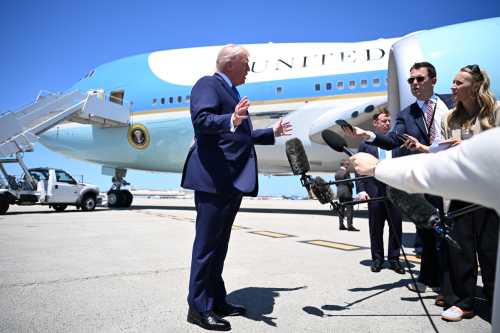
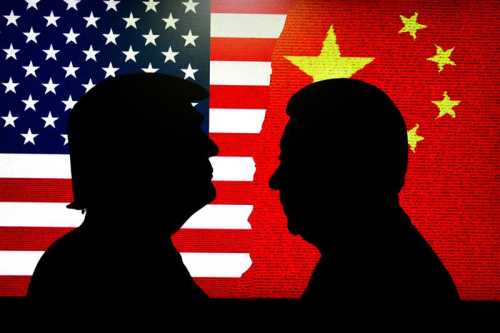
President Donald Trump will travel to Beijing for meetings with President Xi Jinping on May 14-15, 2026. Brookings experts weigh in below on how Trump and Xi’s interaction will impact their areas of expertise and how the summit’s success will be measured.
Low expectations amid fears of escalation
Outside observers should have low expectations for the upcoming summit between Trump and Xi. While the relationship has stabilized since the two leaders met last November, it remains fragile—defined more by an absence of friction than any affirmative agenda or deep dialogue on the substantial differences that bedevil the relationship. Many Chinese analysts expect a U.S. snap back to a more competitive China policy, either after the midterms or after Trump steps down in 2029. Beijing seems focused on using this interregnum to enhance its position vis-à-vis the United States. Likewise, many in the Trump administration and on Capitol Hill favor a return to sustained strategic competition.
The summit’s diplomacy has only reinforced the deeper drivers diminishing the likelihood of substantive gains. The reported meager bureaucratic preparations for this meeting limit the prospects for progress. Counterintuitively, by signaling early and loudly a desire for multiple presidential encounters this year, the Trump administration may have reduced Beijing’s incentive to offer any major concessions. Chinese officials believe they will extract more value from concessions later, calculating that Trump—the self-identified consummate dealmaker—will want to tout any agreement as a major breakthrough ahead of the midterm elections.
However, there are risks ahead that could make this meeting a high-water mark of Sino-U.S. amity rather than a precursor to additional agreements. Most notably, the administration is trying to reconstruct its tariff regime after the Supreme Court ruled in February that many of the previous tariffs were unlawful. Beijing could argue that restoring tariff levels back to where they were violates the tenuous “ceasefire” in the trade war, opening up the possibility of a renewed cycle of escalation.
Prolonging the uneasy calm in U.S.-China relations
A key lesson from 2025 for Trump and Xi was that they both could harm the other, but not without inviting painful retaliation. As a result, both leaders agreed to a trade war truce when they met on the margins of the Asia-Pacific Economic Cooperation meeting in Busan last October.
Trump appears focused on preserving this truce and using the time to build insulation against dependence on China for key inputs such as rare earths. This focus likely will guide his visit to Beijing. In this sense, the summit can be understood more for what it aims to avoid (e.g., a breakdown in the relationship) than what it seeks to achieve.
To be clear, there will be outcomes from Trump’s visit. Both leaders will likely announce Chinese purchases of American products, such as Boeing airplanes and agricultural goods. They also likely will announce a bilateral “Board of Trade” to identify non-sensitive sectors for purchase commitments and limited tariff adjustments.
Spaces to watch will include any announcement of major Chinese investments into the United States and any potential shift to long-standing American declaratory policy on Taiwan.
So long as the visit proceeds smoothly and Trump concludes he was treated respectfully, then the uneasy calm in the bilateral relationship will endure. If, on the other hand, Trump leaves feeling disrespected or trifled with, then he could have a change of heart. Trump may also be sensitive to being perceived as upstaged, particularly if Beijing rolls out the red carpet for Russian President Vladimir Putin immediately after his departure from Beijing.
The end of estrangement
For Americans, the most significant result from Trump’s upcoming visit to Beijing will be that it happened. Mistrust between the U.S. and Chinese governments has skyrocketed since COVID-19. Communication between the two across the Pacific has been dramatically truncated. Joe Biden was the first U.S. president since U.S.-China relations were established not to visit China. Congressional visits have similarly fallen off. This estrangement coincides with both elevated bilateral tensions and with sudden and dramatic changes in the global power structure, norms, and institutions. Presidential-level communication is currently the only guardrail in U.S.-China relations; we need this channel to stop miscalculation from leading to conflict.
It is less than ideal, of course, that this meeting will happen against the backdrop of the war with Iran, but U.S. policy continually allows the urgent to crowd out the important. Trump seems determined not to let that happen in this case. He deserves credit for already increasing communication with Xi in the first year of his second term; the Chinese leadership has also shown flexibility and willingness to keep this channel open. The two have stated that they may meet as many as a record four times this year. These meetings are our best hope for preventing miscalculation and should be welcomed as such. Ongoing estrangement is too dangerous.
Uncertainty surrounds Taiwan
I have no idea how the Xi-Trump summit will affect Taiwan and its relationship with the United States. China watchers understand that China’s policymaking occurs in a black box. Currently, the United States has no formal process. For outside observers of the Trump administration looking for intensive summit preparations regarding Taiwan or any other issue, they are not readily apparent. I hope that U.S. officials are consulting with their Taiwan counterparts, but I do not know whether they are.
Nor do I know how the two presidents will discuss Taiwan at the summit. That is, will they do so with other officials present or talk one-to-one with interpreters (no notetakers)? Whatever the case, will senior U.S. officials have an opportunity in advance to brief Trump on how not to concede too much on Taiwan?
It is possible that Taiwan may get crowded out by other important issues: tariffs, export controls, Russia-Ukraine, and especially the war in Iran. But the Chinese are signaling that Taiwan cannot be avoided. So, Xi may seek changes in U.S. declaratory policy, including on Taiwan’s legal status. He may ask Trump to impose constraints on American arms sales to Taiwan and then enforce them. The simple fact is that Beijing could ameliorate many of its purported complaints about Taiwan’s cross-Strait policy by talking to officials of the government in Taipei and doing so without conditions. But it has not done so for 10 years. As far as U.S.-Taiwan relations are concerned, in the immortal words of Carter administration official Burt Lance, “If it ain’t broke, don’t fix it.”
It’s time for the U.S. and China to talk about AI
The United States and China are the world’s two artificial intelligence (AI) superpowers. Virtually all of the most advanced and widely used AI models are developed by these two countries. As AI systems rapidly become more powerful, so too do the risks they create. Anthropic’s newest model, Mythos, has raised new concerns about AI-enhanced cyberattack capabilities. Researchers are sounding the alarm that AI tools could help less sophisticated actors develop novel bioweapons. The proliferation of AI agents, capable of operating autonomously for hours at a time, raises questions around unintended actions and loss of control over these systems.
And yet, the United States and China hardly talk about AI, at least at the official level. Both nations see AI as a key strategic technology, and their relationship in this domain is characterized by a low degree of trust and a high degree of competition. But this could change, given suggestions that Trump and Xi may finally discuss AI at their upcoming summit in Beijing. The United States and China will almost certainly continue to compete fiercely in AI. But ideally, both leaders can also take steps toward working together in areas of shared interest.
Trump and Xi can begin by opening official communication channels on AI risks, developing nonbinding safety guidelines, and sharing limited information about AI misuse or safety incidents. Both countries will be wary of agreeing to anything that could tie their own hands. But restarting official dialogue between the United States and China on AI is a crucial first step toward addressing an increasingly high-stakes issue.
A blind spot in U.S. AI policy
An opening chapter of an AI cold war is emerging. This week, the White House accused China of “industrial-scale” theft of American AI models, while Beijing reportedly moved to prevent Meta from acquiring Manus—a Chinese-founded AI startup now based in Singapore.
The deeper contest is not over who copies whose model, but over the talent capable of building the next generation of frontier AI. And on that dimension, the Trump summit offers little relief.
DeepSeek and Manus were not built by talent poached or stolen from American institutions. Their founders and core teams were trained entirely within China. Beijing’s decision to block the Manus acquisition is instructive because it reveals what matters most to China: keeping its frontier AI talent at home. The White House, by contrast, remains focused on distillation and chip controls—symptoms of a competition but not the root of it.
From an American perspective, success should be measured by whether the summit prompts any honest reckoning with the U.S. talent crisis: why the United States is producing less technical talent domestically, why its AI pipeline depends so heavily on immigration, and why that pipeline is now drying up.
Trump has lost leverage on fentanyl
Fentanyl and synthetic opioid precursors remain a significant issue in U.S.-China relations, but the Trump administration has weakened its leverage. By October 2025, China had outsmarted the United States in its fentanyl diplomacy, absorbing Trump’s early-2025 tariffs while retaliating with counter-tariffs, export controls on critical minerals, and boycotts of sensitive imports like soybeans. Subsequent diplomatic rounds led China to give the Trump administration the same deliverables it had already given to the Biden administration in late 2024—the scheduling of nitazines and several fentanyl precursors.
The U.S.-China counternarcotics working group is working, but U.S. officials tell me that cooperation hasn’t been as robust as it was in late 2024. At a March 2026 U.N. meeting on narcotic drugs, the U.S.-China exchanges were acrimonious: the U.S. delegation complained of China not doing enough to stop fentanyl precursors, while China accused Washington of “unilateral bullying.”
Indeed, the Trump administration deprived itself of the kind of multilateral counternarcotics pressure that China has been responsive to by letting the Biden-era Global Coalition to Address Synthetic Drug Threats wither on the vine. Moreover, the Trump administration’s preferred tool of diplomacy—tariffs—was gutted by the February 2026 U.S. Supreme Court decision against its use of the International Emergency Economic Powers Act. The Stop Chinese Fentanyl Act (H.R.747), a new U.S. bill seeking to impose visa bans and other sanctions on Chinese officials and other actors if China doesn’t cooperate against synthetic drug flows, has been stuck in the Senate.
In March 2026, the United States began charging Chinese precursor smugglers with material support for terrorism, following the designation of Mexican cartels as foreign terrorist organizations. This is an irritant for China, but a minor one. A much bigger irritation would be keeping China on the list of major illicit drug suppliers that the U.S. government will release in September.
Oil, coal, and power politics
The Iran conflict’s climate and energy dimension will hang over the Trump-Xi summit in two ways. On the one hand, the disruption to energy markets has substantially increased the cost of Chinese energy imports and will almost certainly result in increased coal combustion. Xi will be anxious to ensure that these disruptions are minimized, particularly if the conflict is still ongoing by the time the summit begins. On the other hand, the conflict has vindicated China’s approach to energy security. China has pursued an “all-of-the-above” strategy for developing fossil and non-fossil energy and electrifying its energy system, which allows for power from multiple sources to be optimally integrated and, increasingly, stored. Its long-term investment in boosting oil and gas supplies from overland rather than seaborne sources, most notably Russia, likewise looks sound. China is, thus far, less exposed to energy supply disruption and price volatility than it would be otherwise. Success should be measured to the extent that China agrees to purchase U.S. energy, as opposed to continued purchases from Iran, Russia, and other U.S. adversaries.
Principled toughness, strategic restraint
The Trump administration’s strategy toward China, as detailed in its National Security Strategy, National Defense Strategy, and annual report to Congress on the People’s Liberation Army (PLA), is sound and should guide Trump’s approach in Beijing. He should maintain a positive overall tone while disagreeing specifically and firmly on key issues where Beijing’s policies warrant pushback—religious rights, minority rights, dissident rights, Hong Kong policy, military assistance to Russia as well as support for Iran and North Korea, Chinese military approaches toward Taiwan, intellectual property theft, unfair subsidies for some domestic industries, implanting of malware in the cyber systems for American infrastructure (by the Volt Typhoon group), and the rapid pace of PLA military modernization, especially in areas like nuclear weapons. We would be naïve to expect that China would not translate greater wealth and power into a stronger military, but that military’s behavior and some aspects of its modernization efforts warrant criticism—even at the price of having to accept some criticism for our own actions.
Trump should also avoid some of the trigger words that American officials have sometimes recently used toward China. China should not be accused of genocide, should not be portrayed as part of a new “axis of evil,” and should not be described as an enemy or even an adversary. Such terms are either too strong, too inflammatory, and/or too sweeping to be productive or fair-minded. Criticism is fine, even necessary; hyperbole and ad hominem-style attacks are unwise.
This approach—strong disagreement on specific issues, but mutual respect and even a measure of friendliness in personal relationships as well as the overall bilateral relationship—maximizes the chances of constructive engagement while minimizing the risks of war. It is that last objective that I consider far and away the most important for assessing the outcome of this summit and most others in U.S.-China relations in the modern era.
Authors









Related Content
The Brookings Institution is committed to quality, independence, and impact.
We are supported by a diverse array of funders. In line with our values and policies, each Brookings publication represents the sole views of its author(s).

Commentary
What will happen when Trump meets Xi?
Brookings experts weigh in
Updated: May 5, 2026
Originally published: May 4, 2026