This piece is part of the “Blowback: How the Iran war may change the world” series, which features original analyses and policy recommendations by experts on the immediate and prospective long-term fallout from the 2026 Iran war.
Summary
The United States and Israel’s war in Iran has meaningfully shifted political dynamics in the Middle East and diplomatic focus away from Israel and Palestine amid worsening conditions on the ground. While major combat in Gaza has ended, Israeli attacks on the enclave continue, and efforts at reconstruction and to provide governance have stalled. The West Bank, too, is beset by increasing settler violence and settlement expansion. An intensifying divergence between key Arab Gulf states—notably Saudi Arabia and the United Arab Emirates—is reducing internal Gulf alignment and thus the incentives to take positive steps in Israel-Palestine. The United States and regional governments should recognize that unresolved structural inequities in Israel-Palestine are a key driver of Middle Eastern conflict, including in nearby Lebanon. Absent improvements on the ground, they will continue to fuel regional instability.
Background
My Brookings colleague Bob Kagan persuasively argues that the U.S.-Israeli war against Iran represents a simultaneous collapse of deterrence and diplomacy. Many American allies—including some in the Middle East—doubt whether the United States can now protect them. U.S. rivals, such as China and Russia, see declining American power in the region. And indeed, some Gulf states may further hedge their relations with Iran while relying less on the U.S. security umbrella. But let’s not forget that the war in Iran was initially sparked by renewed conflict in Israel-Palestine that escalated into a regional conflict. For that reason, it’s important to understand not only the impact of the Iran war on Israel/Palestine, but also how improving the situation there can calm the situation in the region.
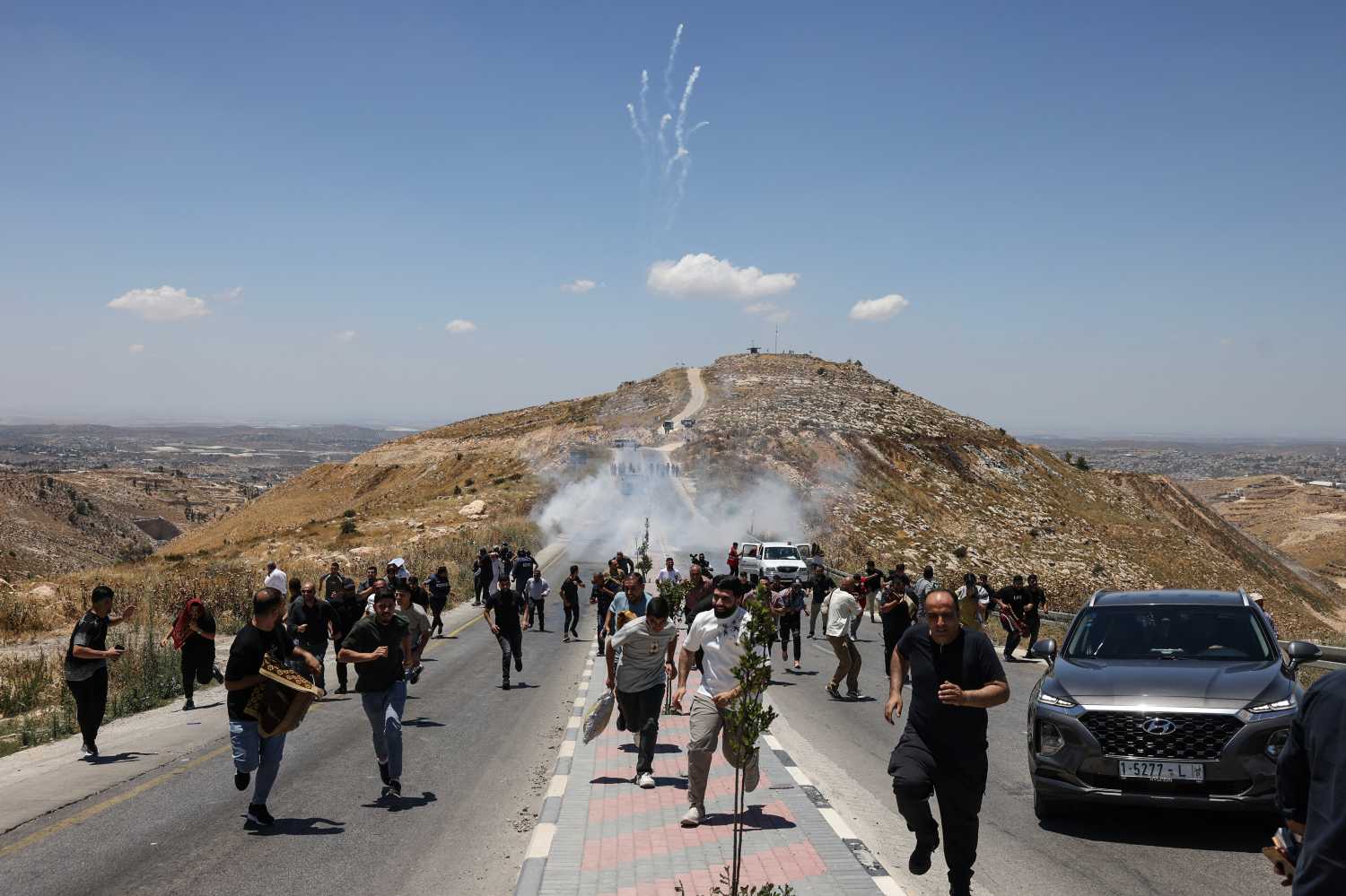
The most direct impact of the U.S.-Israeli war against Iran on Israel-Palestine has been to divert energy and attention away from the so-called ceasefire. Major hostilities in Gaza have ended, but Israel continues to attack the enclave—with hundreds killed since the war on Iran began. Meanwhile in the West Bank, extremist Israeli settlers continue attacking and killing Palestinians with what looks like Israeli military acquiescence—if not protection—and in a manner that looks systematic. Since the Iran war began, over 40 Palestinians have been killed in the West Bank alone.
Preoccupied with Iran, the Trump administration has made little progress on Gaza. No real economic redevelopment has begun; in fact, Gaza is back to counting trucks for the entry of basic necessities. The Israeli military has attacked and killed those trying to restore water and sewer services to Gaza, leaving Gazans without clean water, and even halted aid deliveries to Gaza following attacks from Iran. Even the Palestinian National Committee for the Administration in Gaza has not yet been let into the enclave to begin the process of providing governance.
Analysis
Global public opinion is not only distracted from Israel-Palestine by the larger conflict in Iran, but the Trump administration’s very structure also makes progress on the Palestinian territories difficult. The Trump team operates through a very tiny circle of senior officials, like Steve Witkoff, so little can get done when these officials have their attention directed to the wars in Iran and Lebanon and trying to reopen the Strait of Hormuz. That’s certainly been the case on Gaza. Nickolay Mladenov, the High Representative for Gaza and the director-general of the U.S.-backed “Board of Peace,” with whom I’ve worked over the years, is an astute diplomat, but he doesn’t appear to have the necessary backing to deliver even on elements of Trump’s own plan.
Israel has used the Iran war to tighten its stranglehold on the West Bank and rapidly expand its settlements, further increasing the transfer of Israeli civilians into the territory. The war on Iran and Israel’s behavior also appear to have put Israel much more on the defensive in American discourse than ever before—with recent polls showing 60% of Americans having an unfavorable view of Israel, including 80% of Democrats and 84% of those under the age of 50.
The Iran war’s unpopularity and Israel’s role in it have also harmed Trump’s standing and perceptions of U.S. power. Trump’s favorability has continued to plummet since the war began on February 28. As of mid-May, only 37% of Americans approved of the job Trump is doing as president—a second-term low—while majorities disapproved of how he is handling the war in Iran (65%) and the Israeli-Palestinian conflict (62%). Secretary of State Marco Rubio’s choice of words intimated1 that the United States followed Israel into a war against Iran, implying deep American weakness and raising concerns about Israel’s role in U.S. government decisionmaking. This drew criticism from the American Jewish community that the administration was placing the responsibility on Israel for the war—even as Trump made his own decision.
Further, the war on Iran has also engulfed Lebanon. Israel’s brutal war in Lebanon has displaced over 1 million Lebanese citizens, and its deliberate, systematic leveling of villages across southern Lebanon has killed over 3,000, including over 110 health care workers—far more than twice the number of Israelis killed on October 7, 2023. And notwithstanding the recent efforts by Lebanon’s weak central government to further isolate Hezbollah, Israel’s ferocious actions are likely increasing the legitimacy of Hezbollah’s resistance to Israel, even among those Lebanese who are predisposed to hate the militant group. Perceptions of Israel are not only worsening in the Arab world, but also in Europe, Asia, and the United States. This has implications for improving the situation in Israel-Palestine.
The Iran war has also impacted regional alignments, as seen in the United Arab Emirates’ (UAE) decision to move closer to Israel and distance itself from neighbors like Saudi Arabia. One example of this shift is that the UAE chose this occasion to exit OPEC—the Saudi-led oil cartel. Meanwhile, Israel has acted to defend the UAE from Iranian drones and missile attacks by sending Iron Dome air defense batteries and personnel to operate them to the UAE in May. There are also credible reports that Israel may allow the UAE’s Emirates Airlines to fly nonstop flights between New York City and Tel Aviv. Saudi Arabia, for its part, has announced a new deal with Turkey to create an Istanbul-to-Oman railway that bypasses both Israel and the UAE.
These trends create further challenges for Palestinians, who would be best served if Gulf countries—particularly Saudi Arabia, Qatar, and the UAE—were aligned in their efforts to improve Palestinians’ conditions. Such cooperation could help end the killing in Gaza and the West Bank, promote economic growth, or advance other shared objectives. Lack of Arab Gulf state unity on Israel-Palestine weakens their collective leverage over both Israeli and Palestinian leaders. Neither side faces the clear incentives—or disincentives—that a unified Gulf position could provide to encourage positive steps at a time when such alignment is needed more than ever.
None of these developments will help de-escalate the Israeli-Palestinian conflict. Quite the opposite: In recent days, we have seen both Israel and the United States lash out at Palestinians in new ways. Indeed, the war has empowered those whose actions show they are least interested in compromise.
Yet there are also factors that augur in a positive direction. Saudis and other regional actors may conclude that the continuation of Palestinian suffering is becoming an increasingly intolerable driver of regional conflict, particularly as nonstate actors continue to leverage Palestinian grievances to pursue their own goals. Thus, there may be new incentives for diplomatic engagement and improving the situation on the ground in Israel-Palestine as regional governments conclude that their own security requires a fair and just solution in Israel-Palestine.
It’s also possible that Israelis elect a somewhat less extremist government later this year—certainly not peaceniks, but one that would see it as in Israel’s interest to at least partially de-escalate the situation with the Palestinian people and the international community. There’s also the fact that diplomatic progress in the Middle East sometimes occurs after moments of profound change or even war—much like the hopeful Madrid summit which brought together Israelis, Palestinians, and regional states at the conclusion of the 1991 Iraq War.
Policy recommendations
What should be done about all of this?
In the first instance, the Trump administration should deepen its bench and bring the diplomatic talents at its disposal into the fold to ensure that sufficient diplomatic energy is invested in Israel-Palestine and Lebanon. Not only are the people of Gaza—and now Lebanon—in desperate need of housing, reconstruction, and redevelopment, but failing to alleviate suffering risks renewed conflict.
The Trump administration should also come to terms with the fact that conflict in Israel-Palestine is a driver of regional instability. It should focus more political energy on ending Israel’s settlement drive in the West Bank and on improving living conditions in Gaza to provide hope to the Palestinian people.
While it is unclear what the Trump administration could do to mend the Saudi-UAE divide, regional governments should also align around practical measures to improve living conditions and advance hope for the Palestinian people in the West Bank and Gaza. These efforts could take the forms of economic assistance, increased trade, and a presentation of clear trade-offs to Israel based on its behavior toward Palestinians. Of course, the Palestinian and Israeli leadership have a role to play as well in improving their collective situation. However, with Israel now in an election campaign that is driving policy even more to the right, and the Palestinian Authority hobbled by Israel continuing to seize the majority of its ongoing revenues, we should expect little positive movement on the issue from either of those two actors.
Conclusion
The United States and Israel’s war on Iran has set back progress on the ground in Israel-Palestine by sidelining the issue and creating division in the Arab world. Yet hope remains that the war will spur regional governments to finally come together to end the inequalities and grievances that continue to perpetuate the cycle of violence in Israel-Palestine. If there’s a lesson here for Washington and the world, it’s that failure to address the structural inequities in Israel-Palestine does not contain conflict but regionalizes it.
Author

Related Content
-
Footnotes
- Rubio remarked: “We knew that there was going to be an Israeli action, we knew that that would precipitate an attack against American forces, and we knew that if we didn’t preemptively go after them before they launched those attacks, we would suffer higher casualties.”
The Brookings Institution is committed to quality, independence, and impact.
We are supported by a diverse array of funders. In line with our values and policies, each Brookings publication represents the sole views of its author(s).