Executive summary
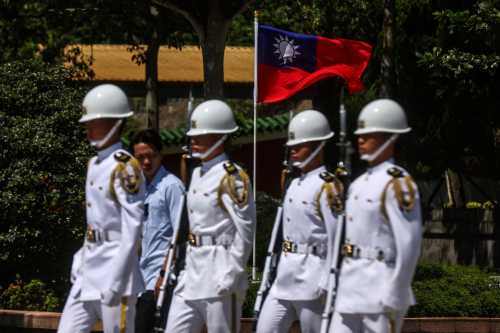
America’s relationship with Taiwan is arguably strengthening materially even as perceptions of America’s will to stand firm on Taiwan are weakening. At a substantive level, Washington and Taipei over the past two years have increased security cooperation, expanded trade and economic ties, and deepened societal connections. Yet, during this same period, polling indicates that Taiwan’s confidence in America’s dependability has declined. Meanwhile, China’s leaders have gone on the offensive in pushing America to shift declaratory policy on cross-Strait relations. There is no single variable or explanation for these shifts, but President Donald Trump’s analogy of arms sales to Taiwan as a “bargaining chip” and his embrace of Beijing’s preferred framing on cross-Strait relations likely played a major role. The controversy surrounding Ambassador David Perdue’s disclosure that Trump had offered to sell weapons to China therefore made waves not because it altered American policy, but because it exposed America’s narrative on Taiwan as being unmoored and muddled.
It likely is too much to expect that the current administration will improve its performance, particularly given Trump’s grooved rhetorical patterns and his dominance of American policy and narrative. Trump’s successors will need to learn from his missteps, though, if they wish to steadily rebuild confidence in America as an upholder of peace and stability in the Taiwan Strait. America’s next president can do so, in part, by emphasizing clearly and consistently that Washington will oppose unilateral changes to the status quo in the Taiwan Strait and be resolute in keeping open a path for Beijing and Taipei to resolve their differences without violence or coercion, however long it takes.
Enter Trump
President Donald J. Trump made waves on his return from his May visit to Beijing by embracing many of China’s preferred positions on Taiwan. During his press availabilities, Trump made clear he was “not looking to have somebody [Taiwan] go independent,” and that Taiwan needs to “cool down a bit,” along with China. He questioned whether it made sense for American forces to “travel 9,500 miles to fight a war”—without apparently considering such a statement’s implication for the credibility of America’s security commitments to its treaty allies in East Asia. And Trump described a pending $14 billion American arms sales package to Taiwan as a “very good negotiating chip” in his dealings with Xi.
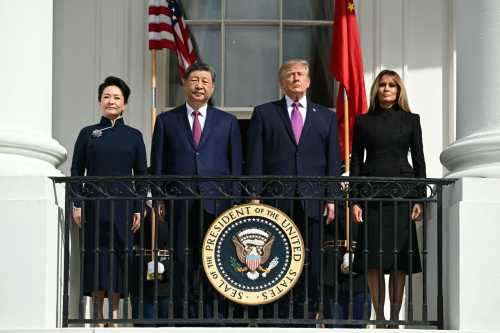
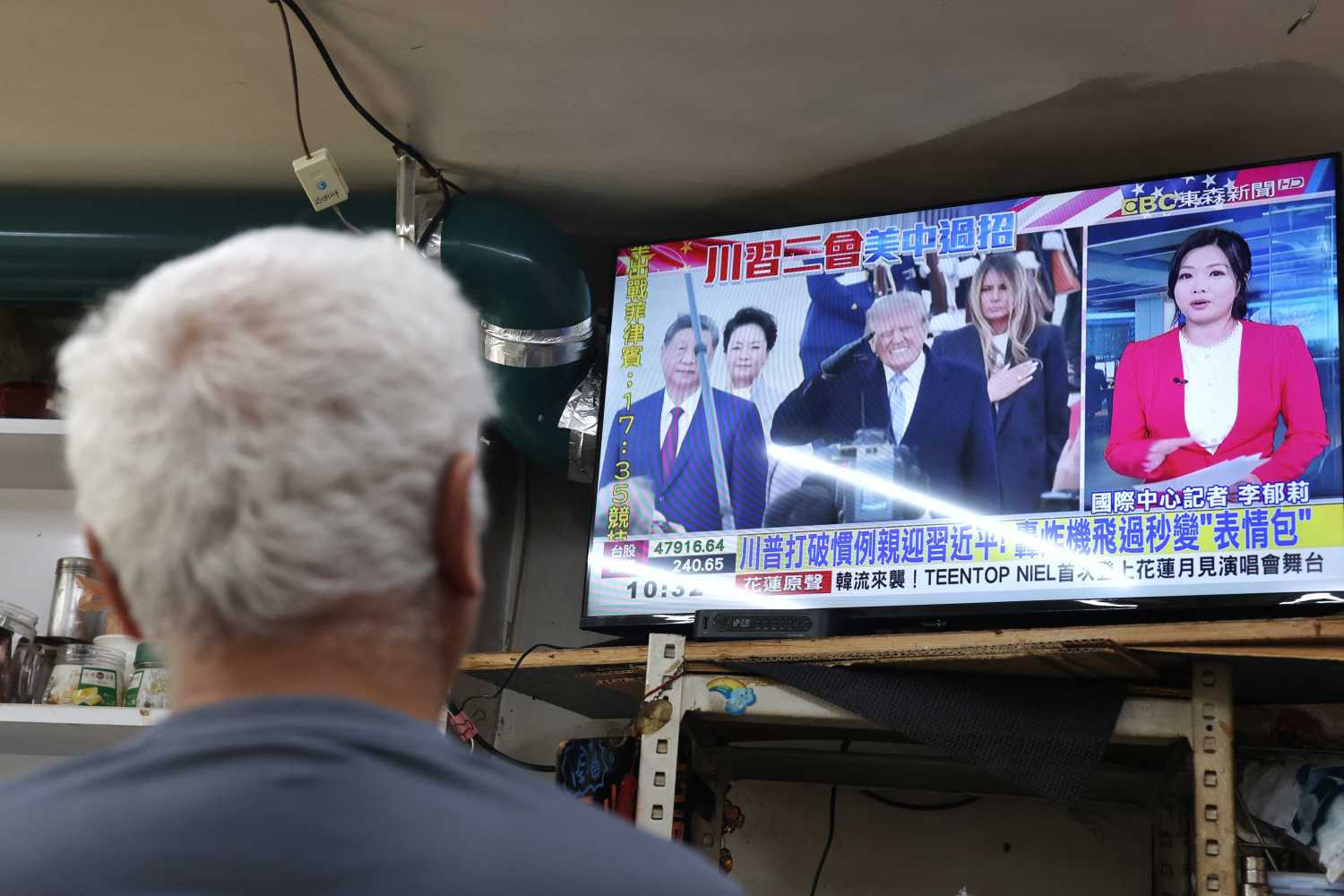
Trump and his administration seemed to recognize the degree to which controversy over Trump’s Taiwan statements overshadowed his May visit to Beijing. When Xi Jinping visited Washington in late September, the Trump administration avoided drawing attention to Taiwan. The White House’s official readout of the meeting did not make any reference to Taiwan. Trump, for his part, responded to a media inquiry the day after the state visit by explaining, “We didn’t talk about it [Taiwan] too much; right now, it’s fine, it’s just moving along. We didn’t spend a lot of time talking about Taiwan. He [Xi] understands very much how I feel.”
This public posture of downplaying Taiwan fit with the White House’s broader objective for the September state visit—showcasing that the two leaders maintain a productive relationship and are committed to working together to keep U.S.-China rivalry within guardrails.
Such efforts to focus the storyline on Trump’s and Xi’s personal ties and the visit’s positive effects on U.S.-China relations ran aground when U.S. Ambassador to China David Perdue disclosed on Fox News Sunday that Trump had offered to sell weapons to China. Perdue let slip the comment while defending Trump’s record on Taiwan. During the interview, as part of a broader exchange over Trump’s record on Taiwan, Perdue shared, “President Trump continues to say, ‘Hey, we sell arms to other people around the world.’ He actually asked President Xi, ‘Would he like to buy some, at one point.’”
Setting aside whether Trump made the offer to Xi during the September state visit or previously, it is fairly widely known in Washington’s China-watching world that Trump has deflected pressure from Xi on Taiwan arms sales over the years by suggesting that the United States could sell weapons to China, too. I have heard directly from participants in Trump-Xi meetings during Trump’s first and second terms that Trump has relied on this verbal crutch to deflect pressure from Xi. Yet Perdue’s disclosure of these comments on national television was the first time Trump’s comments had been aired publicly, and they triggered a cascade of concerns at home and among America’s allies about Trump’s fortitude to stand firm on Taiwan. Perdue’s comment compelled the State Department to deny a potential sale, clarifying in a statement to ABC News that “U.S. law prohibits arms sales to China and there is no offer or plan to sell arms to China.”
The strength of these concerns about Perdue’s comment reflected how centralized power has become around Trump, and how much Trump has personalized U.S.-China relations as an extension of his own relationship with Xi. Given these dynamics, Trump’s utterances, or those made by his advisors about his views, carry outsized weight as directional indicators of American policy.
Future administrations will need to redress these mistakes. Deterrence is not determined by military capabilities alone. It is also generated through credible signals of intent. Such signals, in turn, gain credibility when they are communicated clearly and consistently. Credible signaling is done best when it is grounded in a set of clearly understood objectives that guide the direction of policy. For Taiwan, these include opposing unilateral changes to the status quo, acknowledging that Taiwan’s future will be informed by the choices of its 23 million people, and insisting on keeping a path open for leaders in Beijing and Taipei to resolve their differences free from violence and coercion, however long that may take.
Trump’s defense
In the aftermath of Perdue’s disclosure, Trump supporters quickly came to the administration’s defense in the media and on social media. Their defense of Trump’s record on Taiwan stood on four pillars:
- Trump has approved more arms sales to Taiwan than any previous president.
- Trump is taking initiative around the world to advance America’s interests and is backfooting China in the process.
- The substance of the U.S.-Taiwan relationship is strong and strengthening despite what Trump says.
- Trump denied that he offered to sell arms to China, so there is no basis for concern.
These talking points may deflect pressure on Trump inside the Washington, DC, bubble, but they do little to fortify confidence in Taiwan about America’s reliability. All four of these arguments rest on wobbly foundations. Rather than addressing each of these four claims, this piece will emphasize two key lessons from this period.
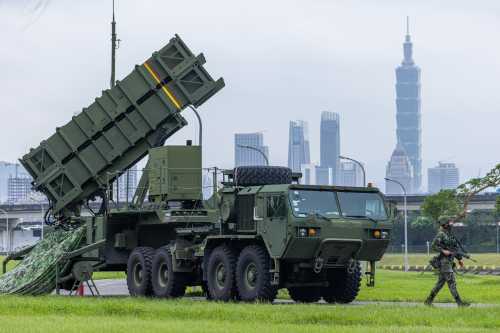
First, arms sales alone do not equal deterrence. Trump has approved significantly more arms transfers to Taiwan than his predecessors, and yet, perceptions of the credibility of America’s deterrent have come under fresh scrutiny.
Deterrence is the sum of capabilities plus intent as refracted through a rival’s perceptions. Both these inputs have declined over the past year. America has shifted significant military capabilities from East Asia to the Middle East to address challenges posed by Iran, thus degrading America’s capabilities in East Asia. Trump’s loose language has also raised uncertainty in Taiwan about America’s willingness to come to Taiwan’s defense.
Second, substantive progress in strengthening U.S.-Taiwan relations cannot offset perceptions of wavering presidential commitment. Materially speaking, U.S.-Taiwan security relations have grown steadily over the past two years in terms of arms sales, training, and coordination, even as Trump’s words and his decisions have eroded confidence in Taiwan about American reliability. The economic relationship between the United States and Taiwan is arguably more symbiotic than that between any other two trading partners in the world. Similarly, flows of people in both directions have risen, thereby deepening personal, professional, scholarly, and scientific links between both societies. Even despite these material gains in the U.S.-Taiwan relationship, though, confidence in Taiwan about America’s reliability has declined, according to Academia Sinica’s 2025 “American Portrait Survey.”
Trump’s description of Taiwan arms sales as a “very good negotiating chip” plays directly into latent anxieties in Taiwan that it eventually will be traded away by the United States as part of some grand bargain with Beijing. These fears long predate Trump. Former President Ronald Reagan sought to allay such concerns by extending Six Assurances to Taiwan. When asked during his return from his May visit to Beijing whether such assurances remain valid, Trump waved the idea away, responding, “Well, I think 1982 is a long way … a big, far distance away.” Trump made these comments while confirming that he discussed arms sales to Taiwan with Xi “in great detail.”
Trump’s words are given greater weight by the fact that he is withholding a $14 billion arms sales package to Taiwan. Additionally, the Trump administration reportedly withheld permission for Taiwan President Lai Ching-te to transit through the United States en route to Central America. Previously, such transits were routinely approved for the “safety, comfort, dignity, and convenience” of the traveler.
Improving America’s narrative on Taiwan
There is little cause for optimism that either Trump or his administration will become more precise in their statements on Taiwan in the remaining two years of this term. The Trump administration prides itself on having a top-down approach to policymaking on China and cross-Strait issues, and Trump himself is too set in his verbal patterns to expect any significant narrative upgrades in his remaining two years in office. The best that could be hoped for is that future administrations learn from Trump’s mistakes to strengthen the credibility of America’s signals on Taiwan.
America’s narrative on Taiwan need not be in opposition to China or accommodative of China’s views. It is a mistake, for example, to declare that Taiwan must permanently remain in America’s security perimeter. In addition to denying agency to Taiwan’s 23 million people over their own future, such a statement puts American goals in direct opposition to China’s ambitions. This puts America and China on a one-lane road in a game of chicken for no purposeful reason. There is no upside for American interests to signal Washington’s opposition to future cross-Strait unification, particularly given that there is not widespread enthusiasm among the Taiwan public for such an outcome. Such a posture is akin to stealing a hypothetical trigger for war from the future and placing it in the present.
Similarly, it is unwise for American leaders to treat Taiwan as an issue where the United States can accommodate China’s preferences in return for Chinese reciprocity on American priorities. Beijing already views Taiwan as “an inalienable part” of its territory and has shown no willingness to proffer gifts in exchange for acknowledgement of its position. By treating Taiwan as a negotiating chip, though, American leaders signal their lack of principle and their ambivalence over Taiwan. Such ambivalence risks emboldening Beijing to push harder in pursuit of its objective, thereby generating fresh challenges to America’s abiding interest in peace and stability in the Taiwan Strait.
It is not America’s burden to resolve cross-Strait differences. America’s objective is to keep a path open for leaders in Beijing and Taipei to resolve their differences without violence or coercion, however long that takes. In fact, America’s position is most credible and most capable of garnering support at home and abroad when it is firm, clear, consistent, and confident.
Over the years, various American leaders have struck a firm and confident tone on Taiwan. Former CIA Director William Burns was the Biden administration’s most effective communicator on this sensitive issue. In the current moment, Admiral Samuel Paparo, commander of America’s 400,000 military and civilian personnel in the Pacific theater, provides a useful model. Paparo is not in the habit of predicting timelines for the People’s Republic of China’s amphibious assaults on Taiwan. He makes clear that his goal is to avert conflict. He is unequivocal that his role is not to challenge or undermine China’s political system. He rarely makes public statements on issues relating to Taiwan’s security unless he has a purpose for doing so. And when Paparo does speak on matters relating to Taiwan, he emphasizes that he views credible deterrence as the most effective way for averting conflict. If war arrives, though, Paparo shows quiet confidence in America’s capacity to prevail.
Conclusion
Trump relies upon rhetorical devices when Taiwan comes up in exchanges with Xi. He either jokes about selling weapons to China just like America does with other countries, or he asserts that he and Xi agree that there will not be any cross-Strait crisis so long as Trump is in power. Trump treats an absence of objection by Xi as evidence of Xi’s acceptance of his assertion. Neither of these approaches serves as a substitute for a firm, clear articulation of America’s interests in the Taiwan Strait and its plans for protecting them.
As I have argued elsewhere, U.S. leaders need not fall back on rhetorical devices in the face of China’s pressure on Taiwan. Instead, they should respond by reminding Chinese counterparts that the center of gravity for the future of Taiwan is not Washington; it is the preferences of Taiwan’s 23 million people. If China wants to pull Taiwan closer, it needs to appeal to the interests and aspirations of Taiwan’s people. Their voices will determine Taiwan’s future direction.
America’s next leader will need to restore credibility in Beijing and Taipei by demonstrating competence and temperament to manage cross-Strait tensions. She or he will need to be clear on America’s purpose, which is not to deny Taiwan from China or to use Taiwan as a bargaining chip for American priorities with China. This will require steadiness of purpose, strength of will, and credible military capabilities.
Beijing has reasons of its own to interrogate the viability of any military solution to cross-Strait differences. These include the fitness of its force, particularly after a historic purge of its high command and a four-decade absence of combat experience. China also must weigh the implications of using force against Taiwan against its ability to realize other goals, such as its socioeconomic project of national rejuvenation. Russia’s setbacks in Ukraine and America’s challenges dealing with Iran also reinforce the rising risks of asymmetric warfare for Beijing. These risks will only compound the more that Taiwan produces and fields large quantities of artificial intelligence-enabled uncrewed systems for air, maritime, and undersea operations.
None of this is meant to diminish the formidable security challenges that exist in the Taiwan Strait. Rather, this piece is intended to advance one narrow point: America’s leaders need to do better in sending credible signals of resolve to uphold peace and stability in the Taiwan Strait. Taiwan’s significance to American interests is high and rising, particularly given America’s dependence on Taiwan semiconductor chips for its AI advances. Arms sales to Taiwan are important, but they are not a cure-all. Ultimately, cross-Strait tensions are a political challenge with a military component, not vice versa. The sooner America’s leaders embrace a firm, clear, consistent, and confident posture on Taiwan, the better the country will be able to protect its abiding interests in the Taiwan Strait.
Author

Related Content
The Brookings Institution is committed to quality, independence, and impact.
We are supported by a diverse array of funders. In line with our values and policies, each Brookings publication represents the sole views of its author(s).