




Brookings Senior Fellow Robert Kagan writes in The Atlantic that U.S. defeat in Iran war “is not only possible but likely.” In this episode of The Brookings Current, Kagan is joined by Melanie Sisson and Michael O’Hanlon, also senior fellows in Foreign Policy, to discuss their latest thinking on the war, and whether it has weakened America’s hand in the region.
Access Kagan’s article, “Checkmate in Iran: Washington can’t reverse or control the consequences of losing this war” (subscription required).
Related Content
Transcript
KAGAN: Iran controls access to the Strait of Hormuz, which means they control access to a major portion of the world’s energy supply which has completely reversed the power situation i in the region so it’s pretty much a disaster.
O’HANLON: The old status quo is gone. The whole thing, the whole enchilada is to some extent up for play.
[music]
SISSON: Hi, this is The Brookings Current from the Brookings Podcast Network. I’m Melanie Sisson, a senior fellow in foreign policy here at Brookings, and I’m joined today by two fellow senior fellows, Bob Kagan and Mike O’Hanlon, to share our latest thinking on the course of U.S. military operations against Iran.
Where does the conflict stand? Has it weakened or strengthened America’s hand in the region? And what are the global implications thus far?
Bob, welcome to The Current.
O’HANLON: Thank you, Melanie.
SISSON: Mike, welcome to you as well.
O’HANLON: Hey, Melanie. Thank you.
[0:52]
SISSON: So Bob, you recently published an article in The Atlantic entitled “Checkmate in Iran.” The subtitle is “Washington Can’t Reverse or Control the Consequences of Losing This War,” which says a lot, but I’m gonna ask you to say even more. Tell us what you want to be sure that we remember from this article.
[1:11]
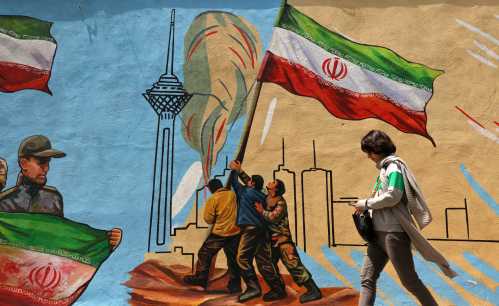
KAGAN: Well, the most important thing is that as things currently stand, and I honestly don’t see what the United States can now do to prevent this, Iran controls access to the Strait of Hormuz, which means they control access to a major portion of the world’s energy supply, which means that they now have leverage that they can use both against countries in the region with the rest of the world.
We’ll have to negotiate with Iran to determine what their oil and energy supplies are, and this just has completely reversed the power situation in the region and globally because it means the significant diminishing of American influence in the region, the enhancement obviously of Iran’s influence, and also Iran’s good allies who are China and Russia.
So it’s pretty much a disaster, and I’m glad we have Mike here because I just don’t see what military options, even if you wanted to pursue a military option, can accomplish the objective of opening the strait without causing immense and lasting damage in the region to oil infrastructure and other energy infrastructures.
[2:15]
SISSON: Before we get into some of the very specific military implications and other dynamics that Bob mentioned, Mike, I wanted to ask you, on a scale from sober and straightforward analysis to worst case scenario catastrophizing, where do you think Bob’s assessment, analysis, and article fall?
[2:32]
O’HANLON: It’s a really important article because I think what it does is what I would define as the plausible worst case. I always say to my students who are learning defense analysis, You never want to have a point estimate, and certainly not just a happy estimate of how a war is gonna go. And we’ve seen this through history, the Germans with the Schlieffen Plan, you know, Lincoln not being ready for the Civil War, if you want to go back that far. Donald Rumsfeld having a shock and awe idea for how to win the Iraq War fast.
And what President Trump did with his optimism, boosted sort of above even normal levels by the Venezuela raid, is to think this would go just the way he wanted. He fell in that long tradition of war planners thinking they could control everything and believing that the optimistic happy outcome was the most likely, if not the inevitable one.
What Bob’s done is, and they should have asked him before, is to explain all the ways in which this can and maybe is going badly at a broader level. Not so much the military tactical level, but the broader level. And I think it’s a very compelling, plausible worst case. I don’t know that I am there with him on being quite as convinced that that’s the likely case, but I certainly think that when you’re establishing bounds in which to imagine where this could go, he is on a very reasonable place, unfortunate as that may be, and I wish I had more solid grounds to just flat out disagree. I don’t.
So I think he’s not just catastrophizing, he’s giving a plausible bad case of where this could go and maybe already is going.
[4:04]
SISSON: And Bob, you’re very clear that you think either we have already lost or will ultimately lose. We’ve lost conflicts before. You highlight a few in your article, in fact. But you draw a comparison about sort of those conflicts, how much they would’ve affected the United States’ overall standing in the world. So what was America’s overall position in the world before Iran, and what does it look like to you right now?
[4:31]
KAGAN: Well, you know, again, as you say, we have failed in conflicts before. Vietnam is a notable example. I don’t consider Iraq a complete failure. I think it’s a mixed picture, but certainly it did not turn out the way we wanted to. But the question is, what were the strategic ramifications of those failures? And in the case of Vietnam, as high a cost as it was, it ultimately didn’t have a huge strategic impact on the United States.
And Iraq, I think, was saved to some extent by the surge, which I know that Mike supported at the time, which at least put us in a situation where the United States ended the Iraq War still in a fundamentally dominant position in the region, still with the strait open, with oil prices at reasonable levels, et cetera.
The difference here is that because I don’t see a way for the United States to regain its position in the region, we really have lost dominance in a critical part of the world. We’ve lost the ability to guarantee freedom of the waterways in a critical part of the world, which has all kinds of global ramifications, which I think will be very difficult to reverse.
I don’t think my argument is a worst-case scenario. I think it is what the reality is. The reality is I do not see a military answer to our current problem, which means that we have permanently, at least for the foreseeable future, given up our position in this vital part of the world.
[5:51]
SISSON: Why does the United States need to be dominant in this region?
[5:54]
KAGAN: Well, it depends on what we think our interests are, and if you are truly pulling back within the Western Hemisphere and sort of returning the United States to where it was sometime in the 19th century, and you believe that it doesn’t matter what happens out there in the world, in Europe or in Asia, which does seem to be Donald Trump’s view — because he’s pulling troops out of Europe, he’s basically destroying our alliances — then I suppose it doesn’t matter. And Donald Trump is constantly saying we don’t need the oil from the region.
But the truth is, I think we’ve learned repeatedly throughout history that the United States cannot be secure simply in the Western Hemisphere, that our interests, our economic interests, our global interests in values, which I think we do have real interests in, and fundamentally, at the end of the day, our strategic interests are fundamentally damaged in this situation.
And again, I don’t see a way to really repair it.
[6:48]
SISSON: So there are some very serious arguments out there about U.S. engagement in the world as not necessarily being all or nothing. So not necessarily a full retrenchment to the Western Hemisphere, for example. And some of those arguments would be in favor of maintaining serious engagement in Europe and in Asia, but not in the Middle East.
Mike, how would that argument strike you in light of what is happening in Iran now and in general in terms of America’s strategic interests?
[7:13]
O’HANLON: Well, you could say the Middle East is third of three on the list, but that’s not really a convincing argument that we can disengage because the region still matters a lot. You have countries that want nuclear weapons there. You have much of the world’s oil and gas and fertilizer and helium supplies coming from that region.
Somebody’s got to make sure the economy works through that region. I may be slightly more willing than Bob to imagine a multinational coalition someday doing it, but I’m probably completely in his camp that that multinational coalition doesn’t exist now, and the aspiration to get there is perhaps not going to be helped by this latest conflict. So I think I find his assessment that this has been more negative than positive correct.
I’m still hopeful that there are a number of mitigating strategies we might employ that may leave us still maybe adversely affected by this conflict, but not quite as badly so as Bob assesses. For example, we could negotiate a deal with Iran, which has reasons that it wants this thing to end too.
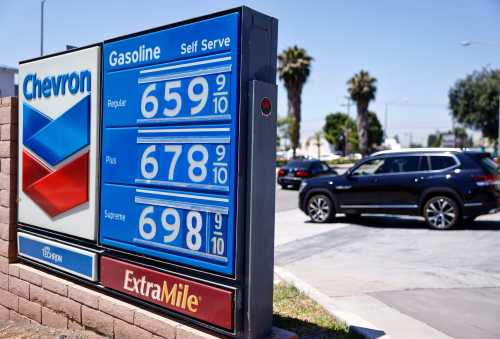
And that deal can include reopening the Strait of Hormuz and maybe tolerating some very low-level uranium enrichment. We could imagine over time building more pipeline across the Arabian Peninsula. That’s an expensive proposition, but it takes away some of Iran’s ability to kill 10 to 15% of the world’s oil exports, which is what’s basically happening now, or 10 to 15% of oil consumption.
And I’m with Bob in underscoring the gravity of where we are. This thing could get worse before it gets better. Even if the shooting doesn’t resume, the world’s energy situation is going to get worse as this thing plays out into spring and summer absent the negotiated strategy. And the pipelines can’t help us in 2026. New pipelines can’t help us in 2026 or 2027.
So I see a number of possible mitigating strategies. I don’t see a solution. I don’t see a net positive. So in that sense, count me yet again in the Kagan camp.
[9:07]
KAGAN: When you say a deal to open the strait, I just don’t see any deal to open the strait that does not include Iran in control of the strait. So it would be open in the sense that Iran is allowing trade to move, ships to move through it, but only under Iran’s terms and only when Iran feels like it. That’s the real problem. And again, is there a military answer to that problem?
Otherwise, I would say not only do the Iranians stand enormously to benefit from that, which is a reason why they won’t give it up, I think they believe it’s vital to their continued existence. What’s to stop Trump from turning around six months from now if you’re Iran and attacking them again, regardless of what deal’s made? Trump has proven himself completely willing to break every deal that he’s made almost within minutes of making it. So that’s a problem.
And what is to protect Iran from Israel should Israel decide, as I think they will many times, that they are unhappy about what Iran is doing and want to strike?
So from Iran’s point of view, I think control of the strait is an existential issue. And so nothing short of really Wiping them out is going to change that. And that’s why I am so pessimistic about the possibility of reversing this defeat any time in any strategic window that matters.
[10:27]
O’HANLON: Well, I would just add that I think we have leverage in the sense that our counter-blockade is very effective at shutting down Iran’s economy. Doesn’t change your assessment, but it does give us some reason to hope that we have some cards to play as well. But I agree with your bottom line about military options, and our colleague Caitlin Talmadge, who’s written about de-mining in the Gulf for much of her career, it’s a very daunting proposition even when you’re not getting shot at.
And so, yeah, the notion that you are gonna reopen the strait reliably in a way that makes everybody comfortable to go through there is a pretty daunting proposition. And I think if you were gonna do it sort of robustly and impose that, among other things you would need to have some American forces on the Iranian coastline along the Strait of Hormuz.
So I I think it’s doable, but with a risk of hundreds or more of American casualties and a risk of thousands of troops being bogged down in Iran for a long time to come.
[11:20]
KAGAN: And, and, and potential loss of warships in the process? I mean, the answer is could we … could the United States do this? Yes, but at any cost that we’d be willing to pay? That’s kind of the question, too, right?
[11:30]
SISSON: No, I was gonna ask you to elaborate a little bit, Mike, on really what would the size of that kind of military operation be? What would it look like? How many ships? How many people? What would the potential cost be if you can give even a sort of very rough estimate based on prior such conflicts, even though there’s not been exactly this before?
[11:49]
O’HANLON: I mean, the way I would ballpark it on the back of the envelope, which is often as the Pentagon goes through a million detail calculations and often winds up with the same kind of answers as these back of the envelopes, or if they think that they can be more precise, sometimes they’re later proven wrong.
But the way, if you’re gonna control a 50 to 100 mile coastline and not just be able to search for speedboats but protect yourself, you’re talking tens of thousands of troops. I mean, typically speaking, a brigade of several thousand is built to control a 25-kilometer front, ballpark. You know, and that can change obviously depending on whether it’s high-end combat or whether it’s monitoring and searching for speedboats.
But I think you’re gonna have to have several American brigades plus the support ashore, which means low tens of thousands of U.S. troops in Iran.
[12:41]
SISSON: So Bob, there’s an alternative. One of them is that President Trump declares the war over and won, and we leave. What does it look like if he chooses that course of action?
[12:52]
KAGAN: Yeah, I think if I had to bet, I would say that’s what he’s going for. I think, you know, there’s talk he may decide to, like, invade Cuba now in order to distract attention from this. By the way, predicting Donald Trump is not an easy thing to do, but I think his current position looks to me like he would like to walk away, and I think he’ll say the strait’s … is somebody else’s problem. Let the Europeans open the strait. Let the Chinese open the strait. We’re selling lots of oil from our ports, which is true. And I think he thinks he can walk away from it.
And then I guess it depends — and this is a an issue that I don’t understand well, which is where does the price of oil settle in a situation of Iran controlling the strait? So Iran is demanding tolls, but also there’s a constant threat of conflict, it seems to me, so you’ve got a huge insurance risk premium. So I don’t know where oil settles if in the scenario the end game being Iran is in control of the strait. It could be that it settles at a new high that everybody just gets used to. I suppose that is a possibility.
So therefore, you know, the American economy may sort of adjust to it in some way. But still, the geopolitical ramifications will be impossible to miss. Although how much the American people care about that, I don’t know. So that’s why my guess is Trump looking at his — what is now a terrible situation. His choices are walk away, try to change the subject, and hope that, you know, he at least can survive. The other is to engage in a much longer, rougher, more expensive, more dangerous war that can go on for possibly months, if we’re lucky. I think faced with those choices, he’s gonna try to walk away.
[14:30]
SISSON: So walk away or go in further. What about just maintaining the status quo where we are? What about just continuing to draw this along and wait for conditions to change and see what happens?
[14:41]
KAGAN: Well, then the question is who can deal with this longer? And plus, Iran doesn’t have to sit there and allow this to happen. This is the other part of this. Iran has options which they are exercising now. The occasional drone is all it takes. Look at what happened in the last two days. By all accounts, I think from what I’ve picked up, the Israelis believed that Trump was going in. I saw Jack Keane, who’s pretty well-informed. He was out there saying Trump is going in. And then next thing we know, we get this Truth Social post where the emirs and everybody have asked him not to do this.
Now, I don’t know if there is any truth to this Truth Social post at all. I don’t believe that we are now in the middle of serious negotiations. I do believe it’s possible the Gulf States begged him not to do this precisely because they know that they’re the ones who are gonna pay an enormous price for this.
Setting even aside could we do this militarily, even if we were to go in and do what Trump wants to do and take out their civilization and wipe them out, in the process they have the capacity, again, as we said earlier, to do such lasting damage to the region’s energy production that it could throw the world into an economic crisis that could last a decade.
And I don’t know how we prevent that from happening, even if we have the best-planned military operation in the world.
[15:58]
SISSON: So, you know, you’ve both been very clear about the amount of power that maintaining control over the strait has given to Iran. My question is, why didn’t Iran start exercising this kind of control earlier? In your Atlantic article, you put a very fine point on it and you say that control of the strait means Iran is the key player in the region and one of the key players in the world. Why would they not have wanted to take that power earlier on?
[16:24]
KAGAN: Well, I think this is a really interesting case study for political scientists out there to talk about deterrence and when you lose deterrence. Now, the interesting thing is, I believe, the reason the Iranians never did this in the 47 years in which they’ve been at war with us according to the Trump administration, is that they knew that if they tried to do this, they would bring upon themselves precisely this devastating attack, probably from a multinational force, but certainly an unbelievably destructive — Who invites this kind of attack on themselves deliberately? And so that turned out to be the deterrent that prevented them from wanting to exercise a power which they theoretically had.
Once we launched the attack and basically made it clear that our goal was their extermination, they no longer had any disincentive not to do everything they possibly could. So I think the only circumstances in which they could have controlled the strait is if we and the Israelis launched an attack that was basically designed to completely take them out.
Even the tit-for-tat attacks that Israel and Iran had engaged in, that sometimes we and Iran had engaged in, didn’t lead to this because they knew that our goal was not their ultimate extinction. But here we are, we kill the entire leadership, we make it clear we’re trying to completely take them out. That is when then the deterrence broke down. We destroyed the deterrent effect ourselves.
[17:46]
SISSON: Mike, what do you make of that?
[17:47]
O’HANLON: Yeah. You’ve only got so many cards to play at a given moment or in in in any given overall situation. And we were in a situation of mutual deterrence. The Iranians were doing bad things with their nuclear program, but not racing for the bomb. They were doing bad things with their terrorism, but not launching attacks on American territory.
So it’s a fascinating study in sort of partial deterrence or deterrence along different rungs of a ladder, if you will. And we’ve just decided to go halfway up the ladder, and now the rules are different. The old status quo is gone, and no one’s quite sure where it’s headed.
So yeah, and I’m gonna stay in the camp of uncertainty. Bob’s in the camp of being a little bit more convinced that the outcome will be bad. I’m with him that it will be net negative. I still think there’s a ton of uncertainty as to where we wind up, but the old rules are gone, the old status quo is gone.
[18:36]
KAGAN: You know, I think historians will say that the turning point was October 7th and the attack on Israel because that changed Israel’s risk calculus also, because Israel wasn’t gonna launch an attack on Iran absent a perception that their existence was at stake. And whether that is true or not, certainly October 7th completely changed Israel’s calculus, which led them to be willing to attack Iran, which provided the opportunity for Trump.
And, you know, we were talking earlier, had Trump thought through all the … Trump didn’t think through anything. He saw a glittering prize. Bibi Netanyahu came to him and said, You’re gonna go down in history as the person who got rid of this Iranian regime. I’m sure Trump had visions of himself on Mount Rushmore, and he didn’t think about day two.
[19:20]
SISSON: One of the long-term consequences of Iran maintaining control of the strait, Bob, in your article, is that you foresee an expanding great power naval race. Mike, do you think of that as one of the possible, if not likely, outcomes of however this intervention concludes and whenever it concludes?
[19:39]
O’HANLON: Possibly, but I think the Chinese may also just decide this is a good part of the world to stay away from. They may exercise the discipline in keeping out of the Middle East militarily that we always say we want to impose on ourselves and fail to do.
I don’t know. I think, you know, the Chinese obviously are gonna get more ambitious as their navy becomes more capable, and they’ve already pushed out well into the Indian Ocean.
So on balance, the trend’s underway. I don’t know how much this accelerates it. The Chinese may just have a good chuckle at our expense that this is yet one more example of the Americans being able to say they’re a global power and yet constantly getting themselves into trouble with how they exercise that influence, and not trying to compete with us precisely in that part of the world.
But I’m much more worried about how they compete with us in the Western Pacific, and they’re doing pretty well there.
[20:24]
KAGAN: Well, the only reason I mention that is because even the Chinese have relied on the American guarantee of keeping the waterways open. Even the Chinese depended on the United States guaranteeing their energy supplies.
I think that was always problematic from the Chinese point of view, but now that we’ve proven that we can’t do it, and it won’t be just the Chinese. The Japanese also have to be able to guarantee their own energy supplies. The Germans also have to be able to guarantee their own energy supplies.
So to me, this is all part and parcel to the fact that we are moving into a multipolar world where every nation takes care of itself, which is going to lead to all kinds of arms races and conflicts in the future.
[20:57]
SISSON: So actually, a few years ago, I heard you question whether there is such a thing as a post-American world. You seem to have answered that question for yourself very clearly here, and you identified that this adjustment, what we’re seeing in Iran, is a global adjustment to a post-American world that’s accelerating. Our once-dominant position is going away, and it’s gonna be the first of many casualties.
So if you were a betting man, what’s the next casualty?
[21:24]
KAGAN: Well, I mean, setting aside Iran, even before we got to Iran, as we talked about earlier, Trump is basically ending the American commitment to alliances in both Europe and Asia, which is therefore going to require those countries, those nations, to look after their own security, which is going to require them to engage in arms buildups like Germany is doing and like Japan is doing, which is going to bring back a lot of the old tensions in those regions which led to repeated conflicts before the United States sort of put an end to them by inserting itself.
If the United States comes back out, we’re just heading back into a world that looks more like the 19th century or the early 20th century, which is one of repeated great power conflict.
[22:05]
SISSON: Mike, what is something that you’re watching as a potential next casualty?
[22:11]
O’HANLON: Well, Bob has really provoked, as you know, this big question to be focused on at Brookings now in the years to come. What is the nature of the world order as of spring 2026? Where will it be come January 2029? And depending on what we think about that and what turns out to be the answer, what can we do next? So the whole thing, the whole enchilada is to some extent up for play.
I’m still hopeful, Bob’s heard me say this before, that, what, five and a third years now into the total eight years of Trump, all of our alliances are weakened but intact, and therefore there’s hope. But that’s all I’m going to say. The strongest word I will use is hope, not optimism.
SISSON: Well, that’s a fine place to end. I want to thank you both for coming in and having a terrific, if all too brief, conversation.
[music]
And thank you all for listening or watching. You can learn more about these and other topics on our website, brookings.edu.
My name is Melanie Sisson, and again, this is The Brookings Current. Thanks for joining us.
Participants



More information:
- Listen to The Current on Apple, Spotify, or wherever you like to get podcasts.
- Watch full episodes on YouTube.
- Learn about other Brookings podcasts from the Brookings Podcast Network.
- Sign up for the podcasts newsletter for occasional updates on featured episodes and new shows.
- Send feedback email to [email protected].
The Brookings Institution is committed to quality, independence, and impact.
We are supported by a diverse array of funders. In line with our values and policies, each Brookings publication represents the sole views of its author(s).
Commentary
PodcastHas the US lost the Iran war?
Listen on
The Brookings Current
May 21, 2026