




With an indefinite ceasefire in place and continued attacks in the Strait of Hormuz, the war in Iran has reached a turning point. Given the chasm between the strategic interests of the United States and Iran, where does the conflict go from here? In this episode of The Current, Brookings Fellow Aslı Aydıntaşbaş is joined by Vice President of Foreign Policy Suzanne Maloney and Visiting Fellow Mara Karlin to discuss the impact of the war, the status of negotiations between the US and Iran, and potential off-ramps for President Trump to seek an end to the conflict.
Related Content
Transcript
AYDINTAŞBAŞ: A scenario that’s been talked about, President Trump walking away, just walking away.
MALONEY: What the president needs fundamentally is some kind of image of victory that he can project publicly to the world and to his base. I do think it’s going to be hard for him to get his sort of victory image if the regime is left intact with access to highly enriched uranium and control over a strategic waterway through which 20% of the world’s oil and liquid natural gas are intended to pass.
[music]
AYDINTAŞBAŞ: Hello, and welcome to The Current. My name is Aslı Aydıntaşbaş. I’m a fellow at the Brookings Institution, and with me today are two very prolific and amazing scholars. Suzanne Maloney, vice president and director of the Foreign Policy program here at Brookings. And Mara Karlin, another visiting scholar, former assistant secretary of defense. Welcome to the show.
So, it’s been quite a dizzying time with the ceasefire, the ceasefire on, and then off and talks and no talks. I’m hoping that you two can help us understand what’s happening as we are taping this on April 22nd at 2:00 p.m. The talks are off. JD Vance has not gotten on that plane to Pakistan. But there does seem to be a ceasefire.
Suzanne, let’s start with you again. I’m not asking you who blinked first, because that even doesn’t seem to be a relevant question, but what do you make of this?
[1:39]
MALONEY: Yes, it has been dizzying. I think that’s a great description for really the entirety of this conflict, and particularly the period since the ceasefire was declared and then um very suddenly extended by President Trump. In his social media posts, he announced that it would be an indefinite suspension of the ceasefire, but of course now we’re hearing that that may not quite be the timeline that the administration is seeking.
And that would be quite reasonable. An indefinite ceasefire really enables the Iranians to continue to do massive damage to the global economy. And while they are currently under a blockade, they have apparently found some ways to evade some of the impact of that blockade, both in terms of getting ships through the strait, but also because they’re not blockaded on their non-maritime boundaries.
So, you know, I think where we are is a situation in which the conflict is still very ripe. I would imagine that within days, if we can’t get the two parties to the negotiating table, that we may be back to an active military phase of this war.
The real challenge is that the divide between their positions at this point appears to be quite considerable. And even the sequencing of next steps to get back to the table also seems to be something of a hurdle. The Iranians have insisted that they won’t return to talks as long as the blockade continues. And of course, the blockade is the primary form of pressure that we have now on Tehran and its position.
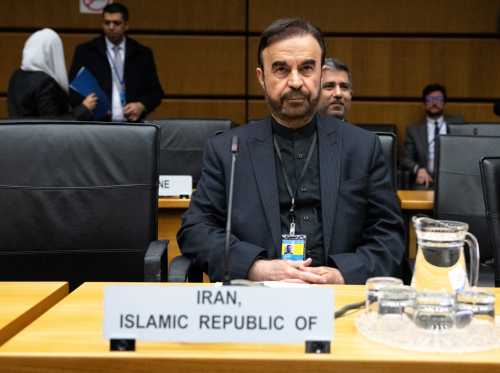
There have also been some questions about the extent to which the regime itself is capable of making and implementing a decision about even attending the talks, that there may be signs of disarray within the leadership of the Islamic Republic. That wouldn’t be entirely shocking given the decapitation of not just the supreme leader at the outset of the war, but senior echelons of the political and military bureaucracy.
From my perspective, they they do appear to have been able to decide upon and act upon a strategy. And that would suggest if they’re able to do that around their military response and their economic response, that they should be able to do that also around their negotiating response.
But it may be a subject of of greater dissent within the system. You know, we are for the moment not experiencing a high tempo of active conflict in the region, but I think it is very likely to resume if we can’t get back to talks.
[4:04]
AYDINTAŞBAŞ: Mara, how do you define the moment we are in? Because it did look for a while like President Trump was really interested in an off ramp. On the other hand, the situation at Hormuz remains uncertain. People have talked about a blockade over a blockade. And as Suzanne has described, Iranians still feel like they are on top of this.
[4:27]
KARLIN: Look, the longer this war has gone on, the more the U.S. has faced a situation of diminishing returns. I think you saw in the first two, even three weeks of the war, that’s where a lot of kind of the big operational achievements were happening by the U.S. and by Israel in terms of hitting leadership, hitting institutions, doing a decent amount to weaken the regime.
Once this became a Strait of Hormuz conversation, once that became the center of gravity, that actually is highly problematic to the United States. It means that that issue has become the forefront. It means that there is not as much attention on how to actually rethink that regime and how to weaken it further.
And of course, you have the economic impacts here at home. And then more broadly, you know, globally as well.
So it seems to me both sides have really appreciated the breather of the last two weeks or so. Probably could use a bit longer of a breather as well. But I think, as Suzanne notes, the fundamental issues are still there. Right? The regime is still there. It is a regime that is working on consolidating its power. You also still have all of these frustrations inside the U.S. administration vis-à-vis this Iranian regime and those frustrations aren’t going to get met in a couple hours of talks in Islamabad.
[5:48]
AYDINTAŞBAŞ: So let’s talk about that big divide between the two sides. To the extent that we know, there has been a substantial amount of conversation on what to do about the existing stockpile of enriched uranium. There has been some conversation on Hormuz. Maybe back to you, Suzanne, how advanced were the first round of talks and what’s your reading of the fundamental differences?
[6:18]
MALONEY: Well, I think we shouldn’t discount how significant the first round of talks really were.
AYDINTAŞBAŞ: Meaning the ones in Pakistan, right? At this point we’re talking about the JD Vance….
MALONEY: the talks that took place in Islamabad. To have the sitting U.S. vice president in the same room with senior Iranian military and political officials is absolutely unprecedented. And for 21 hours of negotiations, that is no small feat.
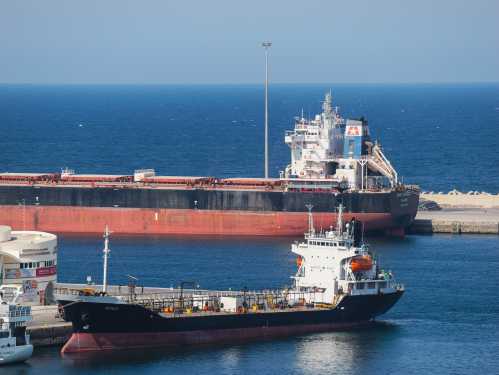
But what they’re trying to accomplish, I think, is highly unrealistic in terms of actually coming to a detailed agreement that could produce a an end to the war and a settlement of the the long file of concerns that the United States and frankly many other countries around the world have with this Iranian regime, while also undoing the the fundamental constraint that the global economy now faces, which is the Iranians’ seizure of control of the Strait of Hormuz and blockage of normal transit of oil, natural gas, fertilizer, lots of other byproducts of the petroleum industry that are crucial to all kinds of aspects of of normal economic life.
And so to set that challenge and to try to achieve it in the course of a day, or frankly even a week or a month, I think is going to be extraordinarily difficult.
We do believe that there have been positions exchanged around the question of Iran’s nuclear program. Most notably on the question of Iranian enrichment capability. The United States has demanded a at least a twenty-year moratorium on uranium enrichment. That’s been a fundamental position of particularly the critics of the Iran nuclear deal in this country and elsewhere–
[7:54]
AYDINTAŞBAŞ: –including President Trump.
[7:56]
MALONEY: Including President Trump. Although it’s not entirely clear how detailed his understanding of some of these issues might be. Even to propose a a lengthy moratorium is something the Iranians have suggested they will never accept. And frankly, even even a moratorium of of a defined period would be a position that some within the Republican Party and some in Israel would find insufficient.
So, you know, already we’re at a starting point with this agreement that it is likely to come under, any agreement is likely to come under fire from from parties within the United States. And the same is true on the Iranian side. That they have essentially, you know, held out from pressure from the international community for more than 20 years on this question of enrichment. They have made that, you know, sort of a inalienable right– that can be debated. But it is something that they have stood firm on throughout negotiations over decades now.
And so the likelihood of them relinquishing that activity permanently or appearing to have made major concessions at a point at which they actually think that they are in a stronger position than the United States is unlikely.
[9:01]
AYDINTAŞBAŞ: Even with sanctions relief on the table?
[9:04]
MALONEY: Well, you know, they they clearly want to come out of the war in a stronger position both strategically and economically. And I think they’re positioned to try to achieve those aims. But what that formula looks like is going to be complicated. And what we’ve seen is that the Iranians have held out at other points in which they have had opportunities to gain economically, or at least avoid further economic pressure by insisting their right to continue to enrich uranium.
The other big question, I think, at least from what we’re hearing from the initial round of talks, is around the stockpile of highly enriched uranium the Iranians produced in violation of their obligations under the nuclear deal. A step they took after President Trump himself exited the United States from the deal back in 2018.
That stockpile is not quite weapons grade, but it’s close enough for a dirty bomb. It would certainly facilitate a much quicker rush to a bomb if they had access to it. We believe that about half of that stockpile is buried deep under the ground as a result of the strikes that the U.S. and Israel took during the June war. We’re not entirely clear where the rest of that stockpile might be. And, you know, the Iranians have proposed various solutions for it, but at least this appears to be another element of sticking point for the two sides at the at the diplomatic table.
[10:17]
KARLIN: You know, If I might add, what’s interesting is how much the talks and the conversation now is focused on the nuclear piece. When we sat here to tape a podcast just a few months ago, we’ll recall that there were these massive protests across Iran. Really, a diversity of folks who were participating across every province of Iran. That was met with probably, you know, the deaths of tens of thousands of Iranians by the regime.
And President Trump at that moment in time was quite passionate about trying to support them, tweeting things about help being on the way. And that’s not the conversation at all at this stage. It’s really turned into, like, a military and nuclear capabilities discussion.
[10:55]
AYDINTAŞBAŞ: That really is incredible, how the conversation has shifted, and no one in Washington seems to remember that two months ago, United States, at least the president, was offering help and asking Iranians to seize their institutions.
[11:12]
MALONEY: Can I just jump in and say that I think that’s one of the shifts that the Iranians have affected. This war began as a war of regime change. Certainly in the president’s initial public statements and from what we know of the planning that went into the war, it was assumed that the regime would fall within a matter of days.
That was a huge miscalculation on the part of the American administration. And I think that Iranians turned the tables by seizing control of the strait. And now it has become, as Mara said, a war about returning control, returning freedom of navigation to the strait. And also trying to achieve some of the more ancillary aims of the initial war around the nuclear issue, military capabilities, and other aspects.
And as you say, the Iranian people have been entirely left out of the equation, even as they have been cut off from internet access throughout this conflict.
[12:02]
AYDINTAŞBAŞ: Mara, I want to get back to the security question.
KARLIN: Okay.
AYDINTAŞBAŞ: And ask you once again to be an explainer of U.S. government.
KARLIN: I’ll try.
AYDINTAŞBAŞ: A position you cannot escape in these podcasts. What does a good deal look like from a U.S. perspective? What would you need at minimum? I mean, President Trump says the deal is done, regime change is over, et cetera. But but really, what’s the bare minimum United States needs needs to have for a good deal?
[12:34]
KARLIN: I don’t know that a good deal is really on the table at this stage in a feasible way. I mean, I think, the parties are in such different places. And so what the U.S. frankly needs right now is an off ramp sooner rather than later.
If it appears that this regime is not collapsing, which I think there is no evidence that it is going to anytime soon, what the U.S. needs is some sort of deal that gets the Strait of Hormuz open, some sort of free and, you know, fair movement through the strait. Not least because you have to be careful of setting precedents in in other places.
And then I think if the U.S. could agree to have talks on the way forward on the nuclear front, paired with a ceasefire, that is so far from ideal, but probably the most feasible outcome in the near term.
[13:24]
AYDINTAŞBAŞ: So we might have to live with what’s possible, not really what’s ideal at this point.
[13:29]
KARLIN: Yeah, absolutely. I mean, the the moment this conflict started and then was unable to achieve its primary objective by Washington to collapse the regime, I think Tehran could see that they had a bunch of leverage that they wanted to take advantage of.
And and I would just underscore, you know, the longer this goes, the more it really does suck out the readiness from the U.S. military. So to give you one kind of astonishing example, the U.S. military has used up between 25 and 50% of some of its most important munitions. And if you’ve been following the kind of ugly story that is the defense industrial base these days, trying to rebuild those munition stockpiles will take a number of years.
The U.S. military, of course, doesn’t just get to think about the Middle East and not just even about an Iran conflict, which means this is actually going to box in decisionmakers in the Pentagon over the coming years when they have to look around at other threats in places like Europe or Asia, for instance.
AYDINTAŞBAŞ: And of course it matters for Ukraine as well.
KARLIN: Absolutely.
[14:32]
AYDINTAŞBAŞ: Suzanne, there’s been some conversation about fractures within Iran inside the regime. Do we know anything about it? And do you think that there is sort of different factions? Is that why they haven’t showed up, or is that a bit of a simplistic read of what’s happening here?
[14:52]
MALONEY: I don’t think it’s at all simplistic. I think, you know, the Islamic Republic has been a highly factionalized state really since its inception. You know, we’ve seen this kind of partisan bickering within the system at almost every point of, you know, critical decisionmaking for the regime, whether it was over the decision to end the war between Iran and Iraq in 1988, whether it was over the how to approach the nuclear file, and and whether there should be a deal.
All of these things have been hotly contested. And often that’s played out both in terms of public rhetoric, but also in terms of how they negotiate by constraining negotiators.
It would not be at all surprising that in the aftermath of the loss of so many significant and influential figures, the regime reconstituted itself quickly. But, you know, these processes of decisionmaking are probably altered as a result of the absence of people who had considerable sway, considerable experience. And the presence I think of, you know, certainly a more heavily radical element of the military and Revolutionary Guards appearing to be at the forefront of decisionmaking.
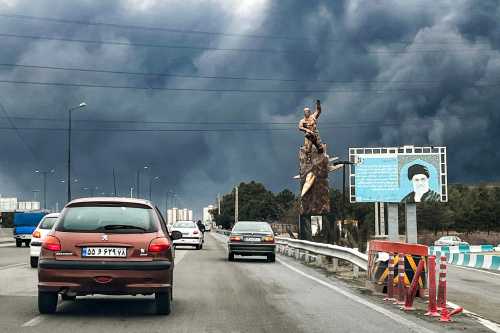
We believe that Mojtaba Khamenei, who was named supreme leader in the aftermath of his father’s killing on the first day of the war, is still in charge, that he’s still alive. But he hasn’t yet been seen in public. He may be being kept in a secure location given the concerns about future targeted assassinations by the U.S. or Israel.
And we don’t know what the structure of decisionmaking is. He had never held any position of formal authority, but he had been a really influential player behind the scenes. Certainly very well networked with the Revolutionary Guard Corps.
But again, you know, with this kind of new structure in place and with the constraints on, you know, the normal meetings and gatherings that might have taken place outside of wartime, I think it’s not at all surprising that we’re seeing at least some sense of a debate within the system that would be normal at any point in time for this regime.
[16:56]
AYDINTAŞBAŞ: Mara, I want to ask you about the region. Let’s just assume that this war will wind down at some point over the next couple of weeks or months. It could be over tomorrow for all we know, or we could be back on war footing. But in terms of the big picture, can you talk a little bit about what you, whether or not this war has advanced U.S. strategic position in the region? Both in terms of Gulf allies and and just sort of when you look at the map, Asia, Europe, and everything. Pluses and minuses.
[17:33]
KARLIN: This war has made the U.S. position globally a whole lot trickier. So it’s worth looking for a moment at America’s allies and adversaries in disentangling this. So first of all, America’s allies, looking at the Europeans. You know, the the U.S. at a minimum usually goes to war alongside its European allies. It almost always at least consults them beforehand. And that hasn’t been the case here. And nevertheless, this conflict has obviously affected them as well.
And in fact, right now you’ve got military planners from about 30 or so nations that have been convened by the Brits and French to try to figure out what does it look like to have an open Strait of Hormuz once a ceasefire becomes permanent.
So effectively you’ve got a lot of perturbation by America’s European allies because they’re saying, you didn’t tell us about this thing you were going to do that’s going to have a real impact on us, particularly our economy. You’d like us now to help play a role in the cleaning up, and we have to think about how we might organize on our own to some extent.
I would also note, of course, the Gulf States are worth highlighting. They, of course, have felt the pain of this conflict quite profoundly. The UAE has actually been hit even more than Israel. And those countries also were not necessarily expecting this conflict to start when it started or to go the way that it, that it would.
And so they need to rethink a bit what does it look like to have a U.S. security guarantee? Is it in their interest to continue having a very robust U.S. military posture? Now, I don’t think they have great alternatives, but they feel that–
[19:05]
AYDINTAŞBAŞ: –in the short run–
[19:06]
KARLIN: –in the short run, absolutely. But they felt the pain of that in a different way.
And then just briefly turning to America’s adversaries or challengers. So so the Russians have given targeting information to the Iranians in this war. That’s a pretty bold and gutsy move. They are helping America’s enemy try to kill American service members. And they have not gotten a response out of Washington along those lines.
And then of course you’ve got the Chinese who have been pretty fascinating on this front. You know, for a number of years a lot of folks were saying, well, maybe Beijing will play some sort of peacemaker role in the region. And I think what they’ve shown is they’re willing to dip their toe in a little bit, but they do not want to spend a lot of time, attention, or energy on this region.
Moreover, they are more than comfortable making sure that the assistance that they have given to Iran is being used in ways, again, that at a minimum harm American national security interests.
All of which is to say the map looks really tricky from a U.S. perspective right now.
[20:10] AYDINTAŞBAŞ: I want to ask you both a question, a scenario that’s been talked about: President Trump walking away, just walking away. You know, people often talk about the Gaza war and the Gaza peace deal, but forgetting that there actually hasn’t been a comprehensive settlement in Gaza. We’ve sort of seen phase one, an active Israeli operation stopping. But phase two has never, you know, we happened, which was disarmament of Hamas and so on.
What about just sort of the current status quo continuing on for the foreseeable future, and then president just sort of gradually peeling off U.S. military buildup?
[20:49]
MALONEY: You know, with President Trump one can imagine the widest range of possibilities with respect to how he might approach a a really complex and potentially unresolvable crisis. So he has certainly threatened a number on a number of occasions that we don’t need the oil; we can simply walk away and let the rest of the world that cares about the strait try to fix the problem. He then has backed down from those threats in the past, and he has actively sought either through force or through diplomacy to try to drive toward a resolution.
I do think that what the president needs fundamentally is some kind of image of victory that he can project publicly to the world and to his base. And he might well take steps in, if he’s given something like that, that would be inconceivable for any prior American president.
Mara was talking about the Chinese posture in the region and effectively their disinclination to really extend themselves in ways that protect global public goods. That has been the fundamental role that the United States has played. But from both the rhetoric and some of the actions that we’ve seen from President Trump, he does not seem to be persuaded that that is a a role that is either essential or important for the United States.
I do think it’s going to be hard for him to get his sort of victory image if the regime is left intact with access to highly enriched uranium and control over a strategic waterway through which 20% of the world’s oil and liquid natural gas are intended to pass.
It’s going to be very hard for him to walk away from the economic wreckage that a sustained closure, of the Gulf, of the Strait will have for for the entire world, including the United States, and from the the elevation of energy prices, which have been relatively modest to date. But if this does appear to be something that is semi-permanent, then I think we’re going to see almost inconceivable escalation in in energy prices and all the fallout for the wider economy.
So I think, you know, despite his inclinations, President Trump is likely to continue to try to push for some sort of a solution. But how long and what solution that is to me seem to be very much up in the air.
[23:04]
KARLIN: And I wonder if we won’t actually see some sort of frozen conflict. It’s hard to imagine some sort of solution that really gets at the fundamental issues, the fundamental divides between the two sides, absent a whole lot of blood, toil, tears, and sweat. And I don’t see evidence that the administration wants that.
So it will probably freeze at some point sooner rather than later. But I don’t think any of us should see that frozen situation as some sort of peace has broken out and new relationship.
[23:36]
AYDINTAŞBAŞ: So a quick question to both of you. I know President Trump is not someone who actually cares much about expert community, policy community here in Washington, which you are part of. But let’s say you got a meeting with him. You are facing President Donald Trump, and you have one minute to pitch your policy idea on Iran.
[24:02]
KARLIN: My policy idea would be to get the Strait of Hormuz issue solved as quickly as possible. So, immediately and enthusiastically reach out to U.S. allies and partners around Europe and Asia in particular. As I noted, you know, some of them are starting to get together. Offer whatever resources they need because that being on the table in such a predominant way is actually really problematic for moving forward out of this conflict.
AYDINTAŞBAŞ: Suzanne?
[24:30]
MALONEY: Well, I’m glad that I got to speak second because Mara as always has the right idea and the right answer here. I would only add, I would advise the president to put down his phone and to limit his contact with the media on this issue. Because I think what his frequent and sometimes contradictory statements to the press and over social media have produced is essentially the United States negotiating with itself, and they have, it has really given the Iranians a a lot of room for maneuver. And it would be far better if there were one clear spokesperson for the United States, and that it would be someone who is consistent and focused on what the real challenges that we’re facing are today.
AYDINTAŞBAŞ: Well, thank you Mara, and thank you Suzanne. This has been a great conversation. I hope President Trump does not put down his phone until he watches our episode, which will be up on our website where you can find more on the war in Iran at Brookings dot edu.
[music]
And this is Aslı Aydıntaşbaş for The Current.
Participants


More information:
- Listen to The Current on Apple, Spotify, YouTube, or wherever you like to get podcasts.
- Learn about other Brookings podcasts from the Brookings Podcast Network.
- Sign up for the podcasts newsletter for occasional updates on featured episodes and new shows.
- Send feedback email to [email protected].
The Brookings Institution is committed to quality, independence, and impact.
We are supported by a diverse array of funders. In line with our values and policies, each Brookings publication represents the sole views of its author(s).
Commentary
PodcastWill the Iran ceasefire hold?
Listen on
The Brookings Current
April 23, 2026