This paper was written for a May 28, 2026 workshop on defense and defense industrial cooperation between Turkey and its NATO allies, organized by the Turkey Project at the Center on the United States and Europe at Brookings, along with Riccardo Gasco’s “Turkey, Italy, and Europe’s defense-industrial future” and Aaron Stein’s “Low-tech cash cows and high-tech bottlenecks: Turkey’s defense industry matures.”
The origins of Turkey’s modern defense industrial establishment can be traced to an earlier episode of its pursuit of foreign policy “autonomy” during the multiple crises in Cyprus in the 1960s. Back then, the pursuit of autonomy was not “strategic” and largely meant Turkey’s emancipation from U.S. dependence for arms. In practical terms, the emphasis was placed on diversifying suppliers within the alliance, local assembly, and later, the indigenization of major weapons systems. The foundations of the current giants of the Turkish defense industry, such as Turkish Aerospace Industries (TAI) and Aselsan, were laid around that time.
Ever since, Turkey has transformed itself from a client (or a recipient) of Western support to a competitor in the global arms market, a transformation my colleagues Sıtkı Egeli, Çağlar Kurç, Arda Mevlütoğlu, and I covered in detail in an extensive 2024-2025 study. That study was part of a project called “National Defence Industry: From an Enabler of Turkey’s Pursuit of Strategic Autonomy to a Bridge between Turkey and Europe”—a title which implied that achieving strategic autonomy through a national defense industry might be a tall order. Yet it also acknowledged that such a shift could provide a solid foundation to resuscitate Turkey’s relations with the European Union (EU) in view of Russia’s war of aggression in Ukraine and the then-looming threat of Donald Trump’s reelection in the United States. Therefore, that research was framed to explore the defense industry’s prospects of unlocking the deadlock in relations between Turkey and the EU.
The limits of strategic autonomy
The Turkish defense industry started as a fourth-tier member of the global arms trade before evolving into the third tier in the last decade, with aspirations to eventually become a second-tier producer (emulating the French example). There is now a general consensus that the Turkish defense industry has matured to a certain extent. However, its ability to support Ankara’s pursuit of “strategic autonomy” in foreign policy is contestable at best.
The alignment between strategic autonomy and defense industrial capabilities is more rhetorical than real.
The alignment between strategic autonomy and defense industrial capabilities is more rhetorical than real. In other words, Turkey’s defense industry cannot afford Turkish decisionmakers the impunity they need when Ankara embarks on unilateral military action or attempts to assert its policy through military means in its neighborhood or beyond.
Consider these two examples:
- When President Recep Tayyip Erdoğan procured S-400 air defense systems from Russia, the United States sanctioned Turkey and removed it from the Joint Strike Fighter (JSF) program. This crippled the Turkish Air Force’s deterrent capabilities and caused a rupture in its long-term force modernization plans.
- Similarly, Turkish assertiveness in the Eastern Mediterranean prompted an undeclared arms embargo by Germany. Erdoğan identified this as foot-dragging and complained that it hampered the Turkish navy’s commissioning of air-independent propulsion submarines—even though Berlin later released the weapons and equipment needed to upgrade the Turkish navy, particularly its submarine fleet.
Despite that the idea of Turkish strategic autonomy remains popular, dependence on foreign arms suppliers continues both in the form of platforms (the F-35 JSF and Type 214-class submarines) and sub-systems (engines for tanks, aircraft, and ships, or seekers for air-to-air missiles). After decades of local assembly or coproduction deals for arms, Ankara has returned to the global arms market as a buyer of complete (or off-the-shelf) items, such as the Eurofighter Typhoon combat aircraft. Moreover, the capability gap in ballistic missile defense systems has revived Turkish interest in existing systems like the Franco-Italian SAMP/T.
In both cases, local solutions are under development (KAAN and Hisar-3), yet they are not expected to be available until 2030—which is a very optimistic target date. These are obviously stopgap measures until Turkey can have its own capabilities; however, those gaps resulted directly from foreign policy choices Ankara made over the last decade, such as unilateral military action in Syria and buying S-400 air defense missiles from Russia.
Leveraging arms procurement in diplomacy
In the past, Ankara leveraged its arms deals with European suppliers with some success, particularly for its EU membership bid. Italy, under Prime Minister Silvio Berlusconi, received many Turkish defense contracts for its support of Ankara in the EU. There are also suggestions that awarding defense contracts to French bidders helped change President Jacques Chirac’s mind about Turkey’s EU candidacy in the 1990s.
Today, the European scene looks very different. Among jointly produced European defense systems of interest to Turkey, two stand out: the Eurofighter and the SAMP/T. While the former is produced by a consortium of four European countries (the U.K., Germany, Italy, and Spain), the latter is produced by a consortium of France and Italy. Italy is the only European country that is part of both coproduction schemes.
In the case of the Eurofighter consortium, the U.K. is already on board with Turkey procuring the system, but it is no longer in the EU. Spain has become a customer of TAI’s Hürjet advanced trainer and is aligned with Turkey on a number of issues in the Middle East. Italy is very much interested in Turkish defense products. Germany remains the main challenge for Ankara in this regard.
In the case of Franco-Italian SAMP/T, France is an obstacle. Paris has already taken a clear side in the Eastern Mediterranean’s geopolitical rivalry involving Turkey, Greece, and the Greek-administered part of Cyprus. Reportedly, France already dashed Turkey’s earlier hopes for joining the SAMP/T consortium. It remains to be seen if the recent geopolitical developments will lead France to reconsider its view of Turkey in the new regional and global security environment.
As a major buyer of Western defense systems, Ankara has lately been signaling that the days of shifting away from the West are over.
As a major buyer of Western defense systems, Ankara has lately been signaling that the days of shifting away from the West are over. Once again, Turkey is willing to consider Europe as the center of gravity for its defense and defense-industrial efforts. This shift is partly triggered by Turkey’s expulsion from the F-35 program, the United States’ imposition of sanctions under the Countering America’s Adversaries Through Sanctions Act, and the congressional hurdles delaying Turkey’s purchase of F-16V Block 70 combat aircraft. These punitive measures during 2016-2024 left a deep scar on Turkish defense procurement agencies (both civilian and military). There is little, if any, interest in Ankara to go through the exasperating experience of seeking congressional approval for American arms in the future.
It should be kept in mind that Ankara decided to buy 20 brand-new Eurofighter Typhoons while it still considers buying 40 F-16Vs from the United States. Although the United States has not made an official statement in this regard, in a recent interview, an Ankara-based U.S. diplomat underlined that Eurofighter Typhoons are significantly more expensive than the F-16Vs.
In the end, Turkey’s procurement of Eurofighters may represent a compromise on strategic autonomy and a departure from Ankara’s long-established policy of prioritizing local content. Yet, for all intents and purposes, it marks a deliberate strategic choice by Ankara to end its path-dependence on the U.S. Air Force model for the Turkish Air Force. Obviously, the additional material costs of buying a non-U.S. jet are considered worthwhile to break away from the trajectory that has defined Turkey’s air power since 1947.
There are modest signs that the Turkish-U.S. defense industrial relationship might improve. Turkey-U.S. defense relations have taken an interesting turn recently. A Turkish company is now producing 155 mm artillery rounds for the U.S. Army at a plant located in Texas. Moreover, an American delegation recently visited Turkish shipyards to explore the possibility of subcontracting component production for U.S. warships. The United States is considering tapping into its allies’ ship-production capabilities (including South Korea, Japan, and Turkey) to keep pace with Chinese naval shipbuilding.
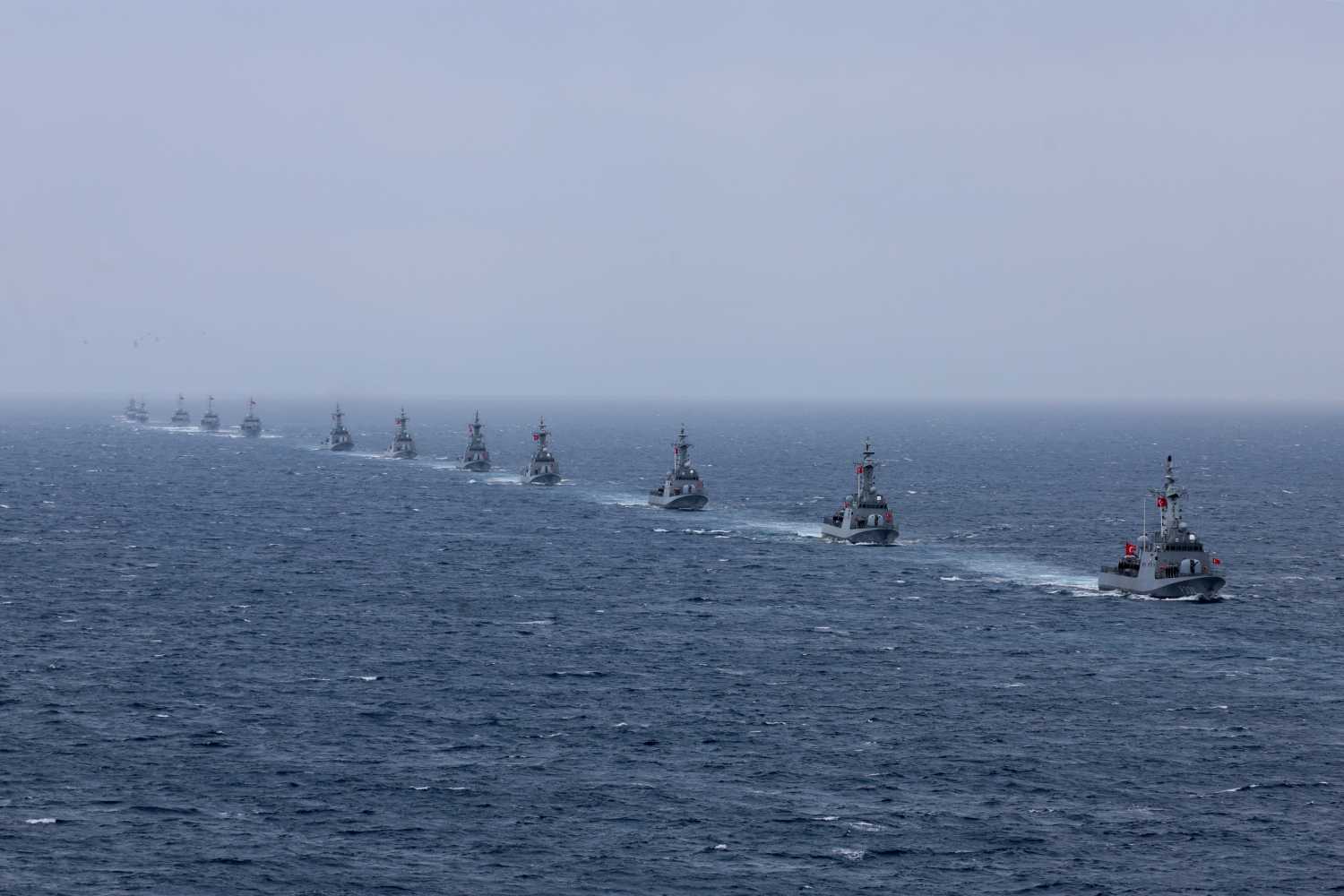
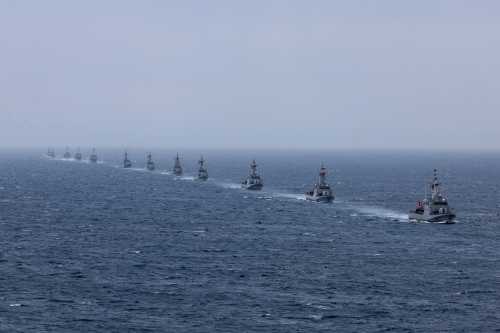
This highlights one of the Turkish defense industry’s core strengths: warship building. Turkey is emerging as a major supplier of naval platforms to a growing number of countries across the globe. NATO members have recently been added to the portfolio of Turkish shipyards, including Romania and Portugal. Furthermore, a large Belgian delegation recently visited Turkey, with Turkish naval shipyards among their primary site visits. While the Belgian navy is not interested in Turkey’s indigenous designs (such as the MİLGEM) just yet, its interest lies in subcontracting the construction of non-Turkish designs. Until recently, Belgium was not among the EU members holding a relatively positive view of Turkey. The delegation’s visit in and of itself may signal a sea change in bilateral relations. If Belgium decides to build its new frigates in Turkish naval shipyards, we are likely to see closer alignment between the two capitals in the future.
Finally, Germany is reportedly interested in Turkish ballistic missiles. The International Institute for the Strategic Studies has identified Turkey as the only European NATO member that “possesses a conventional ground-launched missile with a range greater than 300 kilometres.”
Conclusion
In our previous research, my colleagues and I concluded that institutionalized defense industrial cooperation offered little, if any, promise for revitalizing EU-Turkey relations. Indeed, Turkey’s exclusion from the EU’s Security Action for Europe financial instrument confirmed our pessimistic prediction. We also argued that in the absence of an institutionalized framework, we would be more likely to see the emergence and development of bilateral cooperation schemes. Recent developments point to this bilateral path as the primary way forward to enhance defense industrial cooperation with Turkey.
Bilateral defense industrial cooperation promotes good relations with individual EU members. However, it is too early to tell whether these partnerships are merely new manifestations of transactionalism between Turkey and Europe, or whether Ankara will be able to build a critical mass of friendly member states to overcome the institutional obstacles to harnessing its defense industry capabilities for broader European security.
In the absence of an institutionalized defense industrial cooperation with the EU as a whole or without participation in major European multinational arms ventures, the gap between Ankara’s strategic autonomy rhetoric and its defense industrial capabilities may widen.
In the absence of an institutionalized defense industrial cooperation with the EU as a whole or without participation in major European multinational arms ventures, the gap between Ankara’s strategic autonomy rhetoric and its defense industrial capabilities may widen. Turkey may have reduced its dependence on foreign suppliers for military platforms, but it is not fully emancipated, as dependence continues at the sub-system and component levels. In other words, Turkish defense industries have thrived on technology and know-how acquired through joint ventures and coproduction programs of the past decades. Without similar opportunities with foreign partners, Turkey runs the risk of losing the momentum in both its defense industry and in the strategic autonomy it has garnered for itself.
Author

Related Content
The Brookings Institution is committed to quality, independence, and impact.
We are supported by a diverse array of funders. In line with our values and policies, each Brookings publication represents the sole views of its author(s).