



In this special edition of Reimagine Rural, Tony Pipa interviews Derek Kilmer, senior vice president, U.S. Program & Policy at The Rockefeller Foundation and former member of the U.S. House of Representatives (WA-6) and Benji Backer, CEO and founder of Nature is Nonpartisan. Kilmer and Backer are members of America’s Rural Future: Brookings-AEI Commission on U.S. Rural Prosperity and they share insights and perspectives from the Commission’s August 2026 visit to the Olympic Peninsula in Washington.
America's Rural Future Field Hearings
Transcript
[music]
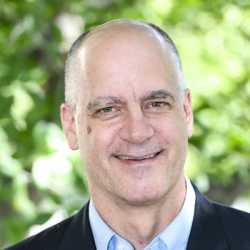
PIPA: Hi everyone, I’m Tony Pipa, a senior fellow in the Center for Sustainable Development at the Brookings Institution, and your host for the Reimagine Rural podcast. And while normally the podcast documents the changes happening in a rural town in America, and we’re looking forward to bringing you season four beginning this October, today’s episode is a special edition of the podcast, an interview with two members of America’s Rural Future, the Brookings-AEI Commission on U.S. Rural Prosperity.
The Commission’s co-chaired by Heidi Heitkamp, former senator from North Dakota, and Chris Sununu, former governor of New Hampshire, and will produce a national rural strategy by the fall of 2027. The Commission’s work is informed by visits to rural places across America, so that as a commission we experience the diversity of those places and we hear directly from rural people.
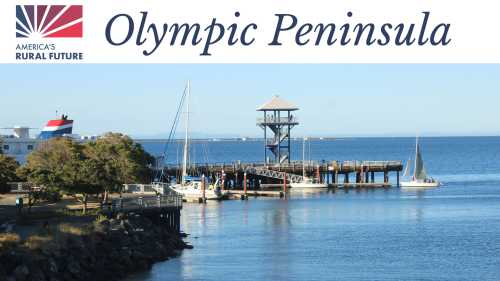
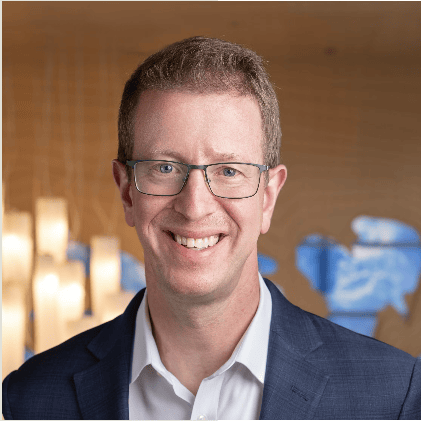
Last month we visited the Olympic Peninsula in the State of Washington, including the towns of Port Angeles and Forks. Yes, those of you who know Twilight will recognize that name, and yes, it is that Forks. And today I’m joined by commission member Derek Kilmer, the former U.S. representative for Washington 6th District, who is now senior vice president of U.S. Program and Policy at the Rockefeller Foundation. Derek, thanks for joining us today.
KILMER: You bet, Tony. Thanks for having me.
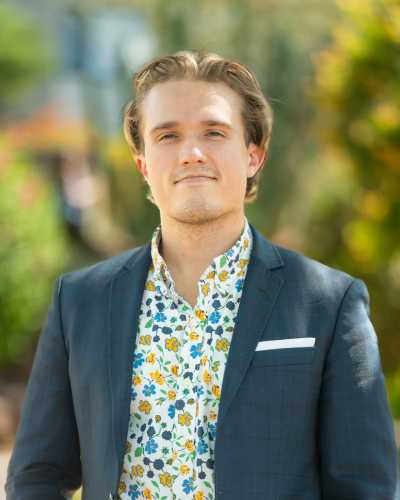
PIPA: And Benji Backer, who’s the CEO and founder of Nature is Nonpartisan. Benji, it’s great to have you. Thanks for joining.
BACKER: Awesome to be with both of you today. Thank you.
[1:47]
PIPA: Let me start with you, Derek. This is a trip home for you. Not only were you born and raised in Port Angeles, but you represented the district in Congress from 2013 to 2025. So tell us just a little bit about yourself and your motivations for participating on the Commission. What drew you and made you interested in the commission’s work?
[2:11]
KILMER: Well, you mentioned this is personal for me. I was born and raised in the community we visited in Port Angeles. I grew up at a moment when, it was a timber town, and I was in high school when the timber industry really took it on the chin.
And I saw a lot of my friends’ parents lose their jobs, a lot of my neighbors lose their jobs, you know, and saw my community go through a real transition, where it went from being a place that exported wood products all around the world to one where, as we heard during the Commission visit, folks are genuinely concerned about it being a place that exports young people.
And, you know, that does something to you. It’s why I worked in economic development professionally. It’s why I served in Congress and mostly worked on economic opportunity. And as you mentioned, I now work at the Rockefeller Foundation, where we’ve launched a new program that’s focused on jobs, focused on economic opportunity, and the notion that no matter what zip code you live in, you should have a shot.
What drew me to the Commission is that I really think it’s asking the right question. For a long time, the conversation about rural America has really been between two, you know, rather unhelpful poles, either kind of romanticizing these places or just writing them off. And the reality is, you know, far more interesting and far more hopeful, in my view, than either of those things.
Rural communities are not a problem to be managed. They’re an asset that this country just hasn’t figured out how to invest in well. And a commission that actually shows up, that listen, that takes these issues seriously, you know, that’s something that I was interested in being a part of. And, I have views on how we help these communities, support these communities, listen to these communities, not just my hometown, but those all around the nation.
And it’s part of the work I now do at the Rockefeller Foundation, and it’s part of my excitement about this Commission.
[4:06]
PIPA: Well, it’s wonderful to have you on the commission and to benefit from your, experience and your commitment. Benji, let me turn to you with the same question. I mean, you grew up in Wisconsin. Actually you also know the Olympic Peninsula pretty well though. Give us a sense of your personal history and priorities, and what made you say yes when I approached you about serving on the Commission?
[4:30]
BACKER: Well, first of all, it’s great to be on it just because it’s an honor to serve with such amazing humans, and I think, you know, this political world that we’re living in and the leadership that we have needs more reflection of what we see on this Commission. So it’s an honor to be a part of it.
I’m not as much of a native to the peninsula as Derek. Everyone went up to Derek and was hugging him and telling him they were like, he was their hero while we were out there. So that was not true for me.
I have spent a lot of time out there because I went to the University of Washington just over the Puget Sound, and went over to the Olympic Peninsula on many, many weekends, and spent a lot of time over there. And it was my first time there on a work trip, that’s for sure. But it was, it was really incredible to see, and I can’t wait to dive into it.
Why I joined the Commission originally was because I grew up around this very interesting dynamic where I lived between the suburbs and rural America, I literally lived on the edge of it. I went to high school across the street from dairy farms, which of course makes so much sense for Wisconsin and is the reason why I’m proud to have a cheesehead behind me in this camera, which you can’t probably see.
But, you know, I grew up kind of around that, but also suburbia, and I I grew up seeing that division of people disliking each other from both of those camps, pitting each other against one another in both those camps without realizing that the rural communities really needed the suburban and urban communities, and vice versa.
[5:54]
I think our country’s division politically is not really on right or left lines. It’s largely on top versus bottom and rural versus urban, when in reality we need rural and urban communities to be working together far more than they are, and to be represented far more than they are.
But as Derek mentioned, rural communities have been very much left behind. I remember one of the most striking things when I moved out to Seattle for college after living in Wisconsin my whole childhood, was going on a date with a girl who thought Wisconsin was a city. And then when I told her it was a state, she said, “Is that the one above Colorado?” And I said, “No, that’s Wyoming.”
And just realizing that so many people, this is a college-educated person, not knowing about flyover country as they call it, but it’s some of the most important places in America, not only economically, but also in terms of it—the people and the communities that are there.
So it’s an honor to be a part of it. I think it’s a really diverse group that truly represents the spectrum of America, and very excited to see where this goes in terms of how leaders follow what we will see and hear on the ground and turn that into hopefully real lasting progress.
[7:07]
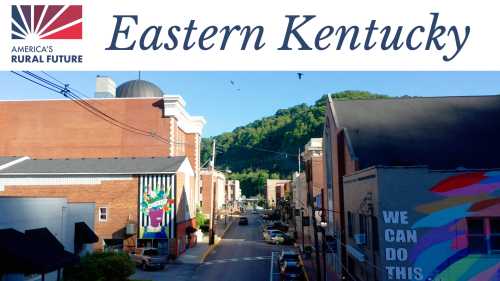
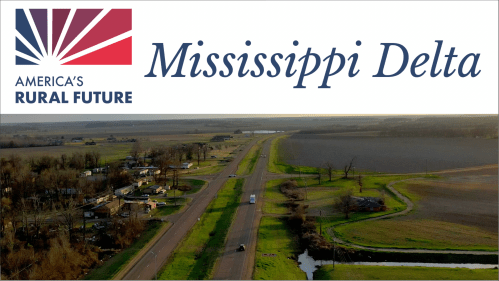
PIPA: Well, we’ve been visiting a diversity of rural places across the country. We’ve been in North Dakota. We were on the White Earth Reservation in Minnesota. We visited the Mississippi Delta. We were in Appalachia in Eastern Kentucky. And Benji, I’m gonna turn to you first on this question because, you know, Derek does know this area very well, and he’s got long relationships with it and with the people there.
Why do you think it was important for us to come out to the Olympic Peninsula and to visit that? And what kind of perspective is that providing to the commission that we might not have gotten, or at least even showing what the similar themes are in some of the other places that we’ve been?
[7:50]
BACKER: It’s a really good question, and I think there’s two reasons why. One is that if you look at the macro politics right now, it feels like rural communities in blue states tend to be forgotten about even more. And I say that because no one really thinks about Washington outside of Washington as having rural communities. They think of Seattle and they think of Spokane, and they don’t really realize that there are a lot of rural places that look like Forks and look like Port Angeles.
And as Derek knows, a lot of the state looks like that. And during my time on the Commission at least, we have not visited a traditionally blue state with a rural community, and I think that that really matters because those communities matter a lot.
And second, it was our first time really seeing a different type of economy. The timber economy in the United States, especially for the Pacific Northwest, was obviously a booming industry. And now the South has a little bit of that, but it’s largely gone from the U.S., and we learned about that and how, the export market for timber is pretty much dead in the United States. It doesn’t necessarily have to be that way, and I’m over-dramatizing by saying dead, but it’s really struggling, and it has for decades.
And I think seeing that as it pertains to where do we go as a country from here really matters because this community, I think, was the most developed in terms of adapting to the challenges, and I think could really prove as a success story for where we go from here.
[9:19]
Obviously, there’s a lot of work that we learned about that needs to happen still. There’s a lot of challenges that these two communities that we visited are still facing. But their downtowns are still vibrant. They still have, you know, economic growth, and they’re trying to figure out how to make the most of the situation that they’re in.
And what I mean by that is they’re trying to figure out how to bring timber back in a sustainable way that meets the environmental needs. They’re trying to figure out how to retrofit manufacturing facilities and old mills to become different types of facilities, maybe for solar energy or for some sort of other process that they could retrofit these places. And it feels like they are on the cusp of figuring some of these things out.
So not only is this a place that’s been left behind in a blue state that I think a lot of people wouldn’t realize is even there in the first place and deserves to have that attention. Everyone’s heard about the struggles in Appalachia. I don’t think most Americans have really heard about the struggles in the Pacific Coast of Washington State. So I think that that’s important. But also, I do think that they’re on a path to figuring these things out, and it was just a remarkable, remarkable story that I’m excited to dive further into.
[10:25]
PIPA: Derek, let me ask the question now of you, and you you represented this district. You worked in economic development, as you said in one of the counties that we visited. Why was it important for the Commission to be in the Olympic Peninsula, and how does it sort of deepen our understanding of rural issues more broadly?
[10:43]
KILMER: Well, I may be biased, but I think the peninsula is really one of the best places in the country to understand rural America, in part because it holds so many rural stories at once. You know, you take a couple-hour drive, and you go from working forest to fishing communities to a tribal nation to a national park that draws millions of visitors to towns that are still figuring out what comes after a mill.
And, you know, most conversations about rural, and it’s part of the reason I think this Commission is so important, you know, most of those conversations kind of flatten it into one thing, and the peninsula won’t let you do that, and I think that is valuable.
It also captures that sort of central tension of rural economics in a really vivid way. You’re surrounded by extraordinary natural wealth, timber and water and fisheries and beauty, and yet prosperity doesn’t automatically follow from that. And the question, you know, that the whole country is wrestling with is, how do you turn local assets into good jobs that can actually build a life on?
[11:45]
And that question’s sort of written all over the landscape on the peninsula. And third, and you heard Benji speak to this, you know, this is an area that’s pulling everybody into the boat, charting a course, and getting folks rowing in the same direction.
I know we’re gonna talk about the Recompete program, but this is a community, this is a region, that was one of five hundred and thirty-five in the country that com-competed for, support from the Economic Development Administration, put forward a plan, got everybody together around the plan, was rewarded one of six implementation grants in the country.
And, you know, importantly now they’re both bringing resource, you know, seeing resources come to the table and executing. Executing on that plan. Looking at, you know, what does Timber 2.0 look like? How do we make sure that we’re providing opportunities in the trades? How are we taking advantage of our local assets?
How are we providing opportunities for the next generation of workers? Yeah, that’s why it was a great place for the commission to come, to listen, to learn.
[12:54]
PIPA: Well, I think between the two of you, you’ve done a great job of sort of describing the different dimensions, Derek, to your point, that we were able to experience in, you know, a short amount of time.
One thing that I guess I will say is still over a great distance. It struck me, and I know we—we’re probably not gonna get to places like Montana or Benji, as you mentioned, Wyoming. But it still was a fair distance, right, for us to get from Seattle over to Port Angeles, then over to Forks, and you start to feel that distance pull, like, that you feel in the West versus where we were in the East.
Like in the Delta, you know, within a couple of hours, we hit six different towns, actually. . And I, I also think it was interesting to see the impact of the federal government up close. Like, you’ve got this federal footprint. Right? Derek, you mentioned Olympic National Park, so you’ve got the national park there, but you’ve got military installations, you’ve got the port that’s going over to Canada, so you’ve got customs and things like that. And, The diversity was just, I think really, really seen up close and felt.
[14:04]
Both of you talked about sort of the communities coming together and trying to pull together, and Derek, you just mentioned Recompete. And so let’s jump into that. You know, as a congressional member, you you helped sponsor the legislation that became the Recompete Pilot Program out of the CHIPS and Science Act. That program, as you were mentioning, you know, was the most popular program ever in the Economic Development Administration’s history. It was 536 applications for only six implementation grants.
And those are long-term …well, they’re five-year, but they’re large scale blocks of flexible money, right, going to a local coalition. The region received over 35 million for a five-year period.
Tell us a little bit, like you were involved in putting the legislation together. Why that approach and, what were your takeaways from our experience of, like, how is that working? How is that going? What’s the progress look like now that they’re getting up to about a year and a half, two years into the program?
[15:14]
KILMER: So first, you know, what’s the program about? The, you know, the the rationale behind the Recompete program was that our national economy can be booming, and yet you have entire communities that can get left completely behind economically. You know, prime age employment, which is a measure of how many people between age 25 and 54 are working in a community, it hovers around 80% nationally. It has for a while. It’s in the kinda 80% ballpark. If you lag that by more than 5%, percentage points, economists consider your community economically distressed.
That’s now a third of the counties in America. Over 50 million people live in communities that are considered distressed. And that’s not because of a bad year. Right? It’s because, you know, they’ve seen economic change, economic disruption, and we haven’t had sufficient policies and programs in place to support those communities.
And, you know, the rationale behind Recompete, and part of the reason the Rockefeller Foundation is engaging on the Good Jobs for America program that it has launched, is the notion that we shouldn’t be leaving communities behind, that we should make sure that you’ve got a shot no matter where you live, and that we’re helping people stay connected to work in the face of economic disruption.
So that was the rationale for it. The approach tried to acknowledge a few things. One, that these communities, as I said, it wasn’t a bad year, so a one-off grant, a one-year grant is not sufficient to help a community really make the multi-year investments that are really required in these sort of circumstances.
[17:03]
Two, most of these communities do not have an army of grant writers, and that’s something that I know the Commission has heard in every stop, that, you know, the challenge of community capacity to navigate what is a exceedingly complex system of federal grants and loans. And Tony, I know you’ve done a lot of work highlighting just how many agencies and just how many programs touch these issues.
You know, that’s brutal for a community to try to navigate that. So having, one door to knock on, making the application reasonably simple, and making it, you know, flexible, multi-year, and large enough to meet the greatest needs that a community has seemed important.
You know, it didn’t look like a typical government program. I mean, what we saw on the peninsula was that it’s flexible enough to meet some of the real barriers that the community’s grappling with. You know, the things that keep people from work on the peninsula are things like childcare and transportation and training that connects to jobs that actually exist.
And so, you know, what you’ve seen is the community come together around multiple streams of work, some more further along than others, but all with the notion that the design is patient and flexible and perhaps most importantly, locally led. And, so the community’s working on it. I think you’ve seen, some real wins out of the gate.
[18:31]
You know, the local community college, which we visited on the trip, you know, talked about a new mobile trades unit that they had just launched as a consequence of the Recompete funding that they had gotten. We were able to spend some time with the port and learn about some of the investments that they’re making. We heard about some of the effort around Timber 2.0. We heard about some of the work around the maritime trades, around the Composite Recycling Technology Center and the innovation that’s happening there.
You know, and so I think the honest measure of Recompete won’t just be what happens on the peninsula or any of the other communities that received awards, but whether it proves a model that works in places that might be otherwise left behind.
Like, that’s the bet, that if you provide those sort of flexible multi-year resources and you don’t make it super complicated so a community needs an army of grant writers, if you allow a process to be locally led, they can really do big things.
[19:28]
PIPA: Benji, what struck you about the, you know, what we, what we heard about Recompete? I mean, you’re coming at this, you know, a little bit further outside than Derek. Derek was involved, you know, with this legislation from the very beginning. What were some of your takeaways just from what you heard from the folks talking about it who were involved in putting it together and are involved in implementing it?
[19:48]
BACKER: Yeah, I think one of the main takeaways that I heard was the Recompete obviously was something that people spoke really highly of. It’s just the difficulties with the federal government in general being so complicated and complex. We heard that over and over again, how there are 15 different agencies they have to talk to. They don’t know who to apply with. The delays are real. In other communities they don’t have to wait for those approvals and that much traction to get something off the ground oftentimes because they already have the infrastructure and the resources already there to begin with.
So, you know, I think it really speaks to the fact that government efficiency, which of course we’ve talked a lot about as a national concept over the last couple years, it hasn’t been carried out in the way that I think any of us would have wanted to, even if we were skeptical of it to begin with, has to happen at some point for rural communities to survive.
The tribes brought it up. The timber industry brought it up. Even the National Park Service people brought it up. Just the complexities of the federal government. But also it wasn’t to say that the federal government isn’t needed, just that the federal government was needed needing to be a little bit more easy to work with.
[20:55]
The second thing that I think was an important takeaway was, and this is a little bit different than the Recompete, but it goes to something you said before that, Tony. The I-5 corridor, which is what connects basically all the urban parts of western Washington, including Bellingham and Seattle all the way down to the Washington border with Oregon and Portland, there was a lot of disdain for that corridor that we heard about. Not because they don’t like those towns or those cities, but because that’s where all the attention and philanthropic investment, and even some government investment goes.
And I thought that was fascinating. That was an important takeaway for me was that you had Democrat elected officials, current state elected officials, talking about how problematic the consolidation of that corridor was. And when I lived in Seattle, I always thought that was a kind of right versus left argument, but it goes back to my earlier statement, which was that a lot of rural America, whether they’re left or right, feels like they’ve been left behind by this one corridor that is really where all the population is.
And so it really comes down to the fact that the state and federal government has to do a better job of having more programs for rural America to invest in and to be able to take on. Recompete’s an obvious it seemed like success story. I was not there when it was being crafted, and it seemed like from the folks on the ground, a really good opportunity for them to get innovative and to take advantage of something that was there.
But there needs to be more of that. And I do think for the next president and the next Congress, and every president and Congress after that, we need to be figuring out innovative ways to get more investment on the ground to these places.
[22:36]
Because like you said, Derek, this is not an accident. This is not just one year where things went wrong. Forks and Port Angeles were actually very geographically sound for a very long time with the industries that were successful at the time that these towns boomed. They’re on the coast. They had easy ports. It was easy to get things in and out.
But then the world changed and we became, you know, very car-driven, plane-driven economy, and it became harder to have this little peninsula, which was actually very well positioned as kind of the most western part of the United States to get things to Asia and to other parts of Canada and the and the world, became very difficult.
And it’s been decades of disinvestment from these places, which means that it will take decades of investments in these places to bring these places back. And it will not just be one program that does that. It will be a concerted effort by the state and federal government to be better beneficiaries to these places that need it, because they’re not going away, and we should invest in them if we’re gonna have a good country going forward.
And that’s, that was a main takeaway from the Recompete was that we need a lot more of that.
[23:46]
PIPA: Well, your point about population density turning into political capital no matter the political stripe, I think is a point well taken and one that we’re seeing from the different places that we visit.
And also that philanthropic desert is, I mean, we know that nationally even there’s just disproportionately lower amounts of philanthropic investment, which also can make it difficult, because you don’t have the venture social capital or even the matching grants, for example, that you might need for larger scale investment. So that definitely, becomes an issue.
Benji, let me ask you, you know, conservation, environmentalism, those are big priorities for you. We were in a place with a lot of natural resources, a lot of natural beauty. What was your takeaway about how that shapes both the local economy, but even the community’s sort of sense of identity and who they are, and the importance of all of that culturally as well as economically?
[24:51]
BACKER: Yeah, I mean, Derek can speak to this too. Everyone is so proud to be from that peninsula because of many reasons, but largely the beauty. It is truly one of the most beautiful parts of the country, if not the world. And they take pride in actively conserving those places, which also means they take pride in in how if you do timber right, it can be good for the environment. If you do fishing right, it can be good for the environment. If you build the maritime industry or you build, you know, tribal nations and you build… If you build things that are economically viable, you can do it right.
And we did hear that from the tribal leaders as well, that, you know, a lot of them are struggling financially, and it’s hard for them to improve the environment with the changing climate, and moving their communities to different places, even in their own tribal nation because of a changing climate, because of a lack of resources.
So it’s kind of this, it’s at the heart of what I think the national environmental conversation needs to be about, which is how do we pair economic growth, how do we ensure economic growth so that we can then invest it back into taking care of the health of our communities from an environmental standpoint?
I also thought it was fascinating that a couple of leaders, especially on our last day, mentioned that all of the climate laws in the State of Washington and largely in D.C. as well, climate change laws, have been about mitigating future damage. And what we heard was that the damage is already happening now, and that there isn’t enough focus on adaptation to the changes.
That the rising cost of energy is already there, that the lack of water from snowpack because there’s more rain instead of snow in the winter is already there, that these streams are already losing the wildlife that they need for tribes to sustain the food supply. That instead of focusing on EV mandates or stopping building new building mandates, we need to be focusing on how do we adapt to the changing climate.
[26:51]
So those were kind of the two main threads that I picked up was that we need active conservation, and conservation meaning we’re actively managing the land, but also having enough economic growth to invest in that management, and that these changes are already there. It’s made the job harder for the tribes. It’s made the job harder for the national parks. It’s made the job harder for the locals.
And they have so much pride in it, but they want to be able to do something about it and not just put in more EV chargers, and say that that will solve all their problems. So I thought that that was a very interesting, dichotomy that we heard throughout the trip and, uh…
But at the end of the day, I think what we’ve also learned about the whole country is that everyone is proud of their local environment. The folks in Kentucky were so proud of their local environment and how beautiful it was.
So that’s something that I think is true everywhere, which really speaks to the fact that this should be a unifying topic for America to invest in these places, because when you’re investing in your home, you’re also investing in your environment, and that is something that I think we’ve forgotten about from a national discourse perspective.
[27:58]
PIPA: I really appreciate that sentiment. Derek, Benji was just referring to the tribes, and we met with some tribal leaders. You know better than anyone that the Olympic Peninsula has multiple federally recognized tribes. What is it from your perspective that Commission members need to keep in mind about the overlap between tribal and rural, and how do we need to be thinking about that as we do our work?
[28:27]
KILMER: Well, first, Tony, I want to commend you and the Commission team for including the tribes in the visit that we had, in part because I think a lot of the themes that we’re discussing, tribes are feeling those issues, but maybe aren’t as visible in the conversations as they ought to be.
In some instances, they carry these challenges more acutely. So, you know, when we talk about whether it’s health outcomes or economic opportunity or economic distress, when we talk about chronic underinvestment, when we talk about, you know, some of these persistent challenges, I think you can’t be serious about addressing these challenges if you don’t, you know, if you treat tribal nations as a footnote. Right? If you don’t adequately listen to the, you know, the people who’ve been in the region longest, and in some circumstances have grappled with some of these challenges the longest.
I want to pick up on some of what Benji talked about. You know, the unique stories that we heard And the things that, you know, I sort of carried home with me were some of the stories related to climate resilience. You know, some of the tribes are right on the coast, you know, which means they’re right on the front line of sea level rise. They’re right on the front line of tsunami risk. We heard from leaders of the Quileute Nation where their tribal school, you know, literally any one of us could stand outside their tribal school, throw a rock, and land it in the Pacific Ocean.
And, you know, they get a strong storm and, you know, as they shared, their school floods. And so, they talked about, you know, their effort to move their village to higher ground, to build a new school at higher ground, and some of the challenges of that, which, you know, I think most people don’t think about in their day-to-day. Right? Like, how do you move a village? You don’t start with the building because the building needs electricity, and the building needs water, and it needs sewer, and it needs, you know, all of these basic utilities.
And so that’s tough. You know, and then they talked about some of the challenges related to, you know, navigating federal programs and federal systems that don’t always talk to each other.
[30:45]
One of the tribes shared the story of building a a fire station that when it was built, didn’t have water to the facility, and what they had was surplus body bags from the federal government. And, you know, that’s the type of harsh reality and resilience challenge some of these communities are facing.
So I think to answer your question, I think a couple of the things I’d ask the Commission to hold onto, and first is sovereignty. Right? Tribal nations aren’t a subcategory of rural stakeholders. They’re governments, with their own authorities, with their own priorities, and they can’t … the, you know, the posture can’t be, “Here’s what we’re gonna do for you.” It has to be, “What are you already building, and how do we invest in it and get out of the way in some circumstance?”
And second, I think what we saw on the peninsula is just how interwoven everything is. The same coastline, the same fisheries, the same workforce, the same climate risk. You can’t do rural economic development on the peninsula as if the tribes are a separate file. Right? Like, you can’t talk about, the region’s climate resilience without the tribal communities at the center of it.
And so I want to commend you Tony, and the team that’s driving the Commission’s work because I thought it was important that the Commission took some time to listen, you know, to visit some of these areas, and to really try to better understand the stories of the tribal members in that region.
[32:17]
PIPA: Thanks for sharing that, Derek. I do think that some of the most affecting moments of the visit actually were in those interactions, ones that I think we all took away and carried with us as we even left the peninsula.
So let me end with asking each of you What did that visit mean? And Derek, I’ll give you the final word since, you know, we were kinda going back home for you. But, you know, Benji, what did this leave you with out of the visit for the future of rural America? What issues are we gonna have to address moving forward? But Where does it leave you feeling for the future of America and and the potential?
[32:57]
BACKER: Well, interestingly enough, I I feel like the Olympic Peninsula, even though it’s an island, from the rest of the state and the rest of the country, on its own peninsula island, I mean, it is a microcosm of the country. And I could not feel more confident after visiting that community between Forks, Port Angeles, and then, you know, the places in between, that if we don’t get it right for communities like that, we’re not gonna get it right for the rest of the country in general, including urban America.
You had a cross-section of public land, recreation, tourism, with tribes, with industry, with the relation of that with the urban centers. And there are so many communities like that all over the country that are being left behind. But I also felt really optimistic that we can serve these places, that these places are ready for that.
I mean, Port Angeles and Forks were ready for more investment. They were ready for more economic development. They were ready to have a future where they were included in things, and it’s not like we have to sell them on that. I think it just was a really exciting opportunity to see that up close, and it’s very rare that you can see the cross-section of all parts of society in one place, but we really did see that.
[34:16]
And I also think from an environmental perspective, it showed that most people are not, and this is something that you’ll see across the country, not just there, that most people are not under the two poles of environmentalism where it’s we need to do nothing and just kind of… we we can you know, take away the landscapes and just hope that someday it’ll work itself out and and just not act on these issues. Or we have to act as if the whole world is burning and we have to act now and and do all these radical actions.
People are there actively managing the land. They’re wanting to take care of their places. They’re wanting to take care of their homes. And that’s not where the national narrative is either. So I think to me, that community of the Olympic coast is the perfect example of what America needs more of, not only from a attitude perspective of wanting to solve these problems, but also in a way of these places need to have our investment, they need to have our time, they need to have our attention.
Because if we don’t serve the tribes, if we don’t serve the industries that have made America successful, if we don’t serve the communities that make a place like Seattle possible, for example, then we’re all losing.
And I think we saw firsthand that there’s a real opportunity to change the course of things, and it brought home the importance of this Commission because if and when we’re successful of bringing really critically important recommendations to key leaders, I think this will be one of the most important visits, if not the most important visit because it captured so much of the ethos, of why we need to invest in rural America.
I also just came away thinking, how lucky are we to live in a country with such diverse beauty of the places that we have seen between Kentucky to rural Washington and North Dakota and everywhere in between. And, more of more Americans not only need to not forget about these places economically, but also more Americans need to go out and explore how beautiful this country really is.
You really truly grew up and served one of the most beautiful places, and it was on top of just feeling like it was the, the whole point of the Commission, it just also reinvigorated me like probably anybody that goes and visits there, and sees how amazing it is.
[36:30]
PIPA: Thank you for that, and I can’t agree more sort the diverse beauty across the entire country and many of that in rural places, as well as the microcosm that the Olympic Peninsula was and the beauty there.
Derek, let me give you the final word. What do you take away, having gone back, to the place that you grew up and seeing what’s happening there?
What did it leave you feeling like for the future of rural America?
[36:55]
KILMER: It’s funny, when I was in Congress, my colleagues would always say, “How are you so, you know, hopeful and sunny all the time?” Then usually would make some comment about me living in a a rainy place.
And, the reality is I am very hopeful. Part of that is just I’m genetically hopeful. But you can’t come from a place like that and not feel a sense of hope. And I don’t just think that’s, like, the mountain air talking. And here’s why. Listen, the problems are real, and I’m not gonna pretend otherwise.
But everywhere we went, every person with whom we met, you know, they weren’t waiting to be rescued. They were already building. Right? What you saw on the Olympic Peninsula were the raw materials of what a rural comeback looks like. Right? It’s assets, it’s ingenuity, it’s a fierce attachment to place.
What we heard was, you know, what’s missing is investment that’s patient enough and flexible enough to match how these communities actually work.
So if you ask me what the Commission has to wrestle with going forward, I guess I’d put it into three buckets. One, you know, how do we get capital and opportunity to flow to these places without stripping away the local control that makes them work. Right? I think that was one big theme that we heard.
You know, secondly, how do we take the things that are proving out in one community and help them travel so every town doesn’t have to reinvent the wheel? And that’s, honestly, the program that we’ve launched focused on good jobs, for America at Rockefeller. Like, that’s part of what we’re grappling with, is trying to figure out, you know, what are some of these, for lack of a better phrase, hacks where communities can identify things that actually help drive that prime-age employment. And then secondly, how do we help those good ideas travel?
And then third, you know, I think the one on all of our minds is how do we make sure that the next, next wave of economic disruption, especially AI,, doesn’t hit rural America the way the last few waves did, as something that happened to these communities rather than with these communities.
You know, and I guess I’ll end with this. I really believe that the future of rural America isn’t fate. Right? It’s a choice, and it’s a choice this country gets to make on purpose. And so I’m very grateful that this commission is taking it seriously, and also grateful for the excuse and the opportunity to have gotten a chance to go home.
[music]
PIPA: Well, thanks to both of you for joining me today and for sharing your reflections. I think it’s important to give the audience and those who are following the Commission’s work a sense of the rich experience we had just in a few days. And I’m really glad that our audience got to experience both of you, your thoughtfulness, your care, and your commitment, and what that means to the Commission and how we’re benefiting from your participation and your leadership on the Commission.
So thanks for both of you for being fellow travelers and thanks to all of our listeners and we’ll see you at our next stop on Reimagine Rural. Thanks very much.
Many thanks to the team who makes this podcast possible, including Ike Blake, supervising producer. Fred Dews, senior producer. Daniel Morales and Teddy Wansink, video managers. Chris Chang, audio and video editor. Elyse Painter, senior project coordinator in the Center for Sustainable Development at Brookings. Adam Aley, also in the Center for Sustainable Development, who provides research support. And Junjie Ren, senior communications manager in the Global Economy and Development Program at Brookings. My sincere thanks to our great promotions team in the Brookings Office of Communications and Global Economy and Development. Katie Marris designed the beautiful logo.
Finally, support for this podcast is provided by the Ascendium Education Group. The conclusions and recommendations of any Brookings publication or podcast are solely those of its authors and speakers, and do not reflect the views or policies of the institution, its management, its other scholars, or its funders. Brookings recognizes that the value it provides is in its absolute commitment to quality, independence, and impact. Activities supported by its donors reflect this commitment.
You can find episodes of Reimagine Rural wherever you like to get podcasts, and learn more about the show on our website at Brookings dot edu slash Reimagine Rural. You will also find my work on rural policy on the Brookings website. If you like the show, please consider giving it a five-star rating on the platform where you listen.
I’m Tony Pipa, and this is Reimagine Rural.
Participants
Host
Guests
More information:
- Listen to Reimagine Rural on Apple, Spotify, or wherever you like to get podcasts.
- Learn about other Brookings podcasts from the Brookings Podcast Network.
- Sign up for the podcasts newsletter for occasional updates on featured episodes and new shows.
- Send feedback email to [email protected].
- Find out more about the Brookings-AEI Commission on U.S. Rural Prosperity.
- Discover more research on Reimagining Rural Policy.
The Brookings Institution is committed to quality, independence, and impact.
We are supported by a diverse array of funders. In line with our values and policies, each Brookings publication represents the sole views of its author(s).
Commentary
PodcastAmerica’s Rural Future: On the Olympic Peninsula with Commission members Derek Kilmer and Benji Backer
Listen on
Reimagine Rural
September 29, 2026