

America’s Rural Future: Brookings-AEI Commission on U.S. Rural Prosperity held site visits and a field hearing on Washington’s Olympic Peninsula as part of its two-year, bipartisan effort to develop policy recommendations to strengthen rural communities nationwide. The Commission is co-chaired by former Senator Heidi Heitkamp (D-ND) and former Governor Chris Sununu (R-NH), with research led by Senior Fellows Tony Pipa (Brookings) and Brent Orrell (American Enterprise Institute).
The Commission encountered a region rebuilding after the decline of the once-dominant timber industry, pursuing a more durable economy anchored in sustainable forestry, maritime, and outdoor recreation industries alongside tribal-led entrepreneurialism. That work proceeds within an extensive federal footprint across a geography where long distances, limited access, and overlapping federal, state, tribal, and local authorities increase the complexity of coordination and investment. Nevertheless, local leaders are collaborating across jurisdictional lines to pursue renewal on their own terms.
Over three days, the Commission met with tribal leaders, local government officials, port commissioners, utility managers, business owners, park staff, nonprofit leaders, and shipyard executives to examine how federal land ownership and power management, workforce pathways, and locally led development shape the region’s economy.
Recompete aims to spur regional workforce and job creation
In 2024, the North Olympic Peninsula Recompete Coalition received $35.6 million from the Economic Development Administration (EDA), one of six awards made nationwide under EDA’s Distressed Area Recompete Pilot Program.1 The award brings together Clallam and Jefferson counties and five tribal nations linked by shared economic challenges, with the goal of connecting more residents to local jobs and strengthening the region’s timber, maritime, and natural-resource industries. Clallam County Commissioner Mike French and Karen Affeld of the North Olympic Peninsula Resource Conservation & Development Council described the coalition’s early progress, noting the importance of making investments in the capacity needed to translate planning into measurable progress on workforce development, job placement, and job creation.
Projects so far include work associated with the Hoh Tribe’s relocation to higher ground, disaster-assistance planning for the town of Brinnon, and partnerships that support advanced timber manufacturing. Acknowledging that this capacity and these efforts must continue past the grant, the coalition has begun a “Beyond Recompete” discussion about sustaining the work after the five-year award ends.

Speakers at the opening panel of the site visits on local government and regional coordination. From left: Steve Tharinger of the Washington State Legislature, Jefferson County Commissioner Heidi Eisenhour, Clallam County Commissioner Mark Ozias, and Tony Pipa.
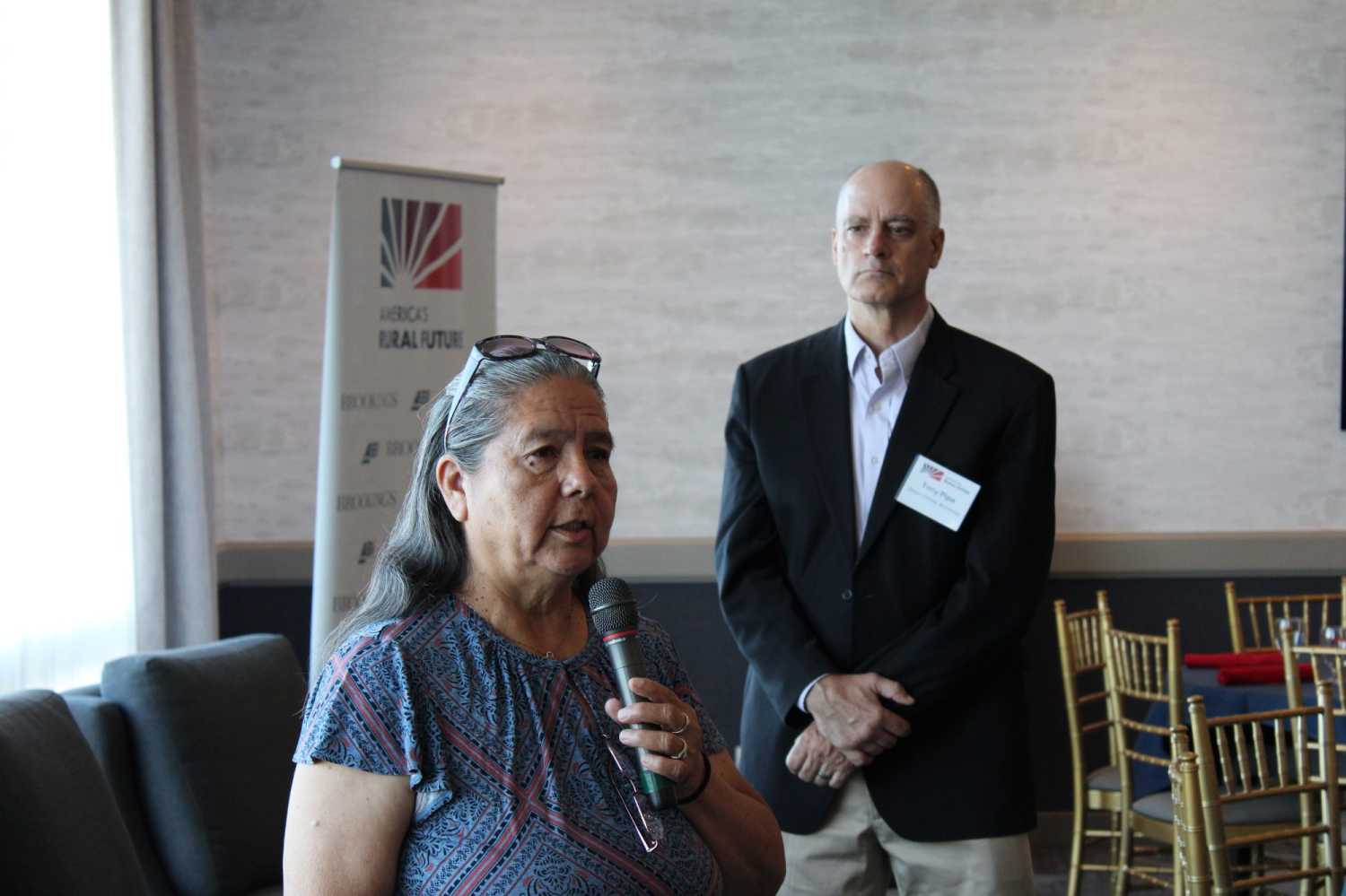
Frances Charles, former chairwoman of the Lower Elwha Klallam Tribe, addresses the Commission on its arrival in Port Angeles, as Tony Pipa looks on.
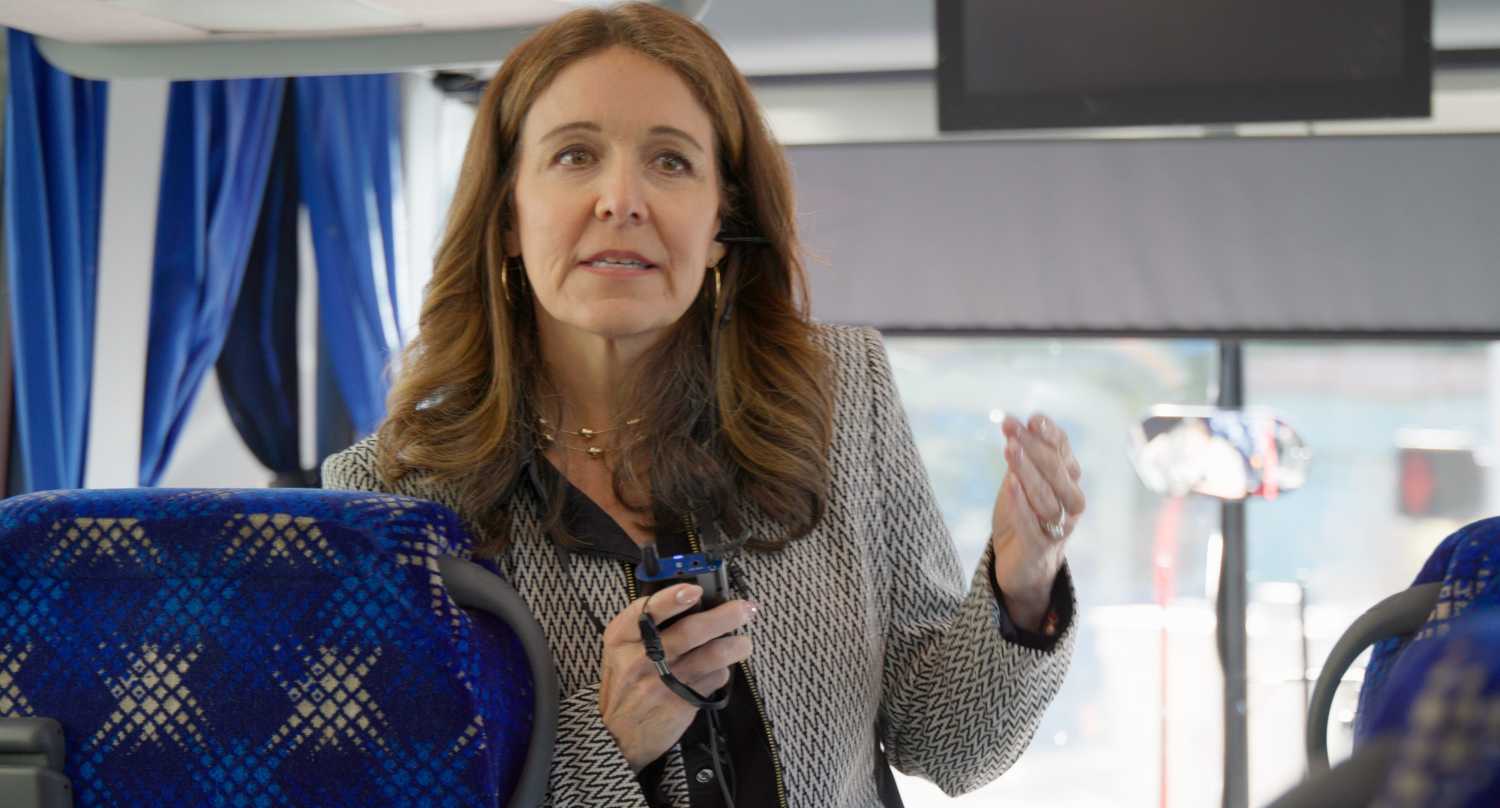
Colleen McAleer (Port of Port Angeles; Clallam County Economic Development Council) addresses the Commission during a bus tour of Port Angeles. Photo: Pioneer Productions for Brookings.
Tribal sovereignty and the mismatch with federal program design
A roundtable with tribal leaders in Forks underscored the importance of tribal sovereignty, which gives their constituencies different legal standing in their interactions with the federal government than state or rural municipal governments. Tribal leaders described entrepreneurial economic development strategies and initiatives to strengthen the resilience of their communities. Speakers noted that federal programs often have funding rules and reporting requirements designed for other jurisdictions, requiring tribal nations to conform to rules built for others, and that they are often faced with accessing limited funding pools that force neighboring tribes to compete. And while speakers described Washington’s state-tribal relationships as comparatively strong, they stressed that such coordination with the state does not replace direct federal engagement grounded in tribal sovereignty.
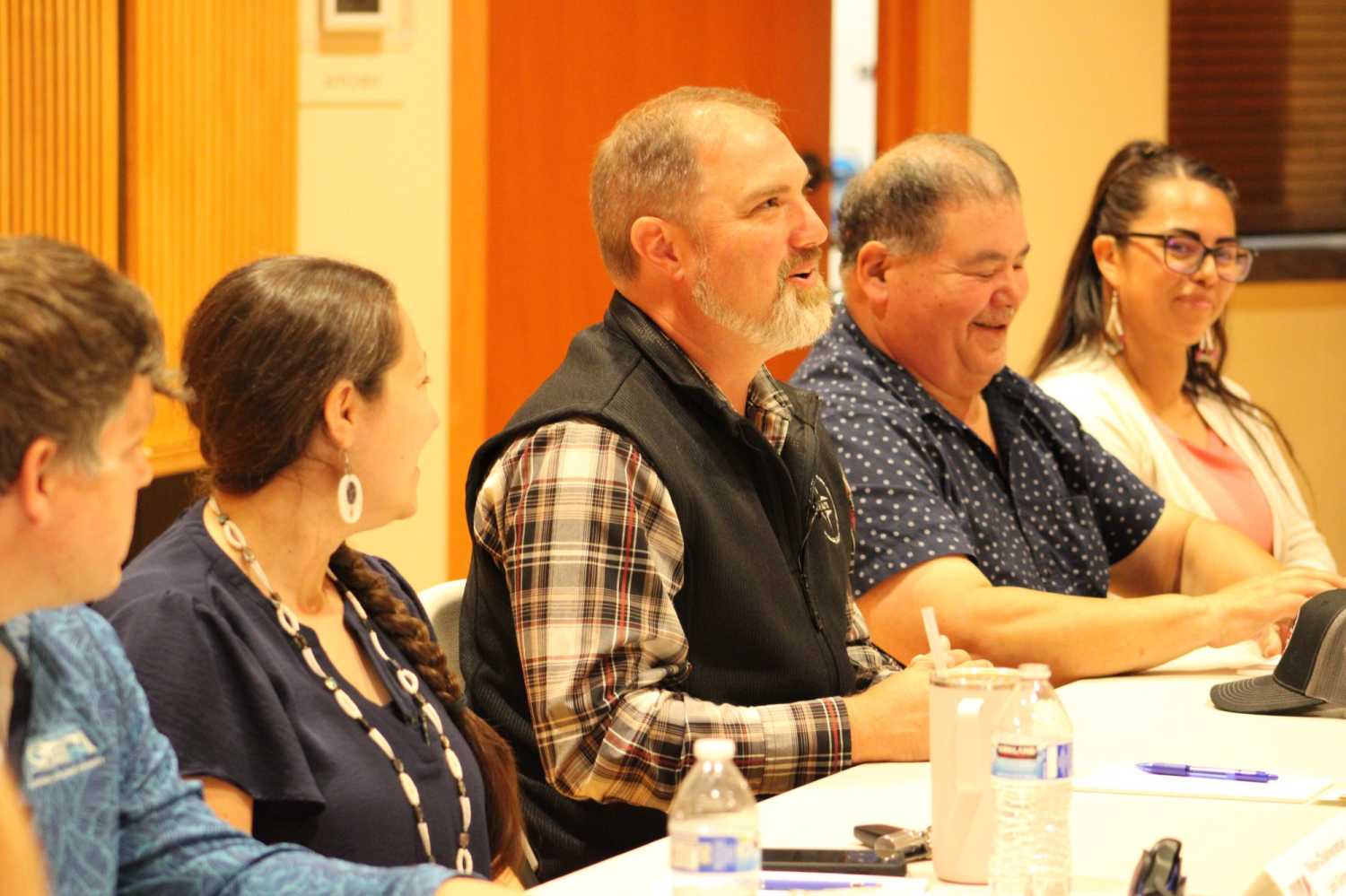
From left to right: Hawk Grinnell (Economic Development Director, Jamestown S’Klallam), Loni Grinnell-Greninger (Vice-Chairwoman, Jamestown S’Klallam), Rio Jaime (Chairman, Quileute Tribe), Chas Woodruff (Vice-Chairman, Quileute Tribe), and Darlene Hollum (Chairwoman, Hoh Tribe).
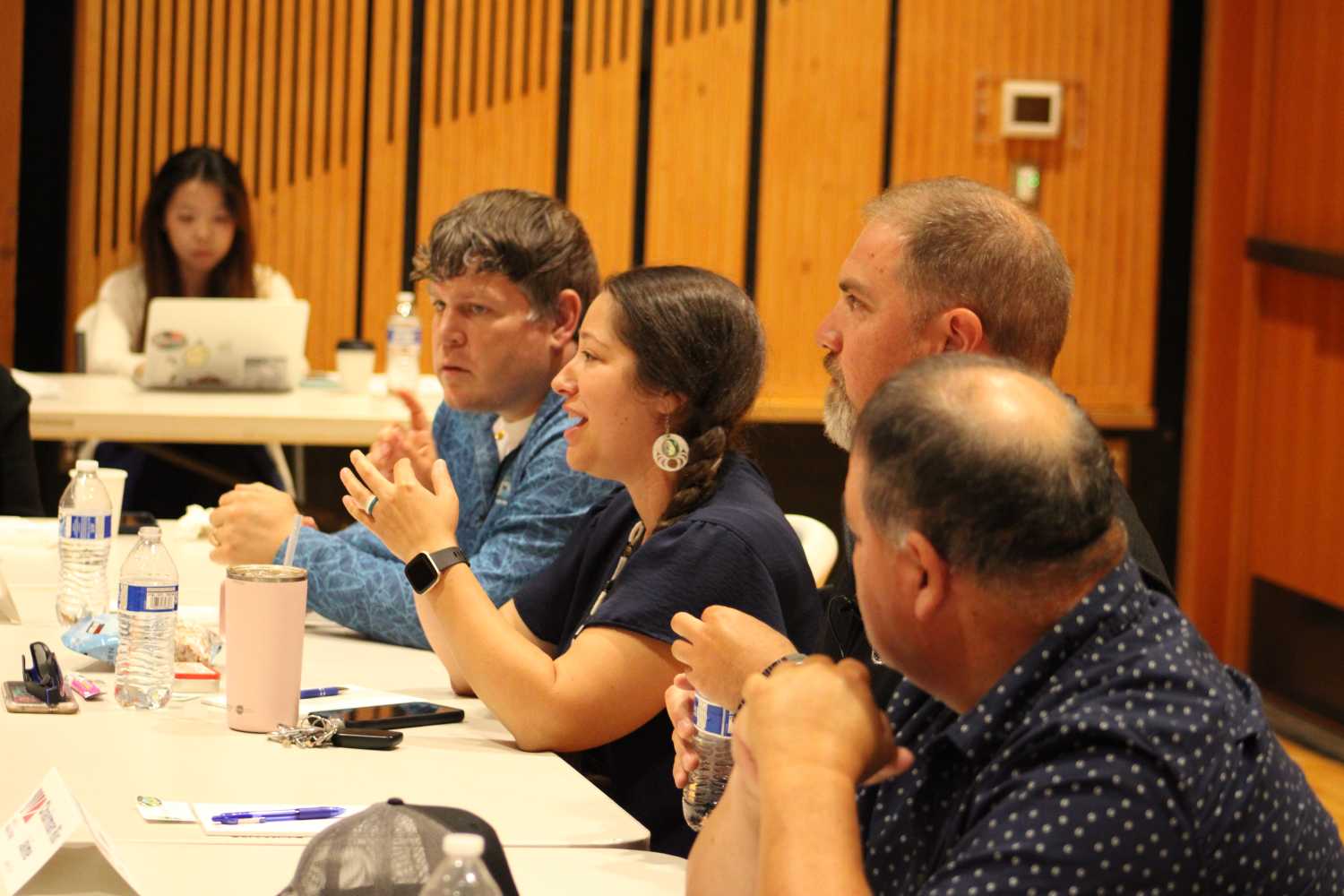
Jamestown S’Klallam Vice-Chairwoman Loni Grinnell-Greninger traced her tribe’s modern land base to 17 families who purchased 210 acres in 1874 after the Point No Point Treaty and pressure to relocate.
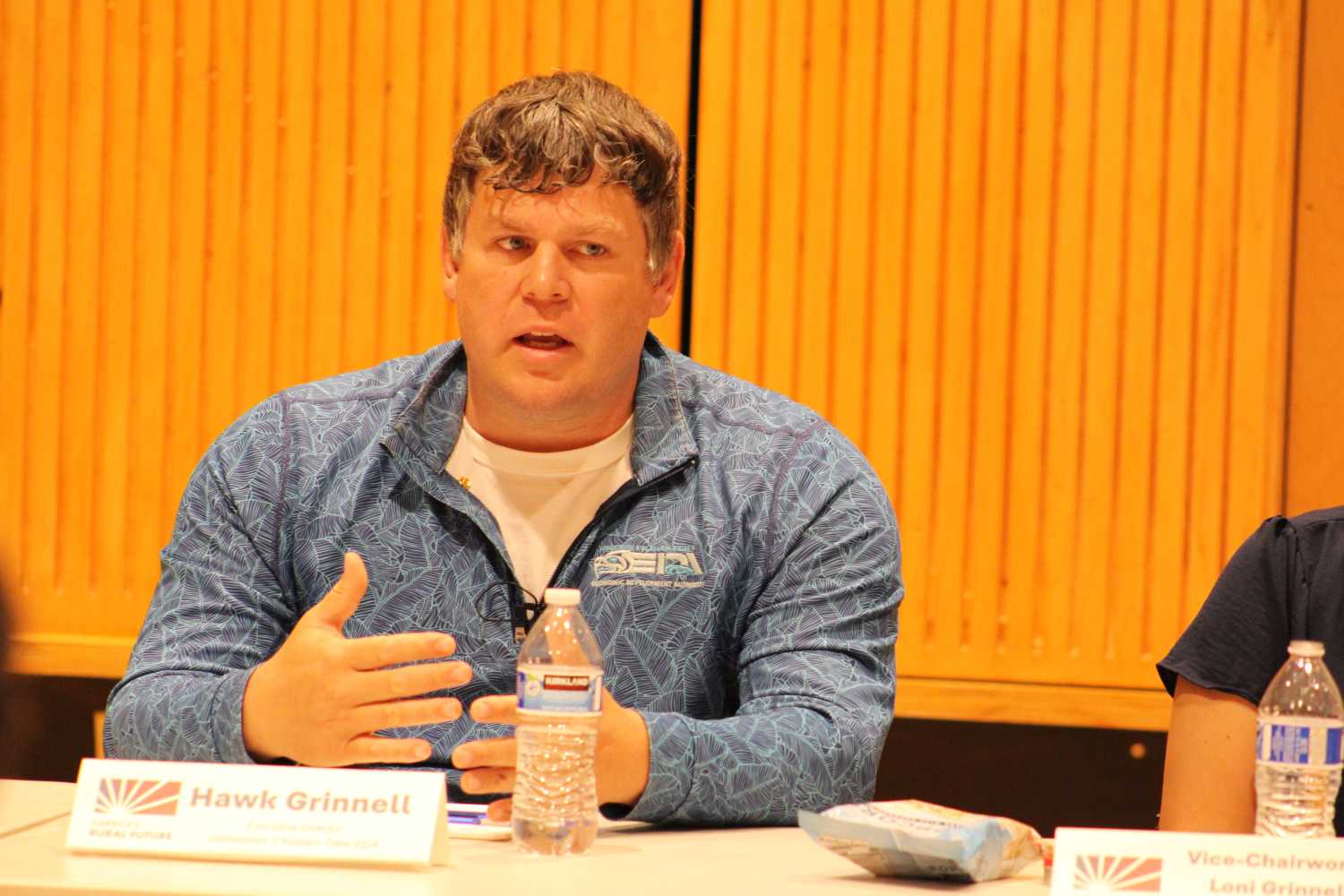
Jamestown S’Klallam Economic Development Director Hawk Grinnell explained how tribal enterprises generate revenue for governmental responsibilities that municipalities typically finance through taxation.
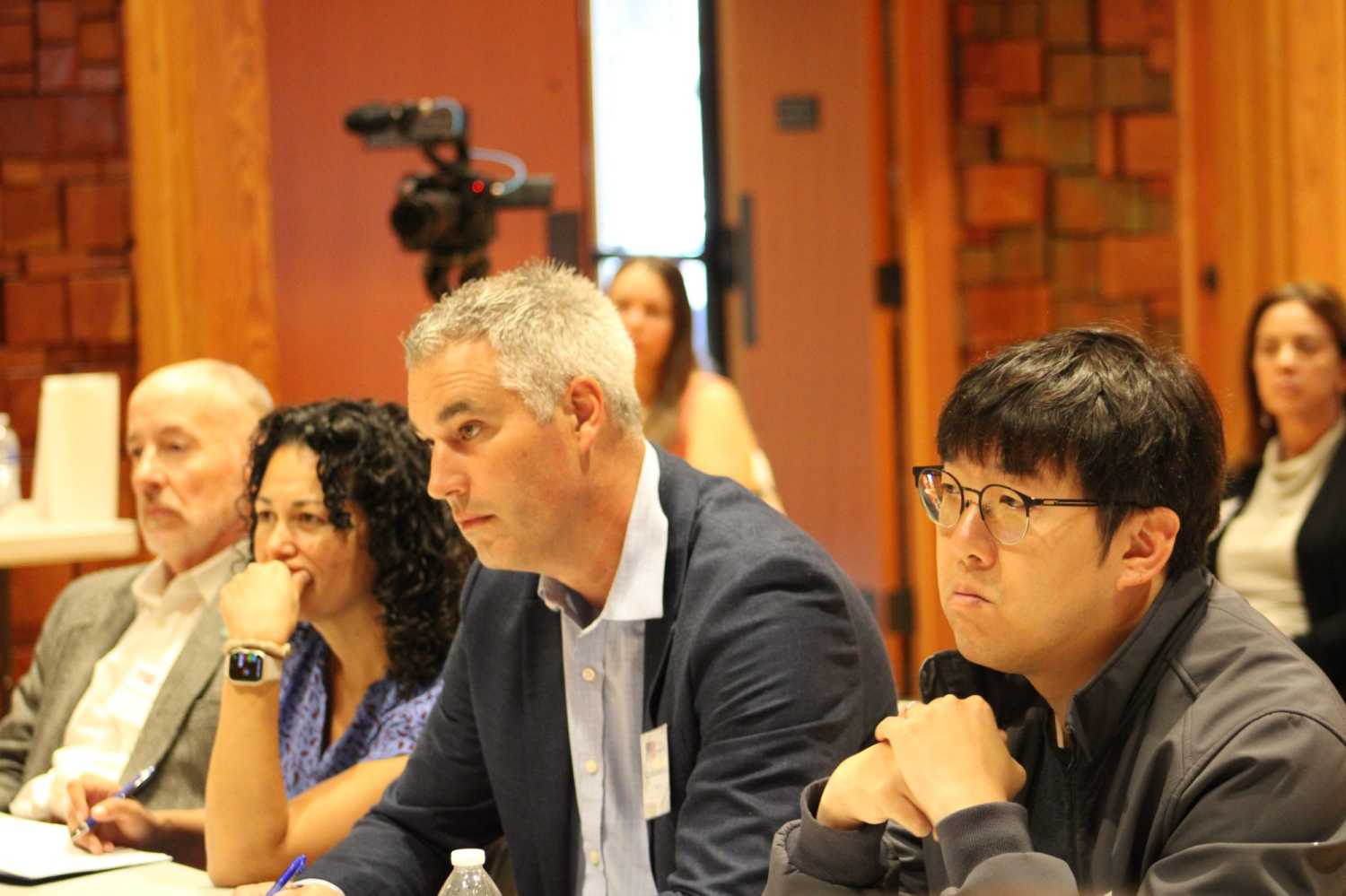
Commission members listen during the site visit. From left: Keith Humphreys, Xochitl Torres Small, Charlie Cotherman, and Phil Chow.
Federal land and power decisions set the terms of local opportunities and resources
The federal footprint on the Peninsula is a major driver of the local economy while also creating additional jurisdictional complexity. Forest Service and National Park Service decisions shape the natural-resource and tourism economies, while Bonneville Power Administration (BPA) decisions affect the cost and reliability of electricity.
On timber, speakers noted that ownership on the Peninsula is a patchwork of federal, private, tribal, and county holdings, with Forest Service and Park Service decisions rippling across it. That interdependence sits atop a history of tension from the timber wars of the 1990s, when logging on federal land was cut sharply to protect the old-growth habitat of the northern spotted owl. The ramifications of that period still shape how parties approach one another today, even as timber operators, landowners and managers, tribes, environmental groups, local governments, and research institutions seek to advance sustainable forest-management practices grounded in evidence.
Outdoor recreation presents a different trade-off. With tourism spending across the Olympic Peninsula topping $1 billion in 2025, participants highlighted the challenge of managing demand across seasons and destinations while maintaining the infrastructure required by heavy visitation. Creating quality jobs and building local wealth are also major considerations. Speakers stressed that coordination between park management, the visitor bureau, and local businesses was the means for managing changes in access or shifts in demand.
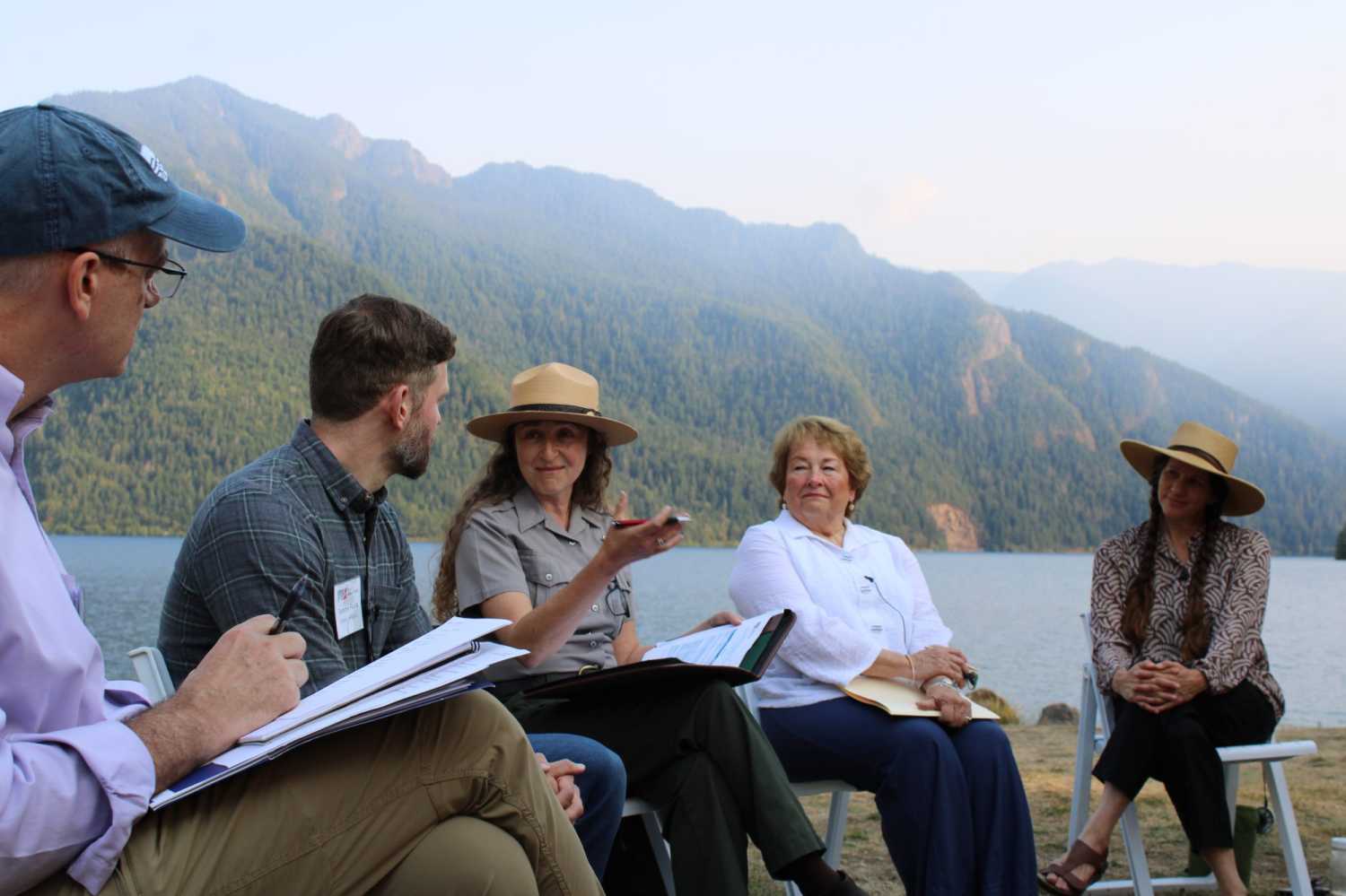
Panelists at the outdoor recreation and tourism session, held at Lake Crescent. From left: Tony Pipa (Brookings), Tommy Farris of Olympic Hiking Co., Olympic National Park Superintendent Sula Jacobs, Marsha Massey of the Olympic Peninsula Visitor Bureau, and Crystie Kisler of the Jefferson Community Foundation and Finnriver Farm & Cidery.
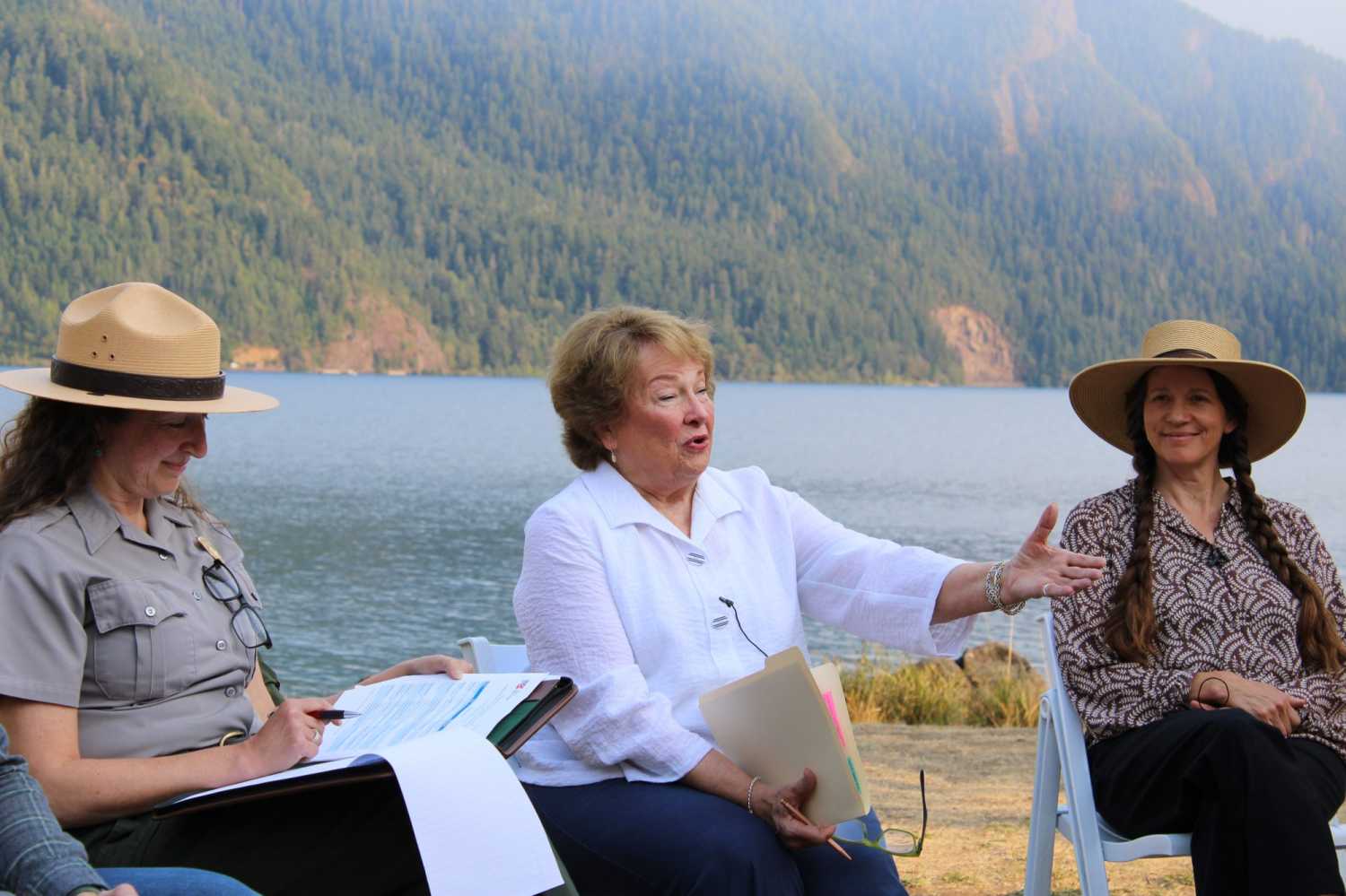
Marsha Massey of the Olympic Peninsula Visitor Bureau described how Olympic National Park coordinates with local tourism businesses.
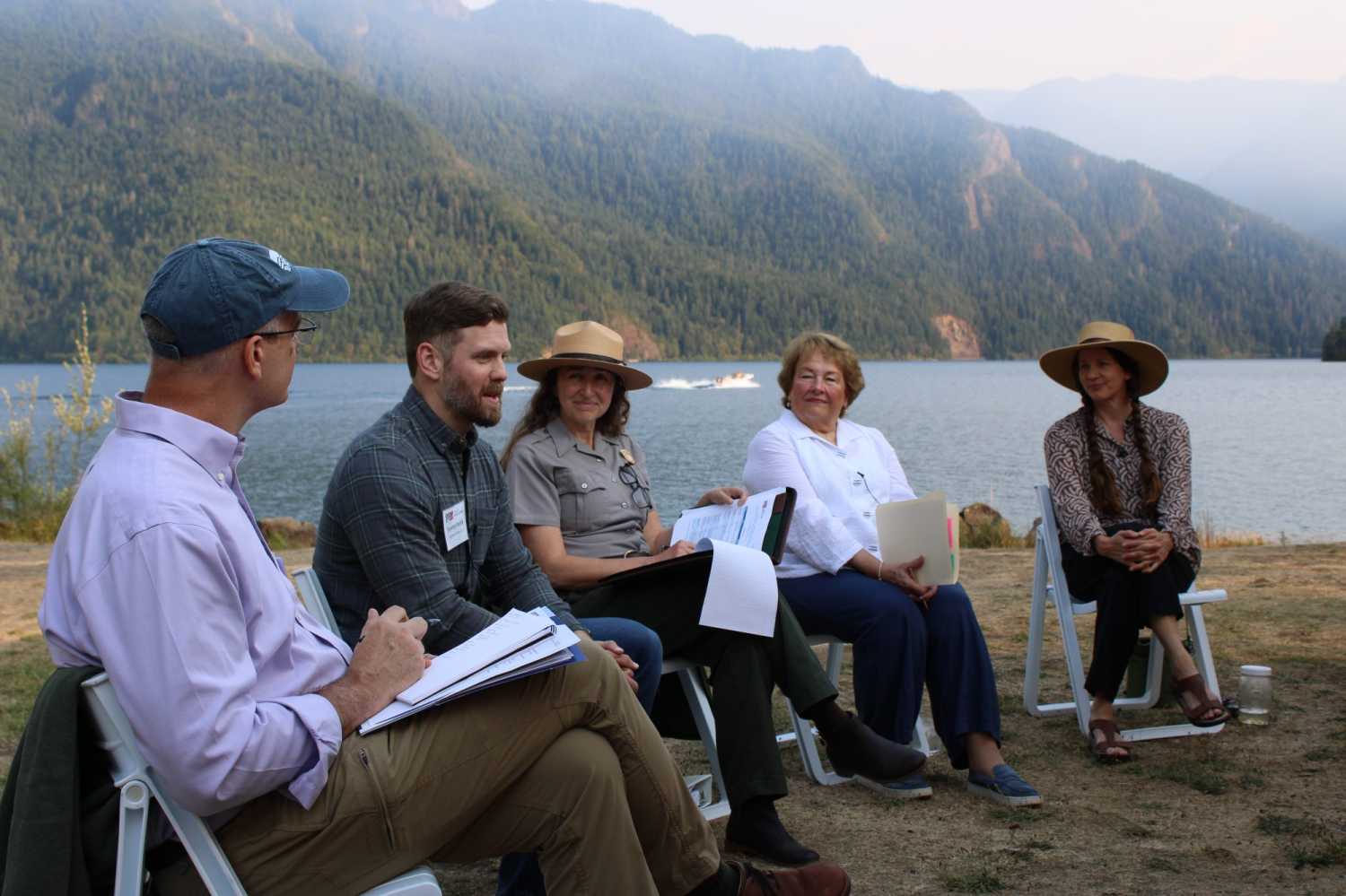
Tommy Farris of Olympic Hiking Co. spoke to the challenge of a visitor economy that peaks in summer and thins in the shoulder seasons, and the shared push to draw travelers across all four.
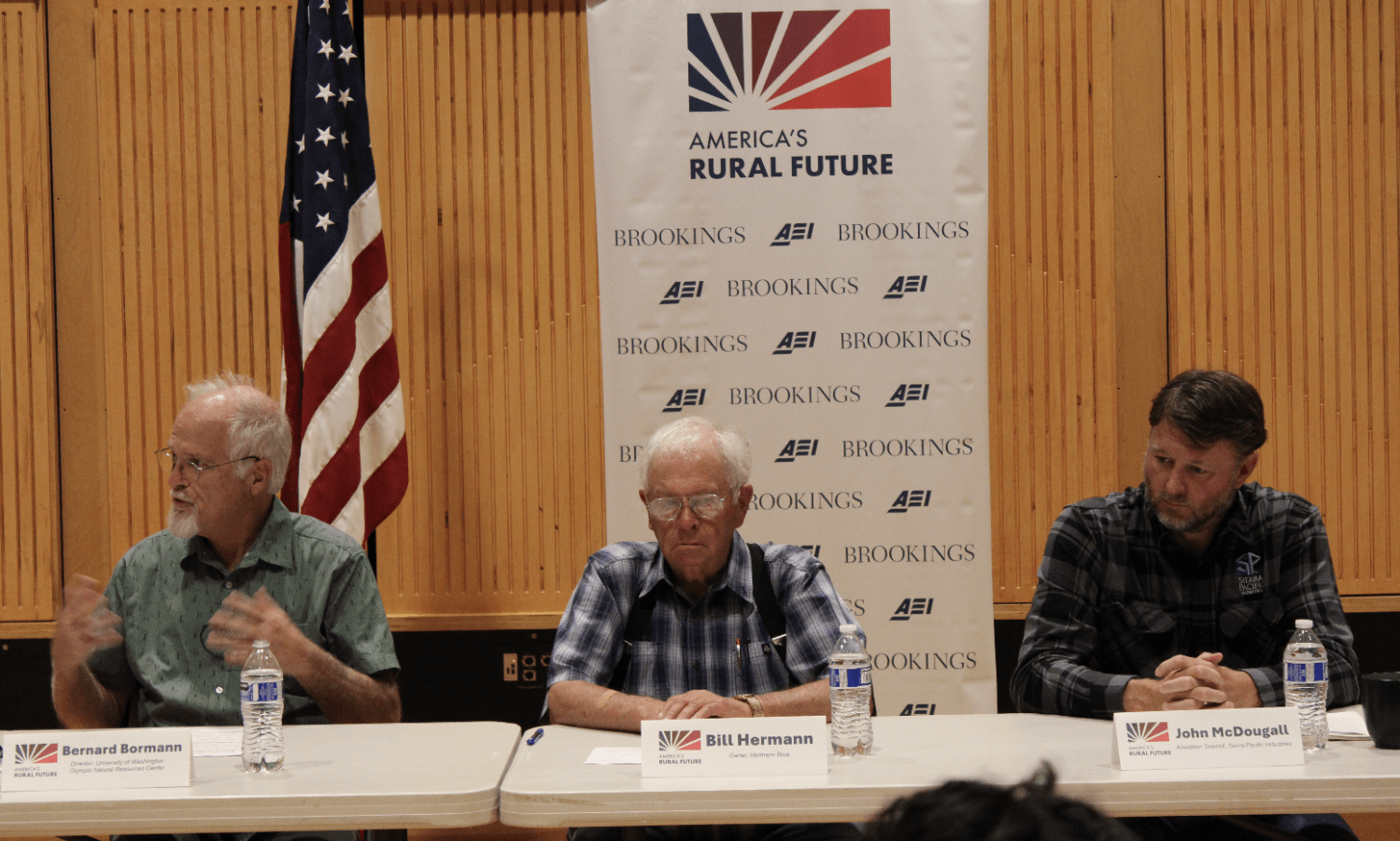
Timber panelists on forest management and the rural economy. From left: Bernard Bormann (UW Olympic Natural Resources Center), Bill Hermann (Hermann Bros.), and John McDougall (Sierra Pacific Industries).
On energy, discussions outlined the economic consequences of an unreliable power grid. Prolonged winter outages have become common enough that residents plan around them. Utility representatives described a system constrained by trees, difficult terrain, long service distances, and a small rate base, which makes major upgrades difficult to finance. Participants also noted that BPA, the federal agency that distributes power across the region, operates under federal rather than state regulation. In response, panelists raised the prospect of microgrids and local generation but stressed that these measures cannot substitute for the capital and federal coordination needed to modernize the regional system.
Training, housing, and other issues affect the Peninsula’s workforce pipeline
The public panel at Peninsula College brought together local leaders to discuss the Peninsula’s shift from its historical timber-based economy toward maritime trades, outdoor recreation, and natural-resource industries, as well as the workforce challenges of making the transition durable. Panelists also highlighted limited housing availability and affordability as compounding factors in the workforce gap. Speakers also noted how metropolitan-oriented housing and employment policies can leave small communities less able to serve their own residents.
Discussion of the region’s maritime economy pointed to the growing opportunities at the ports. Participants noted, though, that technical certification alone does not fully prepare workers for the actual intricacies of shipyard work, and pointed to the value of in-house training and formal apprenticeships, which remain limited on the Peninsula. Such dynamics highlight the importance of continued collaboration and partnership between employers and training providers to meet local job opportunities.
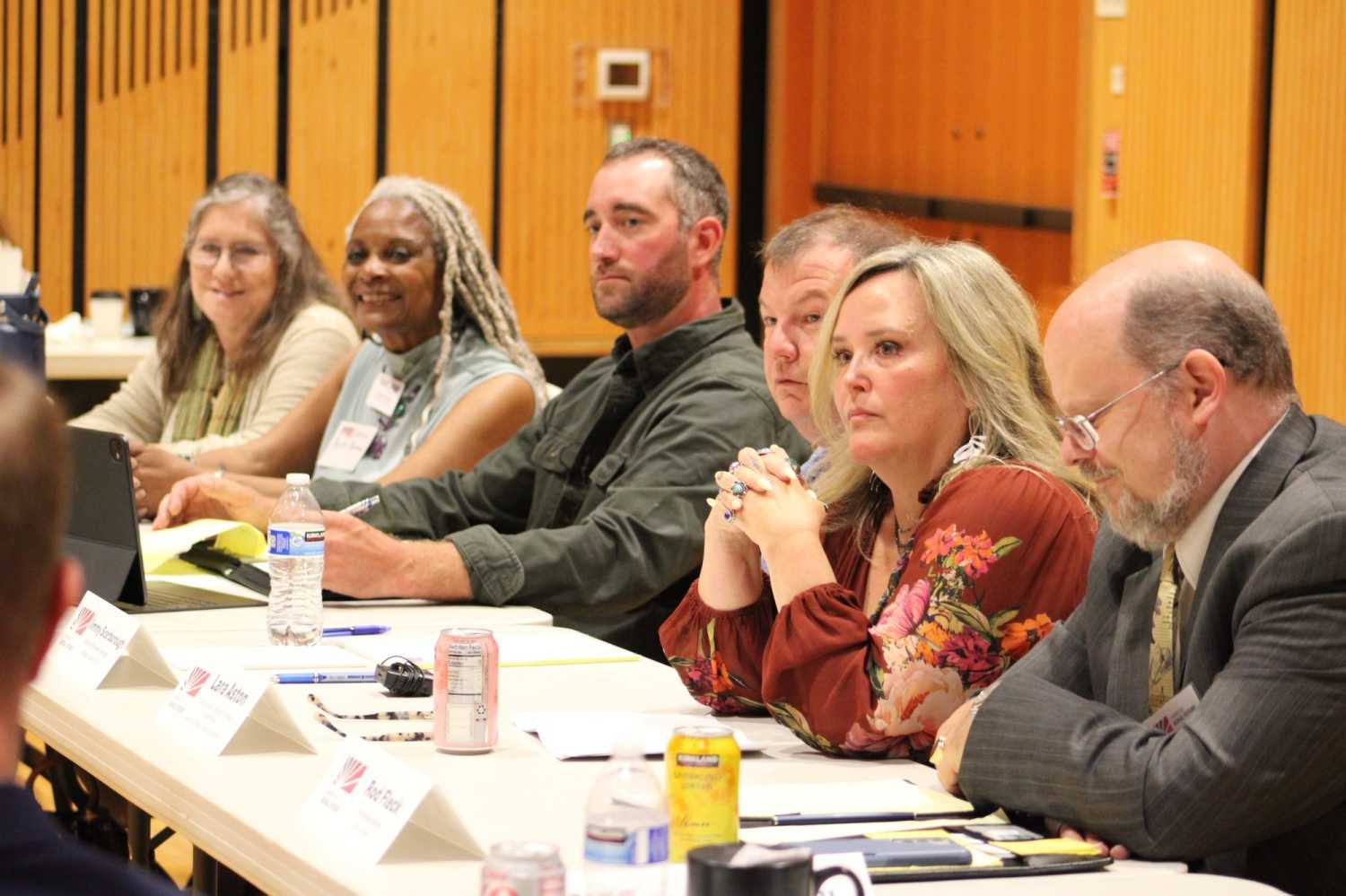
Energy and utilities session. From left: moderator Karen Affeld (North Olympic Peninsula Resource Conservation & Development Council), Phyllis Bernard and Chase Moore (Clallam County PUD), Jimmy Scarborough (Jefferson County PUD), Lara Aston (Pacific Northwest National Laboratory), and Rod Fleck (City of Forks).
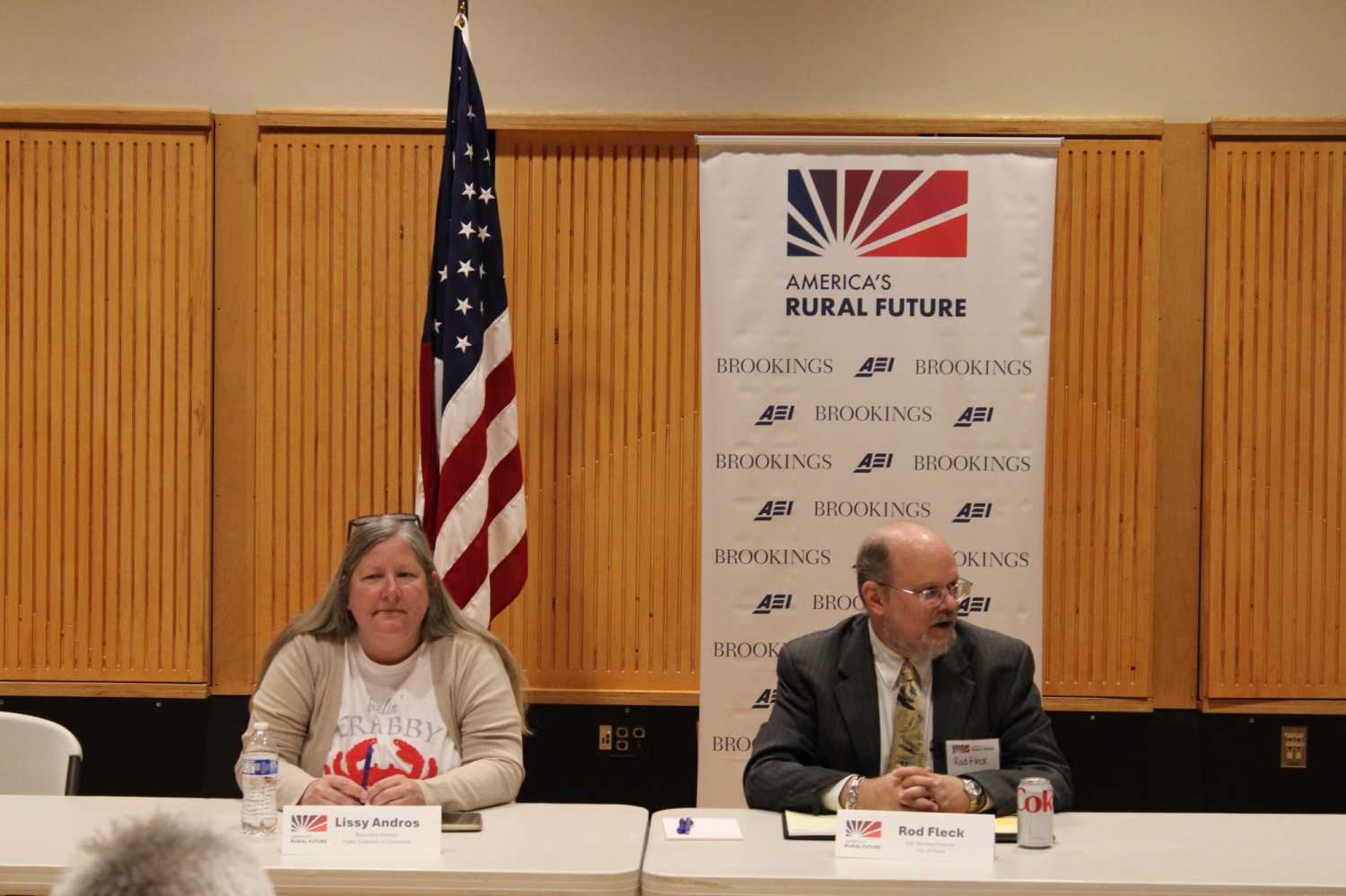
Lissy Andros of the Forks Chamber of Commerce and Rod Fleck of the City of Forks spoke to the challenges facing small businesses as the local economy shifts from timber toward tourism and outdoor recreation.
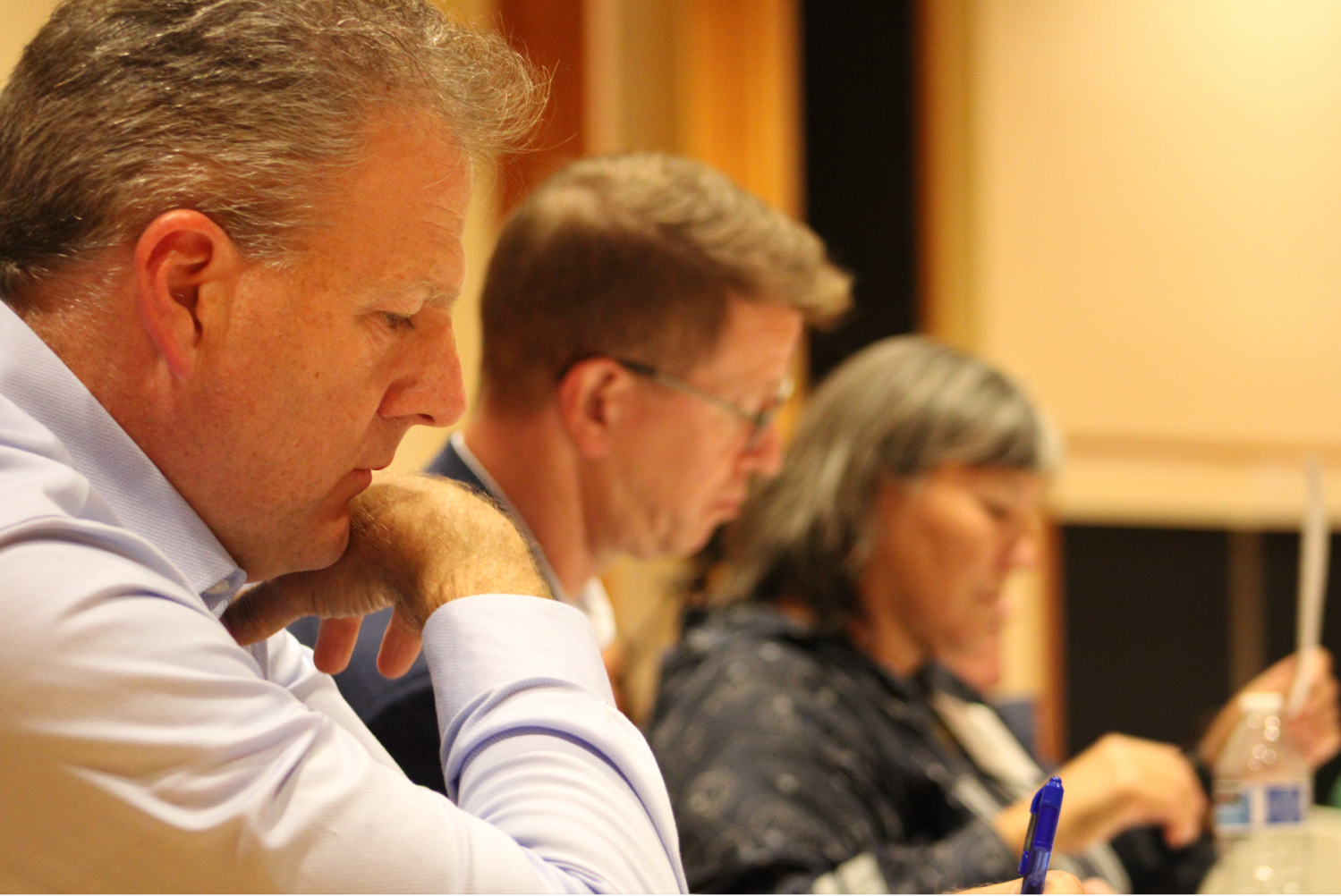
The Commission listens during the field hearing. From left: Commission Co-Chair Chris Sununu, with Commission Members Derek Kilmer and Valerie Nurr’araaluk Davidson.
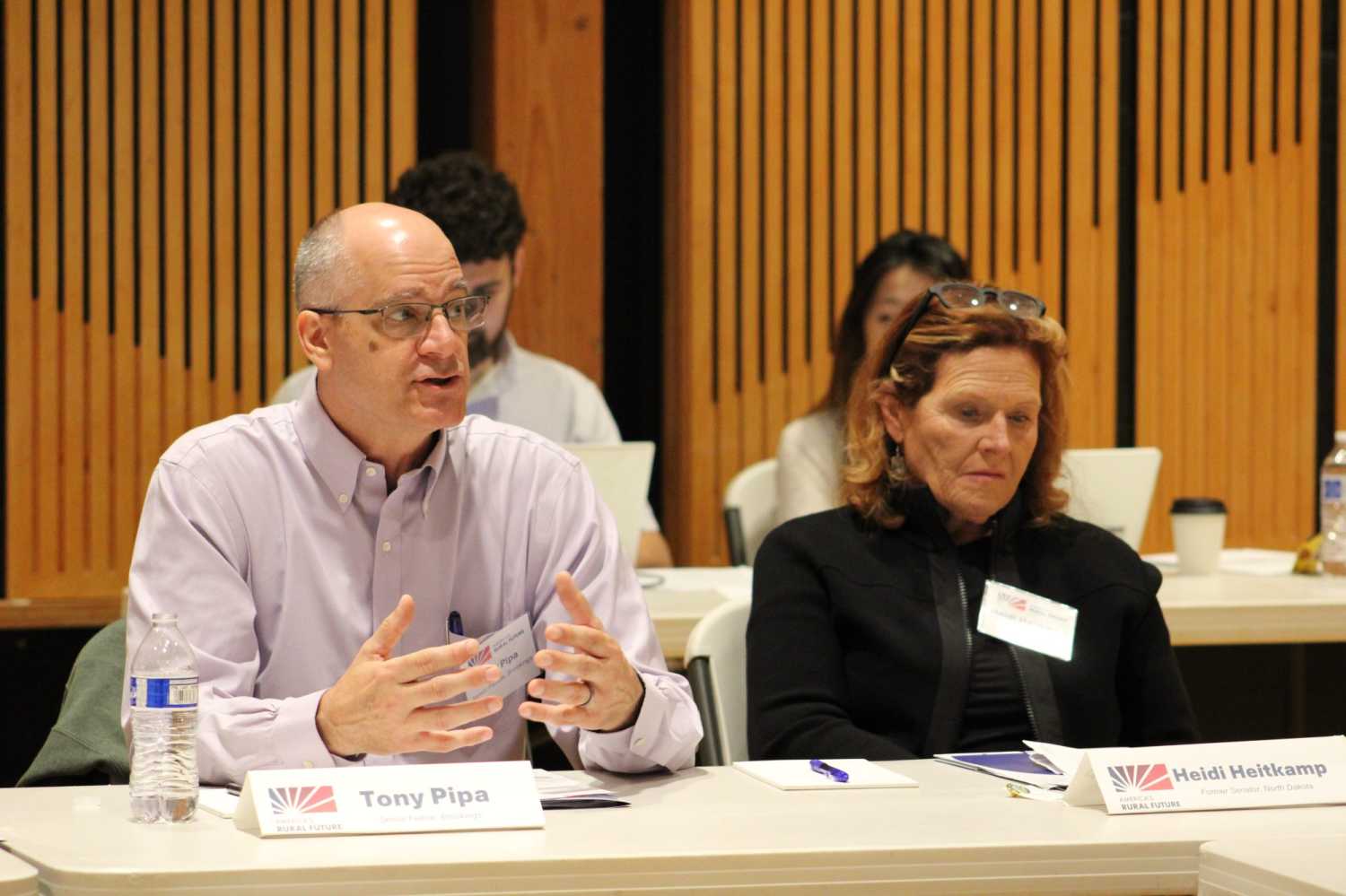
Brookings Senior Fellow Tony Pipa poses questions to participants during a site visit as Commission Co-Chair Heidi Heitkamp listens.
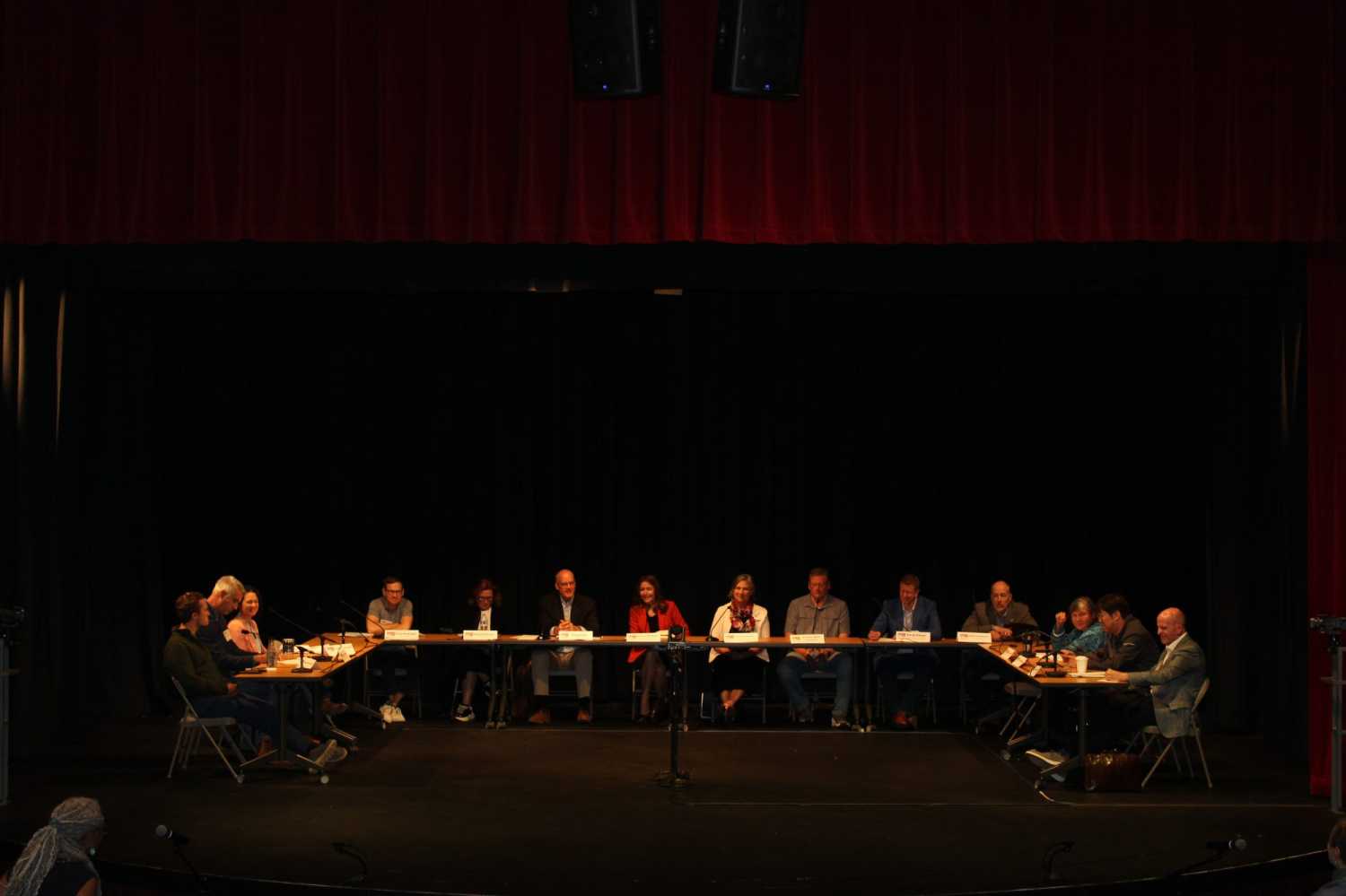
The Commission’s economy session at Peninsula College in Port Angeles, including Colleen McAleer (Port of Port Angeles and Clallam County Economic Development Council), state Senator Mike Chapman, and Helen Price Johnson (Partners for Rural Washington).
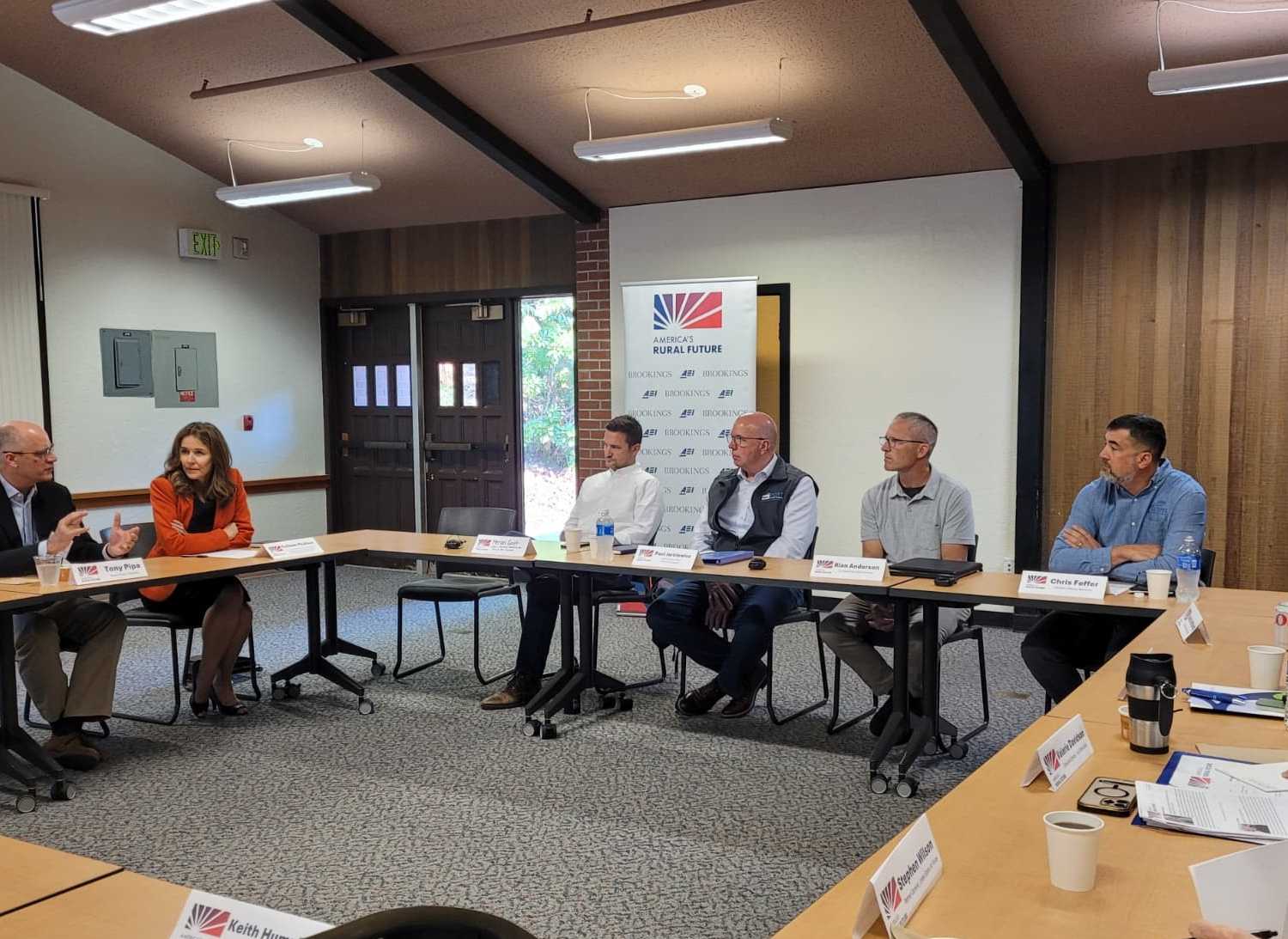
Maritime economy session, with panelists including Eric Toews (Port of Port Townsend), Paul Jarkiewicz (Port of Port Angeles), Rian Anderson (Black Ball Ferry Line), and Christopher Feffer (Platypus Marine). Photo by Elyse Painter for Brookings.
Looking ahead
Intersections between the rural communities of the Olympic Peninsula and the federal government were on display at every turn. The federal footprint carries tremendous impact locally: from the Forest Service and National Park Service to a federal energy utility, federal agencies loom large. The Recompete coalition offers possibility in how federal action can unlock local solutions and strengthen local governance. How federal, state, tribal, and local partners align around key issues, such as dependable infrastructure, workforce pathways and job creation, and resilience, will be central to enabling the region’s assets to be maximized for the benefit of its residents.
The Commission observed related patterns in North Dakota and Minnesota, the Mississippi Delta, and Eastern Kentucky. Its experiences on the Olympic Peninsula will inform the Commission’s thinking on how federal, state, tribal, and local partners can support remote, resource-rich communities and will contribute to the Commission’s final recommendations in 2027.
Coverage from regional media highlights the Commission’s listening tour
- The Seattle Times, August 12, 2026. “How Port Angeles is pointing the way for rural America” (Op-ed by Derek Kilmer and Chris Sununu)
- Peninsula Daily News, August 13, 2026. Paula Hunt, “Officials advocate for federal funding with less red tape”
- Peninsula Daily News, August 14, 2026. Paula Hunt, “Federal coalition sees Peninsula-area resources”
- Peninsula Daily News, August 18, 2026. Paula Hunt, “Coalition: Rural requires flexibility”
- Forks Forum, August 20, 2026. “Rural leaders hear from Olympic Peninsula communities at Forks field hearing”
More from America's Rural Future
Authors


America’s Rural Future: Brookings-AEI Commission on U.S. Rural Prosperity is a bipartisan endeavor to enable rural prosperity by strengthening economic opportunity, resilience, and quality of life across rural America. Learn more.
-
Acknowledgements and disclosures
The Brookings Institution is a nonprofit organization devoted to independent research and policy solutions. Its mission is to conduct high-quality, independent research and based on that research, to provide innovative, practical recommendations for policymakers and the public.
The Brookings-AEI Commission on U.S. Rural Prosperity and associated work is supported by the Robert Wood Johnson Foundation, CoBank, and The SCAN Foundation. Ascendium Education Group provides support for highlighting the Commission’s work through the Reimagine Rural podcast.
The conclusions and recommendations of the Commission are solely those of its member(s), and do not reflect the views or policies of Brookings or AEI, their management teams, other scholars, or the funders acknowledged above. The points summarized in this commentary reflect the perspectives of expert witnesses and local speakers who participated in the field hearings.
This summary benefited from the support of the project team, including Elyse Painter, Wafa Abedin, Zoe Swarzenski, and Paul Ciaramitaro, who led planning and coordination for the field hearings and site visits. Madeline Tong provided detailed note-taking. Together, their efforts allowed for effective Commission engagement, community outreach, and local coordination.
The accompanying video was produced by Pioneer Productions, with publication by Daniel Morales of Brookings. All photos by Junjie Ren/Brookings unless otherwise noted.
-
Footnotes
- The program traces to legislation authored by Derek Kilmer, now a member of the Commission, during his time in Congress.
The Brookings Institution is committed to quality, independence, and impact.
We are supported by a diverse array of funders. In line with our values and policies, each Brookings publication represents the sole views of its author(s).

Commentary
America’s Rural Future: Olympic Peninsula site visits highlight locally led renewal, tribal sovereignty, and the impact of federal decisions in a remote coastal region
Port Angeles, Forks, and Lake Crescent, Washington | August 11-13, 2026
September 28, 2026