



Post-COVID pandemic inflation is often blamed on broken supply chains and energy shocks. A new BPEA paper argues that unexpectedly strong demand was the dominant driver of the surge in both the U.S. and the euro area. On this episode of the Brookings Podcast on Economic Activity, Louise Sheiner talks to the paper’s authors, Domenico Giannone of Johns Hopkins University and Giorgio Primiceri of Northwestern University, about what drove the surge and what it means for policy.
Related Content
- Listen to the Brookings Podcast on Economic Activity on Apple, Spotify, YouTube, or wherever you like to get podcasts.
- Learn about other Brookings podcasts from the Brookings Podcast Network.
- Sign up for the podcasts newsletter for occasional updates on featured episodes and new shows.
- Send feedback email to [email protected].
Transcript
[music]
EBERLY: Welcome to season nine of the Brookings Podcast on Economic Activity. I’m Jan Eberly, the James R. and Helen D. Russell Professor of Finance at Northwestern University. And this season, we’ll be listening to discussions about papers from the fall 2026 Brookings Papers on Economic Activity conference, hosted by Brookings in September.
STEINSSON: And I’m Jón Steinsson, Marek Professor of Public Policy and Economics at the University of California, Berkeley. We are the co-editors of the Brookings Papers on Economic Activity, a semi-annual conference and journal that pairs rigorous research with real-time policy analysis to address the most urgent economic challenges of the day.
EBERLY: Once again, we have a great lineup of timely topics, energy markets, inflation, migration’s effects on labor and housing markets, financing AI, and more. Over the course of this season, we’ll hear a lot more about the conference papers and importantly, how decision-makers should be thinking about the topics they explore.
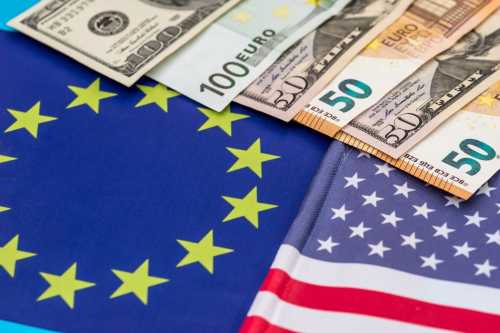
This episode takes on one of the most debated economic questions of the last few years: What actually caused the post-pandemic surge in inflation? Louise Sheiner, policy director for the Hutchins Center on Fiscal and Monetary Policy at Brookings, speaks with Domenico Giannoni of Johns Hopkins University and Giorgio Primiceri of Northwestern on their new paper, “Demand-Driven Inflation.”
STEINSSON: This debate has really been quite heated, which is perhaps not surprising given that there were so many unusual things going on during those years. On the supply side, there were supply chain disruptions, a substantial fall in labor supply, and large increases in energy prices associated with Russia’s invasion of Ukraine.
But then on the demand side, there was huge fiscal stimulus, and monetary policy was, at least until the spring of 2022 quite unresponsive.
EBERLY: Given all of that, it’s quite striking that inflation in the U.S. and Europe followed almost identical paths, just offset by about six months.
STEINSSON: Yes, that suggests that the cause of inflation must be something that was not special to the United States, but quite a few of the main proposed explanations affect both economies.
Now, Giannoni and Primiceri argue that the primary driver of inflation was demand, and what’s driving this conclusion is really to a large extent, monetary policy. Monetary policy was much more accommodative than one would have expected it to be given how the Fed and ECB had conducted monetary policy prior to this episode.
Here, the authors are making a subtle point. Whether inflation counts as demand-driven or supply-driven depends critically on the counterfactual one has in mind. If that counterfactual involves monetary policy responding aggressively to changes in inflation, then the conclusion is that the lack of a response of the Fed and ECB in 2021 was what caused inflation.
EBERLY: So, with that intro, let’s turn it over to Louise and the authors.
[3:16]
SHEINER: Thank you, Jan. Thank you, Jon. And welcome, Domenico.
GIANNONE: Nice to be here.
SHEINER: And welcome, Giorgio.
PRIMICERI: It’s great to be here. Thank you.
[3:24]
SHEINER: Okay. Giorgio, let’s start with you. So, the conventional story about post-COVID inflation is that it was mostly about broken supply chains and energy shocks. You argue that’s largely wrong. What’s the real driver?
[3:37]
PRIMICERI: So, we think that the main driver was actually demand, Louise, and this is true both in the United States and in the, in the Euro area. And to be more precise, our results suggest that approximately two-thirds of the surge in inflation after COVID was due to a boom in demand.
And there were three main contributing factors for this boom in demand. The first was private demand. So, the reopening of the economy after the restrictions of the pandemic, released some private pent-up demand. You know, after being at home for a while, people went out and decided to spend a little bit more than what they would have done otherwise, and probably very understandably so.
The second factor was fiscal policy, which was very supportive of incomes and spending during and after the pandemic. And it might be useful to give some numbers here. In the United States, government deficit relative to GDP increased by approximately nine percentage points. And in the Euro area, this number was seven percentage points, so almost equally large.
The type of fiscal intervention was a little bit different because in the U.S. It took the form mostly of direct transfers to households, stimulus checks essentially. While in Europe, they were mostly energy and employment subsidies, but the size of the fiscal intervention was comparable.
And the third factor that contributed to the boom in demand was monetary policy, which was unusually accommodative, both in the Euro area and in the United States. And just some numbers here are useful. Again, the timing is quite revealing because the Federal Reserve first raised interest rates in March of 2022 when the latest reading on CPI inflation was 7.9%.
The ECB first increased interest rates in July of the same year, when inflation in the Euro area was 8.9%. Okay? So, this is to say that monetary policy was clearly fairly accommodative in the sense that central banks have responded less aggressively than they would have normally done in the pre-pandemic period.
[6:16]
GIANNONE: So, let me also add that we are not claiming supply problems didn’t matter. They did. What our estimates say is that supply shocks alone would have produced less inflation and a weaker economy. And coming back to the conventional story, some of the development usually classified as supply problems, such as higher energy prices, shipping costs, and delivery delays, also reflected booming global demand.
So, supply constraint mattered, but exceptionally strong demand and accommodation by policy was the main force that turned those constraints into broad-based inflation.
[7:01]
SHEINER: Yeah, I thought that was so interesting to think about. So, people heard about stories about how the ports couldn’t keep up, and it seemed, seemed like it was a supply constraint.
And some of these measures of supply constraints were about like, how busy were the ports? But a big shock in demand where demand has just increased can create that supply constraint. Right? And so, like, what do you call it? And you’re gonna say, well, that was demand that created that supply constraint. Is that, is that the right way to think about it?
[7:24]
GIANNONE: Exactly. Exactly. And, you know, bottlenecks tell you where the congestion is, not necessarily what caused it. So, as you were saying, if a port is congested because dock workers aren’t available, that’s a supply shock., But if it is congested because households are ordering far more good than usual, the underlying cause is demand, even though what we see is a supply chain problem.
So, during the recovery, shipping costs, delivery times, commodity prices, energy prices, they all reflected limited capacity and also very strong spending. Of course, if we treat them all as movement in the supply shocks, then we overstate the role of supply.
[8:16]
SHEINER: Makes a lot of sense. Okay, Giorgio, so the U.S. and the European inflation were almost exactly the same, just the timing was different. They were offset about six months. So, you compare this— these two episodes, you compared the U.S. and Europe, and what did that comparison teach you about what was driving the inflation?
[8:35]
PRIMICERI: So, that was very striking to us, the similarities between the two the two regions. And as you said, the only difference was that inflation peaked a few months later in Europe relative to the United States.
And this similarity is not just about headline inflation. It is about many subcomponents of inflation. For example, goods inflation behaved similarly, services inflation behaved similarly, and perhaps more surprisingly, energy inflation behaved very similarly in the U.S. and the euro area.
The case of energy is actually very interesting because in Europe, the much larger increase was in the price of gas, electricity, and heating. This was not particularly surprising. Europe was indeed more exposed to the energy shock due to the Russian invasion of Ukraine. In the U.S. instead, the the larger increase was in the price of gasoline and other transportation fuels, which increased a lot more than in Europe.
But once we put these two components of energy prices together into a single energy price index, it turns out that the differences cancel out, and this aggregate energy price index of inflation behaves very similarly in the two countries.
And we have mentioned before that the similarities are wider than this. The two economies also shared a a broader demand and policy environment. You know, fiscal policy was expansionary, monetary policy was accommodative, private demand boomed because of pent-up demand.
So, to answer your question more directly about what this comparison has taught us, uh, I don’t think it has necessarily taught us what the drivers were, but more that we would expect the drivers to be similar.
[10:32]
SHEINER: Yeah. It’s interesting because I definitely had this view, because it was what I read about, was that certainly in Europe, you know, the inflation was energy driven. And that’s what policymakers were talking about. So, why do so many central bankers believe that?
[10:49]
GIANNONE: I think the main reason is because based on what they saw at the time, that explanation was plausible. So, because in real time that explanation was plausible, the economy looked weaker at the time than it was. Policymakers were seeing high inflation alongside apparently weak activity. And that combination looked like a supply problem. The initial GDP estimates were later revised upward. So, today, with the hindsight, we see stronger activity and realize demand had a stronger role.
Part of why the picture was so hard to read is that this episode was unprecedented. In last year Brookings Papers, Stock and Watson showed that in the United States, the COVID recession was the shortest on record. With the mindset shaped by previous recession, it was natural to expect a slower recovery and hard to recognize how quickly the economy was coming back. And on top of this, the supply problems made the front-page news throughout COVID.
[11:59]
PRIMICERI: I’d like to add a third reason to what Domenico just said, which I think is important, and maybe also a little bit more controversial than what Domenico mentioned, which is that after the very severe economic downturn of 2020, policymakers were probably a little bit worried about withdrawing support too early, understandably so, probably.
And so, interpreting inflation as supply-driven and likely to be transitory, I think made this greater tolerance of inflation appear less risky and more viable. And, you know, to be clear, I do not mean in any way to criticize policymakers. I think given the information available at the time, the risks that they were facing, allowing inflation to run temporarily higher to accelerate the recovery, you know, might have been a perfectly reasonable choice, if not the optimal one.
[12:57]
SHEINER: Okay, great. I was gonna ask, Domenico, I’m just gonna go back, because you said something that I think is very much part of the paper that we haven’t discussed a lot yet, which is part of how you know the difference between a supply shock and a demand shock. And you said that during the episode, GDP at first looked quite weak, and so that looks like a supply shock, but it turns out it was actually quite strong, and that’s w-what looks like a demand shock.
Is that, is that the right way to think about it and how you could tell the difference between the two?
[13:26]
GIANNONE: Yes. Yes, absolutely. So, at the time, so we were observing a weak economy and inflation, which is indicative of supply problems. While today, with the hindsight, now we see that the economy was stronger. So, the economy was strong and inflation was strong, putting more in the direction of of demand.
Basically, our model is working on based on this intuition, and we have a formal model that make predictions and look at forecast errors in this prediction. And when you see co-movement into output and prices, it interpreted as a positive co-movement as demand, negative co-movement as supply.
And our model is run with the data of today, so with the hindsight, we can realize its demand. In real time, it was not that clear.
[14:23]
PRIMICERI: So, we now know that this was the fastest recovery in post-war history. In real time, this might have not been entirely clear.
[14:33]
SHEINER: Yeah. I mean, that’s fair. We know a lot of people get criticism now as if they should have known it at the time. But of course, there was a lot of uncertainty.
Okay, so let’s go back. So so, using your model you decided it was demand. But when you talk about demand, you say how you classify whether or not it was a demand shock or a supply shock actually depends on how aggressively the Fed and the ECB were fighting inflation. Can you explain that?
[15:02]
PRIMICERI: Yes. This is actually a very important part of the paper. The short answer to your question is that demand and supply shocks themselves are not observed. What we observe is the effect of the shocks on some economic variables like prices and production and income and consumption and these things.
And as it is well known, the effect of shocks on economic variables depend on the conduct of monetary policy. So, I’m gonna give you a concrete example. Let’s imagine that the economy is hit by an adverse energy supply shock. If the central bank responds aggressively by raising interest rates and compressing demand, then the shock is probably gonna produce not much inflation, but a more severe recession.
Vice versa, if the central bank decides to look through the shock, the same shock will produce more inflation and a smaller decline in output. So, the originating shock is the same in this example, but the inflation that we observe as a consequence of the shock is different depending on the conduct of monetary policy.
And we can now extrapolate from this example, and perhaps it’s easier to understand why any decomposition of an historical episode is going to depend necessarily on the monetary policy regime in place.
So, to see why this matters, mine was just an example so far, but to see why this matters in practice, consider how monetary policy was conducted before the pandemic by both the Fed and the European Central Bank. So, for many years, both central banks had established a pattern of responding quite forcefully to inflationary pressures, whether those pressures originated on the demand side or the supply side.
But during the pandemic, their response was more accommodative than usual. They accepted more inflation in order to support a faster recovery.
And again, I mentioned this before, that choice might have been justified, but it did change how supply shocks showed up in the data. So, they likely produced more inflation than usual and less economic weakness than in a pre-pandemic regime.
So, the point here of the paper is, or one of the points of the paper is that part of the inflation that is commonly attributed to supply shocks also reflects the accommodative stance of monetary policy in response to these shocks, which was unusual.
[17:51]
SHEINER: So, just to clarify, if there’s a supply shock and in normal times that would have led to less output, and in this time the monetary authorities decided to support demand, and have more inflation and more output, then that becomes a demand shock.
[18:08]
PRIMICERI: Then it doesn’t necessarily become a demand shock, but its effect, it’s amplified by the chosen demand policy.
[18:18]
SHEINER: Right. So, in your classification, that’s one piece of the demand shock, that monetary policy being more accommodative. So, you do break down demand into monetary policy, fiscal policy, and, like, other forces like pent-up demand, as you said. For the U.S. and Europe, which of these matter the most? Whether they’re about the same or how do, how do they compare?
[18:38]
GIANNONE: So, Louise, they all mattered and at different times. So first, monetary policy. So, it turned accommodative in 2021 as rates stayed low while inflation rose. And this is where the two economies look almost identical. The contribution was similar in the United States and the euro area, and more pronounced during the run-up of inflation. As Giorgio was saying at the beginning, both central banks raised rates when inflation was already high.
Second, fiscal policy. In the United States, it was very strong immediately. In Europe, it was similar in size, but the contribution was more spread over time.
Third, pent-up demand and other private spending. That mattered more for the United States, especially during the reopening as the fiscal push faded. In Europe, the contribution of pent-up demand and private spending was less important, and during the reopening, we still had some important fiscal policy shocks bringing up inflation.
[19:55]
SHEINER: Super interesting. Okay. So, what is the one thing you’d want policymakers to take away from your research?
[20:03]
PRIMICERI: So, I would say that one central lesson for policy here is that the inflationary effects, as we just mentioned, of a shock, they do depend on the conduct of monetary policy because policy helps determine, you know, how much of a certain shock is gonna appear in prices and how much is gonna appear in economic activity.
And to be sure, this is a familiar result in monetary theory. It’s not new. The role of the paper is to show just how important this has been in this particular episode in history.
So, take my usual example: supply shocks. The usual recommendation for policy is that policy should look through them, as central banks like to say, especially, you know, when those shocks are expected to be transitory.
The key point here is that being transitory is not an intrinsic property of the shock. So, some supply shocks may be expected to be transitory simply because in the past, central banks have reacted to them in a way that has prevented them from becoming persistent. And if policy suddenly switches, it suddenly becomes more tolerant of inflation and starts looking through supply shocks more than they would normally do, then that shock might lose this transitoriness property that allowed people to look through them in the first place.
If I may add something, this has a concrete counterpart. Right? Because this is not just a theoretical point, that this is exactly the problem that the Fed and ECB are facing now, with the war with Iran. There are disruptions in energy markets. Oil prices are increasing. Inflation never really went back to the 2% target. Demand is still fairly strong, so central banks might need to raise interest rates even more than they have already done in order to prevent this initial energy shock from spreading to other prices and becoming more persistent.
[22:13]
SHEINER: Domenico, you have anything to add?
[22:14]
GIANNONE: Yes. My takeaway is about measurement. COVID reminded us that measuring the economy in real time is difficult and taught us that it becomes harder when there is so much variation and uncertainty.
As we document in the paper, the early data understated the strength of the recovery. And with a clearer picture, policy might have responded differently, and inflation might have been lower.
Something similar had happened in the 1970s. And indeed, policymakers are putting renewed effort into this. The Fed has just launched the five task forces to advance the conduct of monetary policy, and one of them is exactly about the quality and timeliness of data that inform policy decisions.
SHEINER: Yeah. We’re all looking forward to hearing the results of those working groups. So, this has been a really super interesting conversation, and I’ve learned so much. Thank you so much, Giorgio, and thank you so much, Domenico.
PRIMICERI: Thank you, Louise.
GIANNONE: Thank you.
[music]
STEINSSON: Once again, I’m Jón Steinsson.
EBERLY: And I’m Jan Eberly.
STEINSSON: And this has been the Brookings Podcast on Economic Activity. Thanks to our guests for this great conversation.
EBERLY: As always, you can find the full papers and the Brookings Papers on Economic Activity conference proceedings on our website at Brookings dot edu slash BPEA.
STEINSSON: And thank you to the team that makes this podcast possible: Ike Blake, supervising producer; Fred Dews, senior producer; Ranga Krishnamurthy, co-producer; Teddy Wansink, video editor; Chris Chang, audio editor. Show art was designed by Katie Merris, and promotional support comes from our colleagues in Brookings Communications.
Participants
Hosts

Interviewer

Guests


The Brookings Institution is committed to quality, independence, and impact.
We are supported by a diverse array of funders. In line with our values and policies, each Brookings publication represents the sole views of its author(s).


Commentary
PodcastWhat really drove post-pandemic inflation?
Listen on
Brookings Podcast on Economic Activity
November 5, 2026