



In this special edition of Reimagine Rural, Tony Pipa interviews Phil English, co-chairman of the Government Relations Practice Group at ArentFox Schiff, LLP and former member of the U.S. House of Representatives (PA-3). English is a member of America’s Rural Future: Brookings-AEI Commission on Rural Prosperity and shares his insights and perspective from the Commission’s May 2026 visit to Eastern Kentucky.
America's Rural Future Field Hearings
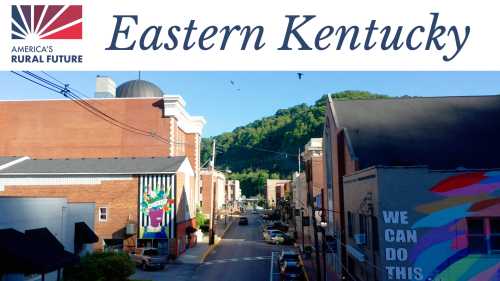
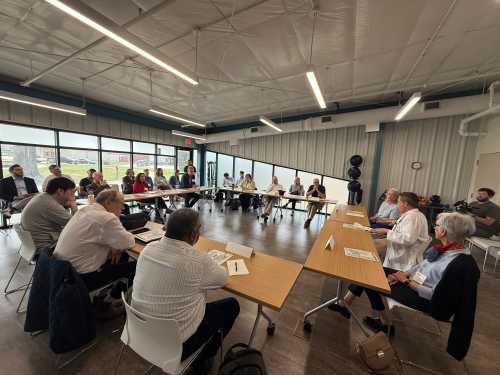
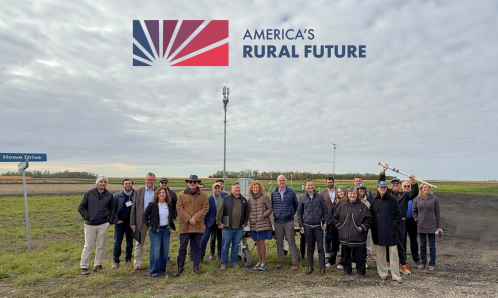
Transcript
[music]
PIPA: Hi, everyone. I’m Tony Pipa, a senior fellow in the Center for Sustainable Development at the Brookings Institution, and your host for the Reimagine Rural podcast. And while the podcast normally documents the changes happening in a rural town in America, and we’re hard at work on our next season, today’s episode’s a special edition of the podcast. It’s an interview with a member of the America’s Rural Future Commission, the Brookings-AEI Commission on U.S. Rural Prosperity. So the commission is co-chaired by Heidi Heitkamp, the former senator from North Dakota, and Chris Sununu, former governor of New Hampshire. And it’s going to produce a national rural strategy by the fall of 2027.
The commission’s work is informed by visits to rural places across America so that we can experience the diversity of those places and hear from rural people. In May of 2026, we visited eastern Kentucky, including a town familiar to listeners of this podcast, Hazard, Kentucky. And today I’m joined by commission member Phil English, who’s co-chairman of the Government Relations Practice Group at ArentFox Schiff, LLP, and former House of Representatives member from western Pennsylvania’s third district, to talk about the visit and his reflections on the insights that we gleaned from the visit.
So Phil, thanks very much for being with me today.
[1:29]
ENGLISH: Tony, it’s a real honor to be with you, and it’s exciting to be part of the commission, moving to create a template for how to approach rural economic development and rural quality of life really for the first time in decades. And, we think that what we’re discovering out there will be of use to policymakers at the federal level, the state level, and at the local level.
I think you’ve put together a remarkable set of people to be on this commission. And I will say, being the least remarkable among them, I’m excited to be part of this effort, which so far has yielded some real results.
[2:08]
PIPA: So let me ask you, I gave a couple of little blurbs about, you know, your history, your bio, but what were your motivations? Why, why when we reached out to you and talked to you about the commission, why were you motivated to join this commission? Give us a little bit about your own history and why you think it’s important.
[2:25]
ENGLISH: This goes back to my roots, in my career and before. I come from a part of Pennsylvania where although I am from a small city, Erie, Pennsylvania, we are part of a a broader region, which is largely rural and is largely challenged.
I also, in my first job out of school, was the policy staffer for a member of the Pennsylvania Senate who had probably the most rural district in the state or the region. With cities like Oil City, Titusville, places which had benefited from the surge of the energy industry in the 19th century, and had seen a loss of manufacturing jobs and vitality since.
All of those places since then have developed strategies for revitalizing their communities. And when I was in Congress, I worked with many of these communities. I was a member of the Ways and Means Committee interested in how to apply tax policy, but also programmatic opportunities to help rural communities. I’ve worked with the ARC. I’ve worked with the Economic Development Administration. I’ve worked on disaster relief. And so this seemed to be right up my alley.
And it also seems extremely timely because we’re gonna be seeing a wave of technological change which is going to transfer our economy. We can’t afford to have rural communities fall behind because of a lack of infrastructure, a lack of opportunity, a lack of workforce development that would permit them to do something that is very timely, and that is provide at a time when many people are working remotely an alternative lifestyle for many, many people with high incomes and playing major roles in the new economy.
Rural areas, I believe, are more viable now than they have been in a long time, and with with the right tools I think can reposition themselves to take advantage of some of the changes rather than be rolled by them.
[4:37]
PIPA: Now, you talked about your personal history and, you know, where you’re from in western Pennsylvania. We share in common our roots from the Commonwealth of Pennsylvania. The commission has visited… You know, we started off in North Dakota and Minnesota, and we were even on the tribal lands, White Earth Nation of Minnesota. Then we were in the Mississippi Delta. Why do you think it was important for the commission to visit a place like eastern Kentucky and Appalachia? Why Appalachia? Why is that important?
[5:05]
ENGLISH: Because Appalachia is the iconic location for rural issues in America. Appalachia is where the Kennedy administration went to launch the last, I think, great rural initiative to revitalize rural economies and communities. Appalachia is a place which represents some of the oldest folkways in America. Remember that Kentucky was one of the earliest places west of the Alleghenies to develop. And as a result, as Appalachia has lost its economic opportunities, lost its coal industry, it has had to adapt with the support of entities like the Appalachian Regional Commission, and adapt to new realities with the support of very active members in Congress, like the iconic Hal Rogers on on appropriations.
But also, what they’ve had to do is cultivate a strong sense of identity, a high degree of social solidarity, and deal with these problems in a very Tocquevillian way, by developing local solutions for their communities.
I think Appalachia is the perfect place to go to get one particular perspective on the rural equation in America.
[6:32]
PIPA: So we visited Hazard, Kentucky, as well as Manchester, Kentucky, and we heard from, the very local leaders, from the hyper-local, like, the town’s mayor and town councilmen and folks who are even local business owners in Hazard. We also heard from some regional leaders. There was the Regional Healthcare Association where the hospital is placed in Hazard, but that serves a large portion of Appalachia as well. The higher educational system.
You know, what struck you particularly about that visit that we had in Hazard and in Manchester and some of those conversations? It’s a place that’s seen a lot of loss. It saw loss of industry, loss of its extractive industry with coal. It’s seen loss in terms of the opioid epidemic. And yet I think we also experienced a lot of hopefulness about the future. What were you taking away from that visit?
[7:31]
ENGLISH: I was struck by their dynamism with limited resources but with a very high degree of civic leadership. They have been coming up with solutions. They have been hit by the loss of the coal industry. They’ve been hit by natural disasters. They’ve been hit by the opioid epidemic, and yet they still have the resilience to come back and be growing.
And what I found was the level of boosterism, the level of civic support, the level of unity, and sense of identity is what set that community apart. I kind of identified with Hazard because I’m from Erie, Pennsylvania, where Oliver Hazard Perry, the guy that the town was named after, achieved his greatest victory by building his fleet, right under our condo, for the Battle of Lake Erie.
Hazard is an old community rooted in the beginnings of the Republic, that really is an example of how such communities need to roll with those punches. And it becomes based on hearing from their healthcare providers, their civic leaders, their regional investors, including nonprofits, their education institutions, what that kind of a community needs in terms of partnership at the state and local level, but also solidarity very much at the local level in order to succeed.
[9:05]
PIPA: What kind of implications did it strike for you in terms of federal policy? And what does it make you feel like as a commission we need to be thinking hard about?
[9:15]
ENGLISH: In terms of federal policy, it is obvious that we need to revisit the speed with which and the processes by which federal organizations respond to immediate needs at the local level. Clearly, although there have been some changes at the SBA, there needs to be a better approach to disaster relief. There needs to be permitting reform. There there needs to be the ability to deploy resources quickly and smartly where they’re going to be very effectively used.
This is the kind of community for which a rapid and intimate partner at the federal level will benefit them in an extraordinary way.
But it also highlights the need for federal programs like the ARC to be continued, refined, potentially rethought for the new realities. It also highlights how there’s a terrible need for rethinking rural healthcare, which increasingly is going to involve remote services, virtual doctor’s visits.
All of that is not particularly new, but those communities and states like Kentucky need to have the resources to have the flexibility to craft those responses to a rural setting. And we heard some eloquent testimony from people about how, for example, the new Medicaid policies potentially are going to be damaging, framed in terms of a loss of funding rather than in terms of the actual policy tweaks.
And that gives me hope that we can think through some ways of utilizing Medicaid, utilizing Medicare, utilizing other elements of our federal health policy to to essentially guarantee an access at the rural level that will be effective.
We have other commissioners who have come in from other settings who have highlighted how some of these same problems impact on their communities, albeit a little differently.
And so the other takeaway I have is that the federal government has to be flexible and has to recognize that rural challenges differ enormously. There are commonalities, but also each rural community is unique, and we need to be prepared to essentially work as a close-in partner with them at the state and local level, recognizing their uniqueness.
[11:56]
PIPA: So that actually anticipates a question that was also in my mind. As I mentioned when we started our conversation, you know, we’ve been in North Dakota, we’ve been in Minnesota, we’ve been on tribal lands in Minnesota, we were in the Mississippi Delta, now we’ve been in Central Appalachia. How did the visit that we just did in Hazard and Manchester, how does that stack up against those other visits we did? What do you see in common and what did you see differently?
[12:22]
ENGLISH: A different kind of community, but with the common feature of having a high degree of social cohesion. There were issues that we saw in the Mississippi Delta that didn’t show up here. For example, racial reconciliation, which is essential for the Mississippi Delta. There were issues in North Dakota relative to the interaction and, frankly, the model provided by Native American communities. Native American communities all over the country have been adapting uh, to the need to generate their own economy, their own revenue base, and maintain their own distinctiveness.
What came across to me about Hazard was that, like the Mississippi Delta, they have crafted a strategy for making themselves a destination. In the case of the Mississippi Delta, it was the Blues Trail. In Hazard, it’s a series of local festivals that draw people from all over who are attracted to the beauty of Appalachia, but also looking for, if you will, down-home experience in participating in a regional festival.
That’s the kind of thing that I think has universal appeal, including to people who live in urban settings and are within driving distance. So Hazard, to me, has developed itself into the kind of place that a lot of middle-class people would go, to go on vacation, to take a break, to have fun. But also the kind of place with things going on every day that would invite the kind of specialist, the kind of consultant who with a practice can locate their business anywhere.
And Hazard, whatever its limitations in some respects, nevertheless had built itself an arts community, built itself a civic infrastructure, revitalized its downtown, had gone an enormous distance to being the kind of place that people would want to settle at different points in their career. And that, I think, gives it an edge in building a tax base and a diversified community that’s very strong.
The thing that also struck me about Hazard is that the people from Hazard are enormously loyal to it, and a lot of their outside support comes from people who grew up in Hazard or who married someone who grew up in Hazard.
[15:07]
PIPA: So we structured the commission to be able to do these visits, hear from experts, as well as doing the on-site visits that we’re doing over a two-year period. You know, we’re not quite halfway yet to doing that particular work. What has your service on the commission, what does it leave you, at least at this point, feeling about for the future of rural America?
[15:32]
ENGLISH: I feel optimistic for rural America, but I recognize that some rural communities will fail. And that has been going on inevitably since the, really the beginning of time. Some rural communities will benefit from changes that may reposition it and create a better dynamic. But for a rural community to succeed, they need to have solidarity, they need to have resilience, they need to have branding, and they need to have a sense of where their opportunity is.
I think the, the biggest challenge for rural America is anticipating the changes in the global economy that are going to come in like a tsunami. And the rural areas that succeed, I would argue, are the ones that are going to see that tsunami coming, jump on their surfboard, swim out to it, and get up on the curl, rather than run away from it.
I think that there is an opportunity here for rural America to adapt, and to be, you know, link in with other things that are going on in their region, and take advantage of their positioning for being appealing to certain kinds of people and appealing to people who have grown up in a rural experience, and would prefer a rural experience as a place to raise a family and to follow their future.
[17:02]
PIPA: Well, Phil English, we benefit greatly from your experience and your wisdom and your participation in the commission. So thank you for being with us and being a member of America’s Rural Future. And thanks for sharing your insights and reflections with us today.
ENGLISH: I’m very excited. Thanks for letting me be a part of this, Tony, and I think people are going to be impressed when the report comes out.
[music]
PIPA: Many thanks to the team who makes this podcast possible, including Fred Dews, supervising producer; Gastón Reboredo, audio engineer; Daniel Morales, video manager; Zoe Swarzenski, senior project manager at the Center for Sustainable Development at Brookings; Adam Aley and Elyse Painter, also in the Center for Sustainable Development, who provide research support and fact checking; and Junjie Ren, senior communications manager in the Global Economy and Development program at Brookings. Also, my sincere thanks to our great promotions team in the Brookings Office of Communications and Global Economy and Development. Katie Merris designed the beautiful logo.
Finally, support for this podcast is provided by Ascendium Education Group. The conclusions and recommendations of any Brookings publication or podcast are solely those of its authors and speakers, and do not reflect the views or policies of the Institution, its management, its other scholars, or its funders. Brookings recognizes that the value it provides is in its absolute commitment to quality, independence, and impact. Activities supported by its donors reflect this commitment.
You can find episodes of Reimagine Rural wherever you like to get podcasts and learn more about the show on our website at Brookings dot edu slash Reimagine Rural. You’ll also find my work on rural policy on the Brookings website.
If you liked the show, please consider giving it a five-star rating on the platform where you listen.
I’m Tony Pipa, and this is Reimagine Rural.
Participants
Host
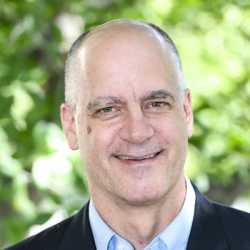
Guest

More information:
- Listen to Reimagine Rural on Apple, Spotify, or wherever you like to get podcasts.
- Learn about other Brookings podcasts from the Brookings Podcast Network.
- Sign up for the podcasts newsletter for occasional updates on featured episodes and new shows.
- Send feedback email to [email protected].
- Find out more about the Brookings-AEI Commission on U.S. Rural Prosperity.
- Discover more research on Reimagining Rural Policy.
The Brookings Institution is committed to quality, independence, and impact.
We are supported by a diverse array of funders. In line with our values and policies, each Brookings publication represents the sole views of its author(s).

Commentary
PodcastAmerica’s Rural Future: In Eastern Kentucky with Commission member Phil English
Listen on
Reimagine Rural
June 5, 2026