In mid-2026, India saw one of its largest youth-led protests in recent history, sparked by anger over the leak of the 2026 National Eligibility cum Entrance Test (NEET) paper, India’s medical entrance exam, with at least 21 students dying by suicide in the aftermath. The protests sustained a 36-day occupation at Jantar Mantar alongside demonstrations in cities across the country and ended with the education minister’s resignation. Coincidentally, this was the very moment that I began to collect data to understand the civic participation and leadership of young women and queer people in urban India.
Reporting on these protests, especially on social media, highlighted visuals of women at the frontlines—from physically protecting others from police brutality to ensuring medical care and legal aid. Yet despite being “seen” (and perhaps even being hyper-visible) in the media, women’s civic participation in India continues to be limited. A 2010 Population Council survey across six Indian states, for example, found that only 23% of young women aged 15-24 reported participating in civil society, compared with 48% of young men, and data on young queer people’s civic lives are largely absent.
The distinctly gendered backlash that followed the protests may provide a glimpse into why women’s participation has historically been lower. That backlash ranged from online sexual harassment and the use of morphed images online to the case of a 15-year-old girl being charged by police for using “foul” language while protesting, apologizing publicly and continuing to be harassed, and to familial pressure applied through the state. When queer youth mobilized protesters, brought together mutual aid supplies, and stood at the front lines, not only did they face backlash, but their identities were also used as content and slurs during the protests.
In almost a decade of running leadership programs for young women and queer people at One Future Collective, I have seen how this type of visible backlash serves as a deterrent to women and queer people weighing whether to raise their voices. For queer participants especially, a duality marks their civic lives: the same gendered backlash, alongside what often feels like an intentional exclusion, even from progressive spaces. These protests suggested on a far larger scale what I had observed anecdotally: that young women and queer people do want to participate and lead in civic life. They also shifted the emphasis in my research from what stops people from starting to participate to what allows them to continue.
Why does the civic participation and leadership of young women and queer people matter?
In youth and early adulthood, civic participation changes what we believe about ourselves. It is also during this period that our sociopolitical attitudes crystallize, often determining our lifelong civic engagement. What begins as inner transformation compounds outward: Participating builds our sense of self, our skills, and our networks, and makes further participation more likely. Such civic engagement strengthens the communities young people are a part of. For queer young people, civic and community spaces are also where recognition, belongingness, and safety are found.
As young people gain the formal rights to vote, organize, and enter the workforce, participation typically rises. But a 2025 study across 27 Indian cities found that while political engagement rose with age among boys aged 14-22, it stayed flat among girls of the same ages, right on the cusp of adulthood. What happens after that, and what might close the gap, remains largely unexamined. Data on the civic experiences of young queer people are harder to come by; existing research tends to focus on adults and indicators of political participation like voting.
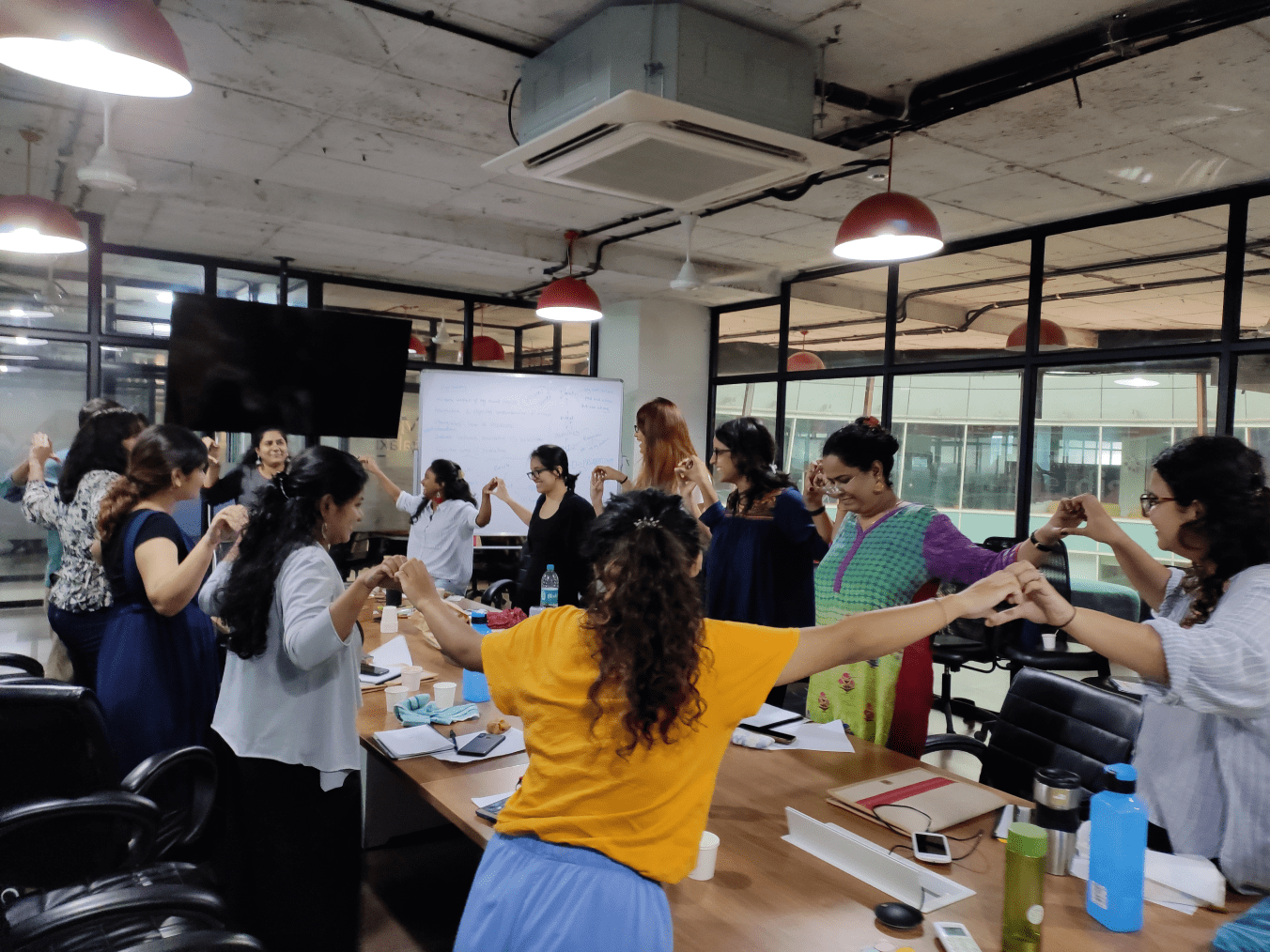
Glimpses from the One Future Fellowship, One Future Collective’s flagship leadership development program for women and queer people.
Where do young women and queer people build their civic muscle?
Leadership development and gender outcomes feature prominently in India’s National Education Policy of 2020 at the basic education level, but that attention doesn’t extend to higher education or young adulthood, leaving out critical elements for building the capacity of young women and queer people to participate and lead in civic life.
Civil society organizations (CSOs) also form a key part of the civic ecosystem in India, yet their role in strengthening civic participation remains understudied. Across the country, CSOs have spent decades running youth fellowships, community organizing initiatives, feminist leadership programs, and civic learning spaces—a long, mostly under-documented history. Much of India’s formal leadership infrastructure, from the National Service Scheme (NSS) to the National Cadet Corps, emphasizes service, volunteering, and individual achievement. Many CSOs approach leadership differently. Rather than starting with “How can I help?” they ask why a problem exists, who benefits from it, and how people can work collectively to change it.
CSOs like Reap Benefit, Pravah, Young Leaders for Active Citizenship, and my own organization, One Future Collective, among others, also place identity and self-reflection at the center of leadership development, treating personal leadership and civic participation as inseparable. These identity- and justice-oriented approaches may matter especially for young women and queer people, whose participation is often shaped by questions of belonging, legitimacy, and safety. While organizations do examine their own work, that learning rarely makes its way into published research or policy conversations and decisions.
What do we still need to know?
As a 2026 Echidna Global Scholar at the Center for Universal Education at Brookings, my research asks two questions: What do young women and queer people (18-35) in urban India identify as their aspirations, barriers, and enablers for participating and leading in civic life? And what role do nonformal leadership programs run by CSOs play in building their capacity to do so?
Using a mixed-methods, participatory approach across Mumbai, Delhi, and Bangalore, I am combining ecosystem mapping, a survey, focus group discussions, and interviews with young people, CSO practitioners, and higher education stakeholders, alongside a case study of One Future Collective. An Advisory Council of young women and queer people keeps the design and analysis accountable to the people the research is about.
What young women and queer people want from their civic lives, and the role CSOs have played in nurturing it, should direct future policy attention and action toward ensuring that they can participate and lead in civic life. Policymakers, funders, and educators will need to understand what they want and strengthen the ecosystems that can support them.
Author
Related Content
-
Acknowledgements and disclosures
The author used Claude, an AI tool by Anthropic, to proofread, pressure-test, and critique the writing.
The Brookings Institution is committed to quality, independence, and impact.
We are supported by a diverse array of funders. In line with our values and policies, each Brookings publication represents the sole views of its author(s).

Commentary
Beyond the front lines: What sustains civic leadership among young women and queer people in India
September 23, 2026