What if the starting point for addressing adolescent mental health was not another program, framework, or service—but a conversation with adolescents themselves?
In my 26 years of working with adolescents and young people in India, I have often seen young people struggle with mental health issues but mostly keep it to themselves or consult AI instead of accessing support from parents, peers, or professionals.
The scale of the global mental health challenge makes this issue even more urgent. Nearly 1.2 billion people worldwide are living with a mental disorder, nearly double the number recorded in 1990. Further, mental disorders disproportionately impact people aged 15-19 and women. 1 in 7 adolescents aged 10-19 experience a mental health condition, yet many remain undiagnosed and unsupported.
The prevalence of mental health concerns among Indian school-going adolescents reflects global trends, ranging from around 4 to 50%, depending on the population studied and assessment methods. Some of the common concerns identified include anxiety, depression, and stress. The experience of mental health is also shaped by gender. A 2023 study of 1,213 Indian high school students found that female students reported significantly higher symptoms of depression and anxiety, as well as lower well-being, than their male peers.
Adolescence is a critical window for prevention and early intervention. Yet, more than 90% of countries lack any mental health policy that includes children and adolescents. India has legislated in this area earlier than many countries. In 2014, Indian policymakers established a rights-based vision for mental health care in the National Mental Health Policy, while in 2017, this right to mental health care and legal protection was further strengthened by the Mental Healthcare Act 2017. However, for adolescents, the translation of these commitments into meaningful, youth-centered support remains limited. Shortages of trained mental health professionals and stigma around mental health in Indian society, for example, prevent young adults and adolescents from reaching for timely interventions and support.
Through my work at Pravah, which has engaged with more than 18 million people and supported around 800 youth-led initiatives, one lesson stands out: Solutions designed for young people are stronger when young people themselves help define the problem and shape the response.
The Mental Healthcare Act includes specific provisions for children and adolescents, but minors have been afforded a limited role in decisions concerning their own mental health care, including provisions in which guardians retain decisionmaking authority. And further, young people were rarely involved in shaping these policies or putting them into practice, except for peer educators mentioned in one policy.
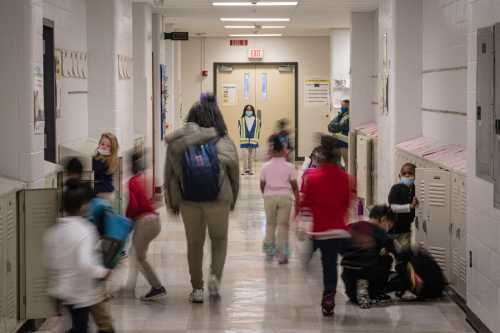
So, where do we start? The best place to enable a gender responsive mental health system in India can be schools. Schools can help foster belongingness in adolescents and young adults, build resilience and allow them to create healthy relationships. They can also build confidence so that they feel comfortable and safe enough to seek early support. Yet, existing School Mental Health programmes (SMHPs) in India such as the Rashtriya Bal Swasthya Karyakram (RBSK), the Rashtriya Kishor Swasthya Karyakram (RKSK), the School Health Programme (SHP), and Manodarpan, though offering structured interventions, face limitations in funding, workforce, stigma, and evaluative mechanisms. Strengthening school capacity, training teachers, and engaging parents and communities would support early identification, intervention, and long-term mental well-being of adolescents.
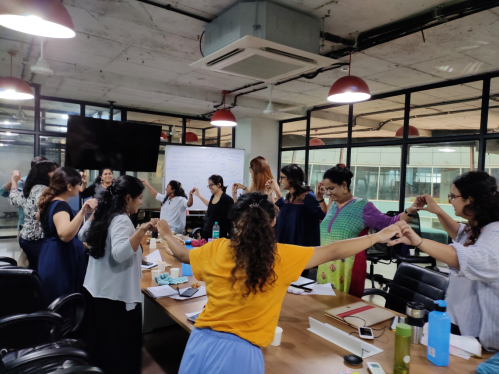
As a 2026 Echidna Global Scholar, I am focusing my research on how adolescents’ experiences of mental health and well-being are heard and included in policy discussions, including how they vary across genders. I also plan to explore what these experiences suggest about building more effective, gender-responsive support for adolescent well-being in schools. The study will use a mixed-methods approach, surveying students from secondary schools in Hyderabad for quantitative analysis, and specially designed workshops with adolescents and interviews with key actors for qualitative insights.
The goal is to reimagine schools as well-being ecosystems and provide adolescent evidence for gender-responsive mental health policy in Indian secondary schools. The findings aim to bring adolescents’ lived experiences into public discourse and include them as decisionmakers and designers within it.
Author

References:
Government of India. 2014. National Mental Health Policy of India. Ministry of Health & Family Welfare.
Government of India. 2017. Mental Healthcare Act, 2017.
Mahanta, Pomi, Fayaz Ahmad Paul, and Abhijeet Singh. 2025. “School Mental Health in India: A Narrative Review of Adolescent Challenges, Interventions, and Implementation Gaps.” Vulnerable Children and Youth Studies 21 (1): 102–116. https://doi.org/10.1080/17450128.2025.2535359.
Park, Suh Jung, Akash R. Wasil, Sarah Gillespie, Rebecca M. Shingleton, John R. Weisz, and Robert J. DeRubeis. 2023. “Depression and Anxiety Symptoms, Subjective Well-Being, and Happiness among Indian High School Students.” Indian Journal of Psychiatry 65 (6): 655–660. https://doi.org/10.4103/indianjpsychiatry.indianjpsychiatry_937_21.
Parikh, Rachana, Daniel Michelson, Mansi Sapru, Rooplata Sahu, A. Singh, Pim Cuijpers, and Vikram Patel. 2019. “Priorities and Preferences for School-Based Mental Health Services in India: A Multi-Stakeholder Study with Adolescents, Parents, School Staff, and Mental Health Providers.” Global Mental Health 6: e18.
Patton, George C., et al. 2016. “Our Future: A Lancet Commission on Adolescent Health and Wellbeing.” The Lancet 387 (10036): 2423–2478.
Roy, Kallol, Sachin Shinde, Bidyut K. Sarkar, Kanika Malik, Rachana Parikh, and Vikram Patel. 2019. “India’s Response to Adolescent Mental Health: A Policy Review and Stakeholder Analysis.” Social Psychiatry and Psychiatric Epidemiology 54 (4): 405–414.
Sharma, Eesha, and John Vijay Sagar Kommu. 2019. “Mental Healthcare Act 2017, India: Child and Adolescent Perspectives.” Indian Journal of Psychiatry 61 (Suppl. 4): S756–S762. https://doi.org/10.4103/psychiatry.IndianJPsychiatry_126_19.
UNICEF India. 2024. Child and Adolescent Mental Health Service Mapping: India 2024. UNICEF.
World Health Organization. 2021. Adolescent Mental Health. Geneva: World Health Organization.
Related Content
The Brookings Institution is committed to quality, independence, and impact.
We are supported by a diverse array of funders. In line with our values and policies, each Brookings publication represents the sole views of its author(s).
Commentary
Listening to adolescents: Building gender-responsive mental health systems in India
September 18, 2026