On March 5, China’s legislature—the National People’s Congress (NPC)—will convene for its annual meeting, which will last about a week. The John L. Thornton China Center asked several China scholars to comment on the meeting and what they expect to occur.
Setting the scene
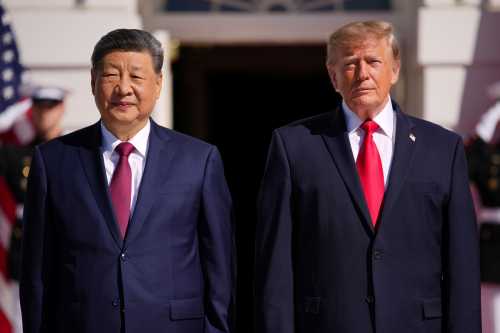
This year’s NPC will be especially consequential because President Xi Jinping and the Chinese leadership will formally roll out the next five-year plan for China’s development. It will lay out Xi’s ambitions through the end of the decade and will emphasize his goals for China’s high-tech and advanced manufacturing sectors, which Brookings convened a group of top experts on China’s economy to discuss last November. The meeting will also occur just weeks before President Donald Trump is set to visit Xi for a much-anticipated meeting—the first time a U.S. president will meet Xi in China since Trump’s last visit in 2017.
The NPC’s rollout of its 15th Five-Year Plan will underscore the continuity in China’s domestic and economic policy as Xi rounds the corner into an all but guaranteed fourth term next year. Yet this meeting will also come on the heels of Xi’s most dramatic purges of his tenure thus far—namely, his dismissal in February of the military’s most senior officer, Zhang Youxia, whose ties to Xi date back to their fathers. The sequencing of events highlights what has been the defining motif of Xi’s third term: policy continuity paired with high political drama, which Allie Matthias and I wrote about after last October’s plenum of the Chinese Communist Party’s Central Committee.
Ahead of this year’s NPC, the Brookings China Center has asked a group of top China experts to analyze the key developments likely to emerge at this year’s NPC and analyze their implications for China’s society, economy, politics, and foreign policy.
The economy: Full steam ahead on technology upgrading and self-sufficiency
The economy-focused outcomes of the National People’s Congress meetings are likely to produce few surprises but will offer a clear statement of Beijing’s economic priorities. The session’s further detailing of China’s 15th Five-Year Plan (2026-2030) is likely to hew closely to objectives foreshadowed at the Fourth Plenum meetings in November 2025, the subsequent Central Economic Work Conference, and province-level “two sessions” meetings held already this year. The leadership’s emphasis is a dogged pursuit of “high quality”—if slower—growth in leading-edge manufacturing arenas. These targets are designed not only to bolster the economy but also to address economic security competition with the United States. They will also seek to set China up as a major future innovator.
The plan has two core components. First, it will continue investments in upgrading the technology base. Much attention has been given both outside and inside China to its “moonshot” investments in technologies of the future, especially artificial intelligence (AI), but also quantum, biomanufacturing, nuclear fusion, and 6G mobile. This will entail state-sponsored support, but Beijing also hopes to spur progress from non-state entities, producing other “DeepSeek moments.” China further has prioritized investment in emerging technologies in new energy, new materials, aviation, and, intriguingly, the “low-altitude economy“—not only drones but also flying taxis and other components and services operating within 1,000 meters of ground level. Other efforts that have received less attention but are important in the near term include investment in technology upgrades to legacy sectors. The goal is to render them more productive and greener, extending their shelf life and, ideally, global competitiveness. Important to this goal is the diffusion of AI into these legacy industries.
Second, and consistent with upgrading, Beijing seeks to deepen self-sufficiency in technology. Beijing’s painful lesson from U.S. export controls is China’s need to prioritize self-sufficiency, especially in semiconductor chips. Complementing technology self-sufficiency will be nods to food and energy security, which were emphasized in the previous five-year plan.
The emphasis on self-sufficiency suggests Beijing views these matters with some urgency, a tone also present in the earlier Fourth Plenum’s instruction to prioritize “extraordinary measures” to achieve the goals, and the proclamation that this is a “critical window.” Nevertheless, despite some caution, the NPC documents will likely continue the tone of confidence that came out of the Fourth Plenum documents.
Technology is the key
Technology is a double-edged sword for China.
On the one hand, China’s growing technological prowess could be the engine for future economic growth and geopolitical power. China is already at or near the global technological frontier in AI, electric vehicles, batteries, autonomous vehicles, and robotics. It is forging ahead across an array of emerging technologies, such as quantum, fusion, biotech, space-based communications, and brain-computer interfaces. Gone are the days when China’s main competitive edge was low wages and lax environmental standards. China now boasts world-class research institutions and leading technology companies with an increasingly global reach.
On the other hand, everywhere Chinese political leaders look, they see technological dependencies and choke points. It is not just advanced semiconductors for training and deploying AI models. It is also semiconductor manufacturing tools, photoresists (a key input for producing semiconductors), aircraft engines and avionics, operating systems, chip design software, high-end CNC machines, and precision optics. U.S.-led restrictions on China’s access to these critical inputs have shaken Chinese policymakers and pushed them to become hyperfocused on technological self-sufficiency. Technology, which has long been viewed by Beijing as key to China’s development, is now also seen as a strategic risk that could threaten to derail China’s drive toward modernization.
Technology as both opportunity and risk will likely be a central focus of China’s 15th Five-Year Plan. Building on the recommendations outlined at last year’s Fourth Plenum, the upcoming Five-Year Plan will likely spell out the targets and pathways for China to strengthen its ability to innovate at the cutting edge and reduce dependence on foreign inputs. We should expect to see concrete steps aimed at accelerating progress in specific technologies, from semiconductors to energy, as well as broader policies to bolster China’s tech-industrial ecosystem. AI and robotics are likely to feature prominently, not just as emerging industries in their own right but also as cross-cutting technologies that can enhance productivity across a wide range of manufacturing and service sectors.
This time around, Chinese policymakers share a sense of urgency. Faced with what Chinese leaders describe as increasingly “intense international competition”—a euphemism for a tougher United States—Xi Jinping has called on his nation to “seize the window of opportunity” and make “major breakthroughs.” Chinese commentators have noted the frequent use of the term “accelerate“ in the latest five-year plan recommendations, implying a need for China to speed up its tech-industrial modernization efforts. We should expect this urgent tone and focus on technology to shape both the 15th Five-Year Plan and the upcoming “Two Sessions.”
Alongside China’s 15th Five-Year Plan (FYP), the National People’s Congress is also expected to approve a Law on National Development Plans. This would be the first Chinese statute to memorialize the existing process for formulating and implementing FYPs, which is now governed by a mix of written authorities and unwritten customs. Most strikingly, it would codify the Chinese Communist Party’s roles at each stage of the planning process.
The law would divide a planning cycle into three phases: drafting, legislative review and approval, and implementation. The National Development and Reform Commission is tasked with heading the drafting effort and must observe various substantive principles and procedural obligations. As a draft takes shape, the NPC’s subordinate bodies also conduct their own research to both inform agency drafters and facilitate legislative review, which culminates in NPC approval. Once adopted, an FYP serves as the overarching “blueprint” for China’s socioeconomic development. All governmental units must align their policies and priorities with it, and its implementation is subject to continuing legislative oversight, including required mid-cycle and final evaluations.
The law would not only affirm the party’s overall leadership over development planning but also go further by expressly embedding the party within the process: FYP drafters must heed the corresponding party recommendations, and the State Council must secure the central party leadership’s approval before submitting draft FYPs, proposed adjustments to effective FYPs, and evaluation reports for legislative review.
The codification of such detailed roles for party documents and institutions would set the law apart from the NPC’s prevailing legislative practice. Since 2019, at the party’s direction, the NPC has shifted from selectively codifying party leadership to broadly enshrining this constitutional principle in national laws. It has generally done so in three ways: affirming the party’s overall leadership over a given field, codifying a party organ’s general authority in a certain domain, or conditioning government service on loyalty to the party. Unlike the law, no existing statute assigns specific procedural roles to the central leadership.
The law’s proposed entrenchment of the party’s gatekeeping role at key junctures of the planning process aligns with the party’s recent turn toward heightened legalization to expand its control over the state apparatus and to legitimize its involvement in state governance—here, the central task of setting China’s overarching policy priorities.
At the same time, the move raises concerns about a more limited role for the NPC in development planning. Take the party-approval requirements for FYP evaluation reports. Party review risks producing sanitized versions that preserve only party-approved characterizations, diagnoses, and solutions, potentially omitting candid analysis. The space for effective, meaningful legislative oversight would thus shrink, if not vanish completely. If the requirements are new, they would prioritize accountability to the party leadership, thereby weakening legislative oversight. Even if not, they will ossify the status quo and make it harder for future leaders to reverse course. Whether this granular codification of party authority signals a broader trend in legislation remains to be seen.
Not just a pretty face: The NPC’s real work
China’s national legislature, the National People’s Congress, is often dismissed as a ceremonial rubber stamp. That perception stems from its record of never voting down any item on the pre-approved agenda for its annual full sessions, typically held in March. This characterization, however, is incomplete and discounts the NPC’s increasingly substantive and consultative approach to its lawmaking and oversight duties. During those sessions, part-time deputies do engage in discussion and make modest revisions to draft reports and legislation.
More importantly, the NPC’s major work is accomplished year-round. It is carried out through its 10 permanent, professionalized special committees that are overseen by the NPC Standing Committee (NPCSC), which itself has five working commissions. These full-time bodies research policy, negotiate with bureaucratic stakeholders, and formulate national laws, most of which are passed by the NPCSC. These bodies also inspect implementation, review draft treaties and lower-level legislation, and oversee the activities of other state organs and the local people’s congresses (LPCs).
While avowing more explicit leadership over the NPC and other state organs, the Communist Party of China has simultaneously sought to professionalize the NPC and LPCs into more deliberative, transparent, and responsive lawmaking and oversight bodies. The NPC has gradually strengthened oversight of government regulation, economic work, budgets and government debt, and state-owned assets management. It has also institutionalized constitutional review of proposed laws and lower-level legislation.
The NPC has concurrently elevated the importance of deputies’ work to the same level as lawmaking and oversight. Deputies, as part-time congressional representatives, are charged with improving their ability to promote their constituents’ interests and “serve as a bridge connecting the people with the Party and the state.”
Public participation has also expanded through newly institutionalized channels. The NPC and LPCs have, since 2015, established over 7,800 grassroots public outreach offices to directly report public concerns and gather input on legislation. These offices complement China’s unique online notice and comment lawmaking procedure.
In most cases, the NPCSC regularly releases online most of its proposed laws for public comment at least once. While some drafts may be exempted, including in emergency situations, public consultation has become routine. Of the three draft laws scheduled for approval at the upcoming session, one went through a typical two rounds of public input, while the other two went through three. Notable exemptions from this public consultation practice included the 2020 Hong Kong National Security Law, 2021 Anti-Foreign Sanctions Law, and a controversial 2024 legislative decision on raising the retirement age. None of these bills solicited public input.
The NPCSC has also increased transparency in nonlegislative areas. It now discloses reports on legislative implementation, state organ responses to NPCSC improvement recommendations, fiscal and budgetary reviews, and bills proposed by deputies before the annual sessions and how relevant committees handled such proposals, which sometimes lead to legislation. Since 2017, the NPCSC has published annual reports and selected cases concerning its formerly secretive oversight system of recording and review (R&R), another participatory mechanism under which the public can request review of subnational legislation for legal compliance. An R&R request submission platform launched in 2019 initially triggered a dramatic increase in review requests.
Despite uneven performance, political constraints, and other challenges, the NPC system is maturing and innovating in interesting ways. Party leadership does not necessarily equate to control, and both party leaders and the NPC participants appear committed to improving legislative quality, oversight procedures, transparency, and accountability. While the NPC’s annual meetings are heavily scripted, its ongoing work is increasingly proficient, collaborative, and worth watching.
Babies in the plan: Taking a pragmatic approach to pro-natalism
Heading into the 14th National People’s Congress, the Xi administration has one domestic priority that aligns with Vice President JD Vance and conservative think tanks: pro-natalism. The difference is that for the Chinese Communist Party, encouraging more births is a matter of sound economics in addition to one of political ideology. Faced with the lowest birth rate since the founding of the People’s Republic of China and a rapidly increasing aging population, China faces a reversal of the demographic dividend—having a robust young working-age population fueling economic growth. It has been a decade since the Chinese government scrapped the one-child policy by promulgating the two-child policy and subsequently, the three-child policy in 2021. In true Chinese governance form, these policies are accompanied by state-sponsored advertising that tugs at parental heartstrings and societal-wide mobilization to encourage a “birth-friendly society.”
This course correction has not worked, in large part because of the lack of economic incentives and social protections that would motivate younger Chinese women, who have personal aspirations beyond motherhood. The party-state has recognized this and is taking concrete measures to address it. In the lead-up to the 14th Congress, the government has rolled out a new child subsidy program, which would give just over $500 per year to each child under three. The next five-year plan is expected to continue to promote “high-quality population development,” which would include putting money where the mouth is: making both childbirth and child care more affordable via child care subsidies, tax credits, and improved safety networks such as insurance and parental leave.
This all comes under the broad banner of promoting “common prosperity,” a term first invoked by the state-run media in 1953 in the spirit of agricultural collectivism and later revived in 2021 by Xi Jinping to harness private capital. In the coming five years, the party promises common prosperity in the form of high-quality living for families that birth more than one child. Sichuan, along with a few other provinces, has already taken measures to ease restrictions on unmarried individuals registering births, along with several other provinces.
These may appear to be progressive policies. Yet, at its core, the party continues to tether women’ choices to state goals, thereby treating wombs as instruments of policy planners. Whereas the one-child policy forced women to insert an intrauterine device after their first child, the state is now making it harder to get abortions. At the same time, it is pushing a new neo-Confucian ideology that sees women’s primary role as mothers and wives. This translates into managing wedlock through relaxing marriage registration while putting up procedural barriers to divorce.
Achieving the state’s pro-natalist goals requires an explicitly feminist policy agenda that also incorporates societal feedback into decisionmaking, in the spirit of mass-line politics—gathering input from the people. It also entails removing structural barriers for women to succeed, no matter how many babies they choose to have. Focus should be placed on punishing employers who discriminate against women of childbearing age in hiring and scraping the sexist rule that only married women can freeze their eggs and undergo in vitro fertilization. This may be a tall order for a patriarchal regime whose top echelons of power are conspicuously absent of women.
NPC will set the backdrop for Trump’s visit
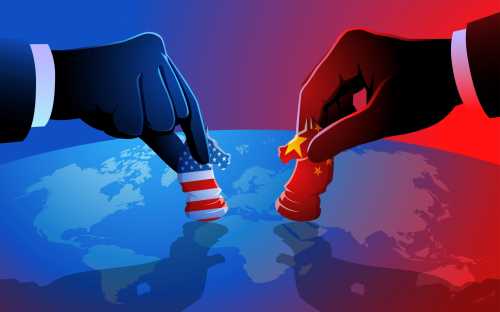
China’s annual “Lianghui/Two Sessions” proceedings will form a narrative of contrast with America’s current governance record. Chinese official media organs will seek to use such split-screen contrasts of America’s chaotic democracy versus China’s orderly execution of plans to bolster a narrative that Xi Jinping will receive Donald Trump in April from a position of strength. The message from the imagery of the Two Sessions will be clear: China represents competence and continuity; America is becoming a symbol of chaos and confusion.
Normally, China’s National People’s Congress is regarded outside the country as a “rubber stamp legislature” that does little more than approve laws and offer a venue for turgid and impenetrable speeches by Chinese leaders. To be clear, the NPC has earned this reputation. It remains a highly choreographed and symbolic event.
Xi will preside over the proceedings from a seat at the front and center of the rostrum. He will nod along as China’s state organs align law and policy with Xi’s direction and ideological line. His silent but dominant presence over the proceedings will serve as a symbol of his grip on national power.
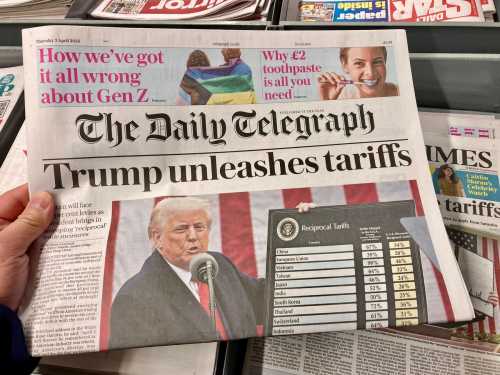
Meanwhile, in the United States, Trump recently has had his signature foreign policy initiative, global tariffs, invalidated by the U.S. Supreme Court. Trump’s signature domestic policy, cracking down on illegal immigration, has grown unpopular. His annual State of the Union address to Congress devolved into a partisan spectacle. Parts of the United States government are shut down at the time of this writing. Trump’s political party appears to be heading toward a repudiation in America’s upcoming midterm elections. Meanwhile, the president’s public approval ratings have steadily declined.
There is a reason why Xi insisted to Trump at their meeting in Busan that Trump’s state visit follow the National People’s Congress. China’s leaders believe that the imagery of unity and national purpose will put Xi in a stronger relative position ahead of Trump’s visit.
Regardless of the merits of China’s analysis, it will be important for Trump and his advisors to understand Beijing’s own internal narrative of the upcoming state visit to China. Beijing believes that its centralization of power in Xi gives him a stronger hand to play with Trump. Never has there been such a high-profile parade of world leaders traveling to China ahead of a U.S. presidential visit. Never in the modern era has the gap in relative power between China and the United States been narrower than it is today. And not since Richard Nixon has there been an American leader as eager to travel to China as Trump.
The significance of the National People’s Congress will not be limited to the speeches, new regulations, and five-year plan it promulgates. It also will be used to set the stage for Trump’s April visit.
Authors







Related Content
The Brookings Institution is committed to quality, independence, and impact.
We are supported by a diverse array of funders. In line with our values and policies, each Brookings publication represents the sole views of its author(s).

Commentary
VideoWhat to look out for at this year’s meeting of China’s legislature
March 3, 2026