Executive summary
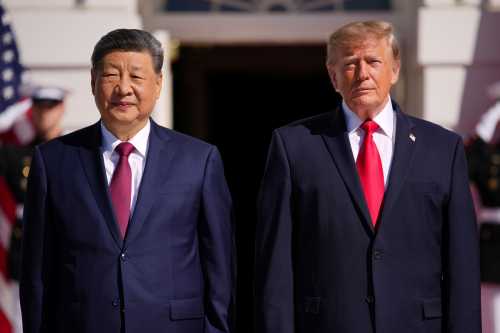
Both China and the United States rely on foreign direct investment (FDI) as a central tool in their geopolitical competition across Africa and the Global South. Conventional wisdom holds that investment generates not only economic returns but also goodwill toward the investing power. Drawing on geolocated data from over 750 Chinese and U.S. FDI projects in 23 African countries, this research challenges that assumption. While proximity to a major power’s investment increases its perceived influence in local communities and undermines that of its adversary, it also decreases affinity for the investing power. Crucially, this reputational cost is not unique to China; U.S. investment triggers a strikingly similar backlash. Unmet expectations around jobs and local economic benefits, heightened perceptions of corruption among local officials, and concerns about external influence erode the soft power dividends that both powers anticipate. These findings suggest that policymakers should not treat investment as a straightforward path to winning friends. Instead, projects designed to deliver genuine local value, paired with transparent dealmaking and robust anti-corruption safeguards, offer the most credible path to durable partnerships.
Influence without affection
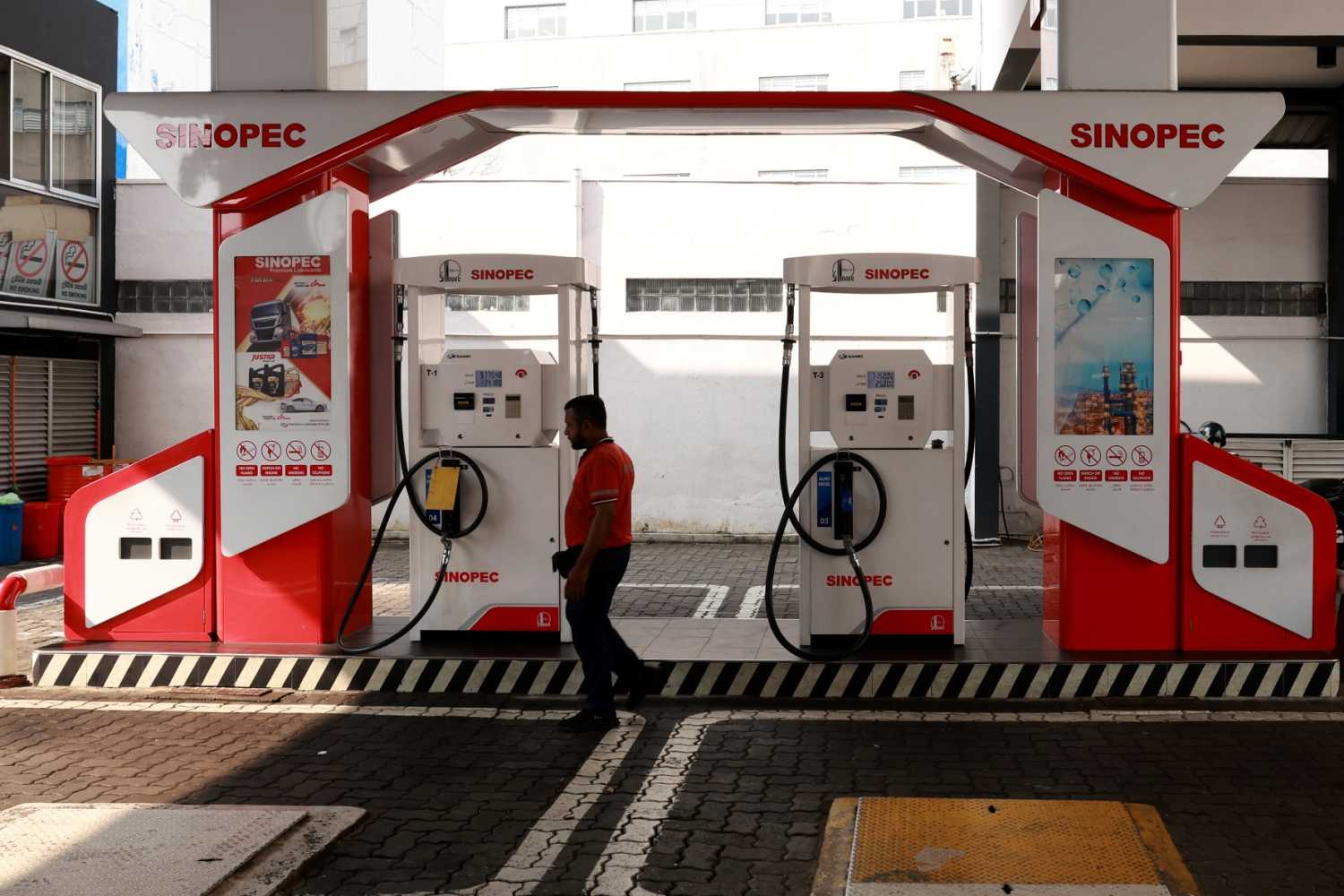
As Washington’s attention and resources are consumed by conflict in the Middle East and an ongoing trade war, Beijing continues to pour capital into the low-income regions of the world. China’s Belt and Road Initiative (BRI) sent an eye-opening $61 billion in investment to Africa in 2025 alone, nearly triple the investment from the prior year. In addition to addressing China’s geoeconomic interests, this investment wave also serves important soft power goals: by financing roads, ports, and factories, major powers like China seek not only commercial returns but also the political influence—and importantly, the goodwill—that come from being seen as a development partner.
The conventional wisdom holds that foreign direct investment (FDI) generates benefits for local populations and, by extension, bolsters the standing of the countries whose firms write the checks. Yet our research suggests that this logic, which is widespread in U.S. policy circles, is misleadingly incomplete. While investment from foreign powers certainly increases their perceived influence in local communities in the Global South, it does not always generate the favorability that Beijing or Washington assumes will follow. In fact, it can do the opposite. Both China and the United States must recognize that investing abroad can sabotage goodwill if projects are not constructed with local economic development in mind.
China’s quest for soft power
Since the BRI’s launch in 2013, China has become Africa’s largest economic partner. All 53 African countries with diplomatic relations with Beijing now participate in the BRI to varying degrees, and at the 2024 Forum on China-Africa Cooperation summit in Beijing, China pledged an additional $50.7 billion in cooperation projects through 2027. These investments span energy, digital infrastructure, logistics, and critical minerals—sectors foundational to long-term industrialization.
China remains broadly popular across much of the Global South. According to the Asia Society’s Global Public Opinion on China project, which consolidates nearly 2,500 survey results from over 160 countries, positive views of China in sub-Saharan Africa have outweighed negative ones by a factor of roughly three to one. Evidence from the Afrobarometer suggests that China is viewed more favorably than the United States across Africa. Those findings rely on surveys of the general population; they tap into broader sentiments that may follow media and elite discourse but may also be divorced from actual familiarity with local investment projects. While academic studies and polls reach varying conclusions, the picture that is emerging from examinations of public opinion is more complex than a simple narrative of Chinese charm offensives winning hearts and minds.
U.S. efforts to keep pace
Washington’s approach to Africa and the Global South has historically emphasized public health, governance, and security assistance rather than the infrastructure-heavy model Beijing prefers. The Biden administration sought to change that through the Partnership for Global Infrastructure and Investment (PGII), including its flagship Lobito Corridor connecting Angola to mineral-rich regions of the Democratic Republic of Congo and Zambia. The Prosper Africa initiative, launched originally under the first Trump administration, brought together 17 U.S. government agencies to boost two-way trade and investment, closing over 900 deals across 47 African countries by 2022. But the trajectory of these efforts under the current administration is uncertain: the U.S. Agency for International Development’s Africa Trade and Investment activity was terminated ahead of schedule in 2025, and the PGII does not appear in the Trump administration’s 2026 budget. Meanwhile, China’s trade with Africa remains roughly triple that of the United States, though both Beijing and Washington continue to express an interest in ongoing economic engagement to bolster ties with Africa and the Global South.
Broader reputational narratives
The competition between China and the United States for standing in the Global South is filtered through broader narratives about each power’s identity. China benefits from a reputation for economic dynamism—a newer, more exciting presence whose rapid development story resonates in countries aspiring to similar trajectories. For many residents of low-income countries, China’s image has improved due to visible, on-the-ground results, whereas the United States is often perceived as lecturing African leaders rather than building alongside them.
The United States, for its part, draws on its longer history of engagement, the pull of American popular culture (which a 2023 GeoPoll report found to be the primary driver of views among Africans under 35), and its tradition of institutional reliability. These narratives shape how citizens interpret the foreign investment they see around them.
Our recent study shows that these perceptions track closely with local investment patterns. A major power’s perceived influence increases in communities where its firms invest and decreases where a rival power’s firms invest. Proximity to U.S. FDI projects, for example, leads citizens in Africa to assign greater influence to the United States while reducing the influence they attribute to China—and vice versa. When Chinese and U.S. projects are colocated, the effects offset one another, underscoring how citizens filter geopolitical competition through the investment they observe in their own communities.
But perceived influence is only part of the story. It masks a crucial element of soft power: the affinity that residents actually express for the major powers investing around them.
The reputational costs of foreign investment
Local community members are an underappreciated centerpiece of soft power efforts; their experiences with foreign projects inform domestic leaders in ways that influence foreign relations. Despite China’s general favorability in Africa, skeptical narratives toward Chinese investment still circulate through local communities: lower quality goods flooding local markets, workers displaced from jobs, price volatility, environmental exploitation, and opaque deals between foreign firms and local officials. These concerns are typically framed as distinctively Chinese problems, products of Beijing’s unique approach to overseas investment.
Strikingly, however, we find that U.S. investment is subject to similar skepticism. In our study, we directly compare citizens’ reactions to FDI from Chinese and American firms. Using data from over 750 geolocated Chinese and U.S. FDI projects in 23 African countries, we demonstrate that for both Chinese and U.S. investment, proximity to FDI projects decreases citizens’ affinity for the investing power’s development model. As Figure 1 illustrates, citizens living near U.S. FDI projects are less likely to favor the U.S. model and more likely to favor the China model. The mirror image holds near Chinese FDI projects. Given the baseline preference between the two models in Africa—30% selecting the U.S. model and 24% selecting the China model—the changes shown in the figure substantially narrow this gap. For both countries, the soft power effect is attenuated.

The reasons for this are threefold. First, expectations regarding jobs and local economic benefits are routinely overstated at the announcement stage and then go unmet once projects are operational. In a separate study in The Journal of Politics, we show that this is especially pronounced near manufacturing and natural resource projects, where low-skilled workers most anticipate sustained employment. Second, foreign investment can trigger concerns about excessive external influence in local affairs, though our evidence suggests that this is less of a driver than is often assumed. Third, proximity to foreign investment is associated with significantly higher perceptions of corruption among local leaders, regardless of whether the investing firms are Chinese or American. Sweetheart deals, opaque procurement processes, and favorable regulatory treatment for foreign firms appear to taint the image of both investing powers equally.
Numerous cases from the dataset illustrate the latter pattern. For example, a Huawei support center in Harare, Zimbabwe, ranked among the most influential projects to local citizens, but it also landed in the bottom 10th percentile for generating affinity toward China. The project’s establishment in 2013 was accompanied by slowdowns, documented concerns about a procurement deal with Zimbabwe’s state telecom company, and an alleged kickback scheme involving a government minister. Chevron’s petroleum operation in Liberia generated analogous results on the U.S. side: highly influential yet deeply damaging to U.S. goodwill, with Liberia’s own General Auditing Commission uncovering a corruption trail connecting the firm to government officials.
In other words, the reputational costs from foreign investment in low-income countries are not unique to China. They are features of how foreign investment operates in low-income settings.
What this means for U.S. policymakers
These findings carry a sobering implication for the great power competition playing out across Africa and the broader Global South. Investment can create influential but unwelcome partners—powers that are acknowledged as significant but that are not always well-liked. This undermines the soft power objectives that both Washington and Beijing attach to their overseas economic engagement.
For U.S. policymakers, the lesson is not that investment in Africa should be abandoned. It is that investing firms and the policymakers who guide them should be clear-eyed about the prospects for winning friends. The best approach is to identify investment opportunities that make commercial and developmental sense on their own terms—projects that create genuine local value rather than serve as props in a geopolitical narrative. Initiatives such as renewable energy projects with local ownership stakes, agricultural value-addition rather than raw commodity extraction, and manufacturing plant partnerships can create gains for both investors and local communities. Furthermore, transparent dealmaking, rigorous anti-corruption safeguards, and realistic expectations about what projects will deliver are not just good governance—they may be the only reliable way to prevent U.S. economic engagement from eroding the very goodwill it is meant to build.
Authors



Related Content



The Brookings Institution is committed to quality, independence, and impact.
We are supported by a diverse array of funders. In line with our values and policies, each Brookings publication represents the sole views of its author(s).