



In the first episode of Embedding Equality in Education, hosts Jennifer O’Donoghue and Edem Dorothy Ossai introduce the Learning and Action Alliance for Girls’ Agency (LAAGA), a Global South-rooted network of Echidna Global Scholar alumni working to rethink how girls’ agency is understood, studied, and supported. Jenn and Edem share the origin story of LAAGA’s community of practice, unpack why dominant development narratives get girls’ agency wrong, and introduce LAAGA’s living definition of agency — the power to dream, decide, and act. Along the way, they reflect on their own journeys into this work and set the stage for a season built on centering girls’ voices, embracing contextual and multi-dimensional understandings of agency, and learning collectively across difference.
- Listen to Embedding Equality in Education on Apple, Spotify, or wherever you like to get podcasts.
- Watch episodes on YouTube.
- Learn about other Brookings podcasts from the Brookings Podcast Network.
- Sign up for the podcasts newsletter for occasional updates on featured episodes and new shows.
- Send feedback email to [email protected].
TRANSCRIPT
[music]
O’DONOGHUE: I’d like to invite you to take a moment or two to reflect. Reflect on a time that you had to make a difficult decision, a time that you wanted to take action on something, but you knew that it wasn’t going to be easy.
How did you go about that? Who did you reach out to who maybe made it easier or harder for you? What were some of the factors around you, the context, the situation, the resources you had available to you, your opportunities? What might have made it easier or harder for you to make that decision to take that action?
What you’ve just reflected about is this concept that we call agency. Agency is about aspirations. Agency is about decisionmaking. Agency is about taking action.
And agency is a part of all of our lives. We all exercise agency. We all exercise it every day from the moment we get up and throughout our day. We exercise it in ways that are big and small. And whether or not we are able to fully exercise that agency depends.
So for all of us, it’s something that is dynamic. It’s not a quality we have. It is something that moves as we move through this world.
Welcome to the first episode of Embedding Equality in Education: Research and Action for Gender Just Futures, where we will continue to unpack this idea of agency in our lives and in the lives of girls around the world.
I am Jennifer O’Donoghue, senior fellow and deputy director at the Center for Universal Education at Brookings, where I lead our work on gender equality in and through education. And in that I have the great privilege to work with a network of global partners around the world, leaders who are working together to advance gender equality in and through education.
And those prepositions matter because it’s not just gender equality in schools or thinking about gender equity in terms of access to schools, but it’s really about what does education mean? How is education and through education are we changing outcomes and opportunities for young people around the world?
I will also say that gender is not just about girls. We’re gonna talk about girls today, but gender is another experience that each of us has. It’s something that every person, no matter what their gender is, experiences the world through the gendered structures that exist around us.
[2:22]
So, I want to now pause to introduce my amazing co-host for this first season, Edem Ossai. So, Edem, over to you.
[2:30]
OSSAI: Thank you Jenn. And hi everyone. I am Edem Ossai. I am an education leader based in Nigeria. I have been working on gender responsive systems within my local education jurisdiction for many years now. And I’m so excited to be part of this podcast and all the conversations we’ll be having in all different episodes.
[2:49]
O’DONOGHUE: Thank you, Edem. It’s it’s wonderful to have you here. I want to share with everyone that I have been lucky enough to collaborate with Edem on this agency work, but really more broadly for five years now. I think we just have had our five year anniversary of meeting each other and getting connected. So, so happy to be in this space and conversation with you.
So let us transition to talk a little bit about what this podcast is all about. So we mentioned agency, we mentioned girls. This season one focus for our 3Es podcast will be on girls’ agency. We’ll be exploring some of the key lessons from our work with LAAGA, and Edem, can you tell us a little bit about what LAAGA is?
[3:30]
OSSAI: So LAAGA, which is a lovely acronym, stands for the Learning and Action Alliance for Girls’ Agency. So it is a network of 23 members from the Global South, countries all over the world, 15 of us, 15 countries rather, all over the world. And we have been working to really work with girls, center girls in the understanding of agency in their local contexts, helping them to identify key stakeholders and actors with whom they can shift norms around their education and how to expand their agency and decisionmaking on education issues.
So LAAGA is that thrilling space, and we want to share with you in the coming episodes some of the things we’ve been learning with and through girls about agency all over the world.
O’DONOGHUE: Wonderful. So we will be really trying to connect research to lived experience.
OSSAI: Absolutely.
[4:18]
O’DONOGHUE: I think, Edem, as you really highlighted for us, you know, we are are gonna use this space to really dig into this relationship between research and lived experience, between research findings and how we move those findings into action with girls and with communities. And we’re gonna be doing that with this large network of people.
So we’re gonna hear lots of voices, and lots of experiences. And we’re gonna also be able to hear from the the girls and the communities themselves as well.
But, you know, before we move move forward into all of that, about what we’ve been learning about agency, I would love to start with talking about why does it matter to talk about agency? Why do you feel like this conversation is needed?
[4:58]
OSSAI: You know, it really brings us back to your beginning question at the start of this conversation and that reflection, because you realize that it’s such an everyday thing. Right? We’re making decisions about our lives every day. And, you know, to the extent that you understand how agency impacts on you, it really reflects on what power you can leverage or what to what extent you can, you know, exercise that power.
And so many people are powerless in the world because this concept of agency isn’t very well defined clearly, isn’t well understood in terms of how it interacts with other people, other systems, other structures, other, you know, norms and cultures, and conventions that shape our cultures.
So it’s so critical because millions of girls all over the world are denied an education, and this is such a critical pathway to future outcomes. And so to think that all of this rests on that ability to dream about a future, to decide, and to take steps to act on that dream and those decisions.
So that’s why we have to really, you know, frontline this conversation, mainstream it, like, make it loud and tease out all the issues in a different context that could thin or expand agency for girls.
[6:00]
O’DONOGHUE: Yeah. And I think that’s really critical what you’re saying. You know, one of the things I’ve been working on, interestingly before it was called agency I was working on on youth voice, youth participation. So I think there’s been many names.
But, in this work, in youth agency and in girls’ agency, I have found that there exist narratives that become really frustrating because they don’t recognize some of the things that you just said. We often put these really individualistic understandings, right, that agency is something that is just about the person.
And this exists I think in many different spaces and and in different ways. That, first of all, that we can give someone else agency. Right? Like, that denies the fact that that everyone has agency within them. And that what young people need and what girls in particular need are life skills. And that if they have life skills, then they’ll have agency and then they’ll solve all the world’s problems.
[6:49]
OSSAI: Problems. I agree completely because, like, when I think about my context, and for us it was really some buzzwords that come to mind are, like, “girls’ empowerment,” “women’s empowerment.” And when you think about the focus of many of those interventions, it’s really been around empowering people with skills, with knowledge, or you know, creating this idea that if we move you from what levels of knowledge you have now to the next levels of knowledge you ought to have, then Ooh, voila, the world is suddenly a better place. Or if we give you this set of skills, then suddenly you have better control of the world and the outcomes around you.
But to your point and to the things we’re saying, there’s systems, there’s structures surrounding us, there’s, you know, enablers, there’s hindrances. And so if we are blind to these, you know, surrounding constructs, then we we leave the people way more limited.
In fact, we could even create conditions where they become in direct conflict because of these new skills and new knowledge that they have but without that understanding of how to negotiate with these surrounding systems.
And so that tension creates a friction that is even more conflicting for their lives. And so, yes, I really am excited that finally a conversation is happening on agency that really, unpacks all of these components.
[7:55]
O’DONOGHUE: Yeah. And, I think one of the things—and we will get into I think a bit more, how and why we started LAAGA—but one of the things we talked about in the beginning of that is is really the lack of spaces to to critically question, right, to to really ask questions about this idea of agency and why it was that we adults and adults who work in development and global education in particular are sort of spreading agency around the world and and think it’s so important and and how little has been done to actually pause and ask girls themselves what agency means to them. Right? And and what it looks like for them.
[8:31]
OSSAI: For them. And that’s so critical about one of the principles that LAAGA operates, you know, under and how we tend to think about this work. Because you’re very correct. A lot of actors in the past felt that there were enough adequate substitutes for girls’ voices. So they would go and consult in whatever manner with girls, and then they would take whatever findings they have into rooms where power was or exists and begin to speak for girls, exercising this kind of editorial, you know, rights over girls’ aspirations, dreams, and whatnot.
And so for us in LAAGA, we realized that that didn’t really transform the world. With all of those kinds of activities happening for successive decades, things weren’t getting better for girls. Girls have to be, you know, positioned as experts over their own lives. And when a person is an expert, you give them the microphone, you give them the space, you give them the power to decide.
And so that’s why LAAGA takes a very different approach to this work. We center girls in this entire conversation. We center girls also in decisionmaking. It’s not only just, you know, wanting to hear from them, want to facilitate their entry into spaces where they can actually decide.
[9:31]
O’DONOGHUE: Yeah, and I think one thing that will really inform this podcast and that we’ll unpack as we move through the episodes is, you know, one of the key things that we learned with girls, right, is it’s about systems. Right? And so that if we want to promote girls’ agency or or improve outcomes through girls’ agency, we really need to first of all understand what are the systems around girls that are influencing that. And then work with girls and their communities, to transform those systems with and for girls’ agency.
And, you know, that has, I think, been a huge learning for us. And and one of the things that we really believe is our contribution to LAAGA and we will be unpacking that , and, you know, thinking about what we hope that listeners will be able to learn and experience through this podcast.
You know, we’ve talked a little bit about how we’ll move from theory or concept into practice. How we’ll have some stories, stories with of girls, girls collaborating with researchers, girls defining agency in their own contexts.
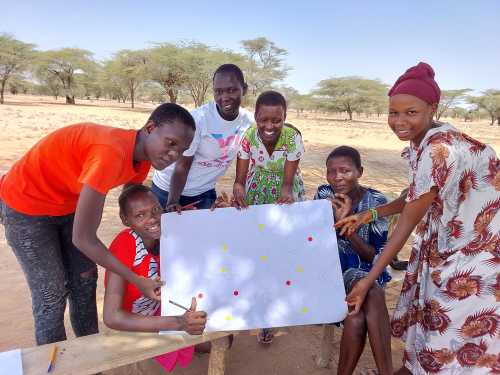
When we were talking with our our LAAGA colleagues, Joyce Kinyanjui and Mary Otieno, who have been leading the LAAGA research in the Karamoja region in Kenya and Uganda, they really, talked about the importance of girls naming this concept of agency.
So not using the word “agency” with the girls, but but the work that they did about, you know, what does agency mean to girls, and then what is an expression for that, or a phrase or a word in their own language, right, that that really brings that to life for them.
[11:02]
OSSAI: Yeah. And you know, even similar to that, this avoidance of giving girls any working definition, but allowing them to approximate from their own real lived experiences what best represents agency. We found examples coming out of, you know, the northern province of Vietnam where Tran Tran also shared about how girls by themselves, in engagement with some of their key influences, parents and other institutional actors, were able to frame this definition of, and, you know, concepts of agency.
And we saw it also play out in, you know, Pakistan when Jamila equally shared how girls became researchers themselves, you know, and led dialogues that led them to not only define agency, but also begin to map out who’s critical in the space in giving them the chance to really exercise their agency.
And so it’s really exciting, you know, that listeners will get to have front row seats into these findings that girls by themselves have have brought up on on agency.
[11:58]
O’DONOGHUE: So, listeners, I hope you can you can feel the excitement that Edem and I have about being able to engage with our colleagues and really learn with them as we all learn with and from the girls. And we will have the opportunity to hear from these folks that we mentioned throughout, throughout this this season.
OSSAI: The coming episodes. Yeah.
[music]
O’DONOGHUE: So we’ve been talking a lot about agency, about why we wanted to focus on agency and some of the critical perspective that we wanted to bring to this work. But I think it’s important for us to define for our listeners how we are understanding agency. And and I want to put an asterisk on this because for us in LAAGA, you know, from the beginning, as we approach this trying to get to a definition of agency, we came to a decision that we would define agency as a living, evolving concept.
And so that means for us, there’s no single universal definition. Agency doesn’t necessarily translate well or directly from one language to the next. And we work in multiple languages and across multiple contexts. And so, I think in LAAGA got to a place of comfort with some ambiguity and with saying, you know, we don’t need to have, and we don’t necessarily even need to all share fully the same, one singular definition. It’s more the conceptual understanding behind it and this commitment to to the why behind agency.
But having said all of that, I would love, Edem, if you could share with us LAAGA’s definition or working definition of agency.
[13:30]
OSSAI: And thanks for really setting that context, Jenn. So, don’t forget it’s a living thing. Right? So what our current definition of agency is that agency refers to girls’ power to identify and voice her hopes, make decisions, and take action to fully shape her own life and that of her community. Agency is a fundamental component of full and equal social participation, and may require negotiating structural and situational barriers to create opportunities for exercising freedom.
So this is how we’re currently thinking about agency, bearing in mind everything that you know, Jenn has explained and contextualized for us about our definition as a living thing.
O’DONOGHUE: And, and I think, you know, through through these conversations around agency, we have a shorthand version of that, which is really these sort of three Ds.
OSSAI: Yeah.
O’DONOGHUE: For us.
OSSAI: Dream. Decide. And I’ll leave the last one to you.
O’DONOGHUE: Drive.
[14:30]
OSSAI: Drive. Exactly. And it really captures how, like, multidimensional, you know, agency is, how relational it is. So all of those elements that we talked about in terms of not just being an individual concept, but something that’s bound by a system, you know, affected by structures, I think it really are are three Ds, or whether you look at it from the larger working definition we just shared, really captures those elements.
O’DONOGHUE: Yeah. And, I think we’re still at a at a pretty conceptual level here, and we hope that this is one of the strengths of the upcoming episodes of the podcast is that we’ll really be digging in with our colleagues and with the girls themselves to talk more concretely about sort of what this means, the ways that this Dream, Decide, and Drive agency is is shaped by the knowledge, the skills, the relationships, the context.
OSSAI: Yeah. It’s it’s absolutely important for us to really unpack all of these things. We do recognize that certain skills are required in terms impressing your desires on any environment, negotiating with, you know, the power structures in that environment, and being able to act within the systems in that environment to realize the futures that you desire for yourself. So, yeah, we’ll be unpacking these.
[15:37]
O’DONOGHUE: I think one of the key learnings for us in all of that, in many conversations about girls’ agency and and girls’ voice, there has been a focus and also a critique here that people tend to focus, especially people, you know, in the Global North looking and working in the Global South focus on these, like, extraordinary moments, right, of these girls who, like, you know, against all odds are able to go and speak in front of Congress or something like that.
OSSAI: Yeah. Travel to the moon.
O’DONOGHUE: Yeah. Exactly. And you know, I think, a a richness of this work and what really came out very strongly for me in this are just these, like, critical moments of everyday agency; the decisions and the the actions that girls are taking every day; the the way that they’re negotiating, creating space for themselves and their dreams in their day-to-day life.
[music]
[16:29]
I’m curious if you, Edem, have any example that stands out around this, you know, from your work in LAAGA or from the, you know, the the broader body of work that you are part of in in Nigeria and elsewhere?
OSSAI: I mean, I love, for instance, how space becomes very relevant to the conversation. Like, you rightly pointed out, sometimes it’s not about the very big things about oh, what, you know, job I want to take up or, like, what promotions am I getting? Sometimes it’s about, like, is it safe to go to the neighborhood market? Is it safe to stay out after 7:00 p.m. Who should I be speaking with? When I have a particular idea I want to work on, who’s best to, you know, share that idea with? Who will kill it or who will nurture it?
And so some of these conversations that we’ve had in different contexts, you know, with our colleagues across LAAGA have really thrown up how important some of these sometimes underappreciated ideas are.
In my example from Nigeria where I work, for instance, it’s become so, like, obvious all of a sudden how things like toilets. I mean we always talk about, oh, there’s lack of water, but even, like, where is the toilet built? Is it close to the fence? You know, all of these things that we would take for granted really affect whether a girl wants to come to school during her, you know, period, for instance. Or, you know, if she has to, you know, go all the way to a certain part of the school compound to do the number two, will she decide instead to leave the school premises, right, and expose herself.
So all of these things become even more dangerous when you think about conflict, environments. They become sensitive when you think about areas prone to flooding, areas prone to environmental disasters.
So I realized how critical toilets were in the in a girl’s education journey in ways I never thought about before. A rural girl, you know, will literally miss many days of schooling, because that distance she has to travel during her period all the way to school is compromised.
So all of these factors that we didn’t think about, just by hearing from girls, I suddenly started becoming more sensitive. And when you bring these girls into a room with policymakers, then they hear the heavy consequences if they fail to allocate required resources to, you know, maintaining these infrastructures, sustaining them, repairing them, and things like that. So that’s one example I can immediately think about.
And in other episodes, I think a lot of our LAAGA members, you know, throw up even more like, very visceral, you know, examples of how some really mundane things, things we think are mundane, are so defining in the lives of girls’ education.
[18:58]
O’DONOGHUE: Yeah. You know, I think for me, one of the, as you used the word visceral, I’m gonna pick up on that, most sort of visceral moments um where I saw how how this girls’ everyday acts of agency, right, like you just talked about how the challenges girls face to stay in school even, and to continue that, how everyday acts of agency that girls have been exercising can really come into conflict with systems and structures.
When we were with the girls at one of the schools in the Karamoja, we were in a room that was sort of a common room and in one of the corners they just had all of these big trunks, like, steamer trunks, stacked one on top of another. And we asked, what is that? And they told us, oh, those are the trunks with all of the material possessions, right, all of the things that belong to the girls who have finished school, who have completed their coursework but cannot graduate because they owe school fees.
And I thought, we are talking about girls who have made it year after year after year, all the way through secondary school and somebody has made a decision, right,
OSSAI: to block, yeah,
O’DONOGHUE: to block them and to prevent them. And, and
OSSAI: kind of economic, like financial, you know, limitations.
O’DONOGHUE: Exactly.
And so, you know, I I think, again, maybe I’ll use that story as a transition to take a step backwards and really talk about where LAAGA came from and and how we began and why we felt like it was so important to pull together and to work explicitly on girls’ agency in LAAGA, which again is the Learning and Action Alliance for Girls’ Agency.
[20:30]
So, LAAGA really grew out of a a larger community of practice and a network of people, Echidna Global Scholars. The Echidna Global Scholars program started as a fellowship program at the Brookings Institution in 2012. It’s it’s a six month fellowship that invites Global South leaders in gender equality and education to come to Brookings to do research, to publish their research and a policy brief through Brookings.
And then in the past few years, after we had many years of this six month fellowship program, we realized, well, now we have all these alumni. What are we doing? So we’ve been working together to come together as a network of alumni. And, you know, when I first joined Brookings about five years ago in in 2021 in the spring at that point—and that’s when you joined the Echidna Global Scholars Program as well, so we, we joined together …
And so at that point, you know, we had about 33 Echidna Scholars. And, as part of my coming into this program, I wanted to meet everyone and I wanted to ask, what is it that you’re working on? What is it that you’re concerned about? What do you want to do?
And what emerged from that was really the strong interest in creating a space where we could learn more intentionally together, deep dive into a topic. And the topic that was really, I think, on the forefront of many people’s minds in the network was agency and girls’ agency.
So maybe I can ask, Edem, for you to share a bit about what your own experience and interest in joining the network and and what you felt like you were looking for in that, in that space.
[22:04]
OSSAI: Thanks, Jenn. So, I mean, I feel like it was such a fortuitous moment, because I was coming in the aftermath of, you know, the COVID-19 pandemic. So the world had experienced a very major disruption at that point, obviously.
And then when I tie that into, you know, the sort of, like, lifespan of the Echidna Global Scholars program, I met previous scholars who had all been, you know, all of us had been delving into girls’ education from different thematic entry points. So whether it was climate, in my case it was, like, gender responsiveness during education in emergencies. People were looking at girls’ education from points of conflict and violence, whether it was teachers and, you know, supporting teachers. So everybody had an entry point.
But I think the common strand in all of our research was that, what was that catalytic element, what would put in the hands of girls the ability to, you know, translate a finding into some kind of transformation?
And all of us found that common in all our, across all our research, was that component that really addressed the ability of a girl to dream, to decide, and to drive the transformation. And it was common whatever subject matter area, you know, your research was centered around.
And for me, like I said, the world had experienced some massive disruptions. My research threw a great amount of findings. I didn’t just want to pile it up on the shelf once again or just, you know, disseminate it on some website. I wanted the power of being able to actually bring about change.
[23:21]
And so at that moment when the idea of LAAGA came about, you know, for me, because LAAGA is a research to action network, and I thought that that was the consolidation of all those desires and aspirations that members, you know, within the network had. We wanted to not just throw up findings and bring up evidence. We wanted to hold some, you know, reins or have a stake in the ability to, you know, act on those findings.
And if you feel like all you can do with your findings is share it with some person in a position of authority or share it with parents, it really leaves you feeling powerless to, you know, do anything about it.
So with LAAGA, we were also positioning ourselves as actual change agents, not just, like, researchers. And we’re positioning ourselves in such a powerful way because we were holding the hands of girls, or girls were holding our hands. So this guaranteed that we would be the most, like, in terms of direction we would be the most clued in because we would be holding the hands of the real experts on the issues, right, and they would be therefore guiding us. So it was the perfect compass.
So that’s why my immediate instant attraction and why LAAGA resonated with me and I imagine many other, you know, members of the network. And this idea that our problems were common. Or you know, these issues are not, you know, isolated issues.
So it it it increases your confidence that you’re not acting alone in the world. Somebody else understands this challenge. Somebody’s also committed to acting on this challenge. And so that galvanizes us further. So these were some of the elements that I think LAAGA put together in this wonderful, sort of, like, potpourri and, you know, formed the uniqueness of our network.
[music]
[24:56]
O’DONOGHUE: You know, I I am gonna pick up on on what you were saying there towards the end about not wanting to be alone in this work. And I think, you know, that’s one thing that I’ve really learned and experienced through through LAAGA. And even in these initial conversations, you know, it’s so interesting to me because we talk about the Echidna Global Scholars program is about working with leaders. Right? And so many of those leaders resist the idea of being a leader alone. Right? Or or this, like, typical or traditional idea, and I I guess probably a very Western or sort of Global North idea of leadership is an individual. Right? And and is not part of a a of a collective.
And so I think there was both this real desire of folks to come together and to to really be in a space where you didn’t feel like you were a leader on your own, that you were, you know, with others. And that also, you know, a huge part of leadership is reflection and being being critical about your own work and your own role in the space
OSSAI: Questioning all your assumptions, you know? Yeah. And your previous approaches. And just being willing to self-examine and self-critique.
O’DONOGHUE: Exactly. Yeah. Exactly. And I think that for me that was, and has been, one of the the key learnings of LAAGA and we’re going to have a chance to hear more from our colleagues about that as well is, you know, the the work of this network is, you know, we call it a transformation. Right? We’re looking for transformation. And that that transformation doesn’t just happen on the ground and with girls and with communities, but it happens in each one of us. Right? And so how do we create that transformative space for ourselves, and that that’s part of the power of the story of LAAGA as well. Right?
[26:34]
OSSAI: Very true. So we actually model what we take into the real world because, you know, we had to undergo even that very reflective, very messy. Because when you think about 23 of us in one space questioning this idea, bringing in our different contexts, which are very different. Even if the issues are similar, the manners in which they manifest are different. The priorities that we place on certain actions or interventions may be different per time. Right?
So coming together to arrive at a shared understanding is a process. But it it prepares you for the real world because we take a very ecosystem approach to the work. Right? So if you can do that within your network and succeed at it, like, you know, managing the the the slow pace of it, managing the tensions that could potentially arise from it, then it prepares you to deal with that kind of process, you know, to really roll out that kind of process in a real world scenario also.
[27:26]
O’DONOGHUE: Yeah. Yeah. And I think we’ve been learning through LAAGA, right, and and with with each other, the LAAGA members and with the girls as well, that this type of transformation is really about people. It’s about relationships. You mentioned the ecosystems. Right? And and it’s not necessarily saying that the change has to be this or that and and this is how it’s going to happen. But really that it’s about strengthening the relationships across an ecosystem. That it’s strengthening the ability of an ecosystem to learn, to take action from that learning, and to really get into this cycle of of knowing and doing and—
[28:01]
OSSAI: —yeah, and listening and engaging, you know, and listening again, like, yes. So these, these are I think, the underlying pillars of the entire process, you know, and welcoming everybody, including everybody.
And just shifting the approach or the mindset when you think about girls. I think that’s one of the most critical things. So the expert is not the person who’s done the research or who’s been going into communities. The expert is a person who is living out the reality. And so front lining that person and, you know, prioritizing that person’s voice in the mix, that just shifts the entire, you know, approach. Because everywhere in the world, the girl is gonna take the lead in in whatever transformation emerges.
O’DONOGHUE: Great. I love how you’ve just foregrounded for us our episode on on challenging power dynamics and and really shifting mindsets through that.
[music]
[28:56]
So, I think I will start to bring us to a close for today because I know you and I could go on and on and talk about agency forever. And I am eager to get our other colleagues in the upcoming episode.
So really, just to thank you again to to all of the listeners and excited that you’re joining us on this journey where we will be exploring agency, agency as contextual, as relational, as really multidimensional and dynamic. And we will dig into all of that.
And this idea of of collectiveness, of collective learning, of collective action, of shared purpose, and and really, you know, getting beyond divisions and getting beyond these ideas that sort of pit us against one another to really thinking about about shared purpose.
And excited to, you know, continue to to dig into this conversation, this idea that, you know, shared purpose matters more than than shared language. And that if we can come together and learn together and and take action together in ways that really resist and are a form of resistance, right, in a time when when we are sort of told more about our differences than our similarities, when we’re often pitted against one another, that really this podcast will be about coming together and what that means and and what that looks like.
[30:11]
OSSAI: Yeah, I’m, I’m really excited. And on that note, Jenn, I really want to invite listeners to think about how agency shows up in their own context. You know, it’s very different depending on where you are in the world and what situations, you know, you encounter daily. Whether yours is environmental in any sense. Does a girl have a chance to get to school? Does she have to cross massive rivers or, you know, climb very, you know, mountainous regions to to get to school?
Or is it from an economic lens, you want to look at it, you know, is it a matter of the example you shared? She’s not let out even though she’s, you know, satisfied all the requirements for schooling, but because she couldn’t pay the fees.
So what does it look like? What is it rooted in, in your context? We want people to really imagine that. And we also want people, listeners, to really think about whose voices are centered in this conversation. When we’re talking about, you know, girls’ rights to schooling, when you pull up the, you know, television reports or newspaper reports, whose voices do we continue to hear? Is it that district commissioner? Is it that, you know, lawmaker who doesn’t have a grip on what the nuances are on the ground?
Or are we really hearing from the girls? Are we hearing what their pain points are? Are we hearing what their real, actual challenges are? Or even grievances, you know?
So whose voices are we centering? Who’s giving space in the room, in the conversation? And that really needs to really prod us also in our different spheres of influence. You know, what kinds of meaningful, marginal small steps can we take to bring about these kinds of transformations that really confront some of these power dynamics?
So we, if we start from that, then we’ll really connect with these episodes as we share them and, you know, derive a lot of value and benefit for them from them.
[31:43]
O’DONOGHUE: Yeah. So stay tuned. We’re gonna be talking about all of this and more over the next seven episodes. I am excited and maybe even just foreground for people that we will get to not just listening to girls, but taking action with girls. And we’ll tell some stories about how things are changing and how girls are really pushing that change, whether that be sort of in their in their community, in their school district, or even in national policy, which is the case of Vietnam. So stay tuned for all that and more. Thank you so much for joining us.
OSSAI: Thank you. See you next time.
[music]
O’DONOGHUE: Thank you for listening to Embedding Equality in Education, a podcast from the gender equality in and through education team in the Center for Universal Education at Brookings. Our sincere thanks to all the LAAGA members and others who contributed to this episode. The show is produced and published by the Brookings Podcast Network.
Thanks to the production team, including Ike Blake, supervising producer; Fred Dews, senior producer; Arushi Sharma, co-producer; Daniel Morales and Teddy Wansink, video producers; and Chris Chang, audio and video producer. Plus, thanks to Benji Aliaga and Madeline Chandler for their contributions to the show.
And a very big special thank you to our former senior project assistant and co-producer, Anya Kasubhai, who did so much to get this show launched.
Finally, our thanks to the promotions team in the Office of Communications at Brookings.
I’m Jenn O’Donoghue. Thank you for listening.
The Brookings Institution is committed to quality, independence, and impact.
We are supported by a diverse array of funders. In line with our values and policies, each Brookings publication represents the sole views of its author(s).
Commentary
PodcastRethinking girls’ agency through collective learning
Listen on
Embedding Equality in Education
September 9, 2026