



On this fourth episode of Embedding Equality in Education, Jenn O’Donoghue and Edem Ossai look at what LAAGA learned from girls about agency itself, drawing on definitions from more than 400 girls across multiple contexts. They explain how LAAGA’s framework for transforming systems with and for girls’ agency grew out of listening to girls and show why agency should be understood as multidimensional, dynamic and rooted in girls’ everyday lives.
Related Episodes
TRANSCRIPT
[music]
OSSAI: Hello, everyone. Welcome to Embedding Equality in Education: Research and Action for Gender Just Futures. In our first season, we’ve been exploring the four key lessons from the work of the Learning and Action Alliance for Girls’ Agency. Our fourth episode will be focusing on what agency means and looks like for girls and why this matters.
My name is Edem Ossai. I’m your co-host, and I join you from Nigeria. In the third episode, we focused on how girls are centered as co-creators. Today, we’ll be moving on to discussing what we’ve learned from girls themselves about agency. So, what this means is that in this episode, you’ll be hearing about girls’ lived experiences directly from girls themselves. Isn’t that exciting?
I’ll hand over now to my co-host, Jennifer, who will let you into the next part of the conversation.
[0:59]
O’DONOGHUE: Thanks, Edem. And hello everyone, and welcome back to our 3Es podcast, Embedding Equality in Education. As Edem said, my name is Jenn. I’m Jennifer O’Donohue, senior fellow and deputy director here at the Center for Universal Education at Brookings, joining you from the Brookings podcast studio in Washington, D.C.
And it is great to be back with you again. I am really excited for these next few episodes where we’re really gonna start to unpack this framework that has developed through LAAGA’s work with girls around, as Edem said, how to engage girls’ agency to transform systems.
And, you know, before we we really start to dig into this framework, just a note on how we developed this framework. And I think this is really important for us because in the last episode we talked a lot about co-creation and what that process looked like of really starting with girls and and not going in with sort of preconceived ideas or preconceived definitions.
And this was really the same with the framework itself. So, we didn’t start with a framework, but rather approached this research and this work with girls with the idea that perhaps we could create a framework and create a framework with girls.
[2:07]
And so again, there was no sort of predefined model. We didn’t go in with a master plan of what we thought this was going to look like, but rather approached this in a way that was iterative, it was guided by the girls, and it was really about seeing what emerged as we took that first step forward with girls and talking with girls and understanding with girls, you know, what agency meant and looked like to them.
And then really taking our lead from the girls about what needed to happen next after that. And actually, I would love to bring in the voice of our our colleague, Jamila Razzaq from Pakistan, who was part of LAAGA’s work on the ground in Pakistan in South Punjab there, and really, I think does a great job of talking about this process of how the the work and the framework began to emerge with girls.
[2:54]
RAZZAQ: So first it was a bit distant from them, but similar to them, like, the girls from their communities. And then we provided a structure where they could discuss it among themselves. They reflect on it. And through discussions, they they formed their way of expression, like, how they understand and express their agency and understanding of agency and share it with us.
One thing, which was very surprising for me, which came as a surprise in this process was that how clear the girls were. I have done a lot of work on girls’ empowerment, where the girls are taken as passive recipient of the training or skills, which we go as as experts and share it with them.
But when we opened up the space where they could share their knowledge, their understanding, and their solutions, that was very surprising for us as researchers to see that girls were very clear what they want to be and what their future trajectory would be and who are the people who can support them, and where are the bottlenecks and barriers?
And then within the groups, when they discussed their strategies that how they navigate, they learn from each other so much.
[4:20]
O’DONOGHUE: So, as we heard from Jamila there, you know, really when we went into this work, the plan was to listen to girls, to follow girls where girls led us, and to adapt so that our work would adapt and be driven by the girls themselves. And so, if anything, I would say, the master plan in this framework creation for us was really to listen to girls. And that was where it it took off.
[4:44]
OSSAI: Thank you so much, Jenn. It’s so interesting to see what, you know, the picture that unfolds in this conversation when girls really share their perspectives. And just like you said, girls have led us into, you know, different aspects of their lives, starting with their communities.
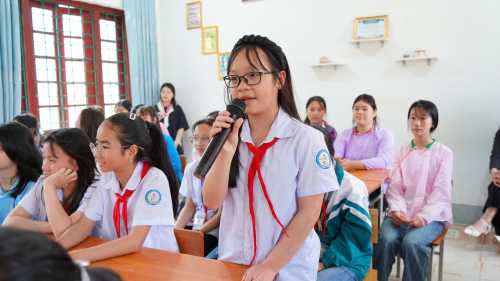
So, the first place that girls took us to was their communities. And it’s so interesting what happens there. Girls identify key actors from families to teachers, community leaders to local authorities. Through our colleagues’ work in Vietnam, we had insights from girls around how their families play key roles in the exercise of their agency. Let’s listen to this perspective from this amazing girl’s voice in Vietnam.
[5:32]
GIRL 1 IN VIETNAM: {translated} My hardest decision is whether to continue pursuing my dream. It’s tough because my parents don’t agree with it. I want to become a lawyer, but my parents think that’s a difficult job and only boys can do it well. That’s been the hardest decision I’ve faced up to now.
[5:50]
OSSAI: You’ve just heard the voice of that girl in Vietnam, and how parents play a very pivotal role in the exercise of her agency. Making a decision about whether to continue her education or what choice of career to, you know, embark upon rests really, really strongly on parents’ approvals. So, it’s very key to understand the situations and the context and the environments that girls find themselves in, and the key actors and how they enable or confine girls’ actions or girls’ decision-making and dreaming.
And we have to emphasize at this point that the network of relationships we find ourselves, you know, surrounded by are so critical to our lives. It influences our aspirations. The the entire scope of our dreams are influenced actually by our peers, our parents, our teachers, what we see on the TV, our leaders, and this plays out every day in the lives of girls.
Through approvals and disapprovals, girls are able to pursue or prevented from pursuing many of the dreams that they have, that they reflect on and that, you know, grips and arrests their their hearts every day.
So, it’s very important, and in LAAGA, we take a very critical approach to moving from individual focus to systems and ecosystems. We recognize that many of the things we’re experiencing, or girls are experiencing are very systemic. And none of these things, issues or, you know, barriers, as we call them, can be solved by addressing them on our own.
[7:30]
O’DONOGHUE: Yeah, you know, I think this piece around the move from the, the shift really from that individual focus on a girl and her agency in particular, to really looking at ecosystems and, you know, who are those people around girls and and systems, what are those structures, and systems that exist around girls, was one of the key things that we learned from, you know, taking the step of really starting with girls and listening with girls.
And so, I think that that is something for us to hold in mind and we’ll continue to, to return to as we really move into talking about what girls showed us about agency. And just to to ask all of you, you know, as you’re listening, I think you’ll be able to hear with the girls, and from the girls here this connection between what a girl’s individual experience is like and how that individual experience fits within a system, you’ll hear girls talk about things like poverty, about educational opportunities.
And you’ll also hear the talk about the ecosystem. That’s, you know, of course, a technical word that we use, but they don’t necessarily talk about the ecosystem in that language. But they will talk about all of those people and those different actors that are around them.
So as we move forward into that I just want to remind everyone, I think we’ve talked about this in in some of our earlier episodes around methodology, but, you know, when we talk about listening to girls’ voices, we are talking about listening to more than 400 girls in our first round of research, and more than 100 girls in our second round of research.
So, let’s hear from some of the girls. In this next clip, we’ll hear from a girl in Vietnam and two girls in Nigeria as they talk about what agency means to them.
[9:09]
GIRL 2 IN VIETNAM: {translated} Agency means taking charge of yourself like doing your homework, keeping clean, working well with others, and joining school activities. It helps us become more independent, make friends, learn new things, and grow into our best selves.
[9:32]
GIRL 1 IN NIGERIA: {translated} Agency means a courageous, resilient woman, and courage and resilient means, for example, someone who can speak their mind without fear or reservation.
[9:44]
GIRL 2 IN NIGERIA: {translated} What agency means to me is that I want to be a boss and own a big shop and also have employees that will work for me. I also want to help people around me.
[9:56]
O’DONOGHUE: So, you know, here this is really listening from over 500 girls in eight different country contexts, in Asia and Africa, in America and the Caribbean in particular, and Jamaica, as well as listening to over, you know, nearly a thousand community members from girls’ ecosystems.
So now, you know, I would love to to move us forward into really unpacking the definitions. What does agency mean to girls as they practiced agency, as they exercised that, as they expressed it? And again, to remind everyone that when we talk about agency here, we’re talking about dreams, aspirations, decisions, and actions. Those three Ds that we talked about in an earlier episode of dream, decide, and drive.
And so, Edem, would love to turn over to you to sort of share with us what were some of the common themes that we saw in girls’ definitions across these eight different country contexts.
[10:53]
OSSAI: Thanks, Jenn. And, you know, I’m so excited to have actually listened to many of these, you know, perspectives from the girls themselves.
And one thing that Jenn stresses is how, you know, we didn’t come with any preconceived definitions, so all of these perspectives were rooted in girls’ own words and experiences.
And another important thing that’s shown clearly for us was that there’s no single universal definition. Right? If you heard the quote from the girl in Vietnam, agency meant pretty much, like taking charge of her life and doing her homework. The ability to exercise, you know, that decision about when to do her homework, where to do her homework was for her, you know, a very strong expression of her agency.
Choosing, you know, who to join her in cleaning up, whether in school activities, like, who to form a team with. Right? And also listening to the girls from Nigeria about how agency was really exercising courage in the everyday decisions of their lives. Courage to, you know, perhaps answer a question in class, courage to, you know, go somewhere that maybe ordinarily she would have gone with her parents, accompanied by her parents.
[11:56]
Like, these very simple, mundane things are showing clearly how girls are moving from dreaming to decision-making and actually taking action, and it’s so powerful. Some of the powerful themes that emerged in these definitions was just the freedom to make choices, whether it’s from making the choice of, you know, where to sit down at home to do your homework, what time to make, do the homework, or where to go or who to spend time with, who to choose as a friend. That’s some kind of freedom that girls expressed in their definitions.
Identity. You know, the girls in Nigeria really emphasized on courage, the idea of that courageous woman. That empowered woman for them was the woman who was daring, audacious, courageous. Right? And so that formed a sense of identity.
And of course, the ability to move from aspirations to action. So, looking at the environment, surrounding environment, and its limitations or its strictures. those spaces that best enable them to move from dreams and desires in their heart to act them out, you know, allow for better expressions of their agency or for them reflect those moments where they’re best exercising agency.
And of course, again, courage, the courage to speak up. I think a lot of the girls, that was a common strand or theme that emerged in many of their responses: courage. And so, it tells you about environments that stifle that for them, and it’s so important for girls to be able to express that. They feel their freest, they feel their, they identify with their core most when they’re able to act courageously.
And of course, perseverance, working towards their dreams in spite of difficulties, negotiating barriers. These were many themes that emerged in girls’ definitions of agency as rooted in their own lived experiences. So, Jenn, what are your next thoughts about, you know, all of these findings that we’ve teased out?
[13:50]
O’DONOGHUE: When we think about these five common themes that you just talked about, that girls mentioned. Right? That agency is about freedom, it’s about identity, it’s about aspiration and action, it’s about courage, and it’s about perseverance.
Like, girls are experts on their communities. Girls are experts on their context. Girls are experts on their family life and their cultural identity and all of that, and they are the ones who are navigating these different spaces and structures, and they are the ones who are, who are making decisions and really, you know, leading the way in thinking about how we expand space for agency.
And to me, that seems really critical that girls were so aware of that cultural context for them. They’re so aware of the lived experience of this. They’re so aware that agency is not just about an individual. And I think in that sense, what we are seeing, at least so far in our work with LAAGA, is that we haven’t been running into that sort of tension that can exist when we go in and and communities might feel like, you know, someone is trying to change a community from the outside or is talking about something that is sort of external to their lived reality, because this is girls talking about their own lived realities.
So, you know, I think what we, what we see in these five common themes that, Edem, that you’ve really laid out is that they really reveal something deeper about agency, and that is that agency is not one-dimensional. Right? That agency is complex, it’s dynamic, it’s multidimensional. And and maybe with that, we can sort of segue into talking about what were the four dimensions of agency that emerged from LAAGA’s work?
[15:24]
OSSAI: I think you perfectly, you know, sum it up. When we think about going beyond, you know, just one dimension, and also going beyond something that’s theoretical to something that’s, you know, lived, practiced, and exercised every day.
One of the dimensions that stuck out, obviously, was the relational aspect of it. You know, it’s way beyond the individual. It it has to do with people around them and the web of very complex relationships that define our lives.
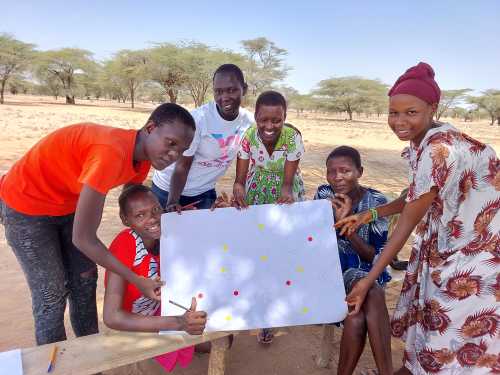
Another dimension that was very important was obviously how really contextual, or another word we can use is how very situational, you know, agency is. And so, for the girls in Pakistan, agency looks very different from how it looks like for the girls in Vietnam, for instance, or the girls in the Karamoja region in, you know, Kenya and Uganda. It’s so situational. It’s so tied to the lives that they live daily, the qualities, the characteristics, you know, the everyday affairs that play out in those, in those contexts.
And everyday agency is also really an everyday thing. It’s not something that’s momentous or, you know, something that’s such a milestone or a major event in your life happens and that’s when you exercise it. It’s happening every day in a very granular way, and it really goes beyond skills. It encompasses skills, it encompasses systems, and we must never lose sight of these dimensions when we’re talking about agency.
[16:45]
O’DONOGHUE: Yeah, and I think, you know, you laid them out for us, I think, in a in a way that was really crisp and and clear. And one thing for me about these dimensions is just remembering, right, it’s not an either/or. So, when you say it’s it’s not individual or it’s not relational, it’s both, right? It’s individual and relational.
So, it is this piece of a a person recognizing themselves as sort of capable of of independent thought, capable of independent action, and that that happens within a network of relationships. Right? So, they are doing things for themselves, and they’re being done with and for others. That they are setting aspirations by seeing the people around them and thinking about, “What does this mean for me? What does it mean for my family?”
That they are taking decisions, especially some of those, what girls talked about as, like, bigger decisions around education or career or family life, that they are reaching out to others to make these decisions, that they are negotiating with others, that they’re co-deciding with others.
And that when they’re taking action, they most frequently are not taking action alone, that they are really practicing that action with others, and that that action is often very collective. And I think our colleague Tran from Vietnam has a great example of what this looked like on the ground in Vietnam.
[18:03]
TRAN: Agency is not individual. It is shaped by relationship. And for that, we focused on three important groups. First one is of course girls themself, and they are not just participant, they are the central actors. They they shape the conversation in those spaces by sharing their own perspective. Also questioning, challenging the assumption. That is one group.
Second the people around them in their daily life, like the parents, the teachers, and also their peers, because our research showed that these relationship is very important to shape girls’ choices and also girls’ lives. And many girls also share with us that they tend to turn to their parents and teachers, when they need to make decision and move forward.
And third, institutional actors. And this includes the local government, the women’s union representative. And also, the development partners like, like us, because these are the people who influence the policy and the resources that can support girls.
[19:14]
OSSAI: I I just love how, you know, that piece really emphasizes that individual relational piece. And in that fluidity comes also the everyday nature of it. From how much money you’re gonna spend out of your pocket money, how much money you’re gonna keep to, like, when you’re filling your application forms, what choice of course will you study in the university? To where you’re gonna spend your weekend? Which auntie will you visit? Like, it’s so granular. It’s so, tied to how we, you know, show up in the world, and we show up in the world in very multidimensional ways.
[19:50]
So, I love how these dimensions really frontline for us the everyday sequence of agency.
[19:58]
O’DONOGHUE: Yeah, and I think, too, you know, and this is a point that you made in one of our previous episodes about the ways that sometimes pushing girls, right, into very public and and sort of extraordinary acts of agency like getting on stage and speaking out publicly about something, can be unsafe. Right?
And and I think one thing we’ve learned from the girls in this research, and this goes back to this contextual situational dimension, that you mentioned earlier, right, is is that in contexts where girls don’t feel that their voice is as welcome in public spaces, or in contexts where there may be real, very real security concerns that girls recognize those everyday moments of exercising their agency as acts of resistance. Right?
And, and that that is something that becomes very important to them, to seeing themself as a person who is exercising agency in these certain ways. And those ways might be ways that are not, again, seen by everyone, are not seen, you know, in these big public moments, but it become extremely important to girls and also to the people around them.
And and, you know, I want to return a little bit to this dimension and this relationship between the contextual and the situational, because to me, this is something that also has emerged from this this work and is so important to understand.
We often talk about, and I think we touched on this in an earlier episode as well, but this idea of, like, context as monolithic and, and unchangeable. Right? But really what we saw is that, yes, there are broader contextual pieces. Right? And these can include things like community structures, or or governance, basic services, access to health and education. Like, those are contextual factors. Gender norms. That’s also, you know, a contextual factor.
[21:42]
But those change, and those change in many ways because of the exercise of agency. So, what we saw is that, you know, when space was created to listen to girls’ voices. Right? So, like, when safe spaces were created, that that meant that girls could step into that space. Girls could more fully exercise their agency in that space. They would see themselves exercising their agency more. The people around them would see them exercising agency more.
And then that space would, would grow. There was, you know, an example that actually is not from our work, but from some colleagues who are working in in Turkey from a group called Sunun Kızları, where they talked about girls doing community mapping and doing this in sort of public spaces. And in the initial feeling of others, adults, being like, “Well, but girls don’t go around in these public spaces and do this type of community mapping.” And the group said, “Well, why don’t we just try?”
And so, once the girls did it, right, the context changed. And so now it’s a context where the girls are out, and they are in those communal spaces because they did the mapping. They’ve done the work around the safe spaces.
And so, again, this is sort of that interplay between this everyday extraordinary, the context that exists, and how do we create situations. And again, I’ll bring in the relations here. Right? How do people around girls work with girls to create situations that expand space for agency within a given context, so that those everyday acts of agency are sort of accumulating and becoming something extraordinary that is changing, that is changing context and that is, can change systems.
[23:16]
OSSAI: Yeah. You know, as you were talking, Jenn, like, what came to mind instantly was the example from Pakistan. Because I feel like in, you know, your last comment, like, really highlights a lot of themes. So, I recall that our colleague in, you know, Pakistan shared how rather than they themselves approaching the stakeholders, they invited girls to, you know, go home and approach stakeholders or key actors themselves with certain questions that they had, you know.
So, girls were the ones who were interviewing their aunties, their grandparents, and their mothers, asking them questions, right, to better understand the reasons behind their actions. And by just simply framing it differently.
So, these are everyday conversations that girls have in their lives, but girls don’t see the power that they’re exercising because perhaps people around them haven’t defined it, you know, or or labeled it appropriately.
But by just letting girls know that they were doing research, they were researchers themselves, it changed the, you know, picture entirely. Girls felt even more empowered. You know, there was more dignity to the status. So, they were as much as researchers as our colleagues who visited them and were consulting with them.
[24:19]
And it also, like you say, changes how girls are viewed by the key actors around them, who see these mundane actions of girls every day and just tend to casualize it or just trivialize it or just take it as like, “Yeah, yeah, there’s no big deal to it.”
But suddenly they’re seeing girls in a different light, that by asking those questions, girls gathered insights that became relevant for framing next steps in terms of what needs to be transformed. And suddenly the insights generated from these girls are forming the foundation of plans for transformation. Everybody respects, looks at the girl differently. Right?
So that example really illustrates for me the points that you just mentioned. It’s such an everyday thing, and these simple acts are actually extraordinary. They’re moving us forward every day. But because they’re repetitive, we think that they’re nothing. They are repetitive, but they’re propelling us to greater versions of ourselves. And it would be great if girls, you know, had a proper vocabulary to label themselves by, and if people around them also, you know, used the more respectful vocabulary for girls when they’re carrying out all these activities or decisions every day.
[25:23]
O’DONOGHUE: Yeah, and I, and I think, too, this piece around what it takes to really strengthen girls’ sense of agency, and that, you know, how, how that often gets tied to life skills curriculum, for example. And the girls here were very clear that, yes, like, being able to step into these spaces to, you know, to take these acts of both every day and extraordinary agency. Right? That that that does require skills, that that does require confidence. It requires skills around goal setting, around problem-solving, interrelational skills, negotiating, leadership.
So, girls were very, very clear and and, you know, very skilled, let me use the word skilled. Excuse the redundancy, but very skilled at identifying what were these skills that they felt they had, or that they felt that they needed to strengthen in order to more fully exercise that agency.
But importantly, the girls really emphasized that those skills by themselves were not enough. Right? And so, they, you know, they talked about all of these systems that they are really navigating that— and again, you know, to remind those of you who are listening, in episode two, we really dig into what it means to work with girls in marginalized contexts.
And so we are talking about working with girls who live in very highly marginalized contexts, you know, where systems like poverty, where systems like insecurity and and the inability, right, of of government and, and others to really respond to situations of insecurity, to respond to the climate crisis, to ensure that all girls have access to education and to learning, and and, you know, among other things. Those are some of the main ones that girls pointed out.
That that really means that agency work has to be about both understanding all of these things that are are sit within girls around skills, and really engaging those to move into action to transform systems. And so, I would love to ask you, Edem, to to sort of help us, and this is a teaser for what’s coming in in upcoming episodes, but, you know, this work that we have done to unpack these dimensions of agency is not just about naming something. Right? It’s not just a, an intellectual exercise, but it’s really about how do we understand this concept so that we can more effectively take action.
So, what what do these dimensions mean for you in terms of taking action?
[27:51]
OSSAI: You know, as you were asking that, I I I was recalling you know, the the perspectives shared by girls in Nigeria, you know, through the work of our colleague in Nigeria, Adefunke, where the girls, many of whom were teenage mothers, you know, were trying to reenter schooling and education again.
And they also stressed, you know, how moving from all of these findings through research to actual transformation really rests on both capability and structures. You know, for them, they emphasized, for instance, that, “Oh, getting us back to school, that’s nice, but who takes care of our babies.” Right? “What’s the affordability of schooling? How do we earn an income, you know, outside of the classroom to support ourselves and our babies?”
So, all of these things, you know, get us to really think about actionable steps. Right? And that brings us back to the framework. You know, if we want to transform systems with and for girls’ agency, we can’t just be comfortable with naming the problems, with saying, “Oh, they don’t have enough skills to negotiate,” or “Oh, there’s not enough, you know, after-school programs or childcare programs.”
What are we actually going to do about it? And also recognizing that it’s never going to be a one size fit all approach, especially given what we earlier emphasized about how situational these challenges are. So, you know, the priorities in one community may be vastly different in another community.
And the teaser, what we need to look forward to in the next episodes, is that, you know, we’re gonna be looking at local realities, how work is carried out across levels, whether individual level, relational level, like we stressed in this episode, and even the systemic levels. We’re gonna be seeing how to engage ecosystems, and these ecosystems, you know, really encompass families, communities, institutions, and even girl peer groups.
You’ll recognize in the next episodes how girls are exercising everyday agency. And don’t forget, in all our episodes, you can look forward to us centering girls as co-creators and decision-makers. So, from acting for girls, you, wherever you are and through the work that you do, you will learn and be able to act with girls.
[29:56]
O’DONOGHUE: Yeah, and I think speaking of acting with girls, we have a great example of that from our colleague Armene Modi in India.
[30:05]
MODI: You know, there are several examples and stories in our Ashta No Kai project where girls really took the lead, surprisingly so for us. And let me give you the first example. The first was about nine girls who had received bicycles through our bicycle bank project. This was an initiative to enable girls to access distant school, high schools, and high schools in India are from eighth to 10th grade. And the reason it was called a “bank” was that the girls had to return the bicycles after 10th grade, and then we would give them to other girls to use.
But the nine of these girls came to us at the end of 10th grade and said, “Can we keep these bicycles? We’d like to go to 11th and 12th grade,” which in India is junior college. We were of course delighted but realized that parents would find it difficult to fund their education, so we decided to establish a scholarship program.
So had it not been for these girls, we might have just felt okay sending girls to, you know, access high school. That means they wouldn’t get married at least until 16, 17, although the legal age for marriage in India is 18. For girls to articulate their desires, you know, and especially a desire to pursue an education we thought was something we need to support wholeheartedly.
[31:44]
O’DONOGHUE: I love this clip from from Armene where she talks about the surprise. Right? Armene talks about the the surprises that she experienced by engaging girls and engaging girls agency in this in this way. And I think, Edem, that really links up to what you were saying and and some of the key things that we need to hold in mind as we move from just talking about agency as a concept into what does it mean to take action for agency.
Agency is lived. It is not something that is just abstract or theoretical. It is complex. Right? It is dynamic. It’s multidimensional. And that it is something that girls exercise already every day in their lives. And how do we learn from that and expand the space with girls, with others around them, expand the space for the exercise of that agency, expand commitment to the exercise of agency, expand capacity for the exercise of agency, and really, you know, expanding and promoting our understanding of what agency means and looks like, and what that means that we need to do.
So again, our sort of tagline in LAAGA is that our research is about changing the world with and for young people. And so, you know, towards that end, looking forward to our next episode, and invite you all to join us for episode five, where we will move from girls to girls with communities, and really explore the question of how we have been working with girls and their communities to co-construct understandings of girls’ agency, of some of the challenges to agency in those communities, and of the solutions.
So, we look forward to having you join us in episode five. And thank you so much for joining us today on behalf of myself and my colleague.
OSSAI: Thank you for joining us. And if you want to access any of the resources we’ve published in the course of our work, just simply click the link in the description.
[music]
O’DONOGHUE: Thank you for listening to Embedding Equality in Education, a podcast from the Gender Equality in and through Education team in the Center for Universal Education at Brookings. Our sincere thanks to all the LAAGA members and others who contributed to this episode.
OSSAI: The show is produced and published by the Brookings Podcast Network. Thanks to the production team, including Ike Blake, supervising producer; Fred Dews, senior producer; Arushi Sharma, co-producer; Daniel Morales and Teddy Wansink, video producers; and Chris Chang, audio and video producer. Plus, thanks to Benji Aliaga and Madeline Chandler for their contributions to the show.
O’DONOGHUE: Daniel Morales also designed the show’s artwork. And a very big special thank you to our former senior project assistant and co-producer, Anya Kasubhai, who did so much to get this show launched.
OSSAI: Finally, our thanks to the productions team in the Office of Communications at Brookings.
O’DONOGHUE: Brookings gratefully acknowledges the support provided by Echidna Giving, Stone Family Foundation, and The LEGO Foundation in support of this work.
I am Jenn O’Donoghue.
OSSAI: And I am Edem Ossai.
O’DONOGHUE: Thank you for listening.
- Listen to Embedding Equality in Education on Apple, Spotify, or wherever you like to get podcasts.
- Watch episodes on YouTube.
- Learn about other Brookings podcasts from the Brookings Podcast Network.
- Sign up for the podcasts newsletter for occasional updates on featured episodes and new shows.
- Send feedback email to [email protected].
The Brookings Institution is committed to quality, independence, and impact.
We are supported by a diverse array of funders. In line with our values and policies, each Brookings publication represents the sole views of its author(s).
Commentary
PodcastWhat agency means and looks like to girls – and why this matters
Listen on
Embedding Equality in Education
October 21, 2026