



On this episode of No More Sidewalks, host Abby McCloskey speaks with Margaret Spellings, president of the Bipartisan Policy Center and former secretary of education during the George W. Bush administration, about changes to public education, including dropping student achievement scores and growing distrust in public schools. In the conversation, they explore the role of standardized testing, screens, reading lists, curriculum, and culture wars—alongside other potential factors for these changes—while discussing solutions to contribute to children’s education.
About the Host
 Abby M. McCloskey is a columnist for Bloomberg Opinion and the Dallas Morning News. She is a nonresident fellow in Economic Studies at the Brookings Institution. She is founder and principal of McCloskey Policy LLC, a research and consulting firm serving business and political leaders across the country.
About the Guest
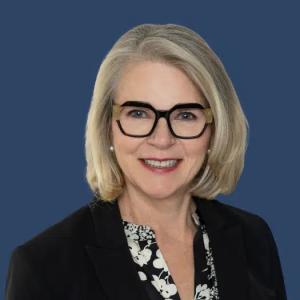 A nationally recognized leader in public policy, Margaret Spellings serves as President and CEO of the Bipartisan Policy Center.
Spellings most recently served as President and CEO of Texas 2036, a bipartisan think tank. Her extensive leadership experience in state and federal government includes service as U.S. Secretary of Education, White House Chief Domestic Policy Advisor, Senior Policy Advisor to then-Governor George W. Bush, President of the George W. Bush Presidential Center, and President of the 17-institution University of North Carolina System.
- Listen to No More Sidewalks on Apple, Spotify, or wherever you like to get podcasts.
- Watch episodes on YouTube.
- Learn about other Brookings podcasts from the Brookings Podcast Network.
- Sign up for the podcasts newsletter for occasional updates on featured episodes and new shows.
- Send feedback email to [email protected].
Transcript
[music]
MCCLOSKEY: Welcome to No More Sidewalks, where we talk about parenting today. I’m Abby McClosky.
As a parent, public school used to be a reliable anchor. It was a place where you dropped your kids off at 8:00 a.m. and trusted they were learning the basics of reading, writing, and math. And as a nation, education has been one of the biggest public investments we’ve made in our children.
But schools aren’t working like they used to. For starters, millions of kids simply aren’t showing up. Nearly one in four kids are absent for at least 10% of the school year. There’s been a collapse in student achievement. According to the “Nation’s Report Card,” math scores for American 12th graders reached their lowest level on record last year, and reading scores have dropped to 1990s levels.
Much of the teaching and classwork has been outsourced to screens. There’s gun violence in schools now, and like so many other areas of our public life, schools feel filled with partisan controversy. We’re fighting about who can go into whose locker rooms and which library books are on the shelves.
How did the baseline promise of public education get off track, academically and otherwise? And how do parents navigate the school system?
[1:06]
With us to discuss all of this is the great Margaret Spellings. I really can’t think of anybody else in the country who’s better to discuss this. It’s the truth, because she served as secretary of education, a position few people can claim. She was president of the George W. Bush Presidential Center. And she currently serves as president of the Bipartisan Policy Center in Washington, where I’m also a fellow.
Margaret, welcome to the show.
SPELLINGS: Great to be here with you, Abby, my fellow Texan, and gosh, thanks for everything that you do to highlight these issues.
[1:34]
MCCLOSKEY: Well, right back at you. And I want to start with taking these issues into kind of a personal lens, which is if you were to send your child to public school right now in America, what are the chances that they would actually be reading, writing, and doing math at grade level?
SPELLINGS: Okay. Well, for starters, I want to have a little addendum to my bio, which is I was the first mother of school children to have the position of secretary of education.
MCCLOSKEY: That’s an excellent addendum.
SPELLINGS: An excellent addendum, and which says I was a little bit younger than my predecessors also because I had school-aged children, was young enough to.
And you know, it hasn’t been so long since I was a user of the system, if you will. And so to answer your question personally, well, I hope, and I’d like to think that my children would be reading on grade level, and certainly they went on to be successful college graduates, and one has a master’s and a law degree the other.
But I would be paying attention to the kind of curriculum. I would be paying attention to the kind of assessment, the accountability, the report card, but more than that, I’d hope to have a home full of books and literature, steeped in content.
Part of what’s implied in your in your commentary is that we send our kids to school, and we hope they do the best with the kids we send them. But really it’s a comprehensive job that also includes the home and family, reinforcing literacy and reinforcing and paying attention to the kind of things that are happening in schools.
[3:05]
MCCLOSKEY: Well, absolutely, but there is this really bizarre paradox in America right now. I think I’ve seen a survey that says upwards of 90% of parents believe that their child and the school is performing at grade level, and yet the data suggests, is it half of kids actually are?
SPELLINGS: About half.
MCCLOSKEY: So you’re trying to plug in, you’re looking at report cards, you’re looking at the syllabus that comes home, but for some reason, there’s this disconnect between how our kids are actually performing and kind of a parent sense of pride that, “Of course, my kid’s on track.” You know, most are.
What do you attribute that to? I mean, that feels, as a parent, that feels really concerning, and I’m not exactly sure how to have a better pulse on what’s actually going on in the classroom.
[3:49]
SPELLINGS: Well, I think, you know, sadly, we have to dig deeper than than what might be on the report card or the grade sheet, or the state-sponsored test, and and see with your own two eyes what’s happening. And you I’m sure are familiar with the podcast Sold a Story where, uh, people during COVID learned that their kids were not reading very well, and that they weren’t using research-based practices to teach literacy. And so it was a real wake-up call, and I think really focused a lot of parents around, “Hey, what the hell is going on in my child’s school?”
So, you know, attend to your state standards, yes. But how do the Texas standards or the South Carolina standards or the fill-in-the-blank standards compare to proficiency on our national education report card?
So, you know, there’s a lot of homework for parents these days to really fully understand what’s going on with your kid. And frankly, I would say that if 90% of the parents think their kids are doing well, but half are, you know, there’s a lot of work to do there.
[4:53]
MCCLOSKEY: Right. Well, yeah, and you know, we’ve experienced that. I’ve experienced that personally as a mother here in Texas where kids are coming home with good grades, they’re doing well on state tests, and yet, you know, people were not reading full books. Spelling has falling behind. Basic math is being taught different.
And as a parent it can make you feel pretty powerless up and against large districts and school systems and testing that most of us have no control over, except for those of us who write columns or those of us who run the agency in charge of it.
So I want to zoom out then, because at the macro level, we do know that these student achievement scores are going down. Now, when you look at our most kind of objective metric that goes across states nationwide, it is a fact that they’re going down, and I want to talk with you about what’s behind these declining scores. There’s a whole host of things that I could come up with just thinking about it for a few minutes. I’m sure you know even more than than I do, but let’s just kind of run through them.
So the first big one is absenteeism, and I say it’s a big one both in terms of its scale, but it also feels pretty new. I think it’s something that really spiked. It went up, like, 50% during COVID, and now we have this case where a quarter of kids for, you know, a decent chunk of the year are just not there.
[6:03]
SPELLINGS: So I think a couple of things are underneath that, and you’re right. I mean, it started during COVID. People got used to this hygiene of, “Well, you know, school’s not really necessary. We’ll learn online or we won’t.” And they got into some very bad habits. Families got into bad habits. And then coupled with some of the stuff we were just talking about, which is, “Well, what’s the point of going to school if my kid’s not gonna learn anything anyway?”
MCCLOSKEY: Right.
SPELLINGS: Or the culture wars rage, and I don’t really subscribe to some of the things that I believe or I know are being proffered at the school.
MCCLOSKEY: Right.
SPELLINGS: So I, I’ve gotta work three jobs. It’s not convenient. I can’t get them there. You know, just a whole stew of issues. And so I think that’s what’s happening there. And so part of it is there’s no value, it’s inconvenient, and I don’t really subscribe to what’s happening culturally in the schoolhouse.
[6:54]
MCCLOSKEY: And then obviously, you know, there was this dip in student performance during COVID, understandably so, and the absenteeism that has persisted afterwards. But as you know very well, the drop in student scores began before that. So as we kind of start digging backwards.
And there’s, you know, the introduction of screens in the classroom, which was exacerbated during COVID when people were handed out school-sponsored devices because they may or may not have ones at home, but had been slowly being rolled out either in the form of, like, phones in the backpack or why don’t we, you know, all just kind of work off a tablet for our homework and, and all of a sudden it seems like, let me look at the stat, 81% of elementary school teachers said that students receive school-sponsored devices for classroom use by kindergarten.
And do we know if kind of this amount of tech is supporting learning, or is this part of the reason for the declining scores too?
[7:46]
SPELLINGS: Well, it, of course, it’s part of it. I, I’m not sure it’s the biggest part, and that frankly just gives me an opportunity to plug federal research around education practice. You know, we we too often just wander in the wilderness about, well, what are the facts? How do we parse those things? How do we fully understand why kids aren’t showing up? What is the effect of screens and so forth?
And, you know, we can’t expect individual school districts or even states to mount a fulsome gold standard research effort. That is what has long been a a big part of the federal government’s role and why I believe, and we’ll get into this, that we do need that federal role in in education. So yes, screens have to be part of it, or that’s a good thesis, I think. We don’t really know to what extent.
You know, when I hear things like that, kindergartners, I mean, is that a Leapfrog? How do we define technology and screen? You know, your child is probably in front of a TV before kindergarten, and that’s a screen. Sesame Street, whatever. So I, I don’t know, I really, I want to understand kind of what’s underneath that. But, you know, it’s, it’s a stew of things.
I would say that the biggest issue is we took our foot off the gas on accountability and on expectations. Whether you love it or hate it, No Child Left Behind said, We care about reading and math. We’re asking the states to develop assessments around their own standards, not a national set of standards, and test every year in grades 3 through 8 and one single time in high school. And that we would disaggregate this information.
That means understand our Hispanic kids versus our African American kids versus Anglo girls, boys, and so forth. And we’d really understand what the hell was going on. And we would require people to get to their definition of grade level expectations to be determined by states.
And we were on that trajectory for a good while, and then we stopped doing that. And boom! And so that was the beginning of the end. Yes, other factors: COVID, screens, absenteeism, et cetera, mental health, all the logs you want to put on the fire. But we’ve stopped caring enough to find out and do anything about it.
[9:58]
MCCLOSKEY: Well, I don’t know if you love the title, the “Testing Queen,” but in my mind, I think of you as testing royalty. And, I want to dig into that with you on two accounts. The the second is just kind of the timing of that, why we took our foot off the gas and and all that.
But again, taking off my researcher hat and putting on my parent hat and having kids in public schools, it feels like now, and it was the case the few years my kids were in public school here in Texas, that there were so many tests, Margaret. There were tests, there was preparation tests for tests. The whole curriculum felt like it was around tests.
All of a sudden we weren’t doing things like handwriting and spelling and reading whole books. Everything, it felt like it was oriented around teaching to this test, and as we raised earlier, it’s like, what are the tests even actually measuring?
[10:44]
SPELLINGS: And you know what we call that, Abby?
MCCLOSKEY: What? Is it?
SPELLINGS: We call that local control because the federal law says one time a year, reading and math, grades 3 through 8, the end.
Now, you know, I am the Testing Queen. I’m a, you know, what gets measured gets done, you gotta care enough to find out. What’s the alternative to caring enough to find out? But adults in the system kind of went crazy around that. And so because the the so-called high-stakes accountability — high stakes for who, I wonder? What are the stakes for a kid who can’t read or get a job? That’s pretty high stakes to me.
But anyway, I think that that speaks to adult behavior more than it does to the federal law.
[11:28]
MCCLOSKEY: So you’re saying that kind of the layered effect of the testing that we would’ve experienced or our friends experienced is kind of local, district, city, state. And that across, you know, if if you were keeping one test, you’d advocate for keeping the federal test because that’s a consistent standard across tests?
[11:45]
SPELLINGS: Well, the the federal requirement is is for a singular test in two subjects over a grade span. That is the federal requirement. Now, do I believe that science ought to be assessed and all those sorts of things? Sure, sure. Of course I do.
But I I think adults at the local level have kind of gone a little bit crazy. And frankly, and this has been the political, we talk about why did these things on the retrenchment. Well, the politics got bad because conservatives were concerned about, first of all, resources going to schools that were not their schools, and unions and and others on the left, administrators and so forth, didn’t like accountability for the adults.
And so we kind of got into a political situation where there wasn’t leadership around the premise here, which is we gotta care, we gotta measure, and we gotta focus on two subjects in particular.
[12:38]
MCCLOSKEY: And when you’re talking about then earlier about taking the foot off the gas, it’s less that anything actually changed with the national testing, it’s that what happened next if schools weren’t measuring up to testing?
[12:48]
SPELLINGS: The consequences, yeah. The consequences.
And and frankly, a lot of what I call the fine print around what was good enough. So in Texas, for example, you know, the definition of the school year might have been the school year starts on, you know, November 1 and ends on, you know, March 1.
Well, that exempts out a bunch of students who are migrating with their families around the country for agricultural reasons or whatever. The definition of the the sample size. I mean, how many kids have to count before you count them for that group for an accountability system? So in small rural schools, if there’s eight kids, not 15, you know. So the details matter in this stuff. It’s complicated.
[13:30]
MCCLOSKEY: Yeah. And moving a bit away from then the the testing, what about this role of curriculum? I feel like in the ‘90s there was this push away from phonics. I’ve experienced it with my own kids with math and kind of new fancy ways to teach math that are moving away from the memorization tables I remember doing.
And so, it feels like the curriculum has gotten more fancy, I don’t know that that’s also kind of changed, and what’s your sense of that? Is that just anecdotal or is that contributing to this?
[13:57]
SPELLINGS: No, I think it’s, I think there’s a lot of truth in that, and I think, you know, again, the National Reading Panel that was actually created in the Clinton administration and then was part of No Child Left Behind, where the brain scientist helped us settle once and for all the reading wars, and it said that phonics, phonemic awareness, print awareness, now we call it the science of reading. Now it’s back in vogue. God bless America. Thank you.
But it was, it was decisive. It informed the pieces of No Child Left Behind that were focused on around reading. But then it became political, and we, you know, went the other direction. And there’s a whole apparatus around whole language and, you know, teacher colleges and so forth. So we lost track of the of the narrative and went down, and now it, it’s ascended again, so that’s good.
The same thing is happening in math. You know, gosh, and like you, I mean, I can barely even understand what are they talking about. And whether it’s math or reading, we know for sure that kids have to have facility and ease of use. You know, if you’re struggling to sound something out and it’s a labor to learn to read, you’re not gonna read books for joy. Of course you’re not. If you can’t have facility, fast factual accuracy that you get from practice, like you’d get from flashcards, you’re not gonna love science and physics because it’s too laborious to get to the starting line.
So we’ve lost a little bit of the, of the thread.
[15:33]
MCCLOSKEY: Interesting. At right at the starting line. And then the last kind of in this series of questions I have to ask you about is money, because we’re spending near, if not at, the highest amount per pupil that we’ve ever spent. Like, we spend more, is my understanding, than other countries do, et cetera, et cetera.
And yet, like, it feels hard to think about how to address any of these things without more money. So just how does money go into this equation of falling student achievement scores, or does it?
[16:01]
SPELLINGS: Well, you know, this is a heavy, labor-intensive enterprise with most of the money going to teachers and administrators that are paid salaries. Are they paid enough? Probably not. And so, you know, the the cost of doing business is informed by the cost of living and, you know, attracting people into the teaching profession.
We did some work here at the BPC that was really interesting, some polling with teachers that, you know, the number one thing for them was, yes, pay. They want to be able to support their families. Who doesn’t? But it was also about the conditions in classroom. It was about the need to work multiple jobs, often out of their field. You know, if you’re driving an Uber at night, are you gonna be a an excellent teacher the following morning? Probably not.
And so, you know, how do we really support teachers with research-based instruction, help them be more effective on the job, giving the kind of wage that doesn’t require them to work multiple jobs? A lot of those are in the summer. That’s fine. Some of those summer jobs are connected to education and tutoring or summer camps or whatnot. That’s additive.
But, you know, to really understand how teachers contribute, because the research tells us emphatically, a great teacher makes all the difference.
[17:20]
MCCLOSKEY: So, and I agree with that, just pushing a little bit. Teacher pay, in my understanding, and this might be wrong, has not gone down over the period that student achievement scores have gone down. And so is it the case that for them to go up—and it’s just, it’s better for everybody, obviously, if teachers are well-paid and have benefits like paid leave and have some sort of, like, reliable structure they can depend on. But to me, at face value, it doesn’t necessarily seem linked to the change we’ve seen in student achievement.
[17:57]
SPELLINGS: Yeah. No, absolutely. And so, I mean, one of the things that we don’t do very well in education is pay our best people, our most effective people to do the hardest work. And so it’s a one-size-fits-all, often kind of a step schedule. If you have a lot of experience and, you know, you work at Cream Puff High, you as a teacher, and our union contracts, often inform this, senior teachers get to pick where they work.
Do you want to work in the most challenging education environment that’s poorly resourced with big absentee problems? No, you do not. So who is in those schools are are brand new, less experienced, you know, et cetera, et cetera.
And so we’ve got, we’ve got to pay our best people to do the hardest work, and we don’t for a lot of reasons.
[18:44]
MCCLOSKEY: Interesting. Interesting. Yeah, that’s fascinating.
Switching gears to some of the culture war and curriculum stuff, okay, which feels kind of ick. But the culture wars feel like they’re everywhere today, including in our schools. And in some ways, all cultural pressures have shown up in schools for a long time, like thinking back to prayer in school, or mandatory kindergarten, or school busing, or all these different things.
And yet, you know, when I’m talking to friends my age of school-aged children, it is largely the cultural stuff that will come up in conversation as kind of the rub. It won’t be academics, maybe because we don’t actually really know how the kids are doing academically. It seems to hold, and I just, I don’t know, is it an outsized place in the mind of parents? Is it just getting promoted more, and it’s noise and social media, and everyone kind of wants there to be another battleground?
Or is this a new feature of what a shared system like public education looks like in a country that’s increasingly politically polarized? How do you, how do you think about the culture and stuff?
[19:50]
SPELLINGS: Yeah, I, I mean, I think the the way you phrased it at the end there is, you know, it is a mirror of what’s going on in the world. And so, hard to think that our schools would be a little haven insulated from the world around it. It’s not going to be.
But what I would say as, you know, we we have to keep the main thing the main thing. And whether kids are reading the Bible or reading, you know, fill-in-the-blank controversial book, what we need our kids to do is read. You know? And obviously there’s lots of grist for the mill in there, and that’s why people go to school board meetings and talk about reading lists, and that gets litigated.
But we have to make sure that, you know, the the actual ability of our kids are not lost in the culture wars. And so well, that takes leadership, it takes common sense, it takes activism. But, you know, I I do think it’s a reflection of what’s going on in the world around us.
And I also think that it’s often a red herring, a kind of a watch the birdie. Let’s talk about who’s in the bathroom. Let’s talk about, you know, what’s going on on the band, in the band uniform or at, you know, whatever, as opposed to how are the kids doing on these basic things that are gonna predict the future of our country and our economy.
[21:04]
MCCLOSKEY: Right. Yeah, I would love to get it back to to that. And before we get into policy solutions, we’ve talked about what’s changed leading up to this point, and I know you and BPC have done a considerable amount of thought and work on this next swing that feels like it’s coming with AI, which is going to fundamentally change education. We we know it is. It feels like in ways bigger than who’s writing the essay and passing it off as their own versus a AI plagiarizing.
It feels feels like that is only the beginning of kind of the impact that something like artificial intelligence is gonna have on education. And I’m just curious your thoughts on that as we all kind of walk blindly into the future a bit on it.
[21:47]
SPELLINGS: Yeah. And so I think, you, you know, what what do we know for sure that is unlikely to change? I think it will be unlikely that we want to be a human race that can’t read and cipher and compute successfully. Can we agree on that? I think we can.
MCCLOSKEY: I don’t know. People aren’t reading anymore, though. Like people don’t—
SPELLINGS: Well, but do we, but do we agree that you can’t be a a participant in any world without a level of knowledge and literacy? That it starts with numero uno.
MCCLOSKEY: Yeah.
SPELLINGS: And so, there’s a little bit of a back to basics thing here. Yes, those things are gonna change things dramatically. You know, what what do we need to do for sure? Read and be able to compute. And those are still foundational skills. Problem-solving, the ability to write. I mean, we’re already seeing things out of the research that AI greatly impedes your ability to write.
MCCLOSKEY: And think.
SPELLINGS: You know, if you rely on it too much, it impacts your brain and whatnot.
And now I’m back to my call for more federal research around these things. We gotta understand it as we go. Or we’re going to just accidentally walk into things. I mean, these days, there’s a lot of litigation around the responsibility of social media and tech companies to what is happening to our kids. You know, we need research.
[23:03]
MCCLOSKEY: Well, there are a number of challenges with public schools, as we have talked about, and there are not enough solutions discussed. So I want to run through some options with the woman who’s best to run through education reform options with.
So, we covered a bit of how we can better support teachers, but are there other things on that front you want to add before we go on to the Department of Education and a whole host of other potential reforms?
[23:26]
SPELLINGS: We we need to make sure that our teachers are equipped with the best research, the best science, the most effective practice, and help them be as skilled and as effective with the students that they’re seeing in their classrooms every day, and we need to arm them with that as much as possible.
And one of the things that I despair about, we have not done a very good job of having our teacher colleges embrace what we know for sure about how teachers can be effective. Therefore, school districts and states often have to retool and reinvent kind of the raw product of a student coming out of college with a baccalaureate degree and a teaching certificate that isn’t fully armed with the best that we know and that’s most effective for kids.
So teachers colleges. And and further, we need to make sure that we’re relying on, I think about half the states now have requirements to use the science of reading, what we know about how to teach little kids to read, and half do not.
MCCLOSKEY: Wow. Yeah.
SPELLINGS: So let’s proliferate what we know, works for kids.
[24:31]
MCCLOSKEY: Yeah. Which gets us to the point, I know near and dear to your heart, on the role of the Department of Education, which has been the center of a lot of controversy in this term of the Trump administration about, you know, why do we need it at all? From data to resources to a whole host of of things, what role does the Department of Education play when we think about reshaping public education in a more productive way in America?
[24:58]
SPELLINGS: Okay. Well, can I first say that having, you know, run the place for four years, I would never assert that it or any other federal agency does not need to be improved, more mission-focused, and play a leadership role in things that only the federal government can do.
Look, we know that 90 cents on the dollar comes from states and localities in K-12. That’s less true in post-secondary education. But, you know, who has the gold makes the rules, all of that, I get that.
But there are some unique things that only a federal government can do. The whole reason we have a federal Department of Education is because it came out of the Civil Rights era, that we believed, and I hope and I think we still do, that every American, irrespective of zip code or locality, should have the tools to access the American dream, and that starts with education.
So a civil rights opportunity, whatever you want to call it, kind of agenda, and the research and practice and tools, the data that can bring that to bear more broadly is a central part of the Department of Education.
The Department of Education is also a gigantic bank. So, Pell Grants, student loans, all those sorts of things are a big part of the remit.
And so we have to decide, do we think that, you know, federal financial support for post-secondary education is worthy or not? But those are the big, big functions of the U.S. Department of Education.
[26:24]
MCCLOSKEY: And what about classroom screen bans? I know you research it more on the federal level, but based on what we know we have multiple states now kind of introducing bills to ban tablets for elementary school kids or to audit the educational software for addictive algorithms and student data. You know, if you were kind of given carte blanche to kind of do what you want. So would you have some sort of screen ban or do we not know enough yet?
SPELLINGS: If I were on a school board or in a state legislature, yes, and I think what what we know is that technology and those sorts of things should largely be in the hands of adults. How we use screens in schools should be guided by adults. And, and should be delayed in large part as long as possible. So we don’t need, you know, elementary school children reading on on iPhones. So how do we think about the role of the teacher, the role of the adult, and the guardrails around that? And it’s gonna require a research agenda that we don’t have now because we’re kind of making it up as we go.
[27:24]
MCCLOSKEY: Right. Speaking of not making it up as we go, I think one of the stars in education reform has been the state of Mississippi and what they’ve been able to do to their reading levels and really honing in on third grade literacy. But part of that program is holding kids back if they’re unable to read. Do you think that should be replicated across other states?
[27:44]
SPELLINGS: You know, we had that in Texas for a good while, and then it got corrupted for a variety of reasons because, again, back to the fine print, there were interventions that could cause kids to advance. And so I I think, in places that did it and tried it, it’s it’s had mixed results. I mean, God bless Mississippi if it’s working for them. We call that local control. You know?
MCCLOSKEY: Yeah. kind of keep going.
SPELLINGS: Yeah, keep going.
[28:13]
MCCLOSKEY: Okay. And two more in kind of this round, so to speak, is school choice. You know, I’ve spent my whole public career kind of on the center right side of the aisle. It feels like saying school choice has been the answer to any problem in our education system.
And yet, at this point, I think we have the highest level of school choice that we’ve had and we’re still seeing scores slip and all this. How do you think of school choice and in places like Texas, right, that’s playing out in having public money go to students who go to private education, but not all schools are accepting the vouchers, and it’s kind of entered this whole new era.
And again, it feels really controversial, all this. You know, maybe it’s always been, but I would just be curious your thought about how does the school choice, the public vouchers for private school, how does all of this fit into the landscape of the main thing about how do we improve student achievement scores at school?
[29:03]
SPELLINGS: It’s a really fascinating time and and, you know, in states like Texas and North Carolina where there has just been massive proliferation and yet, you know, you gotta cut the pattern to fit the cloth. So there’s sort of raised expectations that there’s gonna be a lot of choice and a lot of opportunity, but, you know, there’s not unlimited resources, so a lot of people who thought they were gonna be able to access choice dollars maybe aren’t or can’t get a match to go to the place they want to go, and so on and so on.
Okay. So there’s just a lot of mechanics that are involved in making for a successful choice program. I’m an advocate for choice, but I I worry that there’ll be a, “We tried that, it didn’t work,” because some of the design of the of the thing was not, you know, well enough reasoned.
Furthermore, if we’re gonna spend public money in service to and it resolved on public education, let’s find out how we’re doing. And I’ve worried that some of these big programs at scale don’t have the kind of accountability, so we’re gonna, you know, send the money out and hope for the best, and maybe it’ll work and maybe it won’t, but we won’t know.
And then thirdly, I do think, especially in a place like Texas, you know, Friday Night Lights Texas, what does it mean when we don’t have the kind of cohesion that for good or ill we often have around the schoolhouse, whether it’s sports or athletics or the fall festival or the you name it, that everybody is out getting their own experience however they can. So, you know, there might be something pretty significant lost in the shuffle, I fear. So, you know, time will tell. We’re doing a big experiment.
And then the last thing I would say is I fear and I worry that what is begetting a lot of this energy is some of the cynicism and frustration that we talked about in the early part of this program. “What the hell’s going on up there? I’m not for it. It doesn’t work very well. My kid can’t read. It’s not worth showing up for,” et cetera, et cetera. And so has that been part of this momentum around choice? Seems like.
MCCLOSKEY: Right. I mean, I guess for good and for ill, I mean, it seems—
SPELLINGS: —yeah—
MCCLOSKEY: —it provides energy to change things, but like you’re saying if there’s not actual accountability for— I mean, you can have change, but change in and of itself isn’t always—
SPELLINGS: —Right—
MCCLOSKEY: —good, right?—
SPELLINGS: Exactly. Exactly.
MCCLOSKEY: —know if it’s working …
[31:17]
SPELLINGS: And one more thing, Abby, just to add on that. You know, there’s a proliferation of knowledge that doesn’t have to come in a school. You know, you and I are exchanging knowledge now. I mean, this is part of the promise of technology and AI, and I mean, I think we’re seeing a a redistribution of of learning in K-12 and post-secondary education that … I mean, you can get a Harvard education online.
So how do we kind of think about value? What are the things that that are needed in an in-person or cohesive, collegial kind of community place as opposed to knowledge that, you know, you can get right here?
MCCLOSKEY: Right. Well, yeah, and if I hear you right, it sounds like there is some foundational knowledge … how to write, how to do math that that happens best among young kids in an embodied form with teachers who care and are cared for themselves in a community where there’s, like you’re saying, involved families, and this isn’t just seen as kind of a delegation project into a black box, and then frustration that you don’t understand the black box when you’ve delegated—
SPELLINGS: —right—
MCCLOSKEY: —to begin with.
SPELLINGS: Exactly, and with their peers. I mean, you know, with, with your I mean, do you want your kids just home alone in their rooms learning? No, of course not.
MCCLOSKEY: No, with a screen. Yeah. Hard pass..
SPELLINGS: Hell no. Hell no.
MCCLOSKEY: Right.
SPELLINGS: So, it’s a fascinating time to be in this business. It’s a a gigantic shift, but I hope we don’t leave the value of American public education on the cutting room floor because of all these factors that are coming into play at the same time.
[32:53]
MCCLOSKEY: Yeah. What would it look like to you for American education to be on the cutting room floor? Like, what do you fear could happen?
[33:03]
SPELLINGS: I fear that this idea of education as a route to opportunity for everyone, that kind of civil rights aspect, and that this idea that when you go to a public place free to you, and are required to go to, by the way, that that can set you up for success as an American and in our economy. And we have to continue to work to make that true.
And second order, but it, you know, pretty important is that that place, that experience, that collective, that collegiality, whether it’s support for athletics, whether it is saying the Pledge of Allegiance, whether it is where you go to celebrate success as a community, whatever, that those things happen in in our schools and on our athletic fields and in our communities that are close to us, that you drive by every day. And so that is what we need to treasure and make because it’s a big part of our, our country and its greatness.
[34:07]
MCCLOSKEY: Right. But what about the generation of people who we’ve, for example, encouraged to go to college, and you still have a much better economic outcomes if you go to college, and yet a whole funnel of people have gone through and now hold jobs that you don’t need a college degree for or are out of the labor force.
Again, who I, if I put on my cynical hat, could say like, We’ve seen that story of you have to do this to get that and the American dream, and look, we’ve done it, and we’re still on the same rung of the ladder we were to begin with. How do you push back against kind of an earned skepticism in some ways, or at least seeing it play out in other areas and assuming then that’s also the case for K through 12 and so I’m not gonna ride my kid to go or whatever.
[34:44]
SPELLINGS: Yeah. I I will say this, you know, for good or ill, man, we have reformed and re-reformed and, you know, we continue to talk about improvements in K-12 education, you know, and have, gosh, since the mid-’80s that I’ve been party to, you know, the Nation at Risk and beyond.
But in post-secondary education, they’ve always had, and up till, you know, pretty recent days, kind of a “send us the money and leave us alone.” And so the the disruption that is happening there is overdue, probably in no small part is deserved, I mean, and and expensive.
I mean, people are asking the right questions, and I don’t want to be an I-told-you-so, but a big part of my tenure as the Secretary of Education, we can have another show, was the creation of this Commission on the Future of Higher Education, which became the Spellings Commission, that was all about what’s going on up there? What about price? What about accountability? All these sorts of things that are now coming home to roost, so.
MCCLOSKEY: Interesting. Interesting.
SPELLINGS: Yeah.
MCCLOSKEY: And, I want to just close with what advice you’d have for parents with kids in school and what structural kind of change you would make, what sidewalk you would lay to make schools function better for kids.
But just before we get to those, just really quick to, on that thread of accountability in higher education, and, I think K through 12 has had more accountability, but right now, we don’t exactly know. We have these tests, NAEP, but are they around graduation level? Do we know kind of when kids are leaving the K through 12 system where they’re at, like how they, how they are performing academically, and of course, a lot of kids don’t even finish at all.
SPELLINGS: Well, here’s some good news.
MCCLOSKEY: Can you just speak to that? Yeah.
[36:22]
SPELLINGS: Yeah, here’s some good news. You know, the the NAEP test is not a test that can be taught to, killed and drilled for, and so forth, and you know that. It’s our national report card, grades 4 through 8, multiple subjects. There’s a movement, and the Department of Education is leading, a 12th grade NAEP effort, and states, and I hope Texas will join in, have until early next year, year-end, this year, coming up in the next few months, to raise their hands and say, “We want to participate in 12th grade NAEP.”
So far, my understanding is, and they haven’t named them, but five states have have elected to participate in 12th grade NAEP. That will tell us a whole lot.
MCCLOSKEY: Good.
SPELLINGS: And so that’s my call to policymakers. My call to parents is, with respect to your own child and to the community and your school district broadly, we need to raise our expectations for our young people, period, the end. We are letting our kids off the hook. They are up to these challenges, and they deserve for us to, you know, call them to high standards and do the work and be relentless about it.
MCCLOSKEY: That’s why you’re the testing queen. Margaret Spellings, thank you so much for chatting with me today.
SPELLINGS: Thanks, Abby.
MCCLOSKEY: Always a pleasure.
[music]
I’m Abby McCloskey from the Brookings Institution, and this is No More Sidewalks: Parenting Today. This podcast is produced by the Brookings Podcast Network and the Center for Economic Security and Opportunity at Brookings.
Thanks to the production team, including Ike Blake, supervising producer, Fred Dews, producer, and Daniel Morales and Teddy Wansink, video editors, and Chris Chang, audio editor.
Plus, thanks to Tara Watson, director of the Center for Economic Security and Opportunity, Stephanie Holzbauer and Tyler Hernandez for their support. Daniel Morales also designed the show artwork. You can find all episodes of No More Sidewalks wherever you get your podcasts and on the Brookings website.
And finally, find research on family policy and economic security at Brookings dot edu slash CESO.
Thanks for listening.
The Brookings Institution is committed to quality, independence, and impact.
We are supported by a diverse array of funders. In line with our values and policies, each Brookings publication represents the sole views of its author(s).



Commentary
PodcastNavigating curriculum and culture wars: What happened to public school?
Listen on
No More Sidewalks: Parenting Today
September 17, 2026