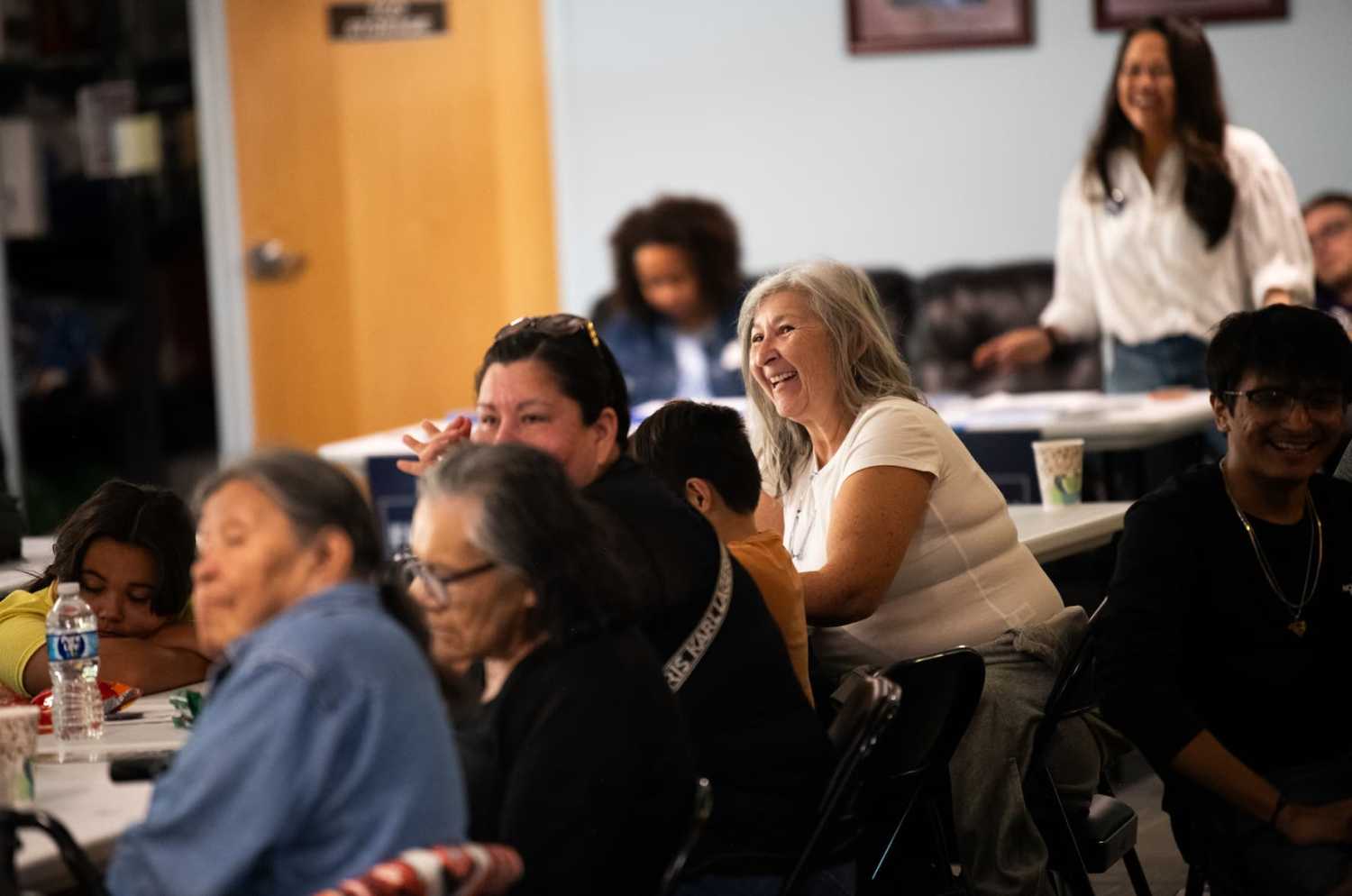
November is Native American Heritage Month, an ideal time to reflect on the Native American electorate’s contributions to the 2026 midterm elections and the accomplishments of candidates from this important yet often overlooked community. The number of Native candidates reached an all-time high in the midterms, with a record 363 running nationwide and 92 state legislative candidates winning their primaries. Among them, Native American women made historic wins in Tribal, state, and federal elections. In New Mexico, voters elected the nation’s first Native American female governor, former Interior Secretary Deb Haaland (Laguna Pueblo), and in Minnesota, Peggy Flanagan (White Earth Nation) became the first Native woman elected to the U.S. Senate. And former Rep. Mary Peltola (D-Alaska), a Yup’ik woman, most recently became the first Alaska Native elected to the Senate. This is in addition to the impact of the Native American vote across several House and Senate races, including in Arizona, Alaska, New Mexico, Maine, Michigan, and Minnesota.
Despite these historic victories, it is telling that there is little to no discussion about how Native Americans voted in this critical election, which resulted in a major shift in the federal balance of power. This is unfortunately not new in American politics. In fact, Native American voters are often completely overlooked in national political discussions, or worse, have their stories told inaccurately through flawed data.
Surveying Native American communities
The 2026 Midterm Election Voter Poll, conducted by the African American Research Collaborative (AARC) and BSP Research, addresses this issue by drawing from a nationally representative sample of Native American and Alaska Native voters (n=1,387, +/- 2.6%) so that their perspectives are part of the midterm conversation. This oversample, supported by First Nations Development Institute and Advance Native Political Leadership, was designed to be representative of the Native American electorate nationally. Here, we summarize the poll’s main findings.
These data enable comparisons of voting behavior with other racial and ethnic groups, as well as variation within the Native American population by factors such as whether respondents live on or near reservations and whether Tribal languages are spoken in their home, along with standard demographics like age and gender. For example, 27% of respondents reported speaking Tribal languages at home, and 43% live on or near their Tribal lands or Alaska Native village. The survey also excluded individuals with only a distant ancestral tie to Native communities. The poll’s authors support standardizing this practice, as collecting and publishing key demographics on Native American respondents produces more dependable and representative data. Far too often, other national polls do not employ similar efforts to ensure their samples include individuals who not only self-identify as Native American but also have meaningful connections to Tribal Nations and Native communities, including through ancestry, Tribal citizenship, enrollment, affiliation, or cultural ties.
Native voters favored Democrats over Trump and the GOP
Native American voters were more likely to vote for a Democrat in congressional races across the country, with 57% indicating they voted for a Democratic candidate for Congress compared to 41% who supported Republican candidates. Another 2% cast their ballots for a candidate from a different party. This is marginally higher than in 2022, when 56% of Native Americans reported voting for a Democrat compared to 40% for Republican candidates, according to the 2022 Midterm Election Voter Poll. This relative stability is consistent with the limited literature on Native American voting behavior, which suggests that Native American voters weigh candidates’ positions on issues affecting their Tribal Nations and Native communities alongside partisan affiliation.
One of the major themes of the post-election analysis has been the apparent losses for Trump and Republicans among voters of color. Thirteen percent of Native American voters who backed Trump in 2024 voted Democratic in the 2026 midterm elections. Part of these losses could be due to a belief that Republicans are hostile toward Native communities. In fact, when asked directly, 24% of Native Americans said the GOP is hostile to Native Americans, compared to 9% who felt that Democrats are hostile toward their community.
Age and gender emerged as key factors shaping party preference, with the clearest differences appearing in younger voters. Among voters ages 18 to 39, Native women were more likely to support Democratic candidates than Native men (62% vs. 46%). This difference extends to perceptions of care toward Native American communities, with men under 40 being 15 points more likely than women in the same age group to report that the GOP “cares a great deal” about Native American communities. Similarly, when asked which party is better equipped to address their most important policy issue, Native men under 40 name4d the GOP more than Native women of the same age (41% vs. 27%). These results speak to the need for a better understanding of partisan alignment in Indian Country and could have implications for the 2028 elections as younger generations become a larger share of the Native American electorate.
Tribal priorities and economic concerns drove Native voters
As noted above, the literature suggests this community is motivated by policy priorities in addition to partisanship. A strength of this survey is that it provides more policy context than the standard federal policy priorities (such as the economy and inflation) common in most exit polls. When asked what the most important issues are for Native American communities, respondents named Tribal land rights (28%), missing and murdered Indigenous people (26%), Tribal sovereignty (26%), and water rights (22%).
It was clear in the 2026 midterm election poll that a candidate’s position on Tribal sovereignty mattered to Native American voters regardless of political party, as seen in Figure 1. Nearly 9 in 10 (89%) Native American respondents said that they considered Tribal sovereignty, treaty rights, and related issues when deciding candidate to support, 11 points higher than in the 2024 American Electorate Poll. This was also evident across parties, with 92% of Native American Democrats, 85% of independents, and 90% of Republicans considering Tribal sovereignty in their candidate choice.
Respondents were also asked to identify the most important issues Congress and the president should address. The economy, including the cost of living, jobs, and health care costs, was a top concern for Native American voters, similar to the electorate overall. Cost of living and inflation ranked highest (55%), with respondents particularly concerned about food (57%), housing (41%), gas (38%), and utilities (37%). Other leading priorities included jobs and the broader economy (34%), health care costs (31%), housing affordability (30%), and gas prices (29%). When asked which party would best address their top concerns, 45% selected Democrats, compared with 31% who selected Republicans.
These priorities reflect the severe economic inequalities facing Native Americans, especially in recent years as the nation has experienced tremendous financial strain and many federal program cuts. This likely shaped policy preferences, as nearly 2 in 3 Native American voters said raising the minimum wage to $25 an hour as one of the most important or a very important issue in their candidate choice.
Outreach fell short and barriers persisted for Native voters in 2026
In closing, we draw on the survey data to show that there is significant room to improve how we engage Native American communities in federal elections, including by addressing the many barriers facing those who are already trying to vote.
Native voters were among the least contacted in 2026, a consistent trend across elections. The 2026 poll indicates that Native Americans were the least contacted racial/ethnic group in the sample, with half (49%) saying no one contacted them to vote. This is a strong reminder that despite the investment by presidential candidates in 2024 in outreach to Native American voters, there remains a tremendous need for sustained, culturally responsive civic engagement that reflects the distinct circumstances of Native communities.
Among Native American voters contacted about registering or voting in 2026, Democratic outreach slightly exceeded Republican outreach (47% vs. 44%). Respondents also reported contact from nonpartisan or civic organizations (21%), Native or community organizations (18%), and ballot initiative campaigns (15%).
Another far too common experience for Native Americans seeking to voice their opinions in federal elections is encountering obstacles when voting. More than one-third of Native American voters (37%) encountered at least one barrier when voting, including long lines, long drives, voting machines not working, and harassment outside the ballot drop-off area. Obstacles were more common among respondents who live in Tribal areas or reservations, with 26% reporting long waits in line and 11% having to drive a long way to reach their ballot box.
These obstacles are also reflected in broader concerns about voting access, as more than half (57%) of Native American voters were worried that voting rights were under attack and that the current environment was making it harder for people to vote and participate in democracy. That worry shapes policy preferences, with 77% of Native American voters backing a new voting rights act to eliminate these hurdles.
Native American organizations, along with others, are advocating for a new voting rights act that addresses the unique barriers Native Americans face when voting. Native-led organizations are already doing important work to strengthen Native civic partnership and representation. Across the country, these organizations are registering and engaging Native voters; challenging barriers to equal access through litigation that protects Native voting rights and advances fair maps; and preparing Native leaders to organize for change and serve in elected office. Together, this work is building the infrastructure Native communities need to overcome barriers to full participation in our democracy and shape the decisions that affect their lives. Sustained support for Native-led civic engagement, research, and voting access efforts is essential to ensuring that Tribal Nations and Native communities can fully exercise their rights and have their perspectives represented in the decisions that affect them.
Related Content
Authors


-
Acknowledgements and disclosures
The survey data referenced herein was produced independently by a third-party firm, BSP Research, on behalf of the organizations who funded the election survey. Outside of his work at Brookings, Dr. Gabriel R. Sanchez serves as Director of Research for BSP Research which designed and implemented this survey.
The Brookings Institution is committed to quality, independence, and impact.
We are supported by a diverse array of funders. In line with our values and policies, each Brookings publication represents the sole views of its author(s).