Since the start of the second Trump administration in January 2025, Black Americans have been experiencing a jobs crisis. Rising unemployment rates and declining labor force participation over the past 19 months have led some economists to use the term “Black recession” to describe the employment landscape Black Americans face. This crisis is largely due to widespread public sector layoffs and dismissals, as well as private sector cutbacks in positions tied to reduced emphasis on diversity, equity, and inclusion (DEI) programming.
With democratic structures under threat of being dismantled, the importance of how they shape American institutions must be underscored. These structures are vital to creating pathways for individuals and families to access education, job opportunities, and healthcare. Given this emerging reality of democracy in America, a new culture of American politics focused on anti-DEI policies is on the rise and may contribute to a deeper economic divide. This new reality is informed by policies that are anti-inclusion and will uproot economic gains from previous decades and highlights the need for policies that will center the economic challenges that Black Americans and other communities of color experience.
As if this crisis wasn’t enough, another jobs crisis lies ahead for Black Americans and the working-class whose work is tied to international trade. Across the U.S., Black Americans make up nearly 14% of the population but own only a small share of businesses, just 3.3% of all firms and 2.3% of firms with employees. Many of these businesses are in sectors such as transportation and warehousing; healthcare and social assistance; waste management; educational services; professional, scientific, and technical services. These sectors and industries have seen substantial cuts in grant and contract funding. These issues can be policy priorities for Americans as they are areas where many people struggle with growing costs. Many of these businesses are also located in Southern cities such as Hinesville, Georgia; the Atlanta metro area; Fayetteville, North Carolina; Memphis, Tennessee; and the Washington, D.C.-Maryland-Virginia metro area. Are anti-DEI policies and ongoing trade disputes part of a new Southern strategy leading to deeper political disenfranchisement of Black voters and reducing economic vitality?
Over the course of the Trump presidency, trade policy has become one of its most significant reversals. After more than 90 years of policies that sought to engage the world and build alliances, this administration has proceeded to rewrite the rules by which it operates. By doing so, it threatens to destabilize agreements and international cooperation built over decades.
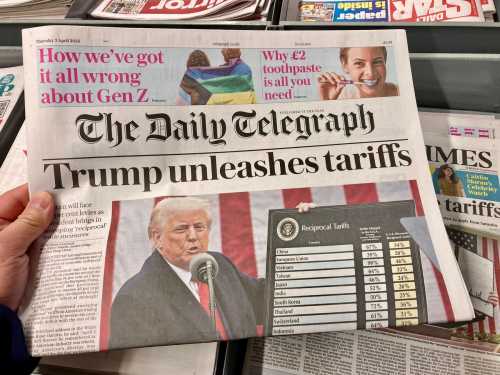
Instead of lowering tariffs and removing barriers to trade with other nations, as has been the standard since the New Deal, this administration has instead opted to levy new tariffs against other nations. In Trump’s first term, China was one of the main targets of these tariffs. Since 2025, however, the administration has issued broader tariffs aimed at other nations, like Brazil, China, and most recently, Canada—one of the United States’ largest and closest trading partners.
The Supreme Court has struck down some of these broad tariffs in Trump’s second term, but the U.S. government is planning to reinstate them under a new strategy, according to U.S. trade representative Jamieson Greer. In an interview this summer, Greer said the administration levied the widespread tariffs in 2025 and 2026 because it saw an “emergency” with trading partners that threatened to decimate American manufacturing. The “emergency” status also extends to Section 232 cases, which since 2025 the administration has filed at a faster rate than during most of the 64 years the president has had that authority.
The Trump administration’s approach may differ from that of its predecessors going back to Franklin D. Roosevelt. But its goals of stimulating economic growth through reshoring manufacturing are not much different from the overarching goals of presidents in the 92 years since Congress and FDR approved Cordell Hull’s Reciprocal Trade Agreements Act of 1934. As documented in “Fraying Fabric,” over the years, various administrations have sought to use trade to achieve broader domestic or international policy goals.
One of the shortcomings of presidential trade policies over the years has been their inability to address local needs with the same vigor or attention given to the overarching policy. This administration’s three-part approach to local economies and local communities disadvantages those who receive their incomes from labor versus wealth, such as gains in the stock market, which includes many Black families.
In this regard, the Trump administration’s goals are like that of its predecessors. In pursuing the goals of reshoring manufacturing and boosting domestic employment, the administration risks isolating the United States from trading partners by using tariffs as a cudgel to extract deals. This practice also can harm American workers employed in economic sectors that are closely tied to trade.
To illustrate this, Trump threatened to impose tariffs on automobiles imported from Canada, further escalating the strained relationship between the United States and its neighbor to the North. Earlier this year, the administration refused to automatically renew the U.S.-Mexico-Canada Agreement (USMCA) which further jeopardize auto manufacturing and the jobs it supports across all three countries, an industry that, in the U.S. alone, supports about 10.9 million jobs and roughly 5.4% of GDP, and in Canada generates more than 500,000 direct and indirect jobs, with intra-USMCA automotive trade valued at roughly $280 billion annually, a 38% increase since 2021. These moves threaten to irreparably damage or destroy an integrated market in automobile manufacturing, created by the U.S. and Canada through the Auto Pact of 1965 and expanded to include Mexico in 1994 as part of the North American Free Trade Agreement (NAFTA).
Is the distant goal of reshoring auto manufacturing worth disrupting a market of this size right now? U.S. manufacturing employment levels are now lower than both the pre-COVID-19 pandemic employment highs of December 2019 and the post-pandemic recovery highs between mid-2022 and late-2024. Between those high points, the U.S. economy lost more than one million manufacturing jobs between March and April 2020. Is the goal of reshoring manufacturing realistic if the means taken jeopardize the manufacturing base that currently exists?
Consumers, who have largely benefited from trade because of its propensity to lower prices, are also being forced to reckon with unpredictability over the new tariffs. Much of the ongoing discussion about affordability as the midterm elections approach arises from rising prices for food, clothing, and other consumer goods due to tariff unpredictability. Those prices, paired with stagnant wage growth, and other discontent toward the Trump administration, helps explain the volatile atmosphere in the weeks leading to November.
In addition, this new approach to trade could affect other economic sectors beyond manufacturing, in the process widening employment disparities that disproportionately affect Black workers. Earlier this year, the Joint Center for Political and Economic Studies reported that the Trump administration’s tariff increases in 2025 reduced imports by driving up prices, in the process curbing consumer demand. The center found those new tariffs also affected employment in transportation and retail, two domestic economic sectors with disproportionate numbers of Black workers.
The Joint Center report also noted that higher tariffs helped decrease international tourism, a development that has negative effects for the hospitality sector, which also has a largely Black workforce. Given the historic reality of Black unemployment outpacing the overall U.S. unemployment rate, the Trump administration’s trade policy of forcing concessions from trade partners can harm economic sectors with disproportionately Black workforces.
By comparison, the Biden administration, which continued some of the tariffs that Trump had imposed in his first term, also instituted policies that aimed at rebuilding older domestic economic sectors or expanding newer ones. Investments in electric vehicles, computer chips, and outlays for infrastructure as part of the Inflation Reduction Act, sought to put Americans to work in these sectors and open up opportunities outside sectors that were in danger of decline from international competition.
These shifts in trade policy may feel distant, especially to young voters and voters of color who are focused on surviving the present or building what they hope will be a productive and prosperous future. Yet it’s all the more reason to pay attention to how trade and other distant developments can affect their lives and livelihoods.
- Thanks to the downstream auto supplier market, a trade battle over car manufacturing in Canada can threaten jobs in communities across the United States, North America, and the world. Likewise, in the U.S., trade disputes could affect employment in auto manufacturing and in transportation, sectors where Black employment is disproportionately higher than the population, with ramifications for far-flung communities, disrupting their economies and destabilizing workers and families.
- Artificial intelligence is reducing employment in various sectors, automating lower-skilled jobs and augmenting the knowledge of workers in higher-skilled jobs. Here, too, it’s necessary to pay attention to trade, as trade policies affect the physical and digital tech infrastructure while data traveling across that infrastructure reshapes supply chains and trade efficiency. Whether preparing for a career, getting an education, or considering entrepreneurship, understanding trade and its potential to quickly reshape job markets, educational plans, or business plans is critical if they are to craft a successful path.
- In addition to being overrepresented in service and manufacturing industries, Black Americans face multiple forms of job erasures and replacements as noted above. Local and state policies may be the immediate remedy for economic stability in the wake of federal attacks on Black families and economic growth.
Tariffs are the latest wrinkle in an affordability crisis that has existed in the United States since the start of the 21st century. In the first decade of the century, the dot-com crash of 2001 and the Great Recession of 2007 to 2009 contributed to a “lost decade” marked by the first decennial decline in median household income since World War II. Since then, stagnating wages, the COVID-19 pandemic, and tariffs have contributed further to this crisis.
But states and localities are combating this latest round of the affordability crisis through new laws and regulatory changes:
- In 2026, nearly 90 jurisdictions and localities are scheduled to increase minimum wages through legislation, ballot initiatives, or scheduled cost-of-living adjustments, offering some assistance to millions of lower-wage workers.
- Other states and localities, now facing higher housing production costs as tariffs increase the price of building materials, have relaxed regulations to increase housing production or encourage high-density development. Across the South, state legislatures have introduced more than 100 bills to reform zoning and encourage housing development. These efforts join localities such as Seattle, Los Angeles, and Washington, D.C., which increased housing production earlier in the decade to respond to housing affordability issues caused by the pandemic.
Given the difficulties of the current moment, federal-level solutions to trade-induced job losses are unlikely anytime soon. Congress has let Trade Adjustment Assistance, the main federal program for trade-displaced workers, expire, and the Trump administration’s fiscal year 2027 budget proposes eliminating both Job Corps and the U.S. Economic Development Administration, programs that could help communities absorb job losses from higher tariffs and trade barriers.
Instead, workers will have to fight for solutions to a potential trade-induced job crisis. Some approaches include demanding that the federal government restore or protect its training and assistance programs and working to convince city, regional, and state leaders to create or expand economic security programs that directly benefit workers. Workers may also urge unions, employers, and foundations to support programs that build working-class economic security amid cuts to federal aid.
To spur reinvestment in communities, states and regions may need to create regional economic funds to attract new employers and train displaced workers. Public investments can be used (as they are in the case of a worker cooperative) to create new jobs in communities that have lost industrial employment.
Navigating trade changes in a world that is far more economically integrated than at any time in the past 80 years requires skill and diplomacy, rather than the bluntness of a tariff policy the Trump administration has undertaken. If Black workers are to endure this difficult moment, it will require constant vigilance of distant forces and developments that can affect jobs and livelihoods, along with advocacy at the state and local level that offers paths to economic security.
Related Content


Author

-
Acknowledgements and disclosures
James C. Benton is the author of “Fraying Fabric: How Trade Policy and Industrial Decline Transformed America” (University of Illinois Press, 2022).
The Brookings Institution is committed to quality, independence, and impact.
We are supported by a diverse array of funders. In line with our values and policies, each Brookings publication represents the sole views of its author(s).


Commentary
How Trump’s tariff policies have shifted economic opportunity for Black Americans
October 1, 2026