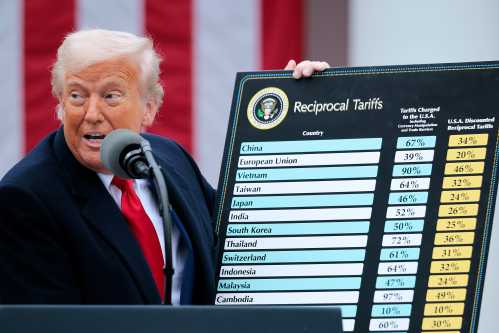
The second Trump administration has been marked by repeated attempts to dismantle diversity, equity, and inclusion (DEI) initiatives both within and outside the federal government. Since 2025, Secretary of Defense Pete Hegseth has blocked the promotions of Black and women officers selected for general ranks, and the Department of Defense purged content related to the contributions of diverse servicemembers. The number of Black federal workers fell by 30% during Trump’s first year in office, and a conservative organization created a public “DEI Watchlist” that lists the names, photographs, job titles, salaries, and alleged offenses of federal career workers in an effort to expose “the unelected career staff driving [DEI] initiatives within the federal government.” Records highlighting the contributions of diverse leaders and guidance around DEI efforts were scrubbed from various government webpages, and the president threatened to remove similar items in museums and parks. Republicans also took up efforts to redraw congressional maps and racially gerrymander voting districts in favor of the party’s candidates.
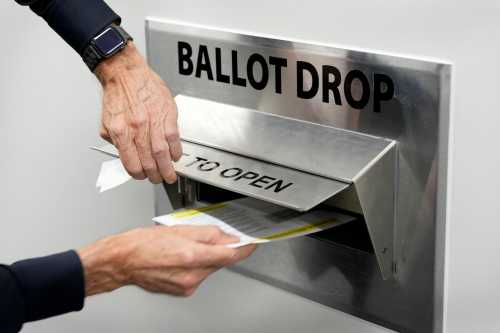
But the results of the midterm elections proved that voters rebuked many of these efforts and demonstrated that ultimately, they decide who represents them, regardless of the deliberate attacks on the integrity of American democracy. The results also reflect the changing diversity of voters prompted by the population growth of racial and other minorities.
Despite the flurry of activities from the Trump administration, which historians and civil rights groups have criticized as being guided by values like racism, xenophobia, and other troubling references in the Project 2025 mandate, the winning streak for Democrats at all levels of government led to some of the most historic and diverse groups of elected officials in U.S. history. Even efforts to racially gerrymander failed as 12 of the 15 districts redrawn to favor Republicans still became Democratic victories.
Rep. Hakeem Jeffries (D–N.Y.) will likely become the first Black speaker of the House, Chris Pappas’ win in New Hampshire will make him the first openly gay male senator, and Peggy Flanagan, Minnesota’s current lieutenant governor, became the first Native American woman elected to the U.S. Senate. Despite the barrage of racist attacks by his opponents in one of the most expensive races in the country, Abdul El-Sayed will represent Michigan and become the first Muslim senator.
State elections also led to several historic firsts, especially in gubernatorial races. In Georgia, Keisha Lance Bottoms, the former mayor of Atlanta, became the first Black woman elected governor of a U.S. state—just one of eight women elected to key Georgia roles, including secretary of state, attorney general, state school superintendent, and public service commission member.
David Crowley will become Wisconsin’s first Black governor despite being outspent by his opponents. Aaron Ford also was elected to become the first Black governor in Nevada, flipping power back to Democrats in the state. Latino leaders also had gubernatorial firsts, with Democrats Xavier Becerra in California and Gina Hinojosa in Texas both winning their governorships—the latter upending the GOP stronghold on a state that also experienced a wave of Democratic wins throughout the state legislature. Del. Stacey Plaskett (D-V.I.) became the first woman elected governor of the U.S. Virgin Islands.
New Mexico’s new governor, Deb Haaland, the former interior secretary and member of Laguna Pueblo, was elected the first female Native American governor. Amy Acton, who was the target of controversial campaign ads by her opponent, will become Ohio’s first female governor. The GOP also had a historic win with Republican Byron Donalds’ election as Florida’s first Black governor.
Other notable election results include Juliana Stratton’s election as the second Black woman to serve as a senator for Illinois after Carol Moseley Braun’s historic win in 1992. Maryland Gov. Wes Moore, the country’s only Black governor prior to Nov. 3, won reelection. Letitia James, New York’s attorney general, won her third term after becoming the first woman of color to hold statewide office in the state.
The Trump administration and Project 2025 set clear goals to eliminate DEI offices and roles, references to DEI throughout government, data collection on related initiatives, and constitutionally sound equity programs and services, including scholarships. Over the last two years, colleges, universities, and private companies have faced pressure to stop DEI programs and appointments.
Yet, despite these intentional acts to dismiss the power of diversity, the midterm results demonstrated that these goals are not necessarily shared by voters.
Underlying the backlash to DEI efforts are concerns that white populations are being displaced by minority populations. The U.S. population is growing more diverse, and recent data from the Pew Research Center shows that the U.S. population has grown by more than 120 million people over the past 50 years, largely driven by immigrants, longer life spans, and growing numbers of Asian and Hispanic Americans. In 2018, Brookings scholar William Frey wrote that the country would become “minority white” by 2045, a trend that is happening faster than previously expected. In his new book, Frey writes that the “emerging diversity boom [is] good news for a country that would otherwise become isolated from the rest of world while facing declining growth and rapid aging for years to come.”
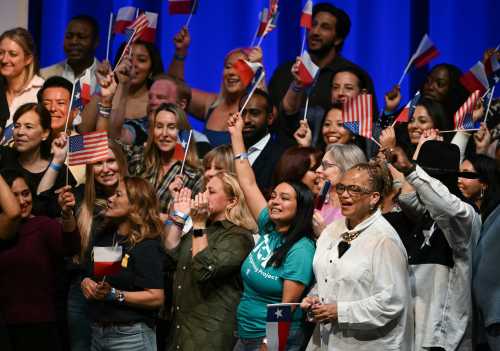
The midterm elections showed a dramatic shift of Latino voters from the 2024 national election. Polling found two-thirds of Latino voters supported Democrats during the midterms. Latino voters in Texas, especially in border cities and counties, demonstrated frustration with Republicans’ efforts to deport immigrants, boosting Democrats in gubernatorial and congressional races.
In many ways, the GOP downplayed the critical importance of minority voting blocs, which it also attempted to mitigate through redistricting efforts. And now, the party will need to determine if it will finally recognize that the U.S. population has changed and develop a path toward more inclusive policies or allow the rhetoric to increase, driving similar outcomes in the 2028 presidential election. After Mitt Romney’s presidential defeat in 2012, a Republican review committee completed an “autopsy” that called for better messaging and policies that appealed to diverse voters, more support for more comprehensive immigration reform policies, and greater recognition of the changing demographics of the populace.
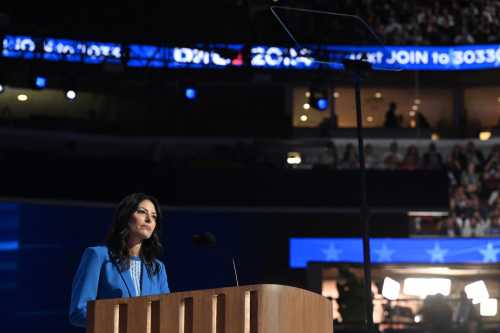
Given the new composition of leadership at the federal and state levels, it is very unlikely that Trump’s anti-DEI policies will resurge, or at least in the same way they did earlier in his presidency. In fact, a Democratic-controlled Congress may attempt to overturn the discriminatory and invasive policies that were predicated on anti-DEI efforts. Democrats plan to use hearings, subpoenas, and spending bills to challenge these policies, though the presidential veto will limit what they can immediately overturn. While the midterms were a referendum vote on Trump’s ailing economic policies and the war in Iran, they also sent a clear reminder that national and global demographics are changing rapidly and that democracy is actually determined by voters, not zealots. The Trump administration will also likely encounter difficulties if it tries to undo or discredit the historic 2026 midterm wins because, in the end, DEI was never about three letters. It was about a political process that allows voters to choose their representatives, including diverse ones.
Related Content

Author

The Brookings Institution is committed to quality, independence, and impact.
We are supported by a diverse array of funders. In line with our values and policies, each Brookings publication represents the sole views of its author(s).

Commentary
The 2026 midterm elections showed DEI is alive and well
November 9, 2026