The following is a summary of the 48th session of the Congressional Study Group on Foreign Relations and National Security, a program for congressional staff focused on critically engaging the legal and policy factors that define the role that Congress plays in various aspects of U.S. foreign relations and national security policy.
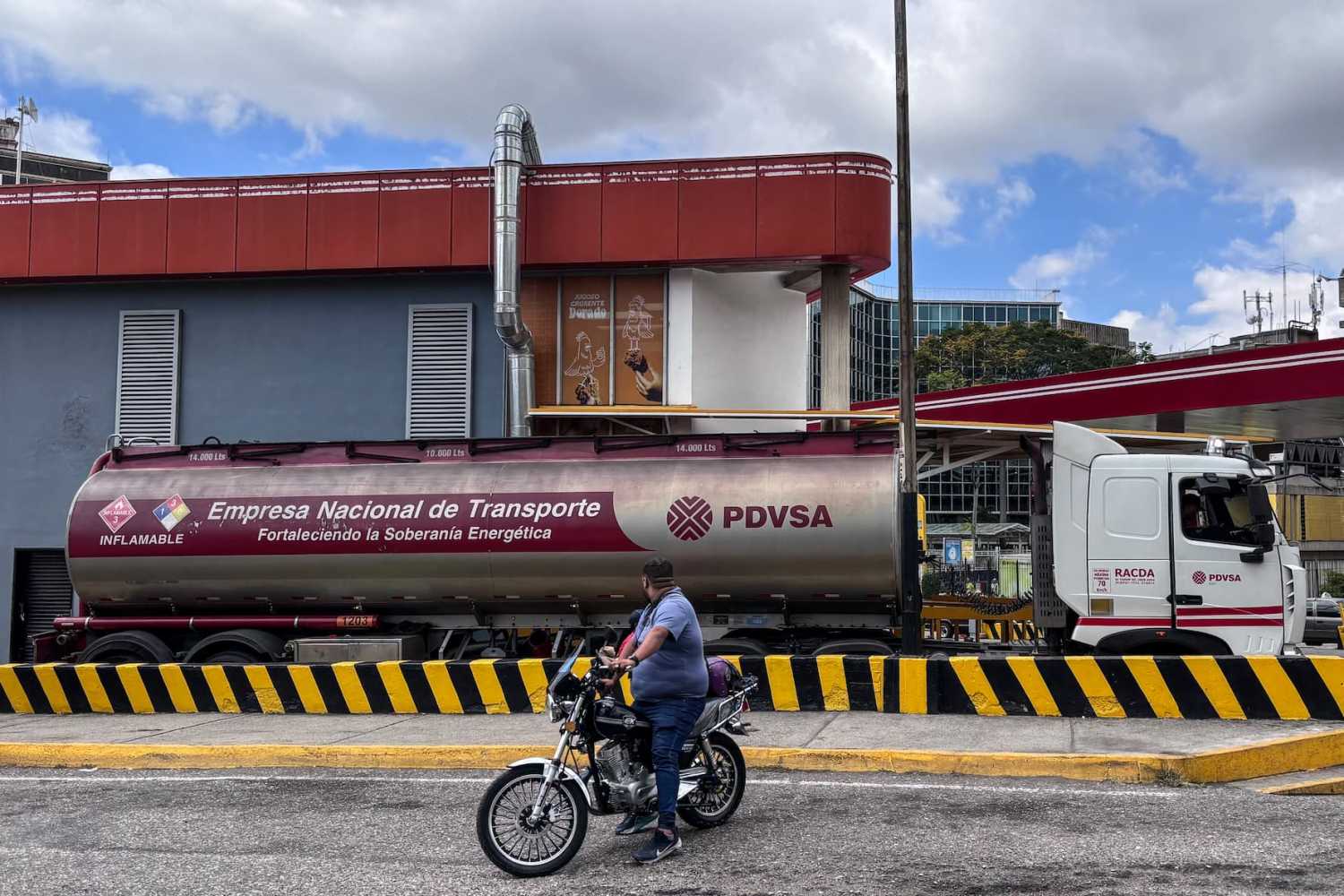
On Feb. 20, 2026, the Congressional Study Group on Foreign Relations and National Security convened virtually to discuss the legal questions surrounding the Trump administration’s management of Venezuela’s oil revenue, sovereign debt, and economic rehabilitation. Since the Jan. 3 military operation that removed Nicolás Maduro from power, the United States has exercised an unprecedented degree of control over the country’s oil exports, drawing on the leverage provided by U.S. sanctions and cooperation with the new Delcy Rodríguez regime in Caracas. As part of this effort, President Trump issued Executive Order 14373, which establishes a special financial mechanism that affords extraordinary legal protections to certain assets the Treasury Department holds on Venezuela’s behalf, insulating them from attachment by Venezuela’s creditors. Subsequent licenses carve out exceptions to U.S. sanctions for various oil-related transactions, so long as the resulting revenue is channeled into that mechanism. Yet the administration nonetheless routed the first $500 million oil transaction it facilitated through a separate account in Qatar, raising questions about how future transactions will proceed.
For the session, coordinator Scott R. Anderson led an initial discussion with three leading experts:
- Rachel Alpert, a partner at Jenner & Block LLP who served as the chief counsel for the Office of Foreign Assets Control (OFAC) at the Treasury Department until last year;
- Lee Buchheit, a renowned legal expert and experienced practitioner who has been involved in resolving nearly every major sovereign debt workout of the past several decades; and
- Mitu Gulati, a professor at the University of Virginia School of Law who has written extensively on sovereign debt restructurings and related issues.
Background readings circulated before the session included:
- Lee C. Buchheit and G. Mitu Gulati, “Sovereign Debt Restructuring and U.S. Executive Power,” 14 Capital Markets Law Journal 114 (2018);
- Scott R. Anderson and Alex Zerden, “Unpacking the Trump Administration’s Plans for Venezuela’s Oil Revenue,” Lawfare (Feb. 2, 2026); and
- “The U.S. Plan for Venezuelan Oil Revenue,” Lawfare Daily (Feb. 5, 2026) (podcast).
Gulati opened by describing the sheer scale and complexity of Venezuela’s sovereign debt, which he characterized as more tangled than any sovereign workout he had studied in roughly 30 years. Beyond the traditional bond debt—somewhere between $60 billion and $80 billion depending on how unpaid interest is calculated—Venezuela owes substantial sums to creditors whose claims are difficult to trace, including support extended by China and Russia during the Maduro era, arbitration awards arising from expropriations under the Chávez and Maduro regimes, and ordinary commercial claims. He noted the added uncertainty of President Trump’s suggestion that the United States itself should be repaid for the costs of removing Maduro. The threshold task for any rehabilitation, he explained, is determining who is owed money, in what priority, and how much revenue can be preserved to help the country recover.
Buchheit identified the diversity of the creditor group as the feature that most distinguishes Venezuela from the sovereign debt workouts of the past four decades, which generally involved relatively homogeneous groups of commercial banks or bondholders. The closest precedent, he suggested, is Iraq’s post-2004 restructuring, which had to reconcile claims held by banks, arbitration award holders, suppliers, and dozens of bilateral government creditors after more than a decade of default. He argued that Venezuela would be well advised to follow Iraq’s approach of making a single, identical offer to all reconciled claimants without regard to the provenance of each claim, rather than negotiating separately with each creditor group—a path he described as a recipe for a multidecade workout. On the recurring suggestion that some of Venezuela’s debt is “odious” and should be repudiated, both Buchheit and Gulati expressed skepticism. Buchheit recounted that the George W. Bush administration had initially urged invoking the odious debt doctrine for Iraq, but that he had counseled against it because the precedent would be impossible to cabin; Iraq instead secured a roughly 90% reduction in the value of its Saddam-era debt without ever using the term. He noted that genuinely corrupt debts can often be challenged under ordinary legal principles without resorting to amorphous international law doctrine.
Alpert then turned to the sanctions architecture, emphasizing that the full framework restricting Venezuela’s oil sector remains in place and that the recent relief has come through temporary general licenses authorizing conduct against otherwise broad prohibitions. She traced several executive orders since 2018 which have imposed debt-and-equity restrictions, designated PdVSA and the government of Venezuela, and created secondary sanctions risks for foreign persons operating in the oil sector. Against that backdrop, she described a succession of general licenses—beginning with one permitting downstream oil products to leave Venezuela and expanding outward to cover diluent imports, service providers, upstream development, and a specified list of companies—that have progressively reopened the sector. The central wrinkle, she noted, concerns payment flows: the licenses generally require that resulting revenue be deposited into the mechanism established by Executive Order 14373. She also observed that the administration’s authority to impose any secondary tariffs on importers of Venezuelan oil rested on the International Emergency Economic Powers Act (IEEPA), which the Supreme Court recently held in Learning Resources, Inc. v. Trump did not authorize the imposition of tariffs.
Comparing the new mechanism to its antecedents, Alpert explained that Executive Order 14373 borrows heavily from the 2003 order protecting the Development Fund for Iraq and the 2022 order concerning the assets of Da Afghanistan Bank, but differs in a crucial respect: Where those arrangements channeled funds into international mechanisms, the Venezuela order holds the funds in designated U.S. Treasury accounts, without the international layer the earlier orders contained. Buchheit underscored that the Iraq precedent rested on a Chapter VII Security Council resolution directing member states to immunize Iraqi oil assets from judicial process, which gave Iraq powerful leverage in its restructuring by leaving recalcitrant creditors with judgments they could not enforce. He doubted, however, that President Trump shared Iraq’s stated objective of facilitating a debt restructuring; the president appeared focused on rehabilitating the oil sector itself, and Buchheit suggested the bond market may have read the executive order as directed at creditors when it likely was not. Anderson and Alpert further examined why the first transaction was routed through Qatar, pointing to the unresolved recognition question—the United States continues to recognize Venezuela’s 2015 National Assembly rather than the Maduro or Rodríguez governments—and to the narrow statutory exceptions, such as Section 201 of the Terrorism Risk Insurance Act, that might still allow certain claimants to reach these assets despite the protections the order extends.
In closing, the experts offered oversight priorities for congressional staff. Gulati flagged the operation of the fund itself as the central unknown, contrasting the orderly consolidation of oil revenues achieved in Iraq with the more improvisational and oil-sector-focused approach taken in Venezuela, and warning that arbitration claimants and the United States’ own asserted claims might be paid first while other creditors are left for a future administration. Buchheit cautioned that what occurred on Jan. 3 was a leadership decapitation rather than a regime change, that refurbishing Venezuela’s degraded oil infrastructure would take years rather than months, and that genuine recovery would require an IMF program, a restructuring of the debt stock, and a return to the markets—needs that extend well beyond the oil sector and that remain complicated by the fact that the United States is dealing with a regime it does not recognize as the government of the country.
The session then concluded with an open discussion wherein attendees were invited to ask questions or present their own views on some of the issues raised.
The Brookings Institution is committed to quality, independence, and impact.
We are supported by a diverse array of funders. In line with our values and policies, each Brookings publication represents the sole views of its author(s).