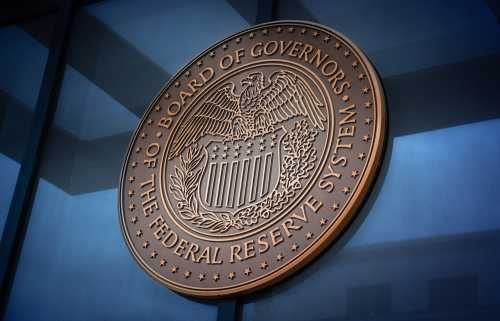
As a technical legal matter, the Supreme Court’s decision in Trump v. Cook1 was a narrow one. As a practical matter, it has far-reaching, mostly favorable implications for the independence of the Federal Reserve. Most importantly, on the same day the Court mandated that the President can remove members of traditionally independent agencies such as the Federal Trade Commission, it made clear that the Board of Governors of the Federal Reserve is an exception to that new rule. During their fourteen-year statutory terms, Members of the Board may not be removed for policy disagreements or at the whim of the president. They may be removed only, as the Federal Reserve Act says, “for cause.”2
The immediate consequence of the decision is that the President’s effort to remove Governor Lisa Cook from the Board has been halted. Although the Court did not preclude the President from trying again if he provides her with some explanation of the evidence for her removal and an opportunity to respond, the Court’s interpretation of the “for cause” requirement in the Federal Reserve Act makes the case against her a difficult one to win unless important new facts emerge. The remainder of this post provides some background on the case, explains the Court’s ruling, and identifies significant questions that remain: the nature of the process that must be followed before a Governor can be removed, the extent to which the exception for the Fed applies to its functions other than monetary policy, and the durability of the critical ruling that for-cause protection for Fed Governors is constitutional.
Background
On August 20, 2025, President Trump posted a brief message on social media: “Cook must resign, now!!!” Next to the message was a link to a Bloomberg news story that the Director of the Federal Housing Finance Agency had sent a letter to the Justice Department calling for an investigation of Governor Cook for possible criminal fraud in connection with her applications for mortgages on residential properties. His letter stated that in the course of two weeks she had signed mortgage documents on homes in both Ann Arbor and Atlanta that each declared the property in question would be her principal residence for at least a year. Mortgages on primary residences are often lower than mortgages on vacation or other secondary homes. On August 25, the President posted on social media a letter to Governor Cook saying that he was removing her for cause, as authorized by the Federal Reserve Act. The cause was “sufficient reason to believe you may have made false statements on one or more mortgage agreements.”
Three days later Governor Cook filed suit in Federal District Court in Washington, D.C., contesting the President’s action and seeking a temporary restraining order to keep her in place during the pendency of the litigation. The District Court granted a preliminary injunction to that effect. A divided U.S. Court of Appeals in Washington upheld the injunction. After a request for a stay of the injunction by the Government, the Supreme Court set the matter for an oral argument.
Although neither the Government, Governor Cook, nor the courts have made any formal submissions or findings of the facts underlying the allegations of mortgage fraud, the investigative reporting of various media outlets uncovered facts quite favorable to Cook. Most significantly, Reuters reported that other documents executed by Governor Cook in connection with her Atlanta property mortgage described it as a vacation home, not as a primary residence.
The Decision
On June 29 the Court, by a vote of 5-4, sided with Cook, thereby allowing her to stay at the Fed while the litigation continues. Chief Justice Roberts wrote the majority opinion, joined by Justice Kavanaugh and the three non-conservative Justices (Sotomayor, Kagan, and Jackson). There were three dissenting opinions. Justice Thomas took issue with virtually everything in the majority opinion, including that for-cause removal protection for Fed governors is constitutional. Justices Alito and Barrett – the former joined by Justice Gorsuch – filed dissents on the relatively narrow ground that the Court should have ruled only on whether to stay the lower court’s injunction, not on the constitutionality of the Federal Reserve Act and the meaning of the “for cause” provision. The breadth of the majority opinion and the discrete basis on which three of the Justices dissented may partly account for the fact that the vote was closer than many observers had expected.
The technical question that was before the Court – whether the District Court’s injunction should be allowed to stand – was answered by the majority’s interpretation that the Federal Reserve Act requires some kind of procedure before a president may remove a Fed governor.3 Since there had been no such procedure prior to the President’s letter to Cook, the attempted removal was legally deficient. Given this conclusion, the majority need not have reached the more consequential issues of the constitutionality of the removal protection and the standards for establishing the requisite cause for removal. That the majority did so, and in a way so favorable to Governor Cook, was perhaps the most encouraging aspect of the case for those concerned about preserving Fed independence.
Constitutionality of For-Cause Removal Protection
The Court’s aggressive version of a Unitary Executive Theory – the idea that the Constitution requires any government official engaged in “executive” type action to be subject to the president’s control – would by its terms seem to include the Federal Reserve. Yet even as expectations grew in recent years that the Court would eventually embrace that theory, there arose a belief that the Fed would be spared. Opinions in prior cases written by both the Chief Justice and Justice Kavanaugh included brief but unmistakable suggestions that the Fed was different from all the other agencies created by Congress since the late 19th century. The Chief Justice confirmed that exception clearly in his Cook opinion, though without very extensive reasoning.
Why is the Fed different? Chief Justice Roberts pointed to the Fed’s historical pedigree as the decisive factor. He described as “de facto” central banks the First and Second Banks of the United States.4 Those institutions were chartered by Congress to be independent of political control – the president could appoint only a fifth of the directors of these mostly privately owned entities. Of course, as he acknowledged, those entities were not central banks in the modern sense of the term that describes the Federal Reserve. But he found that the 18th century purpose of those banks was maintaining a “sound national currency.” He concluded: “What matters is that the Federal Reserve remains ‘consistent with the principles that underpin’ the First and Second Banks – namely, that monetary policy should not be subject to political interference.”5
Historians will be struck by the superficial nature of the Chief Justice’s account. Lawyers have already been struck by the extent to which this exception for the Fed is detached from the premises of the Court’s Unitary Executive theory and from the so-called originalist method of constitutional interpretation often invoked by the Court’s conservative majority.6 The actual reason for excluding the Fed from the sweeping new separation of powers doctrine may be revealed by the Chief Justice’s response to Justice Barrett’s complaint that the majority had decided the constitutionality of the Fed’s for-cause protection even though it had not been contested, much less briefed, by either party in this litigation: “We see no reason to leave the public in limbo, or to sow doubt as to the status of one of our Nation’s (and the world’s) most important financial institutions.”7
This comment was but one of several by Roberts, and by Justice Kavanaugh in his concurring opinion, emphasizing the importance of the Fed to the economy and embracing the textbook view that monetary policy is best insulated from the predictable inclination of any incumbent Administration to favor more near-term economic growth even when it risks high inflation in the medium term. The Chief Justice, showing he had read the various amicus briefs explaining the prevailing contemporary view of central banking, observed that “[n]ot only the fact of independence but also the appearance of independence is key to the Federal Reserve’s design.”8
To those versed in competing approaches to constitutional interpretation, the reasoning in the majority opinion harks back to an earlier era, in which the Court placed more emphasis on history and pragmatic considerations. That is decidedly not the approach taken by the Chief Justice in his opinion in Trump v. Slaughter, the case that gives the President control over traditionally independent agencies.9 Reading the two together, it is hard to escape the conclusion that the Fed is different as a constitutional matter because a majority of the Supreme Court has made the policy judgment that subordinating monetary policy to Administration direction will produce unacceptable consequences.
What “Cause” Is Sufficient?
Like the constitutional question, the Court did not have to resolve the issue of what constitutes sufficient “cause” to justify removal. But unlike the constitutional question, the cause issue was fully briefed and the subject of extensive questioning at oral argument. The Government argued first that a president’s determination of sufficient cause under the Federal Reserve Act is unreviewable. It further argued that, even if the Court found the determination judicially reviewable, a court should give a president very broad discretion in making that decision. According to the Government, if a president had “concerns” about a Governor’s integrity, that was enough to justify removal. Cook, on the other hand, argued that “cause” in the Federal Reserve Act essentially meant the more specific grounds for removal laid out in other statutes such as the Federal Trade Commission Act – namely, “inefficiency, neglect of duty, or malfeasance in office.”
As the Chief Justice observed, accepting the Government’s position “would in effect transform the Federal Reserve’s for-cause protection into at-will employment.”10 Cook’s position, of course, would have yielded the opposite result: the acts alleged by the Government to constitute grounds for removal – whether or not they might constitute “malfeasance” – had not occurred while she was “in office.” The majority rejected her view as well, noting that the Federal Reserve Act made no reference to the standards included in any other statute.
Although the Court did not accept Cook’s position, the standard fashioned by Chief Justice Roberts for the majority is quite favorable to her (and to any other Governor at whom a removal effort may someday be directed11). First, he said, the threshold for establishing cause must be “substantial.” It depends “on the seriousness of the alleged misconduct, and the extent of any nexus that may exist to the Governor’s professional duties.”12 Although the Court did not say so, it is not hard to read this requirement as precluding removal because a Governor had, prior to her appointment, inadvertently signed a document saying a home would be her principal residence, when she had fully and accurately disclosed its status as a vacation home in other documents submitted to the mortgage lender.
A second prong of the Court’s standard for establishing “cause” is especially noteworthy: “The key issue is whether ‘[t]he cause assigned’ truly ‘impl[ies] an unfitness for the place’—or whether it simply represents an effort to secure a “more congenial” replacement.”13 And, in case there were any doubt of its concern, the majority elaborated:
Without such constraints in place, any perceived or alleged misstep (past or present) could provide a ready pretext for a Governor’s removal—a fact that he would surely know, and that would surely weigh on him as he decided what to say and how to vote. Nothing could be more corrosive of the independence that Congress sought to preserve.14
The Court thus evinced a willingness to look behind the reason for removal stated by a president to see whether the effort was really about influencing monetary policy. Given the Chief Justice’s reluctance in other recent cases to look behind the President’s stated reason for taking a particular action requiring legal justification, his openness to doing so in cases involving the Fed may reflect a particular sensitivity to the importance of Fed independence.
Three Questions
As the above discussion suggests, the Court’s opinion in Trump v. Cook is quite favorable to Governor Cook and, more generally, to the continued legal independence of the Federal Reserve. Still, as the President himself suggested a few days after the decision, the attempt to remove her may not be over. The Administration could restart the whole effort by conducting the kind of process required by the Court. Furthermore, of course, such efforts might in the future be directed against other Governors. Here, then, are three questions raised by Cook.
What Process Is Required for Removing a Governor?
Remember that, as a technical matter, the case was decided in Cook’s favor – and the preliminary injunction against her removal allowed to stay in place – because there had been no ex ante process through which she was formally notified of the allegations against her and given a chance to respond. Yet the Court did not provide a blueprint of the procedures for a president to follow. In fact, given that the absence of such a process was the basis for decision, the Court’s brief comments on its form were oddly minimalist. Chief Justice Roberts first made clear a Governor subject to removal is not “entitled to an audience with the President or a full-blown judicial trial.”15 He then said that a process wholly in writing might be adequate.16 And, later in the opinion, he essentially conceded that the process might have little or no effect on a president’s decision.17
Left totally unaddressed in the Court’s opinion is a set of questions around the significance of the process once conducted. To what extent will that process determine the factual record that a reviewing court will assess in deciding whether the threshold for cause has been met? Perhaps more importantly, what impact will the completed process have on the availability of injunctive relief to keep a Governor in place during the pendency of the litigation? In the present case, there was no process at all and thus, because of the majority’s view that one is required, no chance that the Government would ultimately prevail. But once there is a process, a court may have to undertake analysis of the facts to determine likelihood of success on the merits of the case. Because a court considers other factors in deciding whether to grant a preliminary injunction, including where the public interest lies, it is quite possible that a Governor will be able to get temporary relief and stay in place while the case plays out. And, given the solicitude for the Fed’s independence evidenced in the Chief Justice’s opinion, this may well be the result should the issue arise. But the question is still left hanging.
Does the Fed Exception Extend to Its Functions Other than Monetary Policy?
Congress has given the Federal Reserve important functions in addition to monetary policy. Because of its jurisdiction over all bank holding companies, it is the most powerful of the three federal bank regulatory agencies. It also regulates certain financial market utilities and sets maximum interchange fees for debit card transactions. Yet the Court’s rationale for excluding the Fed from its new rule of presidential control rests squarely on its relationship to the “principles that underpin the First and Second Banks – namely, that monetary policy should not be subject to political interference.”18 So does for-cause removal protection extend to the Fed Board members in their regulatory roles?
If the answer is no, then the monetary policy independence of the Fed could be severely compromised. A president could cite regulatory policy differences in removing a Fed Governor, even if the president was partly or mostly motivated by monetary policy concerns.19 But if the answer is yes, how does that square with fact that the Federal Deposit Insurance Corporation and the Office of the Comptroller of the Currency share bank regulatory authority with the Fed, but are certainly not involved in monetary policy?
Chief Justice Roberts was obviously aware of the implications for monetary policy independence. He addressed the issue, but only in a footnote and somewhat obliquely:
In upholding the constitutionality of the Federal Reserve as currently structured and with its existing enforcement authorities, we do not suggest that Congress could assign the Federal Reserve additional regulatory powers that are attenuated from monetary policy.20
The phrase “with its existing enforcement authorities” appears to validate for-cause removal protection for all the Fed’s current regulatory functions. But the last clause indicates that additional regulatory powers assigned by Congress might not be excepted from the Slaughter rule. The Chief Justice gives no hint as to what he means by “attenuated from monetary policy.” Does this phrase refer only to new mandates (such as the Dodd-Frank Act’s requirement to limit interchange fees for debit cards)? Or does he mean that the exception might not apply to new powers to regulate banks? What if Congress decided that certain non-bank financial institutions such as hedge funds should be subject to prudential regulation by Fed? Insofar as this type of regulation, like monetary policy, affects the supply of credit in the economy, one might argue that capital, liquidity and related regulations are closely connected to the Fed’s core function. Again, though, how does this square with the fact that the FDIC and OCC have prudential powers?
Finally, what happens if, despite this warning from the Court, Congress nonetheless assigns a regulatory authority to the Fed that, in the Court’s judgment, is “attenuated from monetary policy”? Will the Fed be right back in the vulnerable position that the Chief Justice tried to avoid with his footnote exempting the Fed’s current regulatory powers? All these questions remain unanswered.
How Durable Is the Ruling?
The Court’s slim 5-4 majority in Cook’s favor was at least one vote short of what many Court watchers had expected following oral argument in the case in January.21 Meanwhile, what promises to be a heavy stream of legal scholarship dissecting much of Chief Justice Roberts’ reasoning has already begun. Does either the closeness of the vote or the asserted thinness of the legal logic in the majority opinion suggest that the Court’s support for Fed independence may be unsustainable?
In practical terms, not for the foreseeable future. Chief Justice Roberts and Justice Kavanaugh seem solidly committed to Fed independence – both in constitutional terms and in the context of an attempted removal of a Fed Governor. They surely have been aware of the jurisprudential gymnastics required to create an exception for the Fed given their stated approach to constitutional interpretation and their embrace of Unitary Executive theory. Both are likely to remain on the Court for some time to come. Justices Sotomayor, Kagan, and Jackson dissented in Slaughter. They are very likely to continue to support any exception to the Slaughter rule, even if they find the basis for an exception no more logically compelling than Slaughter itself. The support of these five Justices can probably also be counted on were a bank, for example, to challenge some future Fed regulatory action on the ground that the action must be subject to oversight by the president.
In sum, while it is unclear whether any future litigation around the attempted removal of a Fed Governor would garner additional supportive votes, the five-Justice majority seems solid.
Conclusion
Trump v. Cook does not foreclose a successful future effort by a president to remove a Fed Governor for cause. Indeed, since the Federal Reserve Act itself contemplates such an effort, the decision could not have removed the possibility. Moreover, because the Court has not yet had occasion to consider a concrete set of facts against the for-cause standard laid out in the majority opinion, we do not have a full picture of how it would work in practice. And the questions about process, interim relief, and the scope of the Fed exception remain. Ultimately, though, the ruling – including the Chief Justice’s explanation of the Fed’s constitutionality and the for-cause standard – has largely affirmed the legal basis for the Fed’s independence intended by Congress.
Author

Related Content
-
Footnotes
- Trump v. Cook, Supreme Court of the Unites States, June 29, 2026, Slip Opinion at https://www.supremecourt.gov/opinions/25pdf/25a312_5468.pdf.
- Section 10 of the Federal Reserve Act, 12 U.S.C. § 242, specifies that a Fed Governor shall hold office for a 14-year term “unless sooner removed for cause by the President.”
- The Federal Reserve Act does not say that such a procedure is required. The Court concluded that existing law at the time the Act was passed was understood to require a hearing when an official was removed prior to the expiration of a term set by statute.
- The Chief Justice even included the Bank of North America – which was created before the Constitution, when the new nation was operating under the Articles of Confederation – as an early version of a central bank.
- Slip Opinion at 23.
- Originalism is a theory for constitutional interpretation that seeks to identify the “original public meaning” of the text of the Constitution. Although there are different strains of originalist thinking, and the concept has clearly evolved over time, all its versions stand in opposition to the idea that the meaning of the terms of the Constitution should be interpreted in light of changes in the country since 1789. Schools of constitutional interpretation opposed to originalism are, among other things, skeptical that the original public meaning of many words or phrases can be definitively established.
- Slip Opinion at 24.
- Slip Opinion at 14.
- Trump v. Slaughter, Supreme Court of the United States, June 29, 2026, https://www.supremecourt.gov/opinions/25pdf/25-332_new_geil.pdf.
- Slip Opinion at 9.
- As readers are doubtless aware, on several occasions President Trump publicly entertained the idea that he might remove then-Chair Jerome Powell. In late 2025 the Justice Department began a criminal investigation into the possibility that he made false statements to Congress regarding the renovation of the Fed’s Eccles Building. The Justice Department terminated the investigation in April, reportedly because at least one Republican on the Senate Banking Committee would not vote to move the nomination of Kevin Warsh forward until the investigation was dropped. An investigation by the Fed’s Inspector General is ongoing at the time of this writing.
- Slip Opinion at 14.
- Id.
- Id.
- Slip Opinion at 18.
- Id.
- Slip Opinion at 25.
- Slip Opinion at 23.
- The problems with this possibility are fully discussed in a prior paper. Daniel K. Tarullo, Can the Fed Be Split in Two? Commentary, Hutchins Center on Fiscal and Monetary Policy at Brookings (October 2025), https://www.brookings.edu/wp-content/uploads/2025/10/Tarullo_Can-Fed-be-split.pdf.
- Slip Opinion at 22, note 6.
- There might even be support for the constitutional ruling by one or more of the dissenters. Three of the four did not take direct issue with the majority’s conclusions on Fed constitutionality or its guidelines for the nature of a “cause” that can justify removal. In separate dissenting opinions, Justice Alito (joined by Justice Gorsuch) and Justice Barrett instead objected that there was no need for the majority to reach these questions. They offered different, though equally technical, reason for concluding that the stay on the district court’s injunction should have been granted. But the fact that they were willing to have Governor Cook removed from the Board of Governors during the pendency of litigation suggests that, at the very least, they do not share the extent of the majority’s solicitude for Fed independence.
The Brookings Institution is committed to quality, independence, and impact.
We are supported by a diverse array of funders. In line with our values and policies, each Brookings publication represents the sole views of its author(s).