When governments need to address fiscal deficiencies, one of the first things they consider is a reduction of the public-sector wage bill. While this approach can contribute to an immediate narrowing of the fiscal deficit, it has medium- and long-term implications that should be considered seriously.
The evidence, based on data produced by the World Bank’s Bureaucracy Lab and detailed in a new World Bank report, points to three reasons to invest more in—not cut—the public sector workforce. It also suggests the best approaches for doing so.
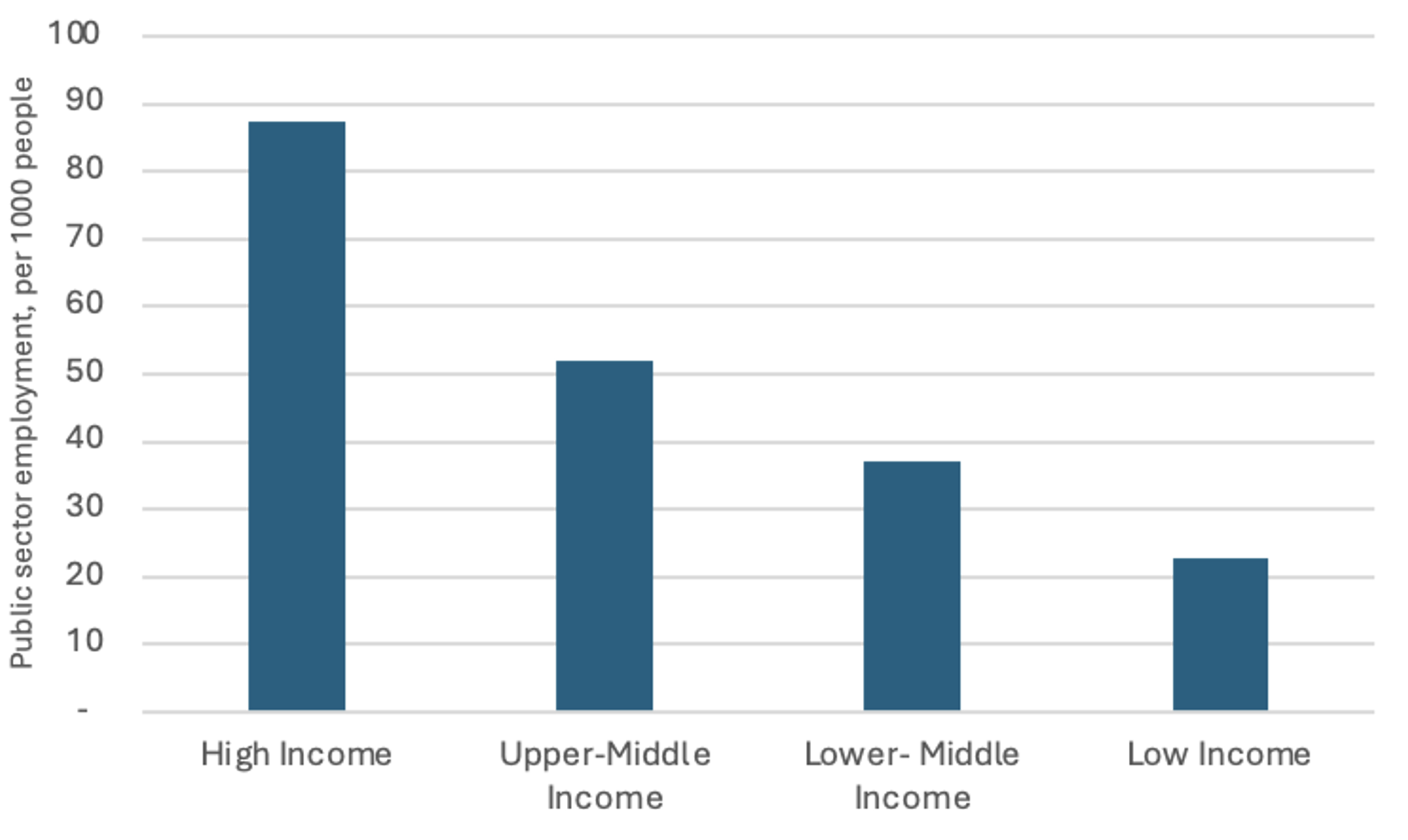
First, developing country governments are relatively understaffed. Contrary to popular opinion, poorer countries have much smaller public employee headcounts. High-income countries average 87 public employees per 1,000 people (See figure 1), while low-income countries have only 23 per 1,000. This rise in public employment with country income means that developed economies depend more on the public sector to deliver essential services to citizens and suggests that developing countries will need to allocate additional resources for staffing public services as they develop.
Figure 1. Public sector employment is higher in richer countries
 Source: World Bank Worldwide Bureaucracy Indicators.
Note: Public sector employment includes workers in central governments, local governments, and state-owned enterprises.
Second, Low- and middle-income countries face staffing shortages in core government functions. Half of all public sector jobs are in critical service areas such as education, health, social security, and public safety, with an additional 20% in public administration overseeing state policy. However, many developing countries do not have sufficient service workers, particularly in rural areas, which can only be partially addressed with better staff distribution. For example, there are half as many police officers per capita in Fragility, Conflict, and Violence (FCV) countries compared to non-FCV countries, despite their greater need for security, law, and order.
Third, the public sector is the largest source of formal sector jobs in developing countries, especially for women. Due to an underdeveloped private sector in low- and middle-income countries, the public sector accounts for 38% of global formal employment and a sizeable 59% in FCV countries. Women represent 46% of the public sector paid workforce, compared to 33% in the private sector, making public employment more representative of women in all but a handful of countries (See figure 2). Any changes in public sector employment can therefore have serious and deleterious effects on women’s livelihoods.
Figure 2. Governments employ more women as paid workers than the private sector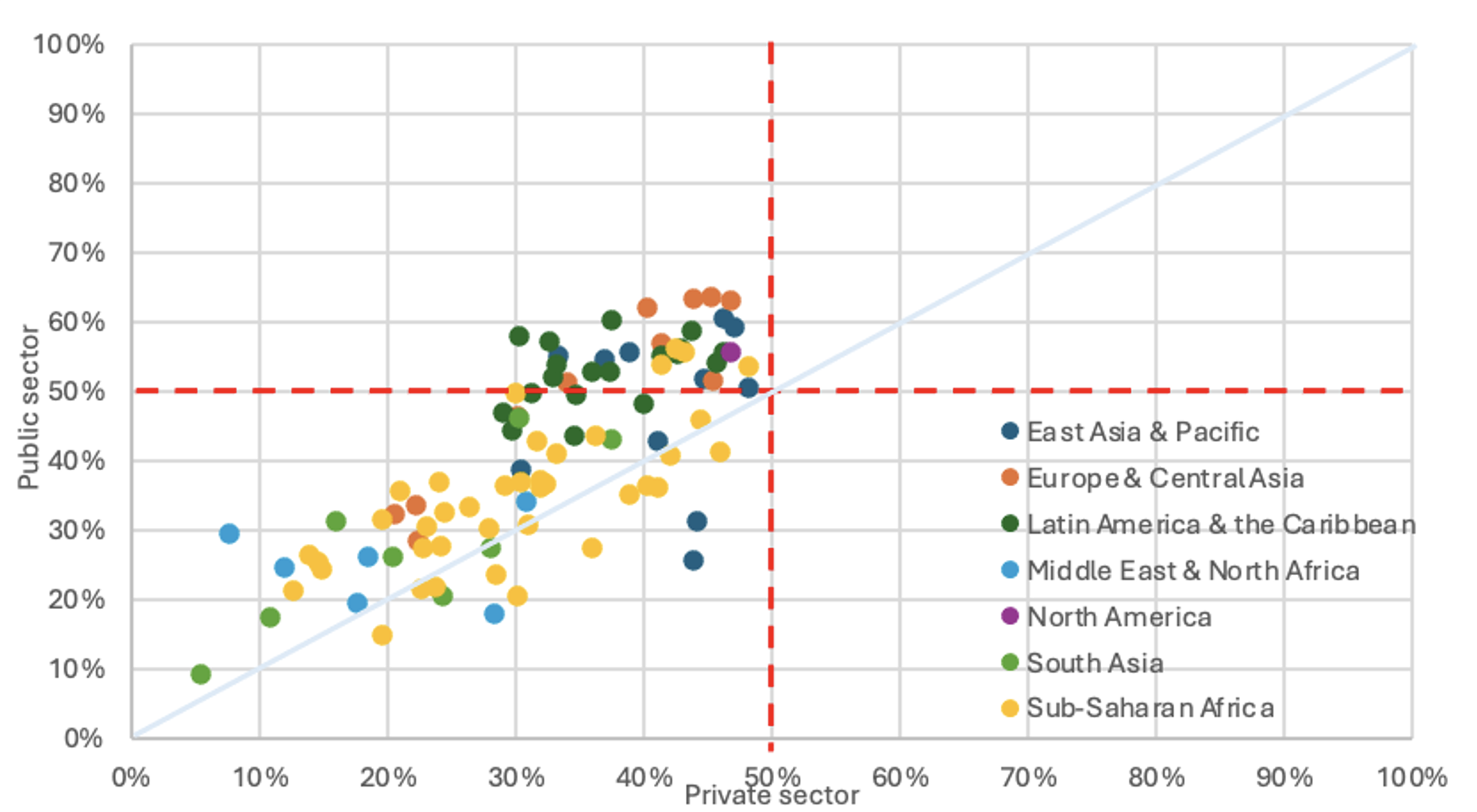
Source: Based on Worldwide Bureaucracy Indicators.
Note: The 45-degree line denotes parity between the two sectors.
Developing countries have to invest in the skills of their government workers. Most teachers in low- and middle-income countries, for example, are not proficient in the subjects they teach (Global Education Policy Dashboard). Skills assessments of health workers reveal similarly alarming skills gaps; for example, doctors in nine countries in Sub-Saharan Africa were found to have a diagnostic accuracy rate of only 67% (World Bank 2021a). While there are no standardized assessments of competencies of managers and administrators, World Bank Bureaucracy Lab surveys reveal that large proportions of these civil servants lack essential digital skills, such as the ability to use programs like MS Excel or PowerPoint.
Poor skills often stem from a lack of merit-based and transparent recruitment. Many public sector workers are not selected through a competitive process—approximately 30% in Armenia, Ethiopia, and Uruguay; 45 percent in Bosnia and Herzegovina; and over 70% of health workers in Mali and Madagascar, entered government employment without going through a recruitment competition, according to Bureaucracy Lab surveys. Written examinations based on job-related competencies can help ensure the intake of high-quality staff, however, these examinations are inconsistently used, both across and within governments (See figure 3). Even when exams are administered, they primarily assess legal knowledge rather than job-related competencies.
Figure 3. Exam-based recruitment varies widely across and within governments
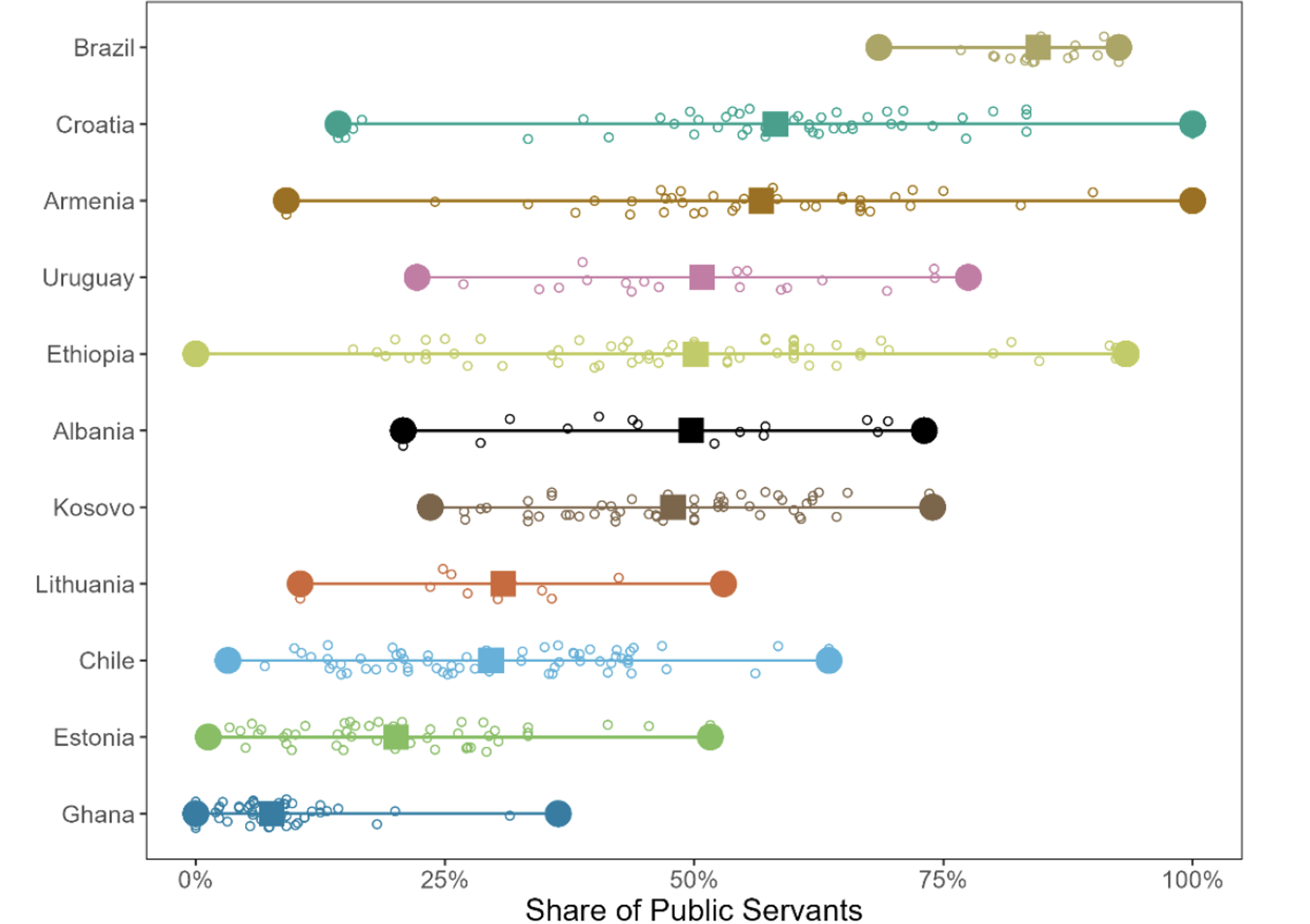 Note: Each circle represents the share of public sector workers hired based on a score for the written exam for organizations within their respective government. The square represents the national average of organizational-level shares. Source: Global Survey of Public Servants.
Fiscal consolidation strategies that rely primarily on employment cuts may compromise the delivery of essential services such as health, education, security, water, and electricity, and undermine overall state capacity. These considerations underscore the importance of keeping workforce reductions surgical during periods of fiscal constraint. It is a good idea for governments to periodically assess whether public employment is bloated or inadequate. Too few public sector workers can jeopardize economic efficiency as surely as bloated public payrolls compromise fiscal balance.
Authors


Related Content



The Brookings Institution is committed to quality, independence, and impact.
We are supported by a diverse array of funders. In line with our values and policies, each Brookings publication represents the sole views of its author(s).



Commentary
Do policymakers underappreciate public employment?
March 6, 2026