Informality remains one of the most widely discussed but poorly understood features of African economies. It is generally depicted as a process of evasion in which firms and workers remain outside the formal sector to avoid taxes or regulation. But this interpretation is misleading and inconsistent with empirical evidence. It fails to account for the magnitude, persistence, and internal organization of informal activities throughout the continent even in the face of conflict and repression. Instead, informality is best understood as the dominant mode of economic organization under conditions of limited productive opportunities, scarce wage employment, incomplete markets, and ineffective institutions that impose heavy obligations with little returns.
Estimates of informal employment by the International Labour Organization indicate that informal employment accounted for 86.3% of all jobs in sub-Saharan Africa in 2024, the highest proportion of any region in the world. Women are more likely than men to work in the informal sector (89.5% versus 83.5%, respectively). Informal employment is highest in Central and West Africa, accounting for 92.5% and 91.8% of all jobs, respectively.
The sheer size and endurance of the informal sector force a fundamental reappraisal: Informality is not a departure from the mainstream but is, in fact, the mainstream. It is not a peripheral activity, but represents the primary setting for most African work, trade, production, innovation, and maintenance of livelihoods. Consequently, efforts towards economic transformation, job creation, or attainment of inclusive growth must first reflect an understanding of the informal economy on its own terms. It must be accepted, expanded, and finally transformed from within, and not viewed as an aberration to be corrected.
The problem begins with the wrong perception
A major reason informality is misunderstood is that the term itself carries a pejorative bias from the outset. “Informal” frequently evokes disorder, backwardness, or noncompliance, as if the people and firms operating in this space are simply failing to meet the institutional expectations of a “modern” economy. But that implication depends entirely on the benchmark being used. For decades, much of the policy discussion has implicitly or explicitly treated the institutional evolution of Western economies as the universal benchmark for African development. Structural adjustment programs, for example, were built on institutional structures imported from outside the continent, with little regard for local political settlements or economic realities. Such programs and related assumptions of the Washington Consensus were grounded in Western policy norms and applied to Africa as if they were universally valid. Once that benchmark is fixed, African realities are easily cast as incomplete versions of something else. But Africa’s development challenge is not to retrace another region’s historical path. According to the African Union’s Agenda 2063, the continent’s long-term aspiration is “an integrated, prosperous and peaceful Africa, powered by its own citizens, representing a dynamic force in the international arena.” It is therefore not a continent whose success should be measured by how closely it reproduces imported institutional templates.
This distinction is important because what is generally referred to as “informality” reflects economic activities consistent with Africa’s structural conditions of limited access to formal credit, scarce formal insurance markets, inconsistent enforcement of contracts, inadequate infrastructure, and continuing reliance on kinship and other forms of social organization to provide incentives and support for cooperation. Although these arrangements are not always efficient or equitable, they represent rational and adaptive responses to the institutional environment and should not be interpreted as static failures of resource allocation. It is inappropriate to dismiss them solely on the basis of their differences from institutional forms characteristic of high-income economies. An adequate understanding of informality in Africa requires a critical evaluation of the conceptual framework used. Only in this way can the economy be viewed as it actually operates, as a process conditioned by its own history, incentives, and constraints rather than by comparison with an external standard.
Informality is not a category but an economy
Another widespread misunderstanding in policy and research reflects the tendency to treat the informal sector as a single, homogeneous entity. Empirical results confirm that the informal economy encompasses a wide variety of activities ranging from subsistence work with little capital and low returns to moderately productive enterprises with little capacity for growth and highly dynamic firms with substantial potential for growth. In West Africa, this diversity of activities is described by the concept of “constrained gazelles,” which refers to high-potential firms that remain small not because of a lack of ambition or capacity, but due to systematic impediments to growth in the environment. This approach provides a far more accurate description of conditions for informal enterprises than does the oversimplified view that informal firms merely avoid regulation.
The resulting diversity of conditions has been a major focus of recent research. For example, a structural analysis of heterogeneity within the informal sector confirms that a worker’s choice to engage in either subsistence or entrepreneurial activities is subject to severe constraints. The major conclusion of this work is that informality results not only from patterns of registration but also from various constraints on production. Most informal entrepreneurs operate at suboptimal levels of production due to financial constraints, the risk of failure, and imperfections of product and factor markets that impede growth. Consequently, these results have important implications for policy. Interpretation of informality solely as a problem of compliance leads to excessive enforcement expenditures and fewer efforts to increase productivity. By contrast, recognition of informality as a highly diverse setting with severe constraints on economic activity shifts the emphasis of policy from control to facilitation and from punishment for noncompliance to expansion of opportunities, reduction of risks, and utilization of existing capacity for productive activity.
People in the informal economy are not “bad actors”
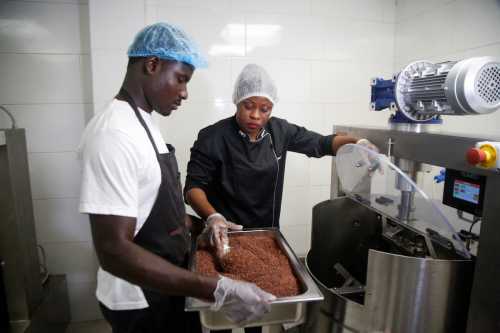
The challenge is not solely linguistic, but also concerns how ordinary people are positioned, implicitly or explicitly, in economic analysis and policy debates. Small traders, artisans, transport operators, food vendors, repair workers, home-based producers, and micro-entrepreneurs throughout African cities and rural economies are routinely characterized as marginal or transitional. They are recognized as essential to individuals’ survival, but viewed as operating outside the “real” economy. In effect, they are stigmatized as noncompliant “undesirables” who require formalization. Even influential discourses on informality reinforce the perception that informal actors operate outside the boundaries of legitimate economic activity. This representation is both conceptually flawed and normatively damaging. Recent World Bank estimates indicate that approximately 12.7 million firms in Africa had more than one worker in 2020, and there were more than 230 million own-account enterprises in Africa during the same year. About 73% of multi-worker enterprises were informal. These results confirm the importance of informal activity for the organization and development of African economies. Informal actors are not engaged in marginal activities but represent the principal mechanisms for organizing and sustaining African economies.
Informal sector workers are not aberrant but are fully rational agents adapting to fragmented markets, unstable demand, and limited institutional supports with remarkable ingenuity. As a consequence, they are major contributors to production, trade, income generation, and attainment of household security. Their behavior reflects adaptation to constraints of production and trade, and not to patterns of deviant or fraudulent behavior. The important task of explaining why these actors have failed to achieve other forms of economic organization remains largely unresolved. Equally important is our failure to understand why the overall system of economic organization so frequently fails to provide them with the institutional basis, degree of security, and opportunities for increased productivity, reduced risk, and greater economic mobility that are characteristic of formal economic activity. Resolution of these problems requires recognizing the informal sector as a group of people who must be understood, supported, and empowered, rather than as a problem to be corrected.
Formalization is the wrong starting point
Formalization is not an appropriate starting point because it assumes that the institutional sequence that worked elsewhere can be simply reversed for African economies. In many policy discussions, formalization is seen as a means of increasing productivity, with the implication being that registration, licensing, and compliance will somehow stimulate growth. But under conditions of extreme smallness of firms, severe capital constraints, and high risks of failure, this approach has exactly the opposite effect. Even registered firms with an initially informal mode of operation remain highly unproductive. Attempts to achieve formalization first thus represent an attempt to impose costs for visibility on firms that have insufficient capacity to obtain any benefit from this process. The demands for compliance are made long before any value is delivered. This reflects a sequencing error and accounts for the generally disappointing results achieved with almost all efforts to promote formalization, regardless of their degree of intentionality.
My own recent joint research with Cédric Okou shows that direct pathways to full formalization have had limited success in sub-Saharan Africa for similar reasons. A more effective strategy is to prioritize productivity growth within the informal sector. Firms that become more productive are significantly more likely to formalize when formality offers a credible value proposition, such as improved access to finance, expanded market opportunities, valuable public services, and enhanced protection, rather than merely additional reporting requirements and tax obligations. Therefore, formalization should not be pursued as an administrative goal. Instead, it should result from increased productivity and improved institutional support, rather than serving as a prerequisite for these outcomes.
Digital technologies reflect both the potential and the risks associated with current approaches to informality. They reduce information frictions, improve market matching, lower transaction costs, and provide a basis for access to financial and market services by small enterprises. Evidence from African settings demonstrates that these technologies stimulate productivity, entrepreneurial activity, access to credit, and greater financial inclusion within the informal sector. Consequently, digital technologies allow firms to become visible to segments of the economy that stimulate growth. However, they do not eliminate the political characteristics of informality. The effects of greater visibility depend on whether firms gain access to financial, commercial, and public services that increase opportunities, or instead face increased risk of taxation, monitoring, and selective enforcement of rules. As a result, the relationship between increased visibility and increased vulnerability of micro-enterprises represents one of the least appreciated trade-offs of the current debate. When increased visibility leads to an increased risk of penalty rather than of state support, it represents an important liability, rather than an asset, for small enterprises.
Africa needs fit, not imitation
A more general lesson is that Africa’s development path cannot be reduced to a race to replicate institutional forms that emerged under very different historical, political, and economic conditions elsewhere. The objective is not to “catch up” by copying but to build institutions that fit African realities and are grounded in them while remaining receptive to learning from the global experience. This reflects a long tradition of institutional economics and confirms that enduring, inclusive institutions cannot be generated by transplanting external rules into new settings. Rather, they emerge from interactions among capacities for state-building, patterns of political settlements, and distributions of power. Consequently, effective institutions must be internally generated and adapted to the societies they are intended to serve.
Appropriate solutions for Africa must be based on approaches that are well adapted to local systems of economy, society, and politics. This does not imply a policy of exceptionalism or isolation, but rather of authenticity and of institutional designs consistent with the experiences of African workers, firms, and communities. The goal should be to increase productivity, reduce insecurity, improve quality of life, and achieve agreements between the state and society that make participation in the economy highly rewarding. In this regard, an approach to productive inclusion that increases the efficiency of the informal sector constitutes a major organizing principle. This leads to a focus on capacity rather than compliance, on facilitation rather than regulation, and on adaptation to local conditions rather than imitation of external models. Ultimately, the future economic development of Africa will depend not on eliminating informality, but on transforming it to produce institutions that embody African conditions of life, priorities, and aspirations.
What productive inclusion of the informal economy looks like in practice
If productive inclusion of the informal economy is the right starting point, then the central policy question becomes: What does it take to expand the capabilities of the firms and workers who already power Africa’s economies? The answer begins with addressing the systemic limitations that keep informal enterprises small, vulnerable, and unable to capture economies of scale. For most informal enterprises, binding constraints are remarkably similar across countries: limited access to working and long-term capital, thin insurance markets that leave households and enterprises exposed to shocks; inefficient systems of electricity and transportation that increase costs and restrict access to markets, weak enforcement of contracts that discourage cooperation, and large information gaps that impair identification of customers, suppliers, and reliable business partners. These represent not minor impediments, but instead the major frictions that determine patterns of production, investment horizons, and organization of economic life. No single strategy of rapid or major intervention will be sufficient to alter this mode of operation. Instead, an effective strategy of inclusion involves reduction of these impediments in a manner appropriate for the conditions of enterprise. This includes development of financial instruments appropriate for irregular cash flows rather than for assumptions of regular monthly payroll requirements; establishment of systems of micro-insurance to protect against illness, theft, and costs of funerals and adverse weather conditions; investment in local infrastructure to reduce costs of enterprise; and application of information technologies to increase access to markets without imposition of excessive requirements for compliance with regulations.
Finally, it involves simplification of interfaces with government such that initial contact with the public sector represents an opportunity for problem solving rather than a threat, a fine, or an experience of overwhelming bureaucratic complexity. Importantly, this is not an attempt to romanticize informal modes of operation, but an acknowledgment of the capacity of millions of Africans to function as entrepreneurs, producers, and workers, whose potential is continually limited by operating conditions. Improvement of those conditions results in the growth of enterprises and in a natural, and generally desirable process of formalization, rather than of the imposition of additional requirements for administrative compliance.
These deep, sustained, and mutually reinforcing structural reforms to stimulate productivity provide for slow but ultimately substantial improvements. This represents not only a social policy but also a strategy for increasing the productivity of the state itself. It achieves productivity patterns that have always been beyond the capacity of enforcement-based formalization in Africa. Higher productivity leads to higher incomes, more extensive markets, and finally to a larger, more stable, and a more credible base for taxation that supports further expansion of appropriate public services and investments. It facilitates integration into production systems, the adoption of new technologies, and the development of transaction records that strengthen financial systems. Ultimately, the state would achieve what it has long pursued through campaigns of formalization but never previously attained: a more efficient economy, a more acceptable agreement on the legitimacy of government, and a virtuous cycle of economic activity.
Author

Related Content


The Brookings Institution is committed to quality, independence, and impact.
We are supported by a diverse array of funders. In line with our values and policies, each Brookings publication represents the sole views of its author(s).


Commentary
Rethinking informality in Africa
An economy hiding in plain sight
May 14, 2026