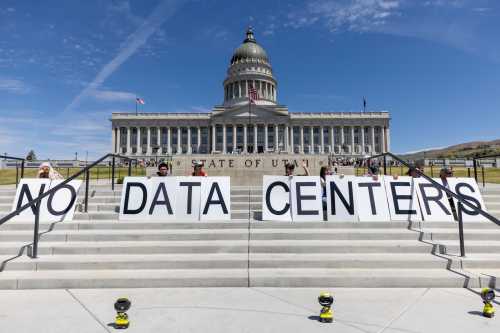
Data center construction is exploding amid the artificial intelligence (AI) boom—and so is the community backlash against these projects. Protests across the country and community concerns have prompted legislators to consider moratoriums on data center construction. At least 15 states have weighed pauses on data center development, and at least 100 localities have already approved their own.
While these efforts might be successful in affording communities the time they need to craft community benefit agreements or consider whether they want local data centers, they are not a complete solution to the problem at hand. Data centers require meaningful accountability and oversight in both the short and long term. These measures may temporarily quiet communities’ resistance, but they will not slow the national momentum behind projects that are being built or are already underway. For moratoriums to work, there must also be time spent gathering data, enhancing transparency, and creating greater collaboration among legislators, industry, and community residents. If these factors, at a minimum, are not achieved, community upheavals are likely to persist.
The rise of moratoriums
Officials and legislators have advanced moratoriums as AI data centers have expanded at such a rapid rate over the past six months. These measures have had the most success at the local level, though New York recently became the first state to impose a moratorium through executive order, pausing state environmental permits for data centers using at least 50 megawatts of power for up to one year. Amid the pause, the order directs the Department of Environmental Conservation to identify “potential regulatory, policy, and guidance actions” to address concerns with the operation of data centers within the state.
New York was not the first state to advance a moratorium. Earlier this year, Maine’s legislature approved a measure to bar permitting of the facilities until November 2027, but it was ultimately vetoed by the state’s governor, who rejected the bill because it did not exempt a specific project with strong community support.
Table 1 presents a summary of select states where moratoriums have been introduced, passed, or failed, demonstrating how widespread these efforts have become. According to the National Conference of State Legislatures, lawmakers have considered such legislation in more than half a dozen states.
At the federal level, Sen. Bernie Sanders (I–Vt.) and Rep. Alexandria Ocasio-Cortez (D–N.Y.) have introduced legislation to pause AI data centers that have peak power loads in excess of 20 megawatts and use either high-performance server racks or liquid cooling systems, as well as facilities used for developing or operating AI models at scale, until Congress “passes comprehensive AI legislation that ensures the safety and prosperity of the American people.” The bill has gained relatively little traction on the hill, especially among Republicans and Democrats who reject slowing development amid concerns about global leadership in AI and ceding development to China. Still, some, including Rep. Nancy Mace (R–S.C.), have supported moratoriums in their own states, and a Democratic leader—House Energy and Commerce Ranking Member Frank Pallone Jr. (D–N.J.)—has since called for a national moratorium.
The motivating factors
While these moratoriums are largely in response to growing constituent complaints, the citizen opposition cuts across both state and party lines. Hundreds of local groups from rural, urban, and suburban areas have formed to oppose them, citing a range of frustrations and concerns. Recent polling shows the most common worries are the environmental impact of hyperscale facilities, costs, and Big Tech setting up facilities in their “backyards.” Arguments claiming public opposition is the result of Chinese influence operations and propaganda miss the point that there is genuine public concern about data centers’ impact on electricity rates, water usage, and the overall environment.
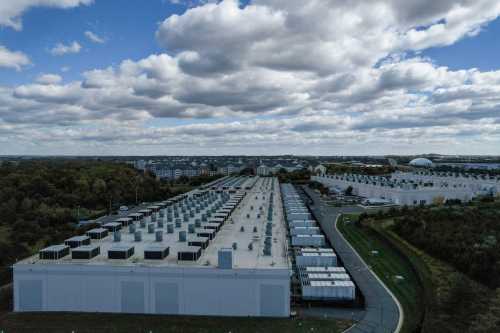
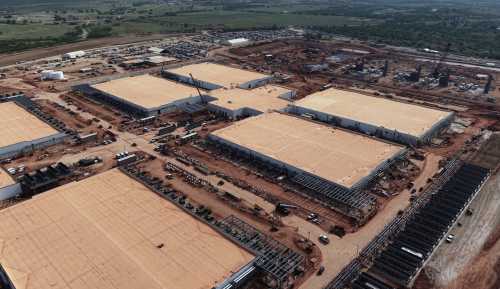
Given the massive amount of compute needed to run AI models and expectations for future demand, data centers have grown increasingly large. For instance, hyperscale facilities often span multiple football fields of land and require significant resources, causing concerns about their implication for the climate at large in addition to more localized worries about air quality, drought, noise, and light pollution.
Researchers have sought to quantify these impacts, yet estimates vary greatly since analysts lack access to proprietary company data on data center construction and operations. The executive branch has been less focused on gathering relevant data, instead promoting permitting reforms and expanding energy access. Without robust and transparent public information about short- and long-term effects, communities’ concerns around data centers escalate and create problems for the future of AI.
This sentiment was abundantly clear amid opposition to xAI’s facility in Memphis, Tennessee, where residents who already face disproportionately high cancer risk feared the company’s use of turbines would further worsen air quality and community health. Such concerns prompted a community organization to undertake its own monitoring of data center pollution and the NAACP to file a lawsuit against xAI.
The lack of transparency also furthers speculation about companies’ regard—or lack thereof—for the communities in which they build. Beyond worries about electricity rates and water usage, some people express broader concerns about AI in particular taking jobs and Big Tech in general gaining too much power over human affairs. Public opinion surveys document a continuing decline in trust in AI and Big Tech, and data centers can largely be seen as the physical manifestion of the companies leading these industries. This cumulative mistrust fuels community resistance and now encourages some policymakers to introduce legislation that would delay the construction of new data centers.
Beyond moratoriums
While most areas pushing back against data centers have proposed moratoriums—or temporary pauses on development—only a few jurisdictions have introduced longer-term bans. These bills would pose a threat to the digital economy if drafted too broadly and could create massive financial problems for a number of firms. Legislators should resist the impulse to stop technology and instead focus more on implementing responsible guardrails and restrictions that protect broadly shared principles.
Slowing new construction will not stop the overall demand for more computing power, and communities that choose to allow these projects—especially when they are against the will of some residents—should have safeguards and adequate oversight of the facilities’ impact. This should begin with increasing transparency into data center development, whether through community benefit agreements or other auditing or reporting requirements. Such measures can help ensure data centers are not built at the expense of local residents but instead serve the needs of the surrounding community.
Similarly, officials and legislators at the state level need to implement protections for ratepayers whose electricity bills may be affected by surrounding developments. The Trump administration has acknowledged the need for such protections, and some companies have pledged to cover their costs, but enforcement and additional requirements need to move beyond the voluntary stage to more meaningful protections. One bill in Congress addressing these challenges, the Ratepayer Protection Act, recently advanced in the U.S. House of Representatives.
If enacted, moratoriums should provide time for raising questions, advancing community benefit agreements, and finding reciprocity in the infrastructure needs of host cities. Town halls and other community engagement opportunities are an important part of this process. Communities need transparent information that helps them understand the issues at stake. Large tech firms need to understand that public education is a vital part of their responsibility to local communities.
Related Content
Authors


The Brookings Institution is committed to quality, independence, and impact.
We are supported by a diverse array of funders. In line with our values and policies, each Brookings publication represents the sole views of its author(s).


Commentary
Data center moratoriums are not a substitute for oversight
July 28, 2026