This piece is part of the “Blowback: How the Iran war may change the world” series, which features original analyses and policy recommendations by experts on the immediate and prospective long-term fallout from the 2026 Iran war.
Summary of the issue
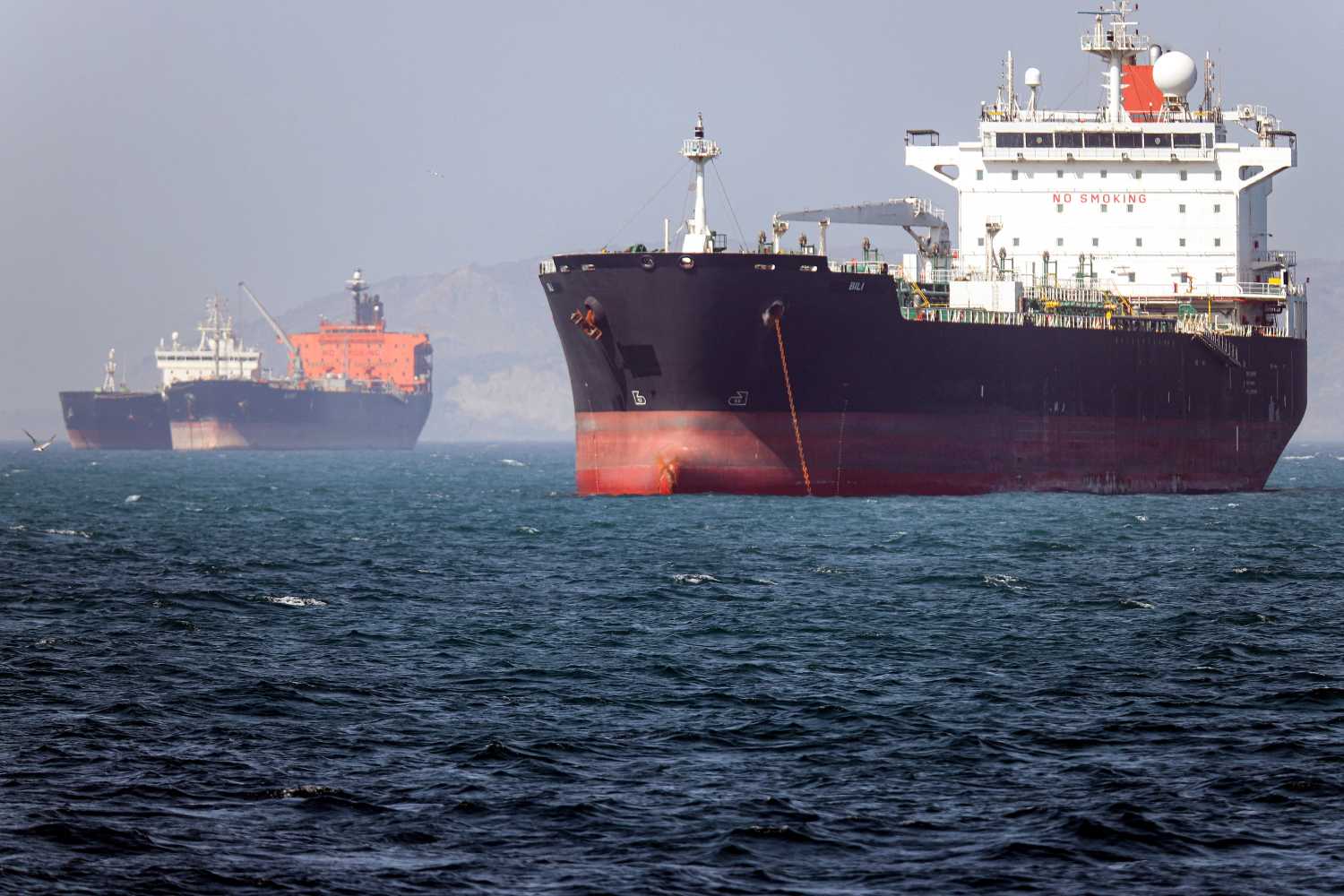
Whatever happens in the coming days in the Strait of Hormuz, Iran has already introduced a potentially significant precedent: access to key maritime chokepoints may be conditioned on political relationships rather than established norms of open transit. Iran’s reported practice of selectively allowing passage to vessels linked to Russia, China, Pakistan, and other countries aligned with Tehran may prove temporary and remain limited to the current conflict. But with Iran reportedly favoring some vessels and the U.S. military reportedly helping others transit the strait, passage is no longer operating on a fully open basis. Iran has shown how access to a critical shipping route can be used to reward partners, disadvantage rivals, and create new forms of geopolitical leverage at a time when the long-standing principle of freedom of navigation is under increasing pressure.
Background
Since the strait was closed at the end of February, prices of oil and liquefied natural gas (LNG) have risen alongside disruptions to supplies of petroleum derivatives, fertilizers, aluminum, plastics, and other industrial goods. Iran has restricted passage through the strait. Tehran’s recently created Persian Gulf Strait Authority says its permission is needed to sail through the strait and that it will charge tolls (or fees, as Iran is now labeling them) of up to $2 million per passage. Charges associated with transit are not unprecedented—the Suez and Panama canals both levy fees for passage. Policymakers have floated charging tolls at other waterways, such as the Strait of Malacca, which is as important to trade and energy flows as Hormuz.
A potentially more significant development is Iran’s reported preference for ships from allies, such as Russia and China, or those with ties to Iran, such as India and Pakistan. To obtain permission to transit the strait, vessels must email information not only about the cargo and the vessel’s origin and destination, but also the flag, registered owner and manager, and the nationalities of the crew. (CNN published the required form.) A related phenomenon has appeared in the Red Sea, where some vessels have faced less risk of Houthi attack based on their perceived affiliations.
What happens in Hormuz could have repercussions at other geographically similar waterways—the Bab el-Mandeb (Red Sea/Houthis), the Strait of Malacca (bordered by Malaysia, Indonesia, and Singapore), the Danish Straits, the Taiwan Strait, and the South China Sea. States bordering those other strategic chokepoints have long possessed varying degrees of potential influence over transit. The concern is that the events taking place in the Strait of Hormuz may weaken norms against using that influence as a source of geopolitical leverage during periods of geopolitical conflict.

Although norms and customs have governed the sea since antiquity, the modern principle of freedom of navigation is usually dated to 1609 when Dutch jurist Hugo Grotius published “Mare Liberum” (The Free Sea), which argued that the seas should be open to vessels of all nations. It was, historians say, a challenge to the claims of control by the Portuguese and British. Over time, that principle became embedded in international practice and was codified in the 1982 United Nations Convention on the Law of the Sea (UNCLOS) through the doctrine of “transit passage,” which limits the ability of coastal states to impede movement through international straits. This stands in contrast to “innocent passage,” which gives the coastal state more leeway. Iran argues that the innocent passage standard applies to the strait, while the United States argues that transit passage is the right of all nations.
The U.S. Navy frequently engages in freedom of navigation operations to assert its rights to pass through various chokepoints, notably in the South China Sea. During periods of disruption, the United States and its partners have also taken more active measures to facilitate commercial transit, most recently in the Red Sea. In response to the Hormuz crisis, the United States announced a military operation intended to assist commercial passage through the strait and has reportedly continued coordinating the transit of some vessels after the operation was paused.
Implications
Temporary disruptions to shipping routes are not new, and global markets have demonstrated tremendous capacity to adapt through rerouting, higher inventories, price adjustment, and alternative transport networks. The prospect of tolls has attracted attention. Yet markets can probably absorb fees that add an estimated $1 per barrel of oil. Contingent access raises a different concern. Iran’s efforts to tie permission to a vessel’s origin, destination, ownership, and crew nationality—much like the Houthis’ more informal pattern of differentiated targeting in the Red Sea—introduce political criteria into what had been an open transit route. Once access becomes politically conditioned, states can use it to pressure adversaries, reward partners, generate economic rents, and strengthen politically aligned commercial networks.
Smaller states are voicing concerns that politically conditioned access to international waterways will occur at their expense. As Liberia’s ambassador to the United Nations recently told the U.N. Security Council, “Today’s maritime chokepoints are no longer just passages—they are pressure valves on the global economy. When they are squeezed, the world feels it. The innocents; men, women, children, babies suffer. “The growing interference with commercial shipping is not incidental—it is strategic. We are witnessing the creeping normalization of disruption as leverage. That is dangerous. Because once obstruction becomes a tactic, stability becomes negotiable. And when stability is negotiable, the smallest economies, like that of my country, pay the highest price.”
Maritime transport accounts for roughly 80% of the global movement of goods, much of it flowing through a small number of heavily used chokepoints. Trade is concentrated along these routes because they provide the cheapest, fastest connections between major markets. When those routes are disrupted, goods take longer and cost more to reach consumers and businesses.
Open maritime transit also reduces the extent to which uneven geographic distribution of natural resources that underpin energy, food production, and industrial activity translates into economic and strategic vulnerability. Unlike many production activities, neither natural resource endowments nor the maritime corridors that connect them to global markets can be moved elsewhere. Without open transit, geography matters more, scarcity matters more, and shocks hurt more. The costs would fall heaviest on smaller and more trade-dependent countries with fewer alternatives.
Much recent global economic restructuring reflects a shift in objectives from pure efficiency to resilience, security, and geopolitical alignment. Concerns about supply-chain fragility, economic security, and geopolitical risk play a role. Governments have increasingly used trade, investment, technology, and industrial policy to pursue strategic objectives, often at the expense of established international rules and norms. Yet the physical circulatory systems that move goods around the world have remained largely open. Most firms still operate on the assumption that major maritime transit routes will stay broadly accessible despite geopolitical tensions.
Iran’s actions in the Strait of Hormuz raise the possibility that physical transit networks could become subject to the same pressures reshaping other parts of the global economy. The significance of selective access is not that it shuts down commerce altogether. States do not need to stop trade to gain influence over it; selective access allows them to impose costs on some entities while conferring advantage on others.
The incentives to preserve open transit remain substantial. Most major trading economies depend heavily on broadly accessible maritime routes and would bear significant costs from any generalized shift toward politically conditioned access. Indeed, politically differentiated access remains largely confined to the Strait of Hormuz and the Red Sea. It has not yet emerged significantly in waterways like the Black Sea, despite intense conflict.
A more geopolitically contingent transit system would not end global commerce. Markets would adapt and reshape. But adaptation itself would be driven by political—not economic or natural—forces. States and firms would face growing pressure to align with countries capable of securing access to critical supplies or controlling the routes through which they move. The result would be favored access, differentiated costs, and new forms of geopolitical leverage. The combination of high interdependence, geographic concentration, and geopolitical rivalry creates incentives for the use and accumulation of coercive leverage precisely because so much commerce depends on a limited number of routes.
Signs of strain in the global norm of open transit were visible even before the crisis in the Strait of Hormuz. The United States and China have been at odds over influence in the Panama Canal, while China’s continued assertion of expansive claims in the South China Sea despite adverse international rulings under UNCLOS has raised broader concerns about freedom of navigation. Scholars of maritime governance have increasingly warned that competing interpretations of maritime rights and coercive efforts to enforce them risk eroding freedom of navigation as a public good.
The openness of global maritime transit routes didn’t emerge from market forces alone. For decades, the United States has supplied a disproportionate share of the hard-security and legal-signaling infrastructure that underpins freedom of navigation. But sustaining that system is costly, and the incentives supporting that system may weaken if major powers place greater value on strategic leverage than on preserving universally accessible transit.
Policy recommendations
The challenge is not simply to restore passage through one strait, but to prevent politically differentiated access to major maritime chokepoints from becoming normalized. The goal should be to preserve the incentives that sustain open transit while keeping the attractiveness of contingent access as a source of leverage low.
- Do no harm. Policymakers should avoid steps that normalize politically differentiated access to key waterways. In the near term, the United States should avoid any deal with Iran that legitimizes politically differentiated access to the Strait of Hormuz. More broadly, major powers should resist the temptation to create competing systems of privileged access through exclusive security arrangements, politically aligned trade corridors, or other mechanisms that tie transit rights to geopolitical alignment.
- Transparency. Transparency cannot prevent contingent access, but it can make it harder to disguise. Liberia’s U.N. ambassador has proposed“a standing, independent incident-tracking and verification mechanism, drawing on the expertise of the International Maritime Organization, to provide real-time, depoliticized reporting on disruptions to commercial shipping.” Independent monitoring would help distinguish ordinary disruptions from politically differentiated transit arrangements, raising the reputational and diplomatic costs of using access as leverage.
- Freedom of navigation. Maintaining open transit routes requires credible signals that excessive claims and politically differentiated access arrangements will be contested. As our colleague Bruce Jones writes, sustaining freedom of navigation in an era of growing threats to maritime commerce will require new military capabilities and new burden-sharing arrangements. By helping commercial vessels transit the Red Sea and Strait of Hormuz, the United States and its partners can weaken the ability of states or armed groups to use access as political leverage. But security is costly and difficult to sustain. As debates intensify over who benefits from maritime security and who should bear its costs, pressure to tie U.S. protection more closely to political alliances or to transactional arrangements will grow. The United States is unlikely to carry the full burden of maintaining open waterways indefinitely, particularly as maritime disruptions emerge in multiple regions simultaneously. Greater participation by allies and regional partners may be necessary to avoid creating competing systems of politically differentiated access.
- Diversification. Building alternatives to maritime chokepoints can reduce the leverage available to states that can enforce control of them and may be necessary in some circumstances. Diversification can improve resilience, but alternative routes are typically more expensive and less efficient than reinforcing the principle of open transit. Still, several such efforts are underway, some designed to route commerce through politically aligned networks. Middle East oil producers are considering expanding land routes (rail, pipeline, and truck) to avoid the strait. China and Russia are discussing new pipelinesto carry gas from Russia’s Arctic to Shanghai. For years, there’s been talk of building an alternative to the Panama Canal through Nicaragua, perhaps financed by China.
Authors


Related Content
The Brookings Institution is committed to quality, independence, and impact.
We are supported by a diverse array of funders. In line with our values and policies, each Brookings publication represents the sole views of its author(s).