An important part of China’s rise involves U.S.-China relations and power transitions between the two countries. In a speech at Towson State University, CNAPS Director Richard Bush addresses these issues and explores challenges they may create for the United States, China, and the rest of the world.
It is a great honor to speak to you this evening. I must say that my topic presents me with a rather daunting challenge. It could be the subject of a lecture series or a graduate seminar. There are many issues that I can only touch on lightly. But I will do my best.
To frame my remarks, I cite as my text a passage written by the Greek historian Thucydides almost twenty-five hundred years ago on the root cause of the Peloponnesian War. In paraphrase, Thucydides said, “The growth of the power of Athens, and the alarm which this inspired in Sparta – the leading power of the day, made war inevitable.” To state the idea generally, international conflict is likely when regional and global power balances shift quickly, and when a rising power challenges the status quo and the position of the state or states that guard the established order. Rising powers have a temptation to expand, and as they do so, they impinge on the interests of established powers. International relations specialists call this power transition theory. Recent examples of the phenomenon include the following:
- World War I was the tragic result of a fast-rising Germany’s challenge to the hegemony of Great Britain.
- The Pacific part of World War II was a function of Japan’s challenge to British and American dominance.
- The Cold War reflected the Soviet Union’s challenge to America’s newly won hegemony.
Now there is no question that China’s power is growing.
- Its economy is growing quite quickly – 10 percent a year for a quarter century.
- Its political influence has been growing, both around its periphery, but also in Latin America and Africa – for a variety of reasons. The most stunning example, I think, is the Republic of Korea, an ally of the United States for five decades, but now a very close partner – at least economically – of the People’s Republic of China.
- The budget of the People’s Liberation Army has grown 15 to 20 percent a year for two decades.
- In the first four years of this decade, the Chinese military has bought over $10 billion a year of military equipment – probably advanced military equipment – from foreign countries.
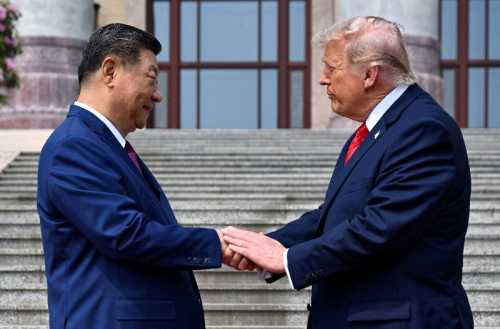
So something significant is going on and raises the question: might China someday challenge American preeminence in East Asia, if not the world? With China’s growing power – economic, diplomatic, military and so on – are we seeing the first stages of a testing of American dominance? Chinese President Hu Jintao’s presence at the G-20 meeting on Saturday posed that question in concrete terms.
But a rising power and the established power do not always descend into conflict. Great Britain accommodated to the rise of the United States about a century ago.
So this phenomenon of power transitions does pose both an intellectual and policy challenge. In thinking about China as the new power of the twentieth century, and going back to the analogy of Germany, we might ask, will China’s leaders over the long run tend to act like Wilhelm II, who pushed Europe into World War I? Will they end up like Helmut Kohl and Angela Merkel? Or will they, God forbid, act like Adolph Hitler?
The Brookings Institution is committed to quality, independence, and impact.
We are supported by a diverse array of funders. In line with our values and policies, each Brookings publication represents the sole views of its author(s).

Commentary
The Revival of China as a Great Power and What It Means for the United States
November 17, 2008