



The level of purges inside the Chinese Communist Party today is unprecedented in the post-Mao era, instilling a sense of fear amongst cadre at every level. On this episode, Joseph Torigian sits down with Ryan Hass and Jon Czin to unpack Xi Jinping’s approach to Party discipline and purges in the CCP, compare Xi’s outlook on Party politics to his father’s and Mao’s, and deliberate how Xi’s succession may look.
- Listen to The Beijing Brief on Apple, Spotify, or wherever you like to get podcasts.
- Watch episodes on YouTube.
- Learn about other Brookings podcasts from the Brookings Podcast Network.
- Sign up for the podcasts newsletter for occasional updates on featured episodes and new shows.
- Send feedback email to [email protected].
Transcript
[music]
TORIGIAN: Xi Jinping really cares about this idea of Party governance. And that seems kind of boring and, like, a slogan or boilerplate to maybe people on the outside. But Xi Jinping believes that the Chinese Communist Party is the only way of organizing his nation to achieve the rejuvenation that it deserves.
HASS: Hello, you’re listening to The Beijing Brief from the John L. Thornton China Center at Brookings, part of the Brookings Podcast Network. I’m Ryan Hass, director and senior fellow at the China Center.
CZIN: And I’m Jon Czin, fellow and Michael H. Armacost Chair in the China Center. The Beijing Brief is a biweekly podcast focused on unpacking the forces shaping U.S.-China relations and China’s political, economic, and technological ambitions.
[0:42]
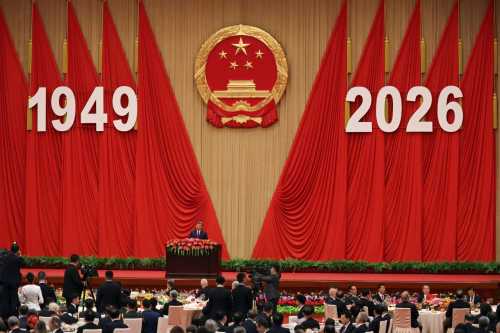
In late October, roughly 300 members of the Chinese Communist Party’s Central Committee met behind closed doors in Beijing for the Fifth Plenum, one of the last major party meetings before Xi is likely to start a new five-year term at next year’s Party Congress.
The meeting confirms the purges of several dozens Central Committee members, which only hammered home Xi’s key point during the meeting with rhetoric about the need for self-governance of the Party. Since his third term began in 2022, Xi has orchestrated the most brutal and thorough purge of the Party’s top ranks since the Mao era. He has purged every leader of the top military body, the Central Military Commission, leaving behind only him and the man who oversaw the investigations of his colleagues, General Zhang Shengmin.
In the last year alone, he has purged three members of the Politburo. This is not what many people would have expected at the start of Xi Jinping’s third term. He has pivoted from purging his enemies to purging his friends, including the military’s top officer.
Few China watchers would have expected these developments at the start of Xi’s third term when he stacked the party’s leadership with his old associates and muscled out any top official with ties to former bases of power in the Party.
All this turn is happening as Xi lays the groundwork to begin a fourth five-year term just about a year from now.
[1:56]
HASS: So, today we want to ask, what the hell is going on inside the Chinese Communist Party? And what does history tell us about the future direction of this party, particularly after Xi Jinping? There is no one better to help us read these tea leaves and understand the context of what is happening in Beijing than Professor Joseph Torigian. He is a professor at American University, as well as a senior fellow at the Council on Foreign Relations. He is the author of The Party’s Interests Come First, the first English language biography of Xi Jinping’s father, Xi Zhongxun. He’s also the author of Prestige, Manipulation, and Coercion: A Study of Elite Power Struggles in the Soviet Union and China After Stalin and Mao.
Joseph, welcome to the program
TORIGIAN: Huge fan of the podcast, huge fan of both of you. Look forward to learning from the two of you as well as we engage in conjecture about what this plenum means.
CZIN: Well, that’s very kind of you. We’re thrilled to have you on, Joseph.
[2:48]
So, we’ll start with something a little bit on the lighter side. What do you think is one common misconception that you hear, including among China watchers, about the thoroughgoing purges that have rocked the leadership over the last couple of years?
[3:02]
TORIGIAN: I think that the first sensibility that we should always bring to these purges is analytical humility. So, when you’re on social media, it’s amazing just how many rumors you see, and a sensitivity to what rumors are as a social phenomena I think is almost as useful as a sensitivity to how the party works.
And so, often what we see online is spread because people want to believe it, because they think that spreading it serves a particular goal, whether they believe in it or not. It gets a lot of attention. And then of course, nobody can really disprove these rumors because nobody actually knows what’s going on.
And so, a few times people have come to me and said, “Did you hear that blah, blah, blah happened?” And I say, “Well, that probably didn’t happen.” Occasionally it’s true that something did happen. In the case of Zhang Yizhen, in this case, the rumors that immediately preceded his fall happened to be true, but a broken clock is right, you know, twice a day, so we should always be careful.
And I spend a lot of time going through U.S. archives, and you see all kinds of rumors that some leader died or there was a coup. And so, I think that what history allows us to do is to give us a little bit more of a sort of chronological horizon to contextualize the very limited evidence that we do have.
So, it gives us the ability to structure questions, come up with different hypotheses, ask what’s more or less likely, and then put what does come to light into a broader sort of mosaic that is a little bit more useful, I think, than trying to figure out whether one particular rumor is coming from a reliable source or not.
[4:49]
And also to say that, you know, it’s not just that Westerners are dumb and they don’t understand China. These people who are getting purged, these are pretty serious people. Right? These are people who have been around the block more than once.
And this plenum I think gives us a little bit of a hint into why this keeps happening. So Xi Jinping really cares about this idea of Party governance. Right? And that seems kind of boring and, like, a slogan or boilerplate to maybe people on the outside. But Xi Jinping believes that the Chinese Communist Party is the only way of organizing his nation to achieve the rejuvenation that it deserves.
And this is a plenum where he talks about why that’s the case. It’s a plenum, according to him, that the Party can take a lot of pride in because it’s accentuating that they have solved a problem that no other Communist Party has, and which Xi Jinping says Marx and Engels didn’t even think about, which is how do you ensure that a regime that has existed for a long time is able to endure and ensure that it is pure and has a sense of ideal and conviction.
And so he gets to decide who has it and who doesn’t, and when people get something wrong, it’s not because they made a simple mistake, it’s because there’s something wrong with their political consciousness, and because it’s so hard to look at these documents and figure out just exactly what you’re supposed to do because of these enduring dilemmas of the party that people who have looked at history have known have existed since the beginning, and how easy it is to get tripped up.
And so you see this like do this, but also do that all over this document. Right? And so on the one hand, it says, we need to have an institutional cage, but we shouldn’t create so many institutions that people are forced to go through the motions and engage in formalism and bureaucratism. Xi says that people need to get in line and do exactly what the Party center wants, but he also says that there is no contradiction between this and a sense of responsibility and adapting to local conditions.
So, if you’re a local leader, what exactly you do in that kind of situation is fraught. And it’s especially fraught because Xi Jinping believes that a lot of people are two-faced, which means that you pretend to be on board, but you’re not. So, how do you figure out what kind of person is like that if everybody knows that they need to be careful?
You need to look for sort of indirect signals, and that’s not a legal thing. Right? It’s not really an objective thing. It means you have to look for more subjective ways of of reading people and for the people who are, you know, hoping to move forward in this impending succession, there’s probably a lot of stressed out people I would suspect in this system.
[7:31]
HASS: Well, there certainly are a lot of people who have been purged. And in previous eras it was possible for purged cadre to be rehabilitated. Deng Xiaoping was rehabilitated. Xi Jinping’s father, Xi Zhongxun, was rehabilitated. It hasn’t really happened under Xi Jinping. And so really curious to hear your thoughts on why there is no rehabilitation and also what effect the absence of sort of a path to redemption is having on the function of the Party.
[8:01]
TORIGIAN: Yeah, that’s a really wonderful question. When Peng Dehuai, the defense minister, was purged in 1959, Mao Zedong said, “We don’t resolve problems like this in the way the Soviets do,” which is another way of saying we don’t execute people. And so, you would see these remarkable stories where people like, as you said, Xi Jinping’s father was purged for 16 years, and this is a guy who when he was in solitary confinement would walk back and forth and count his steps so that his health would be good enough for when the party decided that they had given up on somebody who was loyal to the regime.
So, you could kind of wonder whether people like Bo Xilai are sitting in Qincheng and wondering if something ever went fundamentally wrong, that he would be let out. And so you don’t really, you’re right, you don’t really see that many executions, but we haven’t really seen rehabilitations either. And so Mao did have this idea that even if you suffered and you were innocent, it’s still an ennobling thing because you go through the forge and you come out on the other end and you work even harder to win back the Party.
But he hasn’t really returned to anyone and said, “Now that you have gone through these terrible, terrible things, we actually rely on you more because you didn’t give up,” right?
And so, think that the fact that, you know, getting it wrong, the consequences are so severe, and unlike in the past, it it seems even less likely that you would ever come out on the other side unscathed, I think it speaks to probably just how much fear there is within this system, right, because, you know, in the United States, if the, if you’re in a political party that does something you don’t like, you can leave it. Right? But for these people, there’s no out. There there’s no escape. Right? it’s either up, or it’s out completely.
And so, we know, like during the Mao years from the writings of his doctor, that the the, the stress led to a lot of similar manifestations of of disease among these people. Right? So many of them were taking sleeping pills. And so, I think that, you know, these plenums give us a reminder of of what it’s like to be in this organization that the United States finds itself in in competition with.
[10:22]
CZIN: I think your point about the fear is such a great one too, and especially when conjoined with the initial admonition about humility on this. I mean, one of the ways I console myself, about struggling to understand what’s going on inside the system is that maybe these guys don’t really know what’s, quote, “really going on inside the system.” Right?
And I think that’s especially true when you’re going into one of these plenums. Right? Like, these guys are flying in from all over the country. They may or may not have a lot of contact with the big ministries. Right? Or certainly with the PLA, which is probably scary to people inside the system. Right?
And then you show up at one of these Central Committee meetings, and several dozen of your colleagues are just gone without much explanation, especially at last year’s plenum. Or they’re just passing over people who are alternates and who should be next in the queue, again, without really much of an explanation about what’s going on. Right?
I think people forget that it’s heavily stovepiped, and it’s layered over with this conspiratorial culture that permeates the system. Right? And that the rumors are, are kind of an offshoot of that.
[11:19]
TORIGIAN: One of the people who did benefit from these purges was a man named Zhang Shengmin, who is a vice chairman of the Central Military Commission. He was promoted to the Politburo, and I’ve been reviewing some of the things that he’s written, and one thing that I found, I think, significant that he wrote is that people who are high-ranking military officers should make few friends, should recognize that any interaction with someone else has a political nature, and that you should be careful who you become friends with.
You know, during the Mao era, a lot of these old guys who had fought the revolution together were rather informal and would meet with each other, and that sometimes got them into trouble. But I think that this generation of military officers, like, they’re probably not going to barbecues and talking about Xi Jinping, which speaks to your point, Jon, which is it’s hard for other people to know what other people are thinking. Right?
And so Zhao Ziyang, the general secretary for part of the 1980s said, “You know what Chinese politics is at heart? Saying something to somebody’s face and saying something completely different behind their back.” Right?
So, these people who get promoted, like, looking back to history, some of them are like more excited than anything else because they think they’re gonna be different. Maybe there’s, like, some human story to explaining that, and other people are, like, dreading it when they get promoted because they know that the higher up they get, the easier it is to make a mistake. And then they get to that point, and they just hope for a soft landing. Like, that’s the most that they want. Right?
And so, I think there’s this idea that often people are power maximizers in the Leninist system, and that they’re always looking for a way to knock off Xi Jinping. I think most of the time they’re just … some of them really wanna like go after other people and climb to the top, but others are just, like, “How do I get to the other side of this unscathed?”
And so, even if you’re really careful, that doesn’t mean that you’re still gonna be okay.
[13:15]
CZIN: It reminds me of the old quip about Washington, right, that if you want a friend in Washington, get a dog. Which I haven’t quite found to be the case living in Washington a long time, but it is out there as kind of an analog to your observation. I wanted to ask you too about Xi’s father, and how this plays into all this, right, because Xi has done so much to kind of replicate this atmosphere of fear inside the Party, right, to make it so much more stringent and such a such a harder place to inhabit for so many cadre.
How do you think what he experienced, you know, and what his father experienced in the Mao era has informed or maybe not informed his approach to governance and his handling of the political system?
[13:57]
TORIGIAN: So, a lot of people have said that what Xi Jinping is doing is a rejection of his father’s legacy because of this idea that his father was uniquely liberal and humane. And for example, you see claims that he is the grandson of Mao Zedong and not the son of Xi Zhongxun.
I mean, we can only guess, right, whether what Xi Jinping is doing in his own mind is a reaction to the mistakes of his father or whether he believes that he’s inheriting his father’s legacy but adapting it in a new way, or just doesn’t even see that there’s a difference between what he’s doing and what his father would expect. Right? It’s it’s really hard to adjudicate among these hypotheses.
But when you look at Xi Jinping and his understanding of why purges happen and how far purges should go, his own language suggests that he thinks he’s more measured probably than we would think he is. And so, he’s talked about how during the Cultural Revolution, purges went too far and that it was a profoundly disillusioning experience.
But then he said that after Mao’s death, the Party went too far in another direction. And this was explicit in the plenum documents that came out, which is that it gave up on this seriousness, discipline, criticism, self-criticism, turning the blade inward.
And so, the people around him, they say kind of interesting things in this in this regard, where they say, you know, the Cultural Revolution was rooted in Mao’s desire to destroy enemies within the Party, and there have always been enemies within the Party. That problem never goes away. The issue was that he just estimated that there were too many of them.
And so, one of the ways they describe this colossal mistake is that if you’re trying to get to Shanghai but you end up in Tianjin, it doesn’t mean that you were trying to get to Tianjin in the first place. Right?
[15:50]
So, they’re saying that the Cultural Revolution, the, the inspiration there we can’t reject. And then so, okay, so we’re not gonna go as far as the Cultural Revolution, but, like, how far these purges go and how much you focus on struggle, like, these are not legal concepts. Right? And you don’t have a legal system to adjudicate these crimes because how you are punished, who is punished, what you actually did, and how the crimes are characterized are only about whatever you may or may not have done.
It’s more about what the party’s interests demand in a particular situation, especially with what the top leader thinks that they’re trying to achieve. And often they’re the only one who really understands this full set of calculations. Right? And also these top leaders, they, they too only have a dim understanding of what their deputies are up to half the time. Right?
And so, I think one of the central puzzles, if not the central puzzle for me looking at Chinese politics, is how it was the case that these deeply loyal people kept getting purged over and over because the top leader lost faith in them. The problem isn’t you losing the faith of your deputies, it’s it’s the other way around. Right? Power flows from the top and goes down.
And so, I would suspect that Xi Jinping thinks that the people he’s going after, it’s still nothing like the Mao era, because the Mao era really was, I think, something else. I think he thinks that he’s getting the balance right. Other people probably think he’s going too far, but this is an inherently subjective thing. Right?
[17:06]
HASS: One of the people who has been purged recently is a gentleman named Zhang Youxia. He used to be the vice chair of the Central Military Commission. You’ve been spending some time looking at his case, and also his relationship and his family’s relationship to the Xi family. What is your research uncovering?
TORIGIAN: Zhang Youxia is unique here for two reasons. One is his father was purged at the end of the Cultural Revolution. His father actually had been kind of a Bu Daoweng, who was often on the purging side as opposed to the one who was getting purged and and survived much better than Xi Jinping’s father did.
But then he made a terrible mistake at the end of the Cultural Revolution, which meant that the end of his career was a disgrace. And then his son, Zhang Youxia, he is fighting and killing Vietnamese on the border. Right? And there was this fear that that generation of young military officers wouldn’t be as dedicated, and here he’s doing that even though his father is purged.
And so Xi Jinping, he likes to tell a story about how he went to the grassroots when all these other princelings were not. Well, his father was also really powerful at that time. Zhang Youxia’s was not. Right? And that, that suggests like a level of loyalty that maybe Xi Jinping saw something in. So, I don’t know how close they were personally, but I would— you could see that their sort of narratives line up in that very interesting way.
And then as of this year, this guy, Zhang Youxia, that Xi Jinping so heavily relied upon, it was time for him to go. And we don’t know what happened, but whatever their personal relationship was, it makes me think of this quote that Mao made in 1959, around the time Peng Dehuai was purged, “My ideology, my rationality, and my emotions are always in line with each other.” Right? Which is a hard thing to pull off, I suppose, but for Mao it was true, and I think that Xi Jinping, it’s basically the same story.
[18:53]
CZIN: That is great. I could I could just do CCP party history time all day with you, Joseph.
TORIGIAN: You asked. I apologize to your listeners.
CZIN: No, no, no, no, no. That is, it’s is super interesting. I also wanted to ask you a more forward-looking question too. Right? Because like you said, you made this great point about this being a mosaic. Right? History helps us contextualize developments that are occurring now in in the leadership.
The metaphor I use sometimes is that this is like analytic impressionism. Right? If you look too closely at any one dot, like Zhang Youxia, you’re gonna go cross-eyed and not really understand what’s going on. But when you take a big step back and you look at the picture and composite, you can get some sense of of a pattern that’s going on here.
[19:31]
And I, I bring that up because in the context of Zhang Youxia, because he is but one case of many. Right? Like, most of the Central Committee members from the PLA have also been dismissed too.
And so, I wanted to get your sense of, you know, what do you think is both causing this, but also, based on your understanding of the Party’s history and the military’s history, what kind of impact, and this is admittedly speculative, do you think that this is having within the military and within the broader high command, right, to have such a a generational wire brushing of the military leadership right now?
[20:06]
TORIGIAN: Yeah. So, once again, this can only be conjecture, and so I I would love to hear both of your thoughts on this question as well. I study purges that happened decades ago. Right? And I often feel like I can only even get a very general sense of what happened at those moments because so much of it is ultimately the decision of one leader who doesn’t want to be understood. Right? That would defeat the purpose.
And so, I feel that for Xi Jinping, who he purges, how far the purges go, when he purges, the staging, how they’re characterized, they’re all based on an extraordinarily complicated set of calculations.
We do know that he has this view that for the party to survive, it needs to have partiness, party spirit, dangxin, which essentially is you believe in its mission, and that you put something bigger than yourself at the center of your life.
And so, when you make a mistake, it’s an issue of political consciousness. It’s it’s not actually making a mistake in an ambiguous environment. That for him, when you make a mistake, it’s because you don’t have faith in the cause anymore. Right? And so, that is why you don’t just get a slap on the wrist. That’s why you have to go. Right? Because you need to cleanse the ranks of this degradation.
And this also gets way into party history. Right? You constantly see this language even from Xi Jinping’s own father, that if you’re a healthy body, even the tiniest germ of bourgeois individualism can destroy a healthy body overnight if you are not aware of the fact that you are never sort of through the gate. You never reach an equilibrium where there’s no longer any purges that you need to do.
[21:50]
And so, even in these Fifth Plenary documents, there’s a lot of triumphal language, but it also says that the war on corruption is grave and complex and hasn’t ended, and that … he, he uses this, like, even ecological language of trees. Right? And what that means is, like, you’re never at a point where you stop ripping out the bad trees. Right? It has to be tended to.
And so, sometimes the purges are more intense, sometimes they’re less intense. And so, you know, for the people who are facing this kind of a situation, I would say that, it it probably intensifies at certain times and that the tension is especially pronounced now because of the upcoming succession politics of the Party Congress in 2027. Right?
And so, all of this ultimately gets down to the question of how Xi Jinping believes he can ensure that his vision of the country endures after he’s gone. Right? And he knows enough about Party history to know that the story of unintended consequences of leaders trying to impose their idea of how to immortalize their idea of how to ensure that the Party remains the Party and in control triggers after they’re gone people to go in a new direction because they’ve decided that actually created all of these structural problems that need to be resolved. Right?
And so, looking forward, I think that we don’t know what Xi Jinping will do, but the things that will shape him will be the political skill of the deputies around him, what he sees happen in other countries in terms of their succession stories. We know they’re always watching what goes on in in Russia in particular, for example.
[23:27]
I think a sense of whether things are moving in a positive direction, that relations with the U.S. are stable, that the economy, generally speaking, is able to endure in the ways that he thinks it has to, that I think will will smooth the succession. And then also his own health. Right?
But all of these things are really hard for people on the outside to read, and probably not easy for him to read either.
And so, we can kind of guess what’s shaping his decisions. Xi himself probably hasn’t made a decision yet. But, I wouldn’t want to be in the room with somebody for whom the most important thing is picking somebody exactly like you, and that he has every reason to suspect that you’re only acting like that kind of person in front of him.
[24:09]
HASS: Well, I want to turn us to succession in one moment, because I think it’s a really important topic to cover. But before we do so, I have a Taiwan question for you. Does the generational cleansing of the top leadership of the Chinese military make the risk of conflict higher or lower in the Taiwan Strait?
[24:29]
TORIGIAN: Yeah, this is a really tough question. I would say that it’s unlikely that people in the PLA are spending as much time on thinking about a Taiwan scenario, given how much other they have to think about because of these purges. Right? Like, it’s it’s hard to tell a story that these purges don’t have any effect on military readiness.
On the other hand, for Xi Jinping, I think it’s useful to remember that the way he thinks about it is that the reason the PLA has been successful in the past is that it has the right political consciousness. And to do that, you need to be extremely aggressive about rooting out corruption.
Because for him, corruption is only partly an issue of waste. It’s more broadly a question of whether you ask them to obey you in a power struggle within the elite, to obey you when there is an insurrection, or obey him when there is a war with the United States, that the absolute necessary condition, whatever anything else is going on, is that you have a loyal, politically indoctrinated and motivated PLA.
And so, he may feel that, you know, there’s certain costs over the short term, but that you have to do this anyways. Right? It’s not really like he has a choice.
[25:43]
And he said also, you know, in some of these speeches that have leaked to the PLA that if it makes sense from a military perspective to fight a war over Taiwan, we still shouldn’t do it. But if we have to do it for political reasons, even if it doesn’t benefit us from a military perspective, we still have to do it. Right?
And so, part of it is the military balance, but part of it is a more holistic understanding of the longer term trajectories of the Strait.
And my own sense of Xi Jinping, and he may change over the future, is that on the Taiwan question, the most important thing is to be able to say that he moved the ball along and that the situation is better than when he left it. And if he can say that, then that likely, I think, is good enough for now.
But the background to this is authoritarian leaders will do what they think they can get away with, and it can be sometimes hard for other people on the outside to appreciate just how much they care about these things. And so, this is just a conjecture based on my read of him, but, who knows, I think is the best way to put it.
[26:42]
CZIN: So, Joseph, your first book looked at the question we were just talking about a moment ago about succession and how that plays out and how it unfolds. And it looked in particular at the succession after the death of Mao and after the death of Stalin. How does that shape your thinking about what might come after Xi, both in terms of the personality, but more more so in terms of the process and most importantly the politics of how this all might work and play out, recognizing again that, you know, this is the field of conjecture rather than a a fully grounded analysis at this point.
[27:16]
TORIGIAN: Yeah. So, looking at the politics of the transition after Stalin’s death and the transition after Mao’s death, there were some similarities and some differences, and let me talk a little bit about the similarities. The first was this was a story of who had compromising material on whom, who did what when to whom, who hurt whom, who persecuted whom, who has the most skeletons in their closet, who can find out where those skeletons are, and really a lot of skepticism about whether the new constellation of forces will be good or bad for you, and fear. And that you wanna be able to come through the scrum in a good position, but you need to do it in a way that doesn’t shake the very foundations of the party either.
And so, there will be, I think, a moment where they will also be faced with the question of the legacy that Xi left them. And so, it’s possible that a new leader will decide that Xi Jinping left behind so many problems that there needs to be a fundamental course correction, or they might decide that Xi Jinping basically got it right, or they’ll decide that Xi Jinping got it wrong but that it’s too dangerous to try to fix things. Right? Those are, those are hard to predict.
What I would say is that typically what you don’t see, however, are a selection mechanism that the winner of the scrum would be the most popular because his policies are the most popular. That I think was a a really important insight that that came out of the new materials.
And that one of the reasons it’s hard to predict what the outcome will be is that there isn’t, like, a defined group who will get to decide. A lot of it will be the manipulation of ambiguous rules. Right? Like, who gets the jump on somebody else, who is able to maneuver where decisions are made and and who makes decisions.
[29:07]
And then of course the, the military and the political police I think will be really important too, because if you have a situation where rules are ambiguous, then ultimately the people who have the guns are the ones that get to decide.
[29:18]
Now, I think that that doesn’t mean that the military is going to be a kingmaker. The question is who is able to use the military as opposed to who the military uses. And they too will want to be careful about how they maneuver there because they won’t want to be seen as being, you know, overly political, but also not disloyal to whoever comes out on top.
[29:35]
HASS: We’re nearing the end of our time, Joseph, but before we let you go, we do want to push you into the realm of irresponsible speculation and to just have you help us sort of take a step further from where you just stopped in terms of anticipating what you think will happen whenever Xi Jinping’s time in office ends.
And if I could just append one additional question to this. There is a bit of a discussion in the China watching world, as you know, about whether or not Xi Jinping will enjoy a lifetime tenure in office or whether it will be sort of measured and metered out on a term by term basis. And so. I wonder where you come out on that question and what that tells us about sort of the type of futures we should be thinking about and anticipating going forward.
[30:24]
TORIGIAN: Yeah, that’s a really good question. I would suspect that Xi Jinping himself isn’t sure what he’s going to do yet, which makes it hard for us to suggest what he’ll do.
And that when we look at what his options are, none of them are good. Right? So, if you want to avoid the kind of situation that we saw in the Soviet Union and China after Stalin and Mao, and that a scrum leads to somebody who takes your country in a completely different direction, which is what happened in both of those cases, one option is that you pick a deputy while you’re still alive that you trust, and then you get to test them, you get to see whether they’re good at their job, you get to see whether they listen to you.
It gives them time to develop their own power and prestige to ensure that they are able to definitely be the successor as you’ve picked them after they’re gone.
And so, that’s kind of what happened in in China after Stalin died, which is we can’t allow a Khrushchev to happen, so I, Mao, am going to pick Liu Shaoqi.
And Liu Shaoqi was loyal to Mao, but Mao was just a hard guy to get along with. Right? He was this, like, philosopher king. He would disappear for months at a time. He was paranoid. Okay, so that didn’t work out.
And then Mao, at the end of his life, he considered a whole variety of different successors, and he landed on this person, Hua Guofeng, who wasn’t able to defeat Deng Xiaoping, who both saved the revolution, but in a way that was very different from Mao’s vision for the country. Right?
And so, if you don’t pick a successor, then you get exactly what I describe in my book, which is the possibility of of that outcome coming. Right? And so, I don’t know what you do with that situation. And like I said there are these, these different things that maybe shape him in, in terms of what he’s pushed towards and whatnot. There’s been a lot of talk about his health recently. Unfortunately for people on the outside, that that’s really hard to read.
And so, for Xi Jinping, right, he believes that what the West does to destroy communist nations isn’t to use violence, but one of the things you do is you win over certain people within your system with consumerism and materialism, and that’s what he thinks happened to the Soviet Union with Gorbachev, that it wasn’t that there was something wrong with the system, it was the outcome of a successful American influence operation, essentially. Right?
And so, given that nobody has able to come up with a good answer to this in the past, it’s hard for us to come up with a good answer that he might come to. And I suspect that people around him are also aware of this problem, and they know how potentially serious it is as a sense of instability for the Chinese system.
[32:52]
CZIN: Right. One last question, Joseph, before we let you go. As a historian, what is one lesson from the Party’s past that you think folks in Washington consistently forget when trying to interpret what’s going on in China?
[33:06]
TORIGIAN: That’s a really good question. Right? Like, it’s so hard to get Party politics right that it makes it hard to put yourself in a position where you feel the right to come out and tell everybody else why they’re so wrong. Right?
And so, I feel that because the evidence that we have is always so conducive to multiple legitimate hypotheses that I like to think of us all as on the same team as opposed to just taking potshots against each other.
But I would say that one thing I’m often skeptical about is this idea of factions. I see over and over and over again that who you worked with was really, really important. That is something that absolutely can’t be denied. And we know that there were these blocks within the Party where people had patronage systems and and supported each other and protected each other and promoted each other, which is what Xi Jinping hates so much because he recognizes just how corrosive that is for military effectiveness and for people to believe in a system where this kind of thing happens.
But we also have to say that what your relationship is with someone, it’s hard to guess how you feel about someone having worked with them, and then what that relationship means is fractured through so many different other contexts that we can get a sense of how these things might work, but also make it really hard to predict because it’s so context specific.
[34:26]
And so, Zhang Youxia’s father, he was in every mountaintop. Right? Basically. But that also doesn’t tell you who he gets along with and who will choose to betray him because it’s time for him to go, and it doesn’t tell you who he’s going to betray because he needs to because that’s what the Party tells him, and it doesn’t necessarily tell you who he got along with after working with them.
And one of the other things too that struck me about Zhang Youxia’s father is Peng Dehuai screamed at him all the time and in fact fired him on occasion, actually more than one occasion. And Zhou Enlai screamed at him and he cried because Zhou was, you know, screaming at him. But it doesn’t mean that you’re, you become disloyal to someone just because, you know, you went through something like that too. Right?
So, sometimes people are able to overcome their antagonisms, like Xi Zhongxun and Wang Zhen, they had this big fight over Xinjiang policy in the early 1950s, and so, they were kind of frenemies. Right? And so even the enemy/friend binary is like both context specific but also can change over time. Right?
And so, does it matter that they worked with each other? Yes. Do we understand that? Yes. But, does it sensitize us to things that might be going on? Yes, but we should also just be really cautious about how much it tells us at the same time.
[35:38]
CZIN: That’s a great point to end on because I think embedded in there is the really key insight that these guys, they’re just humans. Right? These are just people operating a big complex system and it’s messy and they’re just trying to figure it out too. Right? Which I felt like was so much of what I took away from your book about Xi Zhongxun in particular.
[35:55]
TORIGIAN: Well, like I said in the book too, right, like, I’m waiting for people to tell me what I got wrong because Party history can only be the latest draft. So, we have to treat our debates as contradictions among the people and not as manifestations of the wrong political consciousness.
[36:10]
HASS: Thank you for sharing your wisdom with us. It, it’s just been a really rich conversation. I’ve, I’ve taken away a few things that really are gonna stick with me. The, the first of which is how much you commit yourself to humility, in the way that you read these events.
You are one of the keenest observers of the Chinese Communist Party, one of America’s finest historians of the Chinese Communist Party, and even yet, you still maintain that degree of humility.
I think that the level of purges that we’re witnessing inside the Chinese Communist Party today is is unprecedented in the post-Mao era. It clearly is instilling a sense of fear amongst cadre, particularly given the absence of legal processes.
But you’ve really sort of helped put this in context by pointing out that the purges are just a natural and continuous part of the way that the Chinese Communist Party functions. It’s it’s part of the the self-cleansing and refreshment process that the Party uses.
The last thing that really sticks with me, Joseph, is your admonition that understanding human nature is essential to understanding and contextualizing events inside the Chinese Communist Party. And so, thank you for making us all smarter through this really interesting conversation.
TORIGIAN: Well, that is much too generous to say to someone who just engaged in so much conjecture and so much just saying that I don’t know what’s going on. You put it in the best possible light, I suppose, of humility as opposed to inability. And I’m a huge fan of both of you, and these were really wonderful questions, and I learned a lot. And I look forward to all your future podcasts because I listen to every one, so thank you.
[music]
HASS: On behalf of the team at the John L. Thornton China Center, thank you for listening to the Beijing Brief. This podcast is produced by the Brookings Podcast Network. For more in-depth analysis from our team, please visit the China Center on the Brookings website at Brookings dot edu slash ChinaCenter. You can also subscribe to our monthly newsletter, the China Bulletin, for the latest updates.
Our thanks to the production team, including supervising producer Ike Blake, senior producer Fred Dews, producer Allie Matthias, and video producers Chris Chang, Daniel Morales, and Teddy Wansink. Rachel Slattery designed the show’s artwork. We would also like to thank Alex Dimsdale, Joyce Yang, and Amanda Lee, as well as our colleagues in the John L. Thornton China Center, Foreign Policy, and the Office of Communications at Brookings for their support.
And to learn more about this podcast, go to Brookings dot edu slash TheBeijingBrief or wherever you like to get podcasts.
Participants
Hosts


Guest

The Brookings Institution is committed to quality, independence, and impact.
We are supported by a diverse array of funders. In line with our values and policies, each Brookings publication represents the sole views of its author(s).

Commentary
PodcastWhy is Xi Jinping purging leaders of his own party?
Listen on
The Beijing Brief
November 10, 2026