In January, Tracee Mergen, a supervisor in the FBI’s Minneapolis field office, was told to stop investigating the ICE agent who killed Renée Good. Instead, she quit. Last year, a court order prohibited DOGE from accessing Social Security records, but many Social Security Administration employees, fearing they’d be fired, continued to give DOGE access. They all had another option, but they likely didn’t know it.
In November 2025, Senators Mark Kelly (D-Ariz.) and Elissa Slotkin (D-Mich.) and four House members released a video reminding service members that they can and should refuse to obey unlawful orders. The President claimed they were “seditious” and could be “punish[ed] by death,” but American service members are bound by the Uniform Code of Military Justice to follow the law and, if given an illegal order, to refuse to obey it.
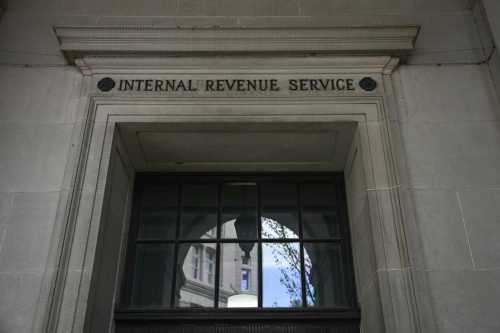
What about the more than 2 million civilian federal public servants? Unfortunately, there are many examples of illegal orders given to them. When a federal prosecutor is told to prosecute someone who has not committed a crime and for which there is no evidence, or is told to lie to the courts, must they do so? When employees at the IRS or Social Security are directed to release legally protected information, must they follow orders?
The law is clear: No.
The Follow the Rules Act—passed unanimously by Congress and signed into law by President Trump in 2017—unequivocally says that public servants cannot be compelled to obey illegal orders. Under the act, federal employees cannot be fired, demoted, or sanctioned in any way for refusing to follow an order that would violate the law—whether it’s the Constitution, statutes, agency rules, appropriations, or federal regulations. If directed to do something that violates a law, rule, or regulation, federal personnel are legally allowed to—and arguably must—refuse to obey.
When joining federal service, every public employee signs and recites an oath to “faithfully discharge the duties of the office … So help me God.” That oath requires that they comply with our nation’s laws. This is the sacred duty of all government employees. It doesn’t change from administration to administration.
This is not about policy disagreements: The law doesn’t permit a public servant, military or civilian, to disobey an order solely because they disagree with a policy. Nor does the law rely solely on the employee’s view that an order is unlawful. That decision is ultimately made by entities such as the Merit Systems Protection Board or a military court under the Uniform Code of Military Justice.
When considering questions about the legality of an order, federal employees have resources. Organizations such as Rise Up Federal Workers Legal Defense Network, The Orders Project, the Veterans Legal Services Clinic, as well as federal employee unions, can help them. They can also file a complaint with the Office of Special Counsel (OSC) or the Merit Systems Protection Board (MSPB), though the administration has systematically undermined those agencies.
However, most federal employees have never heard of the Follow the Rules Act. Why isn’t anyone telling them?
It’s clear why the administration doesn’t—it likely doesn’t want career public servants questioning their political overseers. But what about others who care about the public service? Thus far, there’s been passive silence from the press, members of Congress, civil institutions, trade unions, and others. They could follow the example of Sens. Kelly and Slotkin and their colleagues, reminding public servants of their rights and their obligations under the law.
(The Supreme Court recently determined that, with few exceptions, the president may fire appointed and confirmed heads of independent agencies at will and without cause. Although the Trump v. Slaughter rule may or may not ultimately be applied to lower-level federal employees, it does not confer on federal officials the right to order illegal acts, nor excuse public servants from obeying them. The Follow the Rules Act continues to apply.)
It takes real courage for public servants to demonstrate integrity in the face of an unlawful order. They may fear for their reputation, or losing their job, or maybe even being prosecuted. Nonetheless, some public servants already quit when asked to disobey the law. How many more would act if they knew the law is on their side? This kind of courage is essential: Hundreds of millions of Americans are depending on their public servants to do the right thing.
If the Follow the Rules Act were better known, then perhaps more public servants might be willing to resist improper orders—and more military and civilian leaders might think twice before giving them.
Related Content

Authors


The Brookings Institution is committed to quality, independence, and impact.
We are supported by a diverse array of funders. In line with our values and policies, each Brookings publication represents the sole views of its author(s).

Commentary
When told to break the law, must feds just follow orders?
September 10, 2026