The first review of the United States-Mexico-Canada Agreement (USMCA) has now concluded. Canada and Mexico agreed to extend the agreement for another 16 years, while the United States declined to do so. As a result, USMCA remains in force while Article 34.7 initiates a process of annual joint reviews, creating repeated opportunities to reconsider extension before the agreement’s scheduled expiration. Those immediate outcomes, however, are only part of the story.
The negotiators of the USMCA introduced an innovation that its predecessor, the North American Free Trade Agreement (NAFTA), lacked: a formal joint review six years after the agreement entered into force. The first review has now concluded, prompting immediate debate over whether the parties should have agreed to extend the agreement or to continue negotiations. If one or more parties decline to extend the agreement, the USMCA remains in force while the agreement enters the annual review process established by Article 34.7, creating repeated opportunities to revisit the question of extension before the agreement’s scheduled expiration.
The more enduring question is what the first review reveals about how North American economic integration is governed. By comparing the review mechanism established in the USMCA, the implementing legislation enacted by Congress, and the expectations expressed by U.S. policymakers when the agreement was negotiated, it is possible to assess not only whether the review occurred as planned, but whether it fulfilled the institutional purpose for which it was created.
Related Podcast
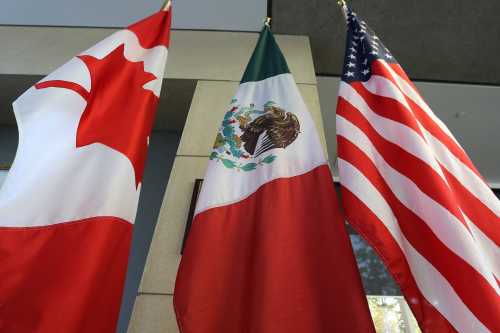
How the USMCA review was designed
The USMCA is unusual among modern trade agreements because it requires the three governments to periodically assess the agreement and decide whether to extend its duration. Article 34.7, “Review and Term Extension,” provides that the agreement will terminate 16 years after its entry into force unless all three parties agree to extend it for another 16-year term.
The review is conducted by the USMCA Free Trade Commission, established in Chapter 30 and composed of the United States trade representative and the Canadian and Mexican ministers responsible for international trade. The commission normally oversees implementation, coordinates the work of specialized committees, and considers matters arising under the agreement. Article 34.7 assigns it the additional responsibility of conducting a comprehensive review in the agreement’s sixth year.
The Article 34.7 joint review is distinct from routine implementation oversight. Before the review, each country may submit recommendations for action, which the commission considers before deciding on any appropriate steps. As part of the process, each government must state in writing, through its head of government, whether it wishes to extend the agreement for another 16-year term. If all three agree, the extension occurs automatically and the next review takes place six years later.
If one or more governments decline to support an extension, the agreement does not immediately expire. Instead, Article 34.7 requires the commission to meet annually for the remainder of the agreement’s term, providing repeated opportunities to reach consensus before the agreement would otherwise terminate in 2036. During this period, the parties also retain the ability to amend the agreement by mutual consent under Article 34.3 or to withdraw separately under Article 34.6.
Although Article 34.7 has been described as a “sunset clause,” the agreement is better understood as establishing a renewable 16-year term anchored by recurring institutional reviews. The possibility of expiration serves as an incentive to undertake those reviews rather than as their principal purpose.
How Congress expected the review to work
Understanding the review mechanism requires looking not only at the treaty text but also at the implementing legislation enacted by Congress. The United States-Mexico-Canada Agreement Implementation Act, signed into law on January 29, 2020, added Section 4611 to Title 19 of the U.S. Code, governing U.S. participation in joint reviews with Canada and Mexico.
Congress assigned primary responsibility for the review to the Office of the United States Trade Representative (USTR) while requiring substantial congressional consultation. At least 180 days before the six-year review, USTR must submit a report to the appropriate congressional committees assessing the operation of the USMCA, identifying the precise recommendations the United States intends to present, stating the U.S. position on whether the agreement should be extended, and describing the consultations undertaken in developing those recommendations. The report must also identify any improvements to the agreement that the administration believes should be considered.
The statute also anticipates the possibility that the parties may not agree to extend the agreement at the first review. If any USMCA country declines to support an extension, triggering the annual review process under Article 34.7, USTR must report to Congress at least 70 days before each subsequent annual review.
These provisions do more than establish reporting requirements. They embed the review within an ongoing process of executive-legislative consultation and strategic planning, suggesting that Congress envisioned it as a structured assessment of the agreement’s performance and future development rather than as a stand-alone diplomatic event.
What the review was intended to accomplish
The USMCA review clause was intended to solve a problem that U.S. officials and many members of Congress believed had emerged under NAFTA: The agreement had become economically significant but institutionally static. For President Donald Trump, the USMCA replaced what he characterized as an outdated and unbalanced NAFTA with a more reciprocal agreement better aligned with U.S. workers, manufacturing, and enforcement priorities. For former U.S. Trade Representative Robert Lighthizer, the review-and-extension mechanism was part of that broader correction. It ensured that the USMCA would not become another “eternal” trade agreement that remained in force long after economic conditions, political priorities, and congressional expectations had changed.
The design of Article 34.7 also reflected negotiations among the three countries over how to replace the Trump administration’s original proposal for a five-year sunset clause. Canada and Mexico, joined by much of the U.S. business community, opposed a mechanism that could inject recurring uncertainty into investment decisions. The renewable 16-year term reconciled two objectives: preserving a recurring point of accountability while avoiding the economic disruption that a hard sunset could create.
The review was included in the USMCA not simply to preserve leverage through the possibility of termination. Supporters presented the six-year review as a mechanism for maintaining political accountability. Periodic reviews would preserve congressional oversight, encourage governments to monitor implementation and enforcement, and create regular opportunities to update the agreement without waiting decades for a comprehensive renegotiation. The review clause therefore addressed two concerns simultaneously: U.S. frustration that NAFTA had become outdated and partner-country concern that a hard sunset would undermine investment certainty.
Underlying this design was a broader lesson many U.S. policymakers drew from the experience of NAFTA. After its contentious ratification, NAFTA largely receded from the congressional agenda except when disputes arose, while criticism of the agreement remained a recurring feature of American electoral politics. By the 2016 presidential election, both major-party nominees advocated renegotiating the agreement, albeit for different reasons. One implication was that congressional approval alone had not secured the agreement’s long-term political legitimacy.
Article 34.7 can therefore be understood as a response to the political experience of NAFTA, requiring governments to periodically evaluate, defend, and, where necessary, modernize the agreement rather than assuming its continued acceptance. The intended result was not recurring brinkmanship but recurring legitimacy.
How the first USMCA review worked
Measured against the requirements established in the USMCA and the implementing legislation enacted by Congress, the first review was a procedural success. The Office of the United States Trade Representative conducted the required consultations, submitted the reports mandated by Congress, and prepared the United States for the review in accordance with 19 U.S.C. § 4611. The Free Trade Commission met as contemplated by Article 34.7, and the institutional process established by the agreement functioned as intended.
The more difficult question is whether the review made the best use of that institutional process. Article 34.7 created a recurring opportunity to evaluate the operation of the agreement, identify needed improvements, and consider whether the agreement continued to serve the interests of the three governments. By the midpoint of the USMCA’s first term, there was no shortage of potential modernization topics. Governments, businesses, and outside experts had identified issues ranging from digital trade and artificial intelligence to critical minerals, improvements to the Rapid Response Labor Mechanism, dispute settlement, and selected rules of origin as areas where the agreement could be updated to reflect changing economic conditions and policy priorities.
Related Content

A review focused principally on the agreement itself might therefore have produced meaningful modernization while preserving the certainty that governments and private-sector stakeholders regarded as one of the USMCA’s principal strengths. Throughout North America, business organizations consistently emphasized the importance of a transparent review process that strengthened rather than reopened the agreement.
Instead, the review increasingly became intertwined with a broader set of negotiations extending well beyond the USMCA itself. Public discussion focused less on updating the agreement than on U.S. Section 232 tariffs, border security, fentanyl, migration, organized crime, and other issues. Those are all legitimate subjects for negotiation between neighboring countries, but they are not questions that only the Article 34.7 review mechanism could address. As the review assumed responsibility for a broader agenda, less attention was devoted to the distinctive governance functions that only the review itself was designed to perform.
The result should not be understood as a failure of the review mechanism. Rather, it illustrates a broader lesson about institutional design. Governance mechanisms are most effective when they are used for the purposes they are uniquely equipped to perform. The first USMCA review successfully implemented the procedures established by the agreement and by Congress, but it left important opportunities for modernization, increased certainty, and renewed political legitimacy only partially realized.
Because this was the first use of Article 34.7, governments, businesses, and other stakeholders were evaluating not only the USMCA but also the review mechanism itself. Confidence in recurring institutions is earned through repeated performance. The first review therefore presented an opportunity to establish the review process as a reliable forum for modernizing the agreement, strengthening legal certainty, and renewing confidence in the agreement and the review process itself. That opportunity was only partially realized. Future reviews will benefit if Article 34.7 becomes known principally as a forum for improving the agreement and reaffirming its continued value, rather than as another source of uncertainty about the future of North American trade.
Lessons for future reviews
The first USMCA review should not be judged simply by whether the parties agreed to extend the agreement or chose to continue negotiations. More important is what the process revealed about governing North American economic integration. The review mechanism established by Article 34.7 functioned as designed: The Free Trade Commission convened, the United States fulfilled the procedures established by Congress, and the institutional framework contemplated by the agreement operated as intended. The principal lesson is therefore not that the mechanism requires redesign, but that it should remain focused on the purposes for which it was created.
The first USMCA review should not be judged simply by whether the parties agreed to extend the agreement or chose to continue negotiations. More important is what the process revealed about governing North American economic integration.
Future reviews should begin with governments identifying potential modernization proposals well before the formal review period, allowing the Free Trade Commission and its specialized committees to build consensus on technical updates throughout the six-year cycle. Issues that require broader diplomatic bargaining—including tariffs, security cooperation, migration, or other bilateral disputes—will inevitably continue to be addressed through the many channels available to the three governments. Whether applied in the annual reviews contemplated by Article 34.7 or in the next six-year review following an extension, these lessons point toward a more focused and effective use of the review mechanism. The review itself should concentrate on those questions that only the review can answer: whether the agreement is operating effectively, what improvements are warranted, and whether it continues to merit another 16-year term.
Less, in this case, is likely to accomplish more. A disciplined review focused on improving the agreement rather than carrying the weight of the broader bilateral relationship would strengthen legal certainty for investors, preserve congressional oversight, and reinforce the political legitimacy that the review mechanism was originally designed to renew. If the first review clarifies that institutional lesson, it will have strengthened North American economic governance even if many of the region’s broader policy debates continue elsewhere.
Authors


The Brookings Institution is committed to quality, independence, and impact.
We are supported by a diverse array of funders. In line with our values and policies, each Brookings publication represents the sole views of its author(s).

Commentary
USMCA review reviewed: Lessons from the first use of USMCA’s review mechanism
July 2, 2026