




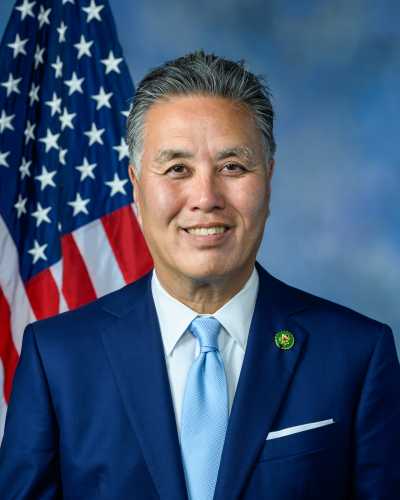
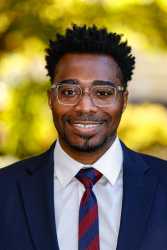
On this episode of The Brookings Current, Brookings Senior Fellow Rashawn Ray sits down with two former teachers-turned-lawmakers: Reps. Mark Takano (D-Calif.) and Kevin Kiley (I-Calif.), members of the House Committee on Education and the Workforce. They engage in a candid dialogue on the state of K-12 education amid changing student demographics, the introduction of AI in the classroom, and the challenge of workforce preparation.
Transcript
TAKANO: Look, we have on the right track with, I think, some of the innovations we’re seeing in elementary education, but the secondary education is also an area that is ripe for reform, and there are seeds of bipartisan cooperation that could happen.
KILEY: How often do we as members of Congress, other than on the Education Committee, how often do we talk about this just generational challenge that we face as a country in terms of widespread underachievement in our school system?
[music]
RAY: Hi, this is The Current from the Brookings Podcast Network. I’m Rashawn Ray, a senior fellow in Governance Studies, and we are here today as part of our Brookings Uprooted series, focused on the theme of civic engagement and community power.
Schools are navigating major shifts, from changing student demographics, to AI in the classroom, to the challenge of preparing students for today’s economy and workforce.
I’m grateful today to be joined by two members of Congress to talk about these critical education policy concerns. Thank you to Congressman Kiley and Congressman Takano for joining me today on Capitol Hill.
So you both sit on the House Education and Workforce Committee, the committee with direct oversight of education policy impacting every student and teacher in America from pre-K through the workforce. You two are also former teachers. And so as a educator myself, as a professor, I’m always excited to be around teachers and individuals who teach students.
In thinking about speaking before your colleagues in the House of Representatives or in front of students in schools, first off, I’m curious which one is more difficult. But but beyond that, I’m curious what similarities might exist between interacting with your colleagues here and then teaching students in a classroom.
[1:48]
TAKANO: Well, let’s start with the similarities. Teachers have to make a lot of decisions. Some people have characterized teaching as they would actually compare it to being an air traffic controller. Especially in the younger grades, you’re constantly having to anticipate complex situations. Think about what an air traffic controller does, manage all these flights coming in, avoiding collisions, you know, and managing. So a lot of what a teacher does is manage a classroom. And it’s enormously stressful.
Congress is somewhat similar. You never know what could come at you a certain day. But actually I think it’s not quite as demanding as being a teacher. I had 180 students. Sometimes if I took a sixth section, it would be more, another 30 students on top of the 180. You know, I have maybe seven or eight staff here in D.C., maybe the same in, well, California. Since I’m a committee ranking member, once a committee chairman, I had up to 30 additional staff. And managing staff is I think there’s a whole level of complexity with that. But if you have a staff director, a chief of staff, that’s something you don’t have as a teacher. So teachers are very lucky to have an aide in the room.
So which is easier? I think being a member of Congress is easier, to be honest with you. I mean, seriously. I mean, it’s, you’re laughing, you’re smiling at me, but I’m not trying to blow smoke up up teachers. I’m trying to say that to the American people that teaching is a lot more challenging job than many people think.
[3:25]
RAY: I completely agree. Teachers spend half of the waking day for children oftentimes, with our kids away from us. And when they’re awake, they’re spending those critical hours with them throughout the day. So I completely agree with that. I really like the air traffic controller analogy, the managing piece and —
[3:43] TAKANO: Yeah, I, I didn’t make this up. Somebody else wrote about this. So, let me say, the job of a teacher’s not done at the end of instruction. If you’re an English teacher, you have a stack of papers to get through. And then there’s lesson planning, and then if you’re a special education teacher, there’s IEP meetings, individualized education plans, for the special education students you have. So, you may have a smaller class load as a result. But teaching special education students is intense.
RAY: Yeah, most definitely. My godfather is a special education teacher.
TAKANO: Bless him. He’s doing the Lord’s work.
[4:20]
RAY: He is. He is. I learned a lot from him.
So as I asked Congressman Takano, I’m gonna ask you, Congressman Kiley, what do you think some of the similarities are between being in the classroom with students and interacting with your colleagues here in Washington?
[4:36]
KILEY: The similarities can be, greater than you might expect. I mean, yeah, there are certainly elements of of Congress that seem like you’re back in school in a lot of ways. And, you know, oftentimes the the challenges you face trying to kind of keep folks on the same page, keep chaos from breaking out in any given situation, you know, might be somewhat similar.
But, I had a great experience teaching. I taught 10th grade English in Los Angeles as part of Teach For America, and it’s certainly informed, you know, everything I’ve done as an elected official. And having worked as the vice chair of the Education Committee in California, and now as chair of the K-12 and pre-K subcommittee in Congress, I’ve, you know, very often thought back to my time as a classroom teacher.
As as a teacher as well, you kinda have to always keep your composure. You know? Students will do what they’ll do. You know? They’ll test you. Right? And kind of that’s the number one thing you have to attend to is classroom management. If you can’t have a well-managed classroom, then the learning objectives that you have are gonna be impossible or very difficult to achieve.
So I think that’s one of the things I learned early on, is that if you get angry or lose your composure or appear frustrated, then that just fans the flames. And I think it’s probably also true around here. People are always trying to test you, and get you to respond, get you to react. But, you know, if you manage to keep your calm, keep your composure, then things generally work out better
[6:08]
RAY: Yeah, I mean, that management piece is so critical, as both of you all noted.
And one of the reasons why I was so excited about this conversation is because my mother lived in Southern California the entire time I was in graduate school. So she was in Ontario, Rancho Cucamonga. I did my postdoc at Berkeley. I went to grad school in Indiana. Every chance I got, I was trying to get out of that Indiana weather to to get to sunny California, which I think was just great.
And when you start talking about teaching 10th grade, I have a 9th grader going to 10th grade taking English honors. So all of that is is spot on.
And one big thing that is shaping education today in our world is AI. And in 2025, you introduced the SAFE AI Research Grants Act. What was the motivation behind this, and how do we balance embracing innovation in schools with concerns over federal overreach into local curricula?
[6:59]
KILEY: Yeah, and and there is a balance, and that’s why, you know, I’ve held two committee hearings, subcommittee hearings on the topic of AI in the schools just over the last year and a half, because it’s an area that is changing extremely rapidly, and you see that some schools are embracing it, others not as much. And, you know, even within a given school, some teachers may be making great use of it, others not as much.
So I don’t think federal overreach is the answer, but what we have tried to do is just shine a spotlight on what’s working and and what’s not, and what the benefits are, and what the risks are.
I’m actually also soon gonna be introducing legislation that’s aimed at supporting teachers, so providing for professional development, for example, in terms of the effective use of AI in classrooms. So I see the federal role as a supporting one, not as one that’s, you know, dictating curriculum or anything like that.
On the broader question and the bill you refer to, so I I think that AI actually holds tremendous promise in classrooms if it’s utilized in the right way to really provide for personalized learning, to give every student access to resources that no student had access to, you know, just a few years ago, and to empower teachers to really focus on the inherently human parts of teaching.
But of course, we have to balance that against the risks that come with, you know, obviously the outright academic dishonesty, or the tendency to use these tools in a way that suspends critical thinking, or the risk that we’re going to be piling on even more screen time when students and kids already have far too much of it.
The the bill that I introduced isn’t dealing with education directly, but is seeking to address the broader risks associated with AI by providing funding for research that’s specifically addressed to safety-related issues. Because obviously there’s a lot of incentive to develop commercial uses of AI, but not as much when it comes to safety, and so I do think there’s a role for the federal government there.
[8:54]
RAY: Yeah, I mean, as a researcher, I always get excited about research funding for the work that we know can lift up what’s actually working. Congressman Takano, one of the things that Congressman Kiley just mentioned is about AI and it being an opportunity. How do you think about it? Is it an opportunity or is it a threat, particularly when we think about education and what’s happening in and around classrooms?
[9:16]
TAKANO: Well, I think it’s more of an opportunity than a threat, but I think our biggest risk is the lack of equity in how technology is acquired, the unevenness at which schools will be able to implement or integrate newer technologies into the curriculum. I do agree with Congressman Kiley that the role of the federal government is in supporting teachers and school systems, and getting teachers to be able to adapt to the new technologies.
And I do see a greater role that AI will promote in terms of individualized instruction, which could be helpful, especially in the early grades in terms of, you know, reading, reading acquisition. So we know so much more about how we can teach reading.
There was a bipartisan effort on the committee to promote the science of reading, the Mississippi Miracle, which California has already taken the cues, and as many other states have already kind of looked at it. But the question will be how we can sustain, I think, the gains that are made from these curricula. But notice, the curriculum is coming from state experiments.
But there is a definite federal role. I would say, you know, just as important as supporting teachers, not overstepping the curricular boundaries, is I think a huge transformative step that we can take is in fully funding IDEA or special education mandates that are in the law already.
In many cases, we could tremendously increase the amount of resources available to school districts, whether it’s red or blue states, rural or urban, that would be a huge transformative thing we can do for education. And that would, I think, do much to allow school systems to adapt to innovations in technology, and also, you know, really ensure that our students have access to the best instruction possible.
[11:14]
RAY: Got it. You know, I want to transition to talk about changing demographics in schools. And Congressman Kiley, I’ll start with you. You’ve championed expanding school choice through open enrollment, charter schools, transfer rights. Supporters say parental choice is an effective school for integrating diverse student populations. But how do you respond to critics who say it also risks deepening segregations along economic and racial lines?
[11:40]
KILEY: Well, the the data shows just the opposite. I mean, when you look at well-administered choice programs within districts, across districts, between traditional public schools and and charter schools– and, you know, even some element of private choice or, you know, at-home options– all of these things, when properly administered, work to the benefit of those who are being most inadequately served within the existing system.
You know, if you look at, for example, the enormous success story of of charter schools, they have done more to close achievement gaps in our public education system than probably any innovation that we have seen in modern U.S. history.
To take one example, if you look at the Success Academy network of schools in New York City, which is dozens of schools in New York, if they were their own school district, they would be literally the number one performing school district in the entire state of New York, even though they have, you know, virtually all of their students are coming from families below the poverty line.
So, you know, KIPP is another example of that. We have a KIPP school that I visited nearby here in in D.C. I also visited a Success Academy school, and I’ve visited a number of charters over the years. So that is, you know, one of the strongest arguments for expanding well-administered programs for providing greater options to families.
The alternative is to say your zip code is your destiny. Wherever you just happen to be born into, you will go to the neighborhood school that’s down the block. And if that’s a good school, then all right, you’re in good shape. If it happens to be a bad school or one where, you know, students are not taught at the level they should be, then we know that that means your prospects in life will be diminished.
And so I think that at the end of the day, if we want to reach our goal of assuring that every child in this country, regardless of their background, regardless of their their income level, has access to a great education, I think that that choice programs are a key part of that.
And by the way, what the data also shows is that when, for example, you expand charter schools or you expand a program like like in California, we call it districts of choice, which is essentially a a program where you can transfer from one school district to another, not only do the students who exercise that choice benefit, but it actually becomes a rising tide that lifts all boats, that other schools within the district or the district the students are transferring away from, they, you know, make positive changes. They provide advanced, more advanced course offerings. They see general improvement for the students there as well.
[14:09]
RAY: So Congressman Takano, you’ve spent, I think, nearly 25 years in classrooms serving diverse communities in Riverside County, California. When we talk about, say, equitable integration, can you explain to people what is that, and what does that actually require from federal and state policy?
[14:28]
TAKANO: Well, equitable education does not mean private equity coming over and monetizing the schools in the same way that we’ve seen nursing homes monetized by for-profit entities, or, you know, managed care plans, or even Medicare Advantage, which ultimately profit, and the shareholders are the primary motivation that eventually wins out. They may initially start off with innovating classrooms, but when it comes down to private entities taking over our schools, ultimately you can see the same logic taking over, the same profit motive taking over what maybe have been good intentions.
Let’s go back to the Mississippi Miracle, which was a public school innovation at the state level. I find this to be one of the more hopeful things. As someone who was trained in literacy for students at the higher upper grades who didn’t gain that literacy, it’s so important that every child in our school system learns to read by fourth grade so that after it’s all about reading to learn. That foundation is so important.
But what happens after that, we need to make sure that schools are adequately funded everywhere, that facilities are maintained, that books are in good repair. But here’s the other thing: Teachers need to be prepared for this diversity. And this administration has cut so many grant programs that would in fact assist low-income areas and low-income zip codes in order to be able to prepare teachers for that diversity, whether it’s language diversity, whether it’s cultural diversity, whether it’s teaching different types of students.
It it does, I think, help a teacher tremendously when they’re given meaningful guidance and even training in teaching diverse students in the school system. So I would, I would say that.
And you know, more than that, I think, we’ve seen in this country a resegregation of the schools by race and by income. Both are problematic, that you have de facto some parents able to give every opportunity to their, to their young person, to their child, and other parents that, you know, are stuck with schools that are, that are woefully underfunded. The response is is not to turn to private equity to monetize a public good.
[16:51]
RAY: You know, I think about growing up in the 1980s in schools, and they were more diverse then in schools than they are now. They’re highly segregated. I think about my children going to school now compared to to when I was.
So Congressman Kiley, let me come to you. People are are worried about the future of American education. I mean, when we observe and we look at global rankings, we see that the United States in many ways is staying stagnant and slips in many ways, but there are other countries leapfrogging. How do we maintain or kind of turn around our competitive advantage?
[17:24]
KILEY: Yeah, this is an enormous concern, and you’re exactly right. Our standing vis-à-vis, you know, comparable developed countries around the world has continued to sink, and the Nation’s Report Card that last came out showed that things are as as dire as they have ever been.
And this is despite the fact that we’ve seen an enormous increase in in spending in our schools, by the way. And, you know, we have way too many kids who are not reading, not doing math on grade level, who are being ill-prepared for participation in in modern society and for, and for active citizenship.
So it’s a tragedy for the students, the kids, the young people who are not getting the education that they deserve, and it is a grave threat for our country when you fast-forward, you know, to the next generation, and we’re not gonna be prepared, we’re not gonna be as competitive in comparison to to a lot of these other countries.
So I think that the good news is that we can actually look at particular parts of our country where the schools are doing well and see what are they doing well, how can we replicate that elsewhere in the country. How can we adopt the best practices that they’re using and see that they are more common. So what is Success Academy doing in New York City, for example, where you’re attaining enormous levels of success from kids from underserved communities. Or if you want to look at just, you know, for example, New Orleans after Hurricane Katrina, where they did this really revolutionary experiment and became a one-hundred percent charter network and saw some of the most significant gains from historically underserved students in terms of of their their student achievement.
So, there’s many, many other examples that we can look to of schools, of districts, of charters, of school leaders who are doing things the right way that, you know, set high expectations for their students, that insist upon accountability, that incorporate technology into the classroom in the right way.
And I think that the AI conversation is is key here as well, because I think that those districts or, for that matter, those countries, that on the one hand most effectively incorporate AI learning tools into the classroom and on the other hand prepare students for a world in which AI is becoming more and more ubiquitous are really gonna be at a tremendous advantage.
I do think that, and just as a final point, that part of the problem is that education perhaps has not gotten the focus in the national conversation that it should. I think that, you know, we have a lot of other issues we’re dealing with as a country.
But if you just kind of go back and look at major speeches from the last several presidents or the last several leaders of each chamber or what have you, how often do they really even talk about education? How often do we as members of Congress, other than on the Education Committee, how often do we talk about this just generational challenge that we face as a country in terms of widespread underachievement in our school system?
So I think that if we give it a higher level of priority on the political agenda, then at the very least we can have a conversation about why we have these problems and what the right solutions are.
[20:31]
RAY: So I want to come right back to this point. You two are both former teachers turned legislators sitting on a committee that shapes education policy for 340 million Americans and their families. If you could get Congress to take action on one thing that we haven’t discussed to help revitalize American schools, what would it be and why? So Congressman Kiley, I’ll start with you, and then Congressman Takano, we’ll give you the final word.
[20:56]
KILEY: Well, I think it would be passing a bill that I’ve introduced called the High Quality Charter Schools Act, which would provide a tax credit for starting new schools that are an expansion of an existing net– with a track record of success, so a a Success Academy or a KIPP or what have you, that will allow for more of these schools that have tons of students on the waiting lists to open up and provide millions of more students with access to a proven model that far outpaces the rest of the country.
Although I will just — I know you asked for one thing — but just I want to make sure I agree with … I express my strong agreement with Congressman Takano about the importance of teaching reading and phonics. We held a hearing on this in my subcommittee as well. And for a generation, we had this failed experiment with teaching, you know, kind of this new fad of whole word learning or reading comprehension. And we moved away from what the science has shown to be the foundations of basic literacy.
Thankfully, the the pendulum has swung back. Mississippi is a great example of that. Several states have showed enormous gains in student reading scores, and California is finally starting to get the message as well and start teaching phonics again.
And so that’s sort of something that hopefully can become even more widespread and that doesn’t necessarily, you know, get you into these heated hot button political issues that tends to mire education politics in other ways.
[22:16]
RAY: Yeah. Congressman Takano, what is the one issue?
[22:20]
TAKANO: Well, beyond fully funding IDA to have this infusion of money into the schools, I do think it would be a mistake for us to dilute the already limited budget for K-12 education with opportunities for monetization by private entities or private equity. I don’t think necessarily incentivizing a greater charter movement is gonna help us.
But I’m very pleased to see this movement toward a more of a science of reading approach for the early grades. But what to do about the secondary schools? That’s also a major area where I think we’ve been lost as a country.
One area that there’s consensus about between Democrats and Republicans is concurrent enrollment, dual enrollment, early college high schools, middle, middle college high schools. And I think there should be more discussion about how we blend that also with career and technical education, not vocational education, we call it career and technical education. They don’t have to be opposed to each other. People going into the trades or career and technical paths can be earning college credit at the same time, building a foundation for more higher education to be stacked on top of the credentials they earn.
And and so this idea that we can more efficiently prepare adolescents for work with meaningful credentials or an accelerated pathway into higher education, a less expensive one, is also something that I think Americans would be truly engaged with.
I’ll point to examples in New York City, the early college high schools by Bard College, the Bard Early College High School, tremendously sought after. By the way, a public school effort, not a charter effort, but an experiment that was undertaken by a partnership with an institution of higher learning, Bard College.
I would love for the committee to be able to take site visits to these kinds of experiments. Texas has moved really ahead with its public community college system and its partnership with local school districts.
I think it’s also an opportunity for us to take a serious whack at deepening the preparation for secondary school teachers if they not only are credentialed to teach high school, but also thought of as the assistant professor on the faculty, adjunct faculty of the community college. That does something to change how we view the high school teacher, but also how students look at who their instructor is, that the course they’re taking is not just biology, but maybe freshman college biology.
But we also need to deepen the ability and the capacity of our high school teachers to take on this advanced coursework. This is, I truly think, a huge step we need to take forward as a nation to really compete with the achievements that other national education systems are are achieving.
Look, we have on the right track with, I think, some of the innovations we’re seeing in elementary education, but the secondary education is also an area that is ripe for reform, and there are seeds of bipartisan cooperation that could happen.
RAY: You know, Congressman Takano, Congressman Kiley, I really appreciate both of you joining me today here on Capitol Hill. This has been a very important and insightful conversation that I think gives people in the United States and abroad a lot of things to think about as it relates to education.
[music]
Again, I’m Rashawn Ray, and as always, you can visit Brookings dot edu for information on education policy, AI, and the economy, as well as listen to more episodes of The Current. Thank you for joining.
Participants

More information:
- Listen to The Current on Apple, Spotify, or wherever you like to get podcasts.
- Watch full episodes on YouTube.
- Learn about other Brookings podcasts from the Brookings Podcast Network.
- Sign up for the podcasts newsletter for occasional updates on featured episodes and new shows.
- Send feedback email to [email protected].
The Brookings Institution is committed to quality, independence, and impact.
We are supported by a diverse array of funders. In line with our values and policies, each Brookings publication represents the sole views of its author(s).

Commentary
Podcast2 members of Congress on improving American education
Listen on
The Brookings Current
May 27, 2026