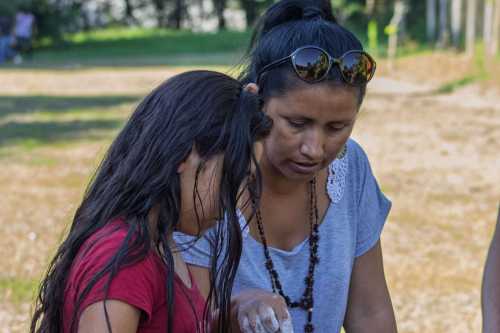
Chi’ishi1 is an Indigenous Qom teacher in Argentina who never dreamed of becoming a teacher as a child. She is part of the first wave of Indigenous teachers who, since the establishment of Intercultural Bilingual Education (IBE) in the country in the mid-1990s, now number 4,000. Chi’ishi’s pathway to teaching exemplifies the many struggles and supports that Indigenous girls and women face in their educational journeys, as well as the critical role they play in maintaining and transforming cultural norms and practices.
Her memories of her own schooling journey are overshadowed by the hostile environment she faced, the lack of teachers who spoke her language, the difficulty of having to secure resources to attend school, and the extra work she had to do at home as the oldest daughter. Nevertheless, her grandparents’ encouragement and dreams sustained her. During her adolescence, she had to pause her studies due to the distance to secondary school and concerns for her safety. After having her children and moving closer to town, Chi’ishi was able to continue studying and become a teacher. Those years were full of discoveries about her own culture, language, and Indigenous history, and introduced her to new friendships and mentors. Although hard, she was able to graduate and, after several years of looking, get a job as an IBE teacher—although not yet under permanent contract. Her studies and job allow her to be both a guardian and promoter of Indigenous language and knowledge, and an example of transcending traditional gender expectations. Chi’ishi is now producing her own materials to teach Qom, partnering with a university student to create an app to help learn Qom vocabulary, and looking for new ways to protect and mentor Indigenous adolescents during those challenging years.
Why does this matter?
Over the past 30 years, Argentina has made important strides in recognizing Indigenous children’s rights to relevant education through the gradual implementation of IBE policy, yet these advancements have not yet improved the educational outcomes of most Indigenous children and youth. Currently, only 2 out of every 10 Indigenous children and youth attend IBE schools, and their math and language achievements are on average 10 percentage points lower than their non-Indigenous counterparts.
Teacher preparation programs are one of the main levers through which IBE policy is translated into practice. Indigenous teachers, the majority of whom are women, are key actors in envisioning how IBE policy can fulfill its promise. In community and family life, Indigenous women play a fundamental role in cultural and language transmission. In their role as teachers, they extend their influence as cultural promoters from schools to other social spaces. At the same time, their lived experiences in their educational and professional trajectories, coupled with a deep knowledge of Indigenous values and practices, situate them not as mere policy implementers but as critical agents, interrogating and changing gender norms and expectations.
There is a need to know more about the experiences and insights of Indigenous women teachers regarding their educational and professional pathways. Ignoring this wealth of knowledge limits the ability of IBE policy and practice to strengthen itself based on the lessons learned by their key implementers. The hope is to effectively guarantee the right to relevant and meaningful education to a new generation of Indigenous girls, boys, and youth.
Centering the voices of Indigenous women teachers
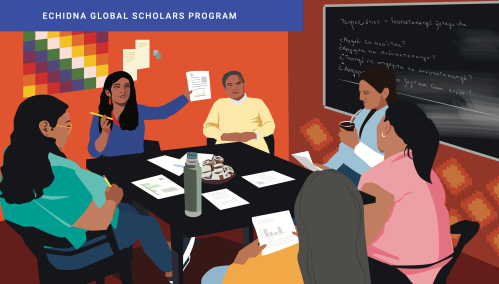
As a 2025 Echidna Global Scholar, I explored the experiences and perspectives of Indigenous women teachers. From July to September 2025, I conducted 10 storytelling interviews with Indigenous women teachers, surveys with nearly 40 teachers, two focus group discussions with Indigenous students, and a participatory workshop with various actors in IBE.
Findings reveal that Indigenous women, positioned at the center, interact with forces and actors who act as barriers to their educational and professional trajectories or as enablers. Analyzed through an ecological lens, they are situated within families, which in turn are within schools, and schools within communities and societies. Teachers use their agency, understood as the capacity to enact change in schools, to make individual decisions, which interact with personal qualities such as perseverance and hope, and the structural barriers and supports that influence teachers’ lives. These include barriers and supports:
At the family level
- Household chores burden Indigenous girls and women, limiting free and study time.
- Family encouragement and support sustain teachers practically and emotionally.
At the school level
- Hostile and discriminatory school experiences interrupt educational trajectories.
- Lack of collaboration between teachers diminishes the potential of IBE schools.
- Culture-affirming spaces strengthen Indigenous identity.
- Decolonized and critical content nurtures Indigenous identity and action.
- Mentoring and relationships promote a new sense of agency.
At the community and societal level
- Male-dominated public spaces negatively affect Indigenous women teachers’ self-confidence.
- Early pregnancy and motherhood hinder educational attainment.
- Distance and lack of resources complicate Indigenous women teachers’ educational trajectories and working conditions.
- Language barriers and weak academic quality delay studies and lead to dropout.
- Safety concerns and gender-based violence are grave threats to Indigenous girls and women.
- Public policies are fragmented, but Indigenous women teachers make strategic use of the weak web of interconnected supports they offer.
Now what?
Based on the possibilities opened by this first wave of Indigenous women teachers in Argentina and centered on their experiences and voices, I offer the following recommendations to support IBE policy in achieving its promise:
1. Strengthen commitment for change based on the values of diversity, multilingualism, and gender equality.
- Contribute to changing mindsets through media campaigns and by incorporating an intercultural approach to all pre-service teacher curricula.
- Promote conversations with Indigenous leaders and organizations about equality values, including gender equality, rooted in Indigenous cultural values.
2. Support Indigenous women teachers’ capacities to lead transformative education through new roles and spaces within the school, and networks to expand their reach.
- Conduct a participatory assessment of Indigenous teachers’ needs and pilot a teacher-training program focused on capacity-building.
- Appoint an IBE pedagogical leader and include the topic of the IBE approach in teachers’ regular school meetings.
3. Create the cohesion needed for systemic change by aligning policy actors and developing a shared vision and purpose for IBE.
- Write an institutional IBE school project that incorporates the shared purpose of IBE and promote a network of Indigenous women teachers to share learnings.
- Assist the school principal in building school-community relationships and clarify career pathways for Indigenous teachers.
Chi’ishi’s story shows how Indigenous women teachers have advanced individually, transcending obstacles, being strategic, and relying on supports and enablers. After 30 years, a new opportunity presents itself if support is given to Indigenous women teachers and other actors interested in contributing to the right to education of Indigenous girls, boys, and youth to work collectively toward a more just, diverse, and peaceful future built by all.
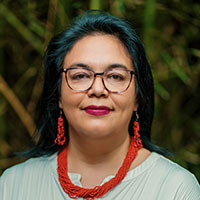
Author
Related Content
-
Footnotes
- Chi’ishi is a Qom name meaning morning star (lucero), often in reference to Venus’ light. This story is a composite.
The Brookings Institution is committed to quality, independence, and impact.
We are supported by a diverse array of funders. In line with our values and policies, each Brookings publication represents the sole views of its author(s).

Commentary
Indigenous women teachers are key to intercultural bilingual education in Argentina
July 16, 2026