
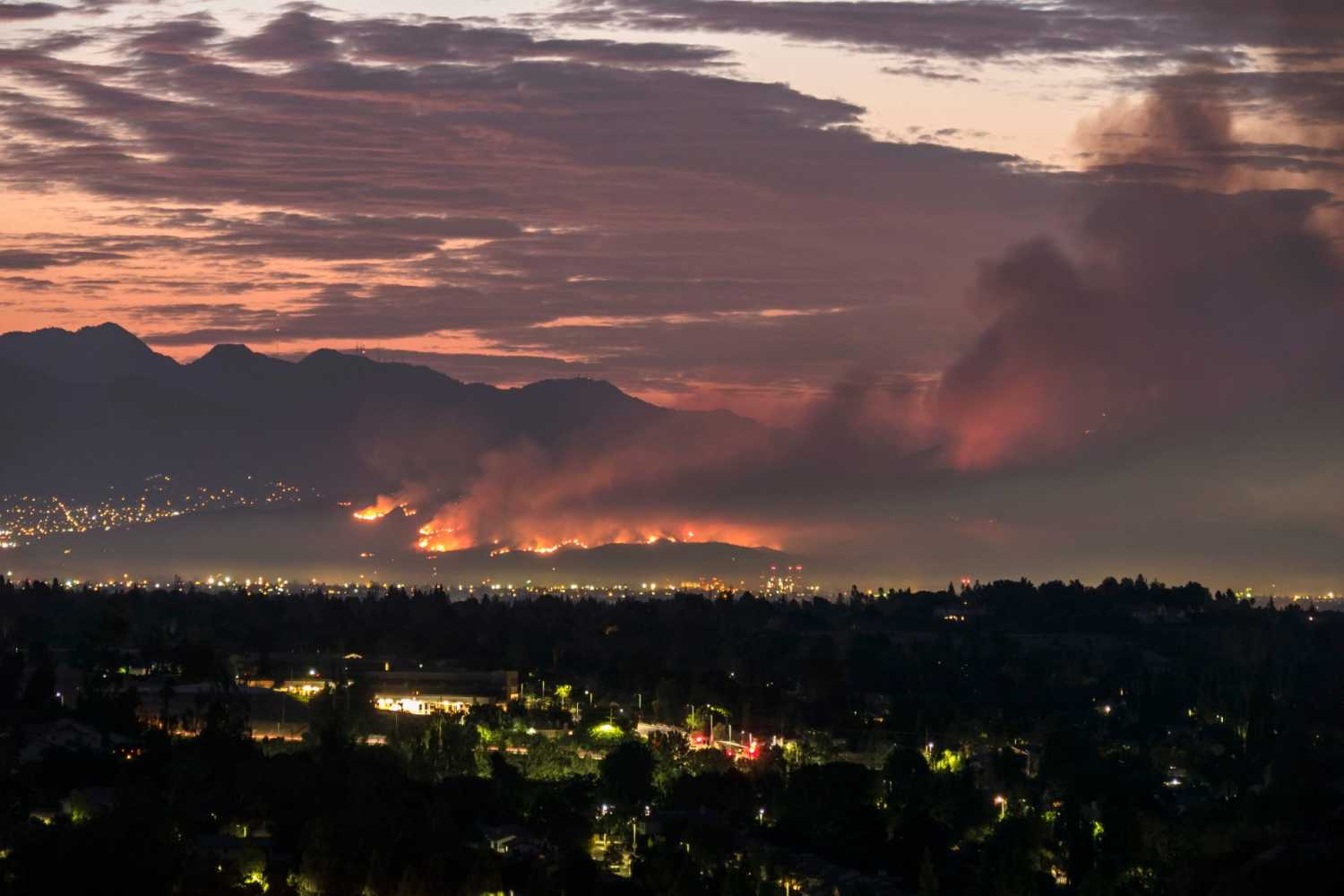
The homeowners insurance market has recently commanded headlines for all the wrong reasons. Average insurance premiums are estimated to have increased over 30% between 2020 and 2023; announcements that insurance companies are no longer writing policies in high-risk areas are becoming more common; and a larger proportion of households are underinsured, causing them to rely on “last resort” insurance or forgo insurance entirely. These issues point to a clear trend: Insurance markets are failing to keep up with changing climate risks.
However, the reality is much more complex. Insurance market instability is also the result of factors external to insurance, including federal, state, and local policies on climate resilience, land use, and zoning, as well as local and state histories of race-based exclusion.
Make no mistake: Insurance is an important part of managing disaster-related financial risk. But without drastic shifts in federal and state policies to reduce climate vulnerability in the short and medium term (and curb greenhouse gas emissions over the long term), changes in insurance market structures can only moderate so much risk.
Indeed, as our laws, policies, and standards on climate resilience have failed to keep pace with increases in disasters and extreme weather, a gap has developed between the risks we are regularly exposed to and what our homes and infrastructure can withstand. While some homeowners can bridge this gap themselves (either by paying higher premiums or fortifying their homes against disaster risks), others are already living with underinsured risks. And as this gap grows, the viability of homeownership as a pathway to upward economic mobility narrows for low-income and historically disadvantaged communities, including many Black and Latino or Hispanic Americans.
This report argues that the affordability and accessibility of homeowners insurance will be shaped not only by hazard exposure, but also by three place-based dynamics summarized in Table 1: migration and settlement patterns; discriminatory housing policy and segregation; and uneven local investment in resilience. Explored empirically in a companion analysis to this report, these dynamics illustrate the importance of a place- and race-based lens to policy and research on homeowners insurance. The report argues that a better understanding of these dynamics can extend analysis of climate-related insurance instability that often frames the problem as a market failure, and thus presents market-based mechanisms as the core solution rather than equitable investments into climate adaptation.
Examining climate change’s effect on homeowners insurance access and affordability
The relationship between the affordability of homeowners insurance and climate risk is more nuanced than reporting would suggest. While local disaster risks fueled by climate change are likely having an impact, other factors—including how premiums are calculated and regulated—are also influencing recent spikes. This nuance matters because it illustrates how a naive reading of the insurance market can mask local and state factors that drive unequal outcomes along lines of race and wealth.
What does the data show?
Data released by the U.S. Treasury Department’s Federal Insurance Office from 2018 to 2022 appear to indicate an empirical relationship between ZIP codes where insurance premiums have increased most rapidly and where climate risks, particularly for floods and wildfires, are more pronounced. Brookings analysis of this data shows that consumers living in the 20% of ZIP codes with the highest expected annual losses from extreme weather paid 82% more in premiums than those in the 20% of ZIP codes with the lowest expected annual losses. Nonrenewal rates (the proportion of policies that an insurer decides not to extend at term’s end) and paid-to-loss ratio (an estimate of how expensive it is for insurers to operate) both appear to have increased more steeply in the highest-risk ZIP codes. However, the data also show some counterintuitive outcomes, including high premiums in regions where climate risks are relatively mild in comparison to other regions.
An important limitation in the dataset is that it only covers five years of observations—too short to measure how climate risks have changed over the same period that premiums have increased. Indeed, research by Jesse D. Gourevitch and Carolyn Kousky concludes that the dataset does not show compelling evidence of climate-change-related nonrenewal or premium rate increases. Instead, the authors point to a range of other reasons that may account for insurers adjusting prices, including increased building materials and labor costs and migration into high-risk areas.
Because of these limitations in the Federal Insurance Office dataset, other researchers have turned to custom datasets. Researchers Benjamin J. Keys and Philip Mulder, for example, developed a dataset of 74 million premiums inferred from mortgage escrow payments spanning from 2014 to 2024. While 10 years is still a relatively short period for assessing changing disaster risks, by isolating their analysis to wildfire and hurricane exposure, the authors developed a more comprehensive measure of catastrophic losses. The study provides compelling evidence that climate-change-related losses are contributing to increasing insurance premiums. The authors find that about 45% of the premium increase in the top decile of ZIP codes for catastrophic losses can be explained by a pass-through of disaster-related losses in the reinsurance market.
Other factors are also playing an important role. The same research shows that increases in construction costs likely explain 35% of the increase in premiums, and that state-level insurance market regulation is also likely having an effect. These findings confirm prior research that insurance holders in states with less restrictive regulation are effectively subsidizing higher operating costs in states with highly regulated markets. This includes East Coast states such as Virginia and New Hampshire as well as some Midwest and Mountain West states such as Kansas and Montana.
How does homeowners insurance impact housing affordability and access?
Isolating how climate change is affecting access to and affordability of homes via insurance markets is a crucial step to understanding the impacts of instability in the market, but it’s challenging to assess with existing data. Insurance could affect home affordability through at least three channels. First, a mortgage is typically a precondition for a home loan, and so increasing insurance premiums can lock potential homebuyers out of housing markets in regions with high climate risks. Second, homeowners with mortgages are obligated to continue paying for coverage even as premiums increase, meaning they can be locked into unaffordable plans—giving them a natural incentive to underinsure. And third, the effects of increasing insurance premiums combined with a greater risk of catastrophic loss and damages could depress property values, limiting the viability of homeownership as a wealth-building asset.
There is some evidence for these effects. Recent studies demonstrate that low- and moderate-income homeowners are price-elastic to changes in premiums, while high-income homeowners are inelastic. This means that as premiums increase, low-income households are likely to reduce coverage, while high-income households will absorb the costs. There is also evidence based on the California housing market that increased nonrenewal rates in wildfire-prone areas have led higher-income (and thus more mobile) homeowners to exit the market, with the overall effect of decreasing property values for those who remain.
However, insurance premium calculations are not only a product of loss and damage—they also include neighborhood- and individual-level factors. In most states (excluding California, Maryland, and Massachusetts), credits scores are used as a proxy for risk, as individuals with low credit scores tend to file more claims than those with excellent scores. However, this likely reflects the fact that low-income homeowners file for smaller damage claims that a high-income homeowner wouldn’t use insurance to cover, effectively penalizing low-income homeowners for their lack of capital. Several studies show that individuals with lower credit scores have, on average, higher premiums compared to those with high credit scores, including in ZIP codes with relatively low disaster risks. Other neighborhood-level factors could also be augmenting some of the effects attributed to climate change. For example, Brookings research has demonstrated that properties in neighborhoods with a higher proportion of Black residents are devalued relative to neighborhoods with ostensibly the same characteristics but a majority of white residents. The perception of nonwhite neighborhoods as “risky” has also been linked to higher relative property taxes in Black- and Latino or Hispanic-majority neighborhoods.
These nuances don’t mean that climate change isn’t having an impact on homeowners insurance—it likely is. As climate change worsens and more households are exposed to extreme weather, climate change is likely to be an even larger driver of instability. However, recent research illustrates that the homeowners insurance market can’t be divorced from other factors, including important variation at the state and local level. By ignoring these interactions, analysis of the homeowners insurance market can mask distributional outcomes, including those across race, place, and wealth. Taking this evidence seriously, the next section explores three dynamics to make sense of how affordability and access might vary locally for different demographic groups as climate change creates more instability in the homeowners insurance market.
Migration and settlement patterns are exposing more Americans—particularly Black and Latino or Hispanic communities—to climate risks
Nationally, climate change has increased the number of regions that regularly experience extreme weather, exposing more households and communities to hazards. Meanwhile, the highest-risk geographies—primarily located in the South, Southeast, and West—have also seen sustained population booms. Alongside these national patterns, histories of race-based settlement and more recent migration trends have contributed to uneven climate risk exposure across race and ethnicity.
Despite the well-documented increase in the frequency and severity of extreme weather and disasters, many of the regions facing the worst threats still see high rates of domestic migration. For example, Sun Belt states such as South Carolina, Florida, Mississippi, and Texas have experienced migration-driven population growth for at least the last 50 years as families seek more affordable housing and warmer temperatures. Similar patterns have also occurred within states. The wildland-urban interface (WUI)—where combustible vegetation butts up against property in states such as California, Washington, and Oregon—has seen urban sprawl and rapid population growth. Nationally, the number of homes in the WUI has grown by about 350,000 each year since 2004, representing roughly 44 million homes as of 2020.
On one hand, these migration patterns have resulted in increased risks of property damage among high-wealth, white-majority neighborhoods, where households are more likely to be able to bear the costs. There is a correlation between neighborhoods with high median home values, proximity to woodlands or ocean views, and the frequency of disasters in these locations. In cities such as Miami, for example, the ZIP codes where premiums have increased most overlap with those where median property values are also substantially higher than the state average.
However, race-based patterns of settlement and migration have also resulted in heightened disaster exposure among Black and Latino or Hispanic Americans, particularly for flood risk. Because of historic settlement patterns, today Black Americans are 9% more likely than the average American to be living in areas where property is at risk of coastal flooding and sea level rise, and minority populations are at a 16% higher risk of inland flooding. Historic Black urban centers are concentrated in Southern U.S. regions disproportionately exposed to hurricanes, extreme winds, and coastal flooding. Seven of the top 10 Black-majority cities by population size are in Southern states, including Memphis, Tenn.; New Orleans; Atlanta; and Baton Rouge, La. Similarly, Latino or Hispanic communities are also overexposed to hydrological hazards: They are 47% more likely to live in areas exposed to coastal flooding. Waves of immigration from Central and South America have led to higher concentrations of Latino or Hispanic Americans in Floridian cities such as Miami as well as Texan Gulf cities such as Corpus Christi.
More recently, a higher proportion of Black and Latino or Hispanic Americans have migrated away from relatively low-risk areas to more disaster-prone states and cities. Black Americans’ migration southward has accelerated alongside pull factors, including the economic booms occurring in Southern cities such as Atlanta, and push factors, such as the COVID-19 pandemic, which drove an outpouring of residents from urban cores. The cities with the largest numbers of Black migrants—Charlotte, N.C.; Dallas; Phoenix; and Orlando, Fla.—all face higher levels of hazard exposure than other regions. Similarly, driven by immigration and a racially diversifying America, Latino or Hispanic populations have grown most substantially in Texas, California, and Florida. Coinciding with the growth of areas regularly exposed to hazards, these migration trends are also leading to new risks for racially diverse suburban and urban neighborhoods. For example, while wildfire risks have historically been lower for Latino or Hispanic Americans than for other racial groups, as wildfires increasingly spread to semi-urban and urban areas in California, the risk to those communities has also increased.
Part of the reason for the longevity of these migration trends is that climate change still isn’t a dominant factor in shaping migration, home purchase decisions, or housing market regulation. Overall, there is limited evidence that homebuyers consider climate risks above or even alongside other factors such as weather, neighborhood amenities, and proximity to infrastructure and services such as schools. Experiments run by the real estate firm Redfin recently demonstrated that homebuyers do consider climate risks when presented with clear information. However, with few federal regulations compelling home sellers, developers, or insurers to disclose parcel-level property risks, this information remains inaccessible to most. Meanwhile, zoning regulations and state and local land use policies continue to accelerate development in unsafe regions. In 2024, for example, Florida’s state government passed SB 180, waiving county-level resilient building standards in an effort to speed up housing construction and reduce home prices.
In sum, migration patterns across the U.S. are still driving settlement in regions that are becoming more exposed to property-damaging climate risks. While these patterns reflect homebuyers’ preferences, they also intersect with racial migratory histories and housing and zoning laws. In combination, these factors mean minority communities are more likely to reside in neighborhoods exposed to climate-related property damage.
Historically disadvantaged communities are more vulnerable to disasters and less able to absorb financial shocks
The legacies of discriminatory housing policies and residential segregation visibly shape climate risks in today’s built environments. Indeed, disaster-related loss and damage tend to reflect complex place-based factors such as wealth, poverty, and homeownership rates, which themselves are correlated with race and ethnicity. By increasing exposure and vulnerability to disasters, devaluing neighborhoods and inflating the price of risk, and reducing households’ ability to absorb costs, discriminatory housing policies have had the effect of amplifying climate risks as a financially destabilizing force for historically disadvantaged communities.
First, discriminatory housing policies have differentially shaped vulnerability to climate risk, leading to higher concentrations of risks in Black and Latino or Hispanic communities. Focusing on housing, Richard Rothstein has documented how institutions across the U.S. set out to racially segregate neighborhoods through national policies such as redlining and racially restrictive covenants, but also through the state-sanctioned actions of regional homeowners’ associations, insurance bodies, and school boards, among other institutions. In many cases, the legacy of these policies has been to lock in a path dependency that has led to other vulnerabilities. For example, historically redlined neighborhoods are less likely to have abundant green spaces and other permeable surfaces that help moderate flood risk. In Chicago, a city with notoriously high residential segregation, 87% of the flood claims lodged between 2007 and 2016 occurred in ZIP codes classified as disadvantaged. In ZIP codes with the highest number of claims, 93% of households were headed by a nonwhite resident. This pattern of minority communities clustered in flood zones is common in cities and towns across the South and East Coast, reflecting histories of land use policies in which Black and other nonwhite residents were segregated into less valuable, more exposed land.
Second, discriminatory housing policies have also left a legacy of place-based devaluation in historically disadvantaged neighborhoods, which has tended to inflate the price of risk in those communities. This bias creates economic barriers for current and prospective homeowners, which can amplify the effects of climate change on affordability and access. Nonwhite neighborhoods—and the businesses and households that reside in them—are still often perceived as “risky” by institutions such as credit and loan agencies in ways that diverge from actual risks. This is visible, for example, in where nationally significant employers such as specialty grocery chains open stores. Even in Black-majority neighborhoods where median incomes are high, grocers such as Whole Foods are less likely to open outlets. Brookings research has also demonstrated that even high-performing restaurants in Black-majority neighborhoods are financially hampered by a negative perception of neighborhood safety and environmentally noxious developments, such as heavy industry and arterial highways, which are more likely to be sited in historically disadvantaged communities. These place-based factors can depress real estate values and inflate the cost of risk, leading to higher relative premiums for homeowners in these neighborhoods and limiting homeownership as a wealth-building asset. In intersecting with climate change risks, these cost pressures can mean that even small disaster impacts in these communities can have large, negative impacts on household financial stability.
Finally, discriminatory housing policies have unevenly influenced the ability of households to absorb shocks. Persistent race-based gaps in wealth and homeownership are partially a legacy of discriminatory policies, and they mean that many nonwhite households are financially exposed when a disaster strikes. At the time of writing, 44.2% of Black Americans and 48.8% of Latino or Hispanic Americans own a home—substantially lower than the 75.1% of white Americans who own a home. Yet, Black and Latino or Hispanic Americans are also over-indexed in housing as an asset class, meaning they are more reliant on homeownership as a vehicle for intergenerational wealth transfer. This combination can be deadly following disaster events. Since the 2025 Los Angeles wildfires, Black residents in Altadena have experienced high rates of post-disaster displacement despite Black homeownership rates of 74%. Cost-burdened, unable to afford insurance, and lacking the capital to rebuild in the now expensive suburb, many Black Altadena residents may not return, losing the home values they had accrued over decades.
The effects of greater place-based vulnerability, inflated risk pricing, and a lower ability to absorb financial shocks share a connection to discriminatory housing policies. Together, these factors mean that instability in the homeowners insurance sector could produce disproportionately large, negative impacts on low-income, minority homeowners and prospective buyers.
Racial and wealth gaps in affordability and access are likely to be worse where local resilience investments fail to prioritize need
Local investments in resilience rarely reduce risk overall; rather, they determine which communities are protected and which are left exposed. Underinvesting in resilience—the ability of the built environment to withstand and recover quickly from disasters and extreme weather—creates gaps in protection that leave low-wealth and low-capacity communities more exposed to an unstable homeowners insurance market. The actions of local and state governments, as well as individuals and collectives such as homeowners’ associations and preservation societies, influence which communities are insulated from climate risks and which are not.
Similar to how past housing policies have shaped which communities are disproportionately vulnerable to disasters, resilience policies shape which communities are insulated from future risks. Take an East Coast city such as Charleston, S.C., for example, which faces an increasing number of sunny day floods as sea level rise pushes up water tables. Like many cities on the Eastern Seaboard, Charleston cannot completely mitigate local sea level rise. Nestled on an outcrop between two rivers and surrounded by sinking marshes, increasing coastal flooding is a geographic reality. However, resilience investments are shaping how different neighborhoods experience these risks. With city investments into a sea wall to protect the historic downtown and enable more development on the peninsula, water is being displaced into the outer lying, low-income, and majority-Black neighborhoods. In a very literal way, the city is confronting sea level rise by shifting the water from high-value white neighborhoods into poorer, low-valued, and mostly majority-Black neighborhoods.
Charleston is perhaps an extreme example, or at least an early one. But the lesson is this: Political decisions around resilience have consequences for which communities bear the economic burdens of adapting to climate change. Where governments, from the federal to local level, fail to equitably protect communities, households are forced to take on a greater responsibility for protecting against disasters. While some (often high-wealth) homeowners and communities are already successfully lobbying for more resilient homes and communities, others lack the resources to do so. Marin County, Calif., for example, a community on the outskirts of San Francisco where the median income was close to $150,000 in 2024, has been able to drive collective action on resilience, with residents banding together to fireproof their community. In contrast, despite clear economic and cultural value (not to mention being home to hundreds of thousands of people), the right for New Orleans to even exist is regularly questioned when hurricane season comes around.
On the other hand, in a federal policy environment unwilling to act on the threats climate change poses, there could be a premium placed on safety. Poorer households, with less capital to adapt themselves, could be priced out of relatively safe neighborhoods. So called “climate gentrification,” for example, has been identified in parts of Miami, with migration from high-risk, low-lying coastal neighborhoods to low-risk, higher-elevation neighborhoods, spurring new waves of development. While the evidence is ultimately inconclusive as to how widespread this phenomenon is, it’s another indication that, left unmanaged, instability in the housing market in response to climate risks is likely to have local effects with nuanced impacts along lines of race and wealth.
There are promising examples of state and local policies that are helping ensure investments in resilience don’t entrench wealth- and race-based divides. For example, fortified roof programs in Alabama, Florida, and Louisiana subsidize low- and medium-income homeowners to purchase roofs resilient to extreme winds, reducing premiums for those households. But programs such as these still tend to be the exception, and focus on a narrow range of risks. While many states, counties, and metro areas across the U.S. are in various stages of implementing resilience plans, these vary in scope and the extent to which they consider distributional outcomes.
Ignoring climate adaptation could worsen housing affordability and lock vulnerable families out of homeownership
The insurance sector helps moderate risks, but it doesn’t mitigate against them. Ensuring that homeownership is an affordable ambition for most Americans as well as a durable pathway to positive economic mobility will depend on decisionmakers’ willingness to respond to climate impacts in the short and medium term, and reduce emissions over the longer term.
We can’t afford to displace the responsibility for adaptation onto individuals and communities—that’s likely to worsen affordability in the housing market. While our recent research has demonstrated that many states, cities, and regions across the U.S. are still implementing climate resilience plans, national and state legislation on zoning, disclosure of climate risks, and other land use policies are undermining these efforts. Moreover, and as shown here, place-based factors connected to internal migration, discriminatory housing policies, residential segregation, and resilience investments imbue the instability in homeowners insurance markets with racial and wealth dynamics.
Reckoning with these dynamics means that analyses of homeowners insurance and climate risks can’t operate in a vacuum. To be rigorous, research should consider these and other place-based dynamics and the ways they influence affordability. Politically, the themes explored here demonstrate that advocates for more effective homeowners insurance should also be advocates for climate resilience, adaptation, and equity. Policies that fixate on insurance market mechanisms divorced from underlying risks are likely to struggle to improve homeownership access and affordability in a meaningful or equitable way.
Related Content
Author
The Brookings Institution is committed to quality, independence, and impact.
We are supported by a diverse array of funders. In line with our values and policies, each Brookings publication represents the sole views of its author(s).