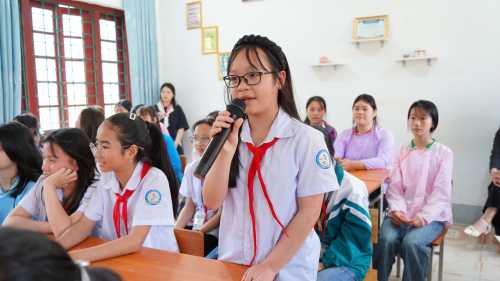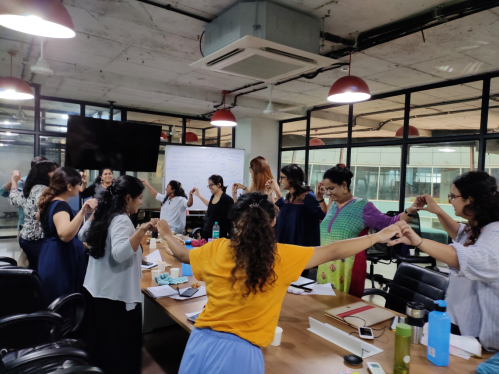
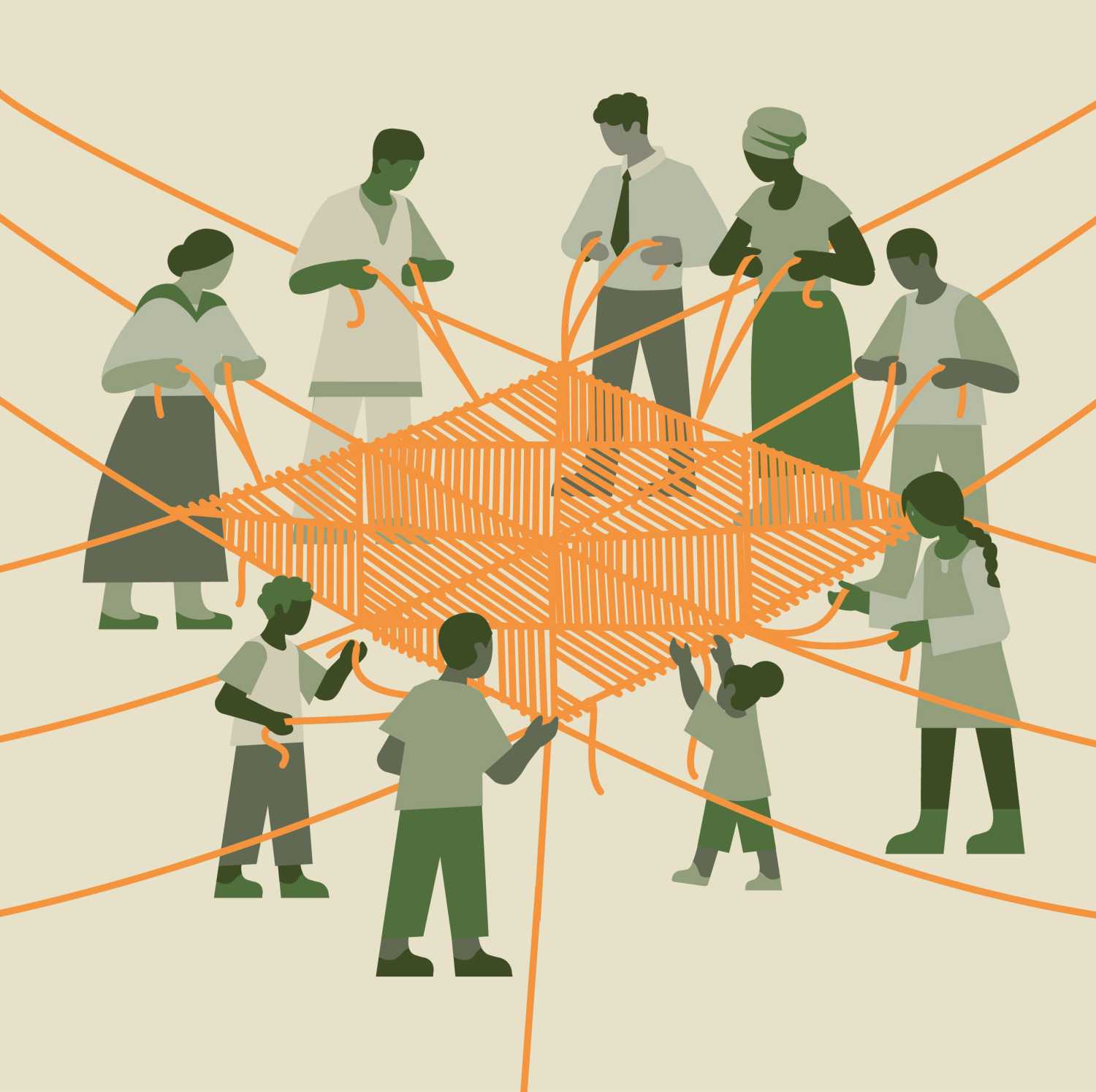
How do narratives about the purpose of education shape systems transformation, and how do their interactions enable or constrain every child’s opportunity to thrive? The Network for Education Systems Transformation examined this question through a qualitative, participatory study in India, Peru, and South Africa. The study brought together educators, policymakers, researchers, civil society actors, parents, community members, and young people to explore what education is for, what systems recognize as success, and which conditions enable children and communities to thrive.
In examining different perspectives on the purposes of education, a relational systems framework for thriving conditions emerged:
- Narratives of purpose across the three countries are reproduced through the interplay of mindsets, power, and relationships. Mindsets shape what becomes normalized and externalized through definitions of learning quality—determining which learners are seen as capable, which languages are valued, and which futures are worth preparing for—while power decides whose narratives become institutionalized and whose remain marginal. These dynamics are lived and reinforced through relationships and everyday experiences.
- Relationships and power across the three countries reveal that participants locate the meaning and value of education in relationships—with teachers, caregivers, peers, families, communities, territories, languages, and themselves. Across contexts, relational conditions—safety, trust, care, respect, and recognition—are central to dignity, agency, belonging, and purpose; yet these conditions are unevenly sustained, often depending on individual actors rather than being structurally supported through system design.
- Governance and measurement across the three countries show that systems primarily reward attendance, examination scores, compliance, credentialing, reporting, and adherence to budgets, while struggling to recognize less measurable but equally critical dimensions such as the quality of relationships, trust between learners and educators, cultural responsiveness, dignity in everyday interactions, learner agency, and belonging.
Based on these findings, the study invites education actors to reopen the question of purpose rather than treat it as settled policy.
Related Content


Authors




With

-
Acknowledgements and disclosures
This report was produced through the collective effort of a wide network of researchers, practitioners, and education actors. We are grateful to all who contributed to its development.
We extend our sincere thanks to the Network for Education Systems Transformation (NEST) global network and the country partner organizations whose leadership and coordination made this study possible: Dream a Dream in India, Enseña Perú in Peru, and SmartStart in South Africa. We are equally grateful to colleagues at the Center for Universal Education (CUE) at The Brookings Institution: Kelsey Rappe, Grace Cannon, Rachel Dyl, and Juanita Morales.
We are grateful to our peer reviewers, Brad Olsen, CUE Senior Fellow, and Jamila Razzaq, Co Founder and President, Aappa Aziz Trust, whose thorough and constructive engagement strengthened this study considerably. We also thank Emily Gustafsson-Wright, CUE Senior Fellow, for her editorial review and support.
Finally, we extend our sincere gratitude to the participants of this study for the time they dedicated and their valuable contributions to the development of the study process and its findings.
The Brookings Institution is committed to quality, independence, and impact.
We are supported by a diverse array of funders. In line with our values and policies, each Brookings publication represents the sole views of its author(s).