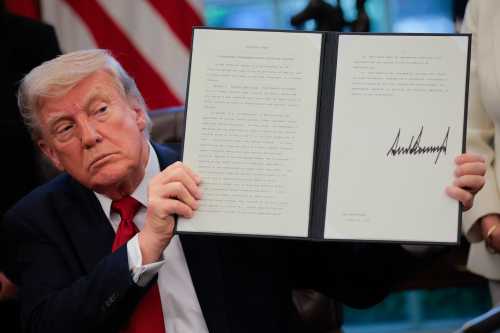
This has been a disruptive year for education research. Last February, roughly $1 billion in federal funding was canceled. Amid efforts to dismantle the U.S. Department of Education, most staff at the Institute of Education Sciences (IES), which supports education research and data collection, were laid off. IES abruptly stopped nearly all data collections, evaluations, and research activities.
The divestment in education research comes at a dangerous time. Education leaders are dealing with poor academic outcomes, high levels of student absenteeism and disengagement, new and unproven technologies, and a changing workforce. Education leaders must make decisions about new tools, models of instruction, and approaches to preparing students for an uncertain future. Bold claims about what works are everywhere, and leaders need credible, independent research to distinguish between what is promising, what is effective, and what is simply well marketed. If there ever was a time when we could expect a strong return on investment from rigorous, independent education research, it is now.
Fortunately, the budget passed this February essentially maintains funding levels for IES, signaling bipartisan support in Congress for federal education data and research infrastructure. In addition, the U.S. Department of Education’s commisioned report, “Reimagining the Institute of Education Sciences,” lays out a vision for federal education research that largely aligns with the types of responsive, rigorous, independent research conducted by members of the Association for Education Finance and Policy (AEFP)—an organization that we have had the privilege to lead for the last few years.
Just weeks after the report’s release, we convened more than 1,000 researchers, policymakers, and practitioners in Chicago for AEFP’s annual conference. Two things stood out:
- First, policymakers, practitioners, and education leaders value evidence. Today’s leaders are facing incredibly difficult challenges and, perhaps more than ever, seeking proven strategies, policies, and programs. In session after session, we heard from high-level policymakers and practitioners about their need for data and evidence. For example, state leaders from Illinois described using research to improve early learning opportunities, while state leaders from Michigan explained how research has informed their teacher recruitment and retention efforts. In the plenary session at AEFP, former Secretary of Education Arne Duncan spoke about how data and research guided his team’s work at Chicago Public Schools (CPS) and the U.S. Department of Education.
- Researchers are eager to generate evidence that is useful for policymakers. A common critique of education research—highlighted in the new IES report—is that it is misaligned with the needs of policymakers. The questions explored and the timelines on which they are answered do not always serve practitioners well. Yet many AEFP sessions showed how our members have been working to produce rigorous, relevant evidence. For example, in Chicago, where the conference met, the Chicago Consortium on School Research has a long history of collaborating with CPS to understand how programs and policies are working and what matters most for student success. Other local organizations, including the Early Childhood Research Alliance of Chicago, the University of Chicago Education Lab, and the Illinois Workforce and Education Research Collaborative, are similarly working to produce actionable evidence and recommendations that support learners from early childhood through adulthood.
The work presented at AEFP’s conference—and other conferences from peer organizations—reflects decades of sustained investment, chiefly from the federal government. These investments have built a field capable of conducting rigorous, policy-relevant, and independent research. Over the last several decades, education researchers have leveraged key federal data collection efforts, developed novel methods, and cultivated institutional partnerships that allow us to answer complex questions about what works and under what conditions. The education research community is producing more rigorous and useful work than it ever has before.
Beyond producing research, members of our community work to ensure policymakers have access to the data and evidence they need. For example, Arnold Ventures sponsored an event that brought together policymakers and practitioners to engage with research on pressing topics such as math achievement, workforce Pell grants, and strengthening the teacher workforce. Our organization also facilitates research use through open-access policy briefs and article takeaways in the Education Finance and Policy journal, as well as the AEFP Live Handbook, a digital hub for education policy research and informed decision-making.
What comes next matters
By far our best-attended session at this year’s conference was a conversation between Amber Northern (a senior advisor to the U.S. Department of Education who authored the report on the future of IES), journalist Matt Barnum, and education researchers and policymakers. Dr. Northern outlined the key points of her report, including the need to focus on the most urgent education challenges as identified by state and local leaders, to emphasize practicality and relevance, and to improve dissemination.
The call for more responsive and actionable research is valid. Some federally funded research remains too difficult to apply or access. But the path forward should build on what the field already does well rather than implying a need for wholesale reinvention.
Getting this right will require federal investments in three areas:
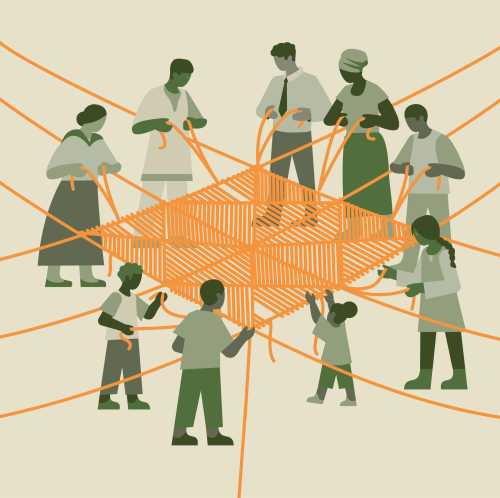
- Strengthening connections between research, policy, and practice. State and district leaders have limited time and resources. The IES report emphasizes the need to prioritize research relevance, but that is only possible through sustained investment and collaboration between researchers and decisionmakers. Fortunately, we have plenty of models from different states, districts, and institutions to identify the conditions that create successful research partnerships.
- Learning about implementation and costs. Evidence about whether a program works is rarely sufficient to drive policy decisions. Education leaders also need clear information about how programs should be implemented, what conditions they require, and what resources they demand. Yet this kind of work is underfunded. If federal agencies want research to be actionable, they need to invest directly in implementation, feasibility, adaptation, and cost studies.
- Maintaining a commitment to rigorous, independent, and publicly accessible science. As demand for rapid answers increases, we must keep sight of the core purpose of federal education research: producing credible evidence that can lead to real improvements for students. This requires that we: maintain federal funding for investigator-led, peer-reviewed research; preserve public data systems and public access to findings; and promote transparent reporting standards. It also requires an investment approach that balances the need for timely, policy-responsive research with sustained support for broader inquiry that can generate knowledge that extends beyond any single context or time-sensitive decision.
At this year’s AEFP conference, we gathered under the theme, “Sustaining Education Research and Evidence in a Turbulent Era.” Our members have demonstrated a longstanding commitment to research as a public good and to meeting the needs of state and local leaders in keeping with the call in the new IES report. Realizing that vision will require not only renewed investment but also deliberate attention to how research is produced, shared, and ultimately used to improve outcomes for students.
Related Content



Authors



The Brookings Institution is committed to quality, independence, and impact.
We are supported by a diverse array of funders. In line with our values and policies, each Brookings publication represents the sole views of its author(s).

Commentary
Rebuilding IES to amplify the impact of education research on student outcomes
April 14, 2026