This commentary is part of a series on “The new geopolitics of Asia and the prospects of North Korea diplomacy” produced by the Brookings Institution.
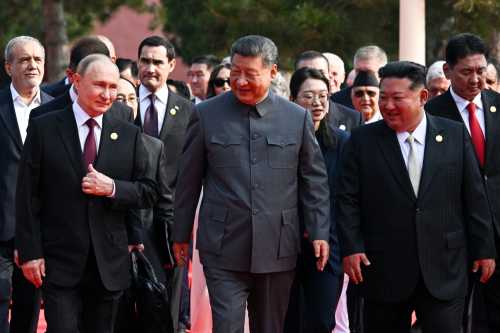
North Korea’s regional diplomacy is undergoing a structural shift. With the declaration of the “two hostile states” theory in December 2023, Pyongyang has not only redefined inter-Korean relations as fundamentally adversarial but has also effectively abandoned unification as a long-term goal. In doing so, it has ceased efforts premised on the idea of a shared Korean nation—effectively closing the door to the South. Instead, it has widely opened the door to its northern neighbors, marking the beginning of a new phase of regional diplomacy.
This transformation—combined with deepening ties with Russia, China, and even Belarus, as well as the potential resumption of a U.S.-North Korea summit under a second Trump administration—poses both opportunities and dilemmas for South Korea. Pyongyang now seeks to engage Washington with growing confidence derived from its northern diplomacy, bypassing and excluding Seoul. It aims to be recognized by the United States as a nuclear power on par with China and Russia, and to negotiate on that basis. In this evolving context, South Korea’s long-standing goals of denuclearization and unification are becoming increasingly distant. Accordingly, the South Korean government is seeking to create regional conditions conducive to reengagement with North Korea—prioritizing U.S.-North Korea summits and diplomacy toward China and Russia—rather than remaining overly fixated on long-term objectives.
Trump-Kim summit: a rare opportunity for a breakthrough
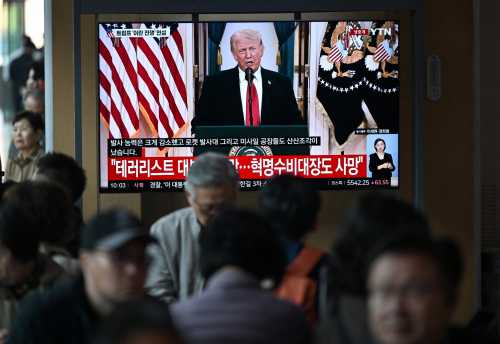
South Korean President Lee Jae Myung and his administration view the prospect of a U.S.-North Korea summit as a rare opportunity to engage the Kim Jong Un regime. Since Lee’s inauguration, the government has made sustained diplomatic efforts to facilitate such a summit, potentially on the sidelines of a U.S.-China summit. The administration appears to place considerable weight on U.S.-led diplomacy, implicitly positioning U.S. President Donald Trump as the primary negotiator and “peacemaker” on denuclearization, while Lee plays a supporting yet indispensable role as a “pacemaker.”
Although efforts to arrange a Trump-Kim meeting during the 2025 Asia-Pacific Economic Cooperation summit in Gyeongju were unsuccessful, another U.S.-China summit scheduled for May has renewed momentum. Given the Trump administration’s preoccupation with the Middle East and its focus on trade issues with China, the prospects for such a meeting are low. However, if it ever happens, Seoul believes that the meeting could mark a turning point toward peace and stability on the Korean Peninsula. Seoul does not expect immediate denuclearization, but rather a phased process beginning with a freeze, followed by reduction and eventual dismantlement. At a minimum, stabilizing the security environment and preventing escalation would constitute a meaningful achievement.
That said, it is important to emphasize that the Lee administration has not abandoned the goal of denuclearization. South Korea and the United States reaffirmed their commitment to denuclearization in their October 2025 summit, and the issue has also been reiterated in trilateral and bilateral meetings with Japan. However, the government has recently adopted more nuanced language—such as “a nuclear-free” Korean Peninsula—alongside the term “denuclearization,” reflecting both the issue’s sensitivity and a more gradual, step-by-step approach.
Leveraging China and Russia for engagement with North Korea
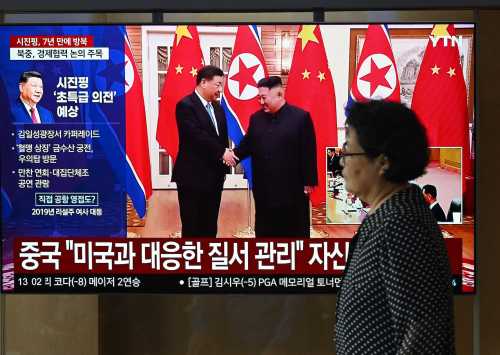
Seoul has been cautious about framing North Korea, China, and Russia as a unified trilateral bloc. Instead, it seeks to improve bilateral relations with Beijing and Moscow, hoping that both countries may ultimately play constructive roles in facilitating engagement with Pyongyang. While it has not been confirmed whether Seoul has directly coordinated with Beijing to enable a U.S.-North Korea summit, the Lee administration has emphasized the importance of President Xi Jinping’s role in addressing Korean Peninsula issues. During the January 2026 South Korea-China summit, Seoul reportedly proposed four cooperation initiatives, including the construction of a Seoul-Pyeongyang-Beijing high-speed rail line; a tourism initiative involving the Wonsan-Kalma coastal resort area; health care cooperation with North Korea; and the Greater Tumen Initiative.
A similar approach is evident in South Korea’s policy toward Russia. Although Seoul has yet to articulate a comprehensive Russia strategy, it does not view Moscow solely as an adversary but also as a potential partner. Lee has described Russia as an important country with which South Korea should improve relations, while still aligning with international sanctions over its invasion of Ukraine. In particular, Seoul has shown interest in economic and logistical cooperation, especially the development of the Northern Sea Route, which could significantly reduce shipping time to Europe and would require Russia’s cooperation. Through improved ties with Moscow, Seoul also hopes to encourage Russia to play a more constructive role in easing tensions on the Korean Peninsula.
A dilemma in “peaceful coexistence”
In tandem with efforts to shape favorable regional conditions, the South Korean government continues to internally debate how to approach potential improvements in inter-Korean relations. A recent poll shows that most South Koreans (64.6%) view North Korea as a separate state, with nearly 80% prioritizing “peaceful coexistence” over reunification. However, in order to make Pyongyang accept peaceful coexistence, Seoul may have to adopt a more moderate stance toward North Korea’s threats, including its nuclear weapons.
Under the Lee administration’s pragmatic diplomacy, the Ministry of Unification has advocated a short-term approach focused on managing rather than eliminating the North Korean threat. This perspective reflects Unification Minister Chung Dong-young’s strong leadership and has increasingly shaped policy discourse. It rests on the notion that peaceful coexistence with a nuclear-armed North Korea may be possible—an approach sometimes described as a “peaceful two-state” framework.
The recently announced five-year inter-Korean development plan outlines goals such as institutionalizing peaceful coexistence, establishing a foundation for shared growth on the Korean Peninsula, and ultimately achieving a peninsula free of war and nuclear weapons. It also emphasizes principles Lee has repeatedly articulated, including respect for the North Korean system, rejection of absorption-based unification, and avoidance of hostile actions.
However, this approach is not uniformly accepted across the government. The Ministry of Foreign Affairs (MOFA) and the Ministry of National Defense (MND) remain relatively cautious about the costs associated with engaging a nuclear-armed North Korea or treating its nuclear status as a given. There is neither a credible expectation nor a policy consensus in Seoul that a “nuclear but stable” North Korea can be realized.
The MOFA continues to emphasize denuclearization in its external messaging and has recently supported international resolutions on North Korean human rights as part of broader pressure efforts. It also seeks to align with international non-proliferation and denuclearization norms. Should South Korea itself move away from treating denuclearization as a core objective, it could weaken the broader international momentum on this issue. In such a scenario, the United States might shift its policy toward arms control or risk reduction, while Japan could adopt a more assertive posture, potentially accelerating regional arms competition.
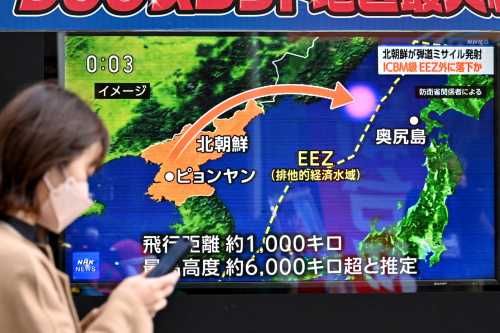
The MND, meanwhile, remains deeply concerned about North Korea’s advancing nuclear and missile capabilities. With China and Russia no longer fully enforcing sanctions, Pyongyang’s capabilities are rapidly evolving. In particular, North Korea’s cooperation with Russia has contributed to advances in drone production, doctrine, and modern warfare capabilities. Additionally, North Korea has begun to emphasize conventional weapons development—explicitly highlighted for the first time at its Ninth Party Congress in February 2026. These conventional capabilities not only pose independent threats but also support and integrate with North Korea’s nuclear forces.
The South Korean government faces a profound dilemma. As North Korea continues to improve its warheads, delivery systems, command and control, and survivability, the absence of dialogue does not preserve the status quo—it shifts the balance in Pyongyang’s favor. Yet to induce North Korea to return to dialogue, Seoul may have to compromise its own principles, norms, and even some aspects of its military posture. Moreover, since there is no guarantee that such concessions would actually bring Pyongyang back to the table, Seoul remains hesitant to take bold preemptive steps first.
Forging strategic consensus under constraints
South Korea must simultaneously pursue two objectives. Facilitating the early resumption of U.S.-North Korea dialogue is important. However, an equally—if not more—critical task is forging an internal consensus within the South Korean government on how to address the North Korean nuclear issue, particularly once such dialogue creates an opportunity for inter-Korean engagement. While South Korea cannot afford to delay further, as denuclearization and unification drift ever farther out of reach, Seoul also recognizes that these goals cannot be achieved hastily. The challenge, therefore, is to identify a long-term approach that preserves the nation’s principles and interests while preventing further deterioration of the problem.
Author

Related Content
The Brookings Institution is committed to quality, independence, and impact.
We are supported by a diverse array of funders. In line with our values and policies, each Brookings publication represents the sole views of its author(s).
Commentary
Pyongyang’s northern turn is reshaping the Korean Peninsula
April 30, 2026