The American promise of free speech and collective action is not merely a constitutional abstraction. It is the mechanism through which every major expansion of civil rights and democratic participation has been achieved. From the labor movement to the suffrage campaigns to the civil rights revolution, organized community power has driven the policy changes that formal institutions were too slow or too reliant on the status quo to enact on their own.
The Black Lives Matter (BLM) movement, which mobilized an estimated 26 million people in 2020 in the largest sustained protest wave in American history (even more counting global numbers), stands as one of the most recent demonstrations of this dynamic. Yet the conditions that make such mobilization possible—legal protection for protest, inclusive civic infrastructure, diverse and intersectional coalitions, and honest civic education—are under systematic attack at the federal and state levels.
When communities organize, policy changes
The relationship between civic mobilization and policy reform is not speculative. It is documented in the data. For example, research analyzing policing reforms found that sustained, organized BLM protest activity was associated with meaningful changes to policing, policy, and practice. Cities where protests were large, sustained, and organizationally rooted saw higher rates of policy adoption, including implicit bias training requirements, restrictions on use of force, civilian oversight mechanisms, and bans on no-knock warrants. The movement also shifted public opinion in ways that created cultural and political openings: A 2017 Pew study found that a majority of white Americans came to view officer-involved shootings of Black people as signs of a broader systemic problem—a shift that would have been unimaginable a decade earlier.
But the evidence also reveals the limits of protest as a policy instrument when it operates in isolation. Passing reform is not the same as implementing it. Case studies in cities found pervasive implementation gaps: Policy adopted does not always translate into policy implemented. State-level political context matters enormously. The difference between a Republican-controlled and a Democratic-controlled state legislature shapes whether locally won reforms survive and are enforced.
A state-level analysis tracking more than 1,700 policing bills across all 50 states found dramatic variation: In some states, nearly 80% of proposed police accountability legislation passed; in others, less than 2% did. This variation is not random—it tracks closely with the strength of organized civic advocacy in each state. Where community-based organizations maintained sustained lobbying and public pressure between moments of protest, reform advanced. Where mobilization was episodic and lacked institutional backing, it stalled.
Sixty years after the March on Washington, survey data confirm that protest remains among the most widely used forms of political participation for communities of color. More than half of Black respondents believe protests are effective in combating racial bias in policing, compared with a third of white Americans. This gap reflects lived experience, not pessimism: Communities that have watched civic mobilization produce concrete policy wins know what it can achieve.
Diversity is not the byproduct, its the mechanism
One of the most consequential findings from research on social movements is that the racial, generational, and issue-based diversity of protest participation is not simply a measure of inclusivity—it is the primary driver of a movement’s political durability and policy effectiveness. Movements that can speak to the overlapping concerns of constituencies with distinct identities generate broader coalitions, sustain pressure across longer time horizons, and create political conditions that are harder for opposition to dismiss or contain.
The 2020 BLM protests were notably multiracial: Approximately 54% of participants were white—a demographic fact that reflected the movement’s capacity to frame racial justice as a universal democratic concern rather than a narrow group interest. This convergence of distinct motivations within a single mobilization is what social scientists call intersectional solidarity, and evidence consistently shows it produces more durable political pressure than single-issue organizing.
Conversely, when protest crowds become demographically homogeneous, the political coalition narrows. Elected officials can more easily characterize demands as representing a partisan or marginal constituency rather than a broad public. Media coverage fragments. Organizations compete for limited donor attention. The lesson is direct: Building diverse coalitions is not only the right thing to do, it’s the strategically effective thing to do. Every policy intervention designed to support civic engagement should be evaluated in part on whether it expands or contracts the range of communities that can meaningfully participate.
Young people are particularly critical to this equation. Survey data show that younger Black and Latino respondents participated in the 2020 protests at significantly higher rates than their older counterparts, and that youth civic engagement correlates with sustained movement involvement over time. Protecting the pipelines through which young people enter civic life—schools, HBCUs, unions, faith institutions, and community organizations—is therefore a prerequisite for durable community power.
Threats and opportunities to civic engagement and community power
The conditions that make effective civic engagement possible are not self-sustaining. They require legal protection, institutional investment, and political will—all of which are under active pressure in the current moment. Five threats deserve particular attention, along with policy recommendations to combat them:
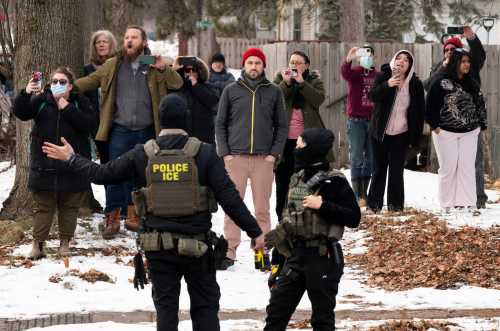
- Criminalization of protest. Federal and state legislation is more likely to impose criminal and civil penalties on peaceful protest activity that occurs near infrastructure and government facilities. These laws disproportionately expose communities of color to arrest and prosecution and have a documented chilling effect on civic participation.
- Protect and expand the legal right to protest: Congress and state legislatures should address how protest activity is criminalized near infrastructure or government facilities and enact robust federal protections for peaceful assembly. Federal civil rights agencies should actively monitor and investigate patterns of discriminatory enforcement of public order laws against protest participants, including the use of surveillance technology to identify and target organizers.
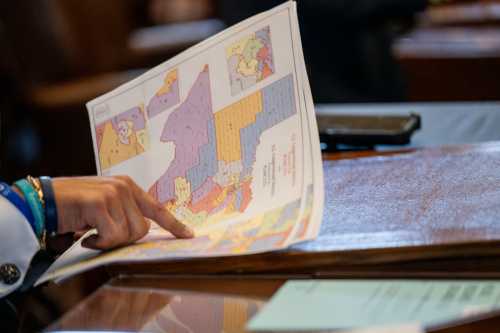
- Voter suppression. Ongoing restrictions on voting rights, including voter ID requirements, roll purges, reductions in early voting, and gerrymandering, suppress civic participation in exactly the communities that social movements depend on for their political base. Research consistently shows that BLM protests in 2020 were associated with increased voting behavior; suppressing that turnout suppresses movement infrastructure as well.
- Restore full voting rights protections: Congress should pass comprehensive voting rights legislation restoring the full protections of the Voting Rights Act of 1965, banning discriminatory voter ID requirements, roll purges, and mandating automatic voter registration. Tonantzin Carmona’s work with CityKey in Chicago—creating an ID that serves multiple functions for access to rights and city resources, from transit to libraries—is a model to be replicated.
- Erasure of civic and historical education. Federal and state-level attacks on curricula and the suppression of accurate histories of social movements sever the connection between past and present civic engagement. Communities that cannot learn from the history of collective action are less equipped to practice it. It is vital that students be educated on the history of civil rights and social movements in the U.S. and around the world.
- Mandate accurate, inclusive civic education: Federal and state education policy should require the inclusion of evidence-based histories of social movements in K-12 civics and history curricula. Research on civic engagement consistently shows that young people who learn about the history and mechanics of collective action are more likely to participate in civic life as adults.
- Require intersectional design in civic engagement programs: Government-funded civic engagement programs—including voter registration drives, community organizing grants, and public deliberation initiatives—should be evaluated on whether they expand participation across racial, generational, economic, and issue-based lines.
- Defunding of civic infrastructure. The current administration’s attacks on federal grants and nonprofit tax status for organizations engaged in racial equity and civic engagement undermine the institutional infrastructure that translates protest energy into sustained advocacy and policy change.
- Fund community-based civic infrastructure: Federal grant programs administered through DOJ, HHS, and the Corporation for National and Community Service should prioritize community-based organizations engaged in civic engagement, leadership development, and organizing in marginalized and disinvested communities. Sustained community power requires organizations with staff, resources, and institutional roots.
- Invest in youth civic pathways: Policymakers should expand service and AmeriCorps programs in underserved communities and connect these pathways to ongoing civic mobilization rather than treating them as one-time experiences.
- Digital surveillance and suppression. Community organizers face increasing surveillance of digital communications and social media activity. Algorithmic suppression of movement content on major platforms limits the reach of organizing in precisely the communities that most depend on digital tools for mobilization. It is important that surveillance and platform suppression not be allowed to prevent people from mobilizing in similar ways, regardless of their political affiliations.
- Disclose AI decisions: Social media platforms receiving federal contracts or regulatory benefits should disclose algorithmic decisions related to civic and political content.
Civic engagement and community power are not soft policy concerns sitting at the margins of democratic governance. They are the mechanism through which democratic governance is held accountable. The evidence is unambiguous: When diverse communities organize together, sustain pressure across time, and connect street-level mobilization to legislative advocacy, they change policy. When the legal, institutional, and educational conditions that make that organizing possible are dismantled, policy change stalls, and the communities that most depend on collective action as a tool of democratic participation are left without recourse.
Related Content
2026
Author

The Brookings Institution is committed to quality, independence, and impact.
We are supported by a diverse array of funders. In line with our values and policies, each Brookings publication represents the sole views of its author(s).
Commentary
Protest changes policy when communities stay organized
June 29, 2026