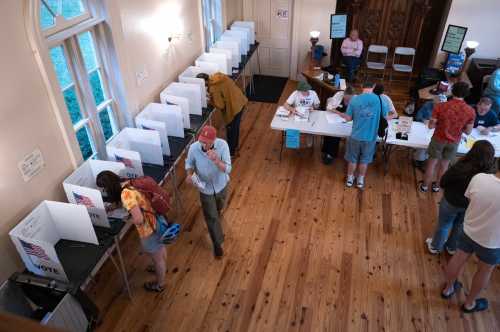
On Oct. 10, 1871, in downtown Philadelphia, Octavius Catto, founder and star shortstop of the Black Pythian Base Ball Club, was summoned in his capacity as a National Guardsman to a polling place where his fellow Black citizens were being allowed to vote for the first time. But there was unrest at the polls as the Daily Tribune Publishing Company recounted at the time, “… where the voters, contrary to all precedent, were ranged in two lines, one of Blacks, the other whites, between whom there was a perpetual struggle to get in votes of the rival races, resulting almost invariably either in the colored man giving up the attempt or else a fight, in which after a drubbing by his white antagonist he would be arrested and locked up.” While Catto was en route to report for duty, he encountered a white man, who shot and killed him.
Catto’s killing stands as one of the most prominent early examples of a Black athlete martyred in the struggle for Black enfranchisement. His sacrifice serves as a reminder that Black athletes have long been on the front lines of the fight for voting rights.
Though the 15th Amendment, which decreed neither race nor color could deny one’s right to vote, was passed the year before Catto’s murder, its protections were swiftly undermined. Poll taxes, literacy tests, and violence were employed to dissuade Black voters from the late 1800s into the 20th century. But as the Black athletic class grew, some of its brightest stars joined the fight against Black voter suppression. Black boxing champion Joe Louis was among them. Speaking at a December 1946 event honoring his civil rights work, he declared, “I hate Jim Crow, I hate the poll tax … I’m gonna do something about it. We must all come together, Black soldiers, white soldiers, Americans, veterans, and take a stand against segregation, fight for our civil rights and our voting rights.”
Baseball legend Jackie Robinson was active in the Civil Rights Movement and the NAACP. In the 1960s, boxing champion Muhammad Ali broke with his abstinence from electoral politics at the time by lending his image to the national Voter Education Project. In the 1980s, a former college quarterback turned minister, Rev. Jesse L. Jackson, canvassed the country to register Black voters as he mounted two campaigns for president. And when a young Black senator from Illinois, Barack Obama, announced his candidacy for president in the early 2000s, he garnered public support from several star Black athletes, including, most notably, NBA superstar LeBron James.
Toward the end of the first Trump administration, James, along with other Black athletes and artists, founded an organization called More Than a Vote to combat systemic voter suppression. “Yes, we want you to go out and vote, but we’re also going to give you the tutorial,” James told the New York Times, “We’re going to give you the background of how to vote and what they’re trying to do, the other side, to stop you from voting.”
During the 2020 election, WNBA players from the Atlanta Dream were angered that a co-owner of their team, Sen. Kelly Loeffler, a Republican from Georgia, was hostile to Black Lives Matter and women’s rights, so they organized to oust her. They coalesced around the campaign of her challenger, the then relatively unknown Rev. Raphael Warnock, and shared images of themselves on social media wearing black t-shirts emblazoned with “Vote Warnock.” “We can’t really do anything about her ownership,” former Atlanta Dream player Elizabeth Williams said, but she further emphasized that “We can control who we vote for.” Their involvement propelled Warnock to become Georgia’s first Black U.S. senator. Black athletes are now being asked by the NAACP to withhold their lucrative labor from schools in states in which legislatures are gerrymandering Black representation out of existence.
Given the financial power of collegiate sports—particularly football and basketball, two revenue sports where Black athletes make up a disproportionate share of rosters—two actions are worth considering:
- The NCAA formalizing a voter registration infrastructure for student athletes. Most college athletes in the country are of voting age. Athletic departments that already mandate academic support, health services, and financial literacy programming should be required to include nonpartisan voter registration and civic engagement as a condition of their Title IV institutional eligibility—institutionalizing what LeBron James built through More Than a Vote as standard practice.
- Universities establishing athlete civic engagement funds tied to NIL sharing. A portion of the revenue drawn from media rights deals, licensing, and donor contributions should be directed into dedicated funds that support athlete-led civic engagement, including voter registration drives and legal assistance for voting rights cases in the surrounding community.
Black athletes have often been asked to carry more than their sport: to represent more, sacrifice more, and fight for more than a scoreboard. Catto wanted to protect Black voters and paid with his life. Louis took to the podium. Robinson walked picket lines. Ali lent his face to the cause. James built an organization. The Atlanta Dream mobilized via social media and stood up to ownership. And now, a generation of college athletes is being asked to weigh where they take their talent against what their states are willing to do to protect the right to vote.
The through-line from 1871 to 2026 is not a coincidence. It is a tradition—one built on the recognition that Black athletic excellence has always commanded a kind of attention that power cannot ignore. The question in every era has been whether that attention would be turned toward something larger than the game. Time and again, the answer has been yes.
On the southwest corner of Philadelphia’s City Hall stands a 12-foot bronze statue of Octavius Catto, a man who played baseball and died at a ballot box. It is not incidental that a monument honoring a Black athlete also serves as a monument in the fight for voting rights. It is the point. As long as Black political power remains under siege, Black athletic power will be called to its defense.
Related Content
Author
The Brookings Institution is committed to quality, independence, and impact.
We are supported by a diverse array of funders. In line with our values and policies, each Brookings publication represents the sole views of its author(s).
Commentary
How Black athletes have championed voting rights
June 29, 2026